Myanmar, Burma, and the Karen Community in Minnesota
Minnesota is home to over 20,000 Karen people — the largest Karen community in the United States — along with more than 2,000 refugees from other Myanmar ethnic groups. The Karen (also spelled K'nyaw in the Karen language) are an ethnic group from Kayin State in eastern Myanmar who fled decades of persecution by the Burmese military government, many spending years in refugee camps in Thailand before resettlement in the U.S. beginning in the early 2000s. Most Karen in Minnesota live in Ramsey County, concentrated in St. Paul, where Rice Street has become a corridor of Karen and Burmese markets, restaurants, and community organizations supported by groups like the Karen Organization of Minnesota. The food they brought — curries fragrant with turmeric and lemongrass, rice at the center of every meal, fermented tea leaves, fish noodle soups — is distinct from the Thai and Vietnamese cuisine that dominates Twin Cities menus, though it shares geography and some ingredients with both.
In Minneapolis
There is exactly one place in Minneapolis proper where Burmese food shows up on the menu in a meaningful way. One. We are not going to pad this section.
Northeast Minneapolis (2121 University Ave NE)
Type
Southeast Asian street food with Burmese dishes
Price Range
$12–$22
Standout Dish
Lahpet (fermented tea leaf salad)
Hai Hai is not a Burmese restaurant. It is a Southeast Asian street food spot in Northeast Minneapolis from chef Christina Nguyen, drawing on Vietnamese, Thai, Lao, and Burmese traditions. But it is one of the only places in Minneapolis proper where you can order lahpet — the fermented tea leaf salad that is the national dish of Myanmar. The version here is served alongside crunchy peanuts, sesame seeds, fried garlic, and dried shrimp, and it is genuinely good. The rest of the menu spans the region: Vietnamese crepes, Indonesian beef rendang, coconut shrimp toasts, and a rotating selection of seasonal dishes. Hai Hai earned a spot on the World’s 50 Best Discovery list and consistently ranks among the best restaurants in Northeast. The patio is one of the most coveted warm-weather seats in the city. Reservations recommended. Dinner only — open Tuesday through Sunday from 4 p.m., closed Mondays.
A Note on Burmese Dishes to Know
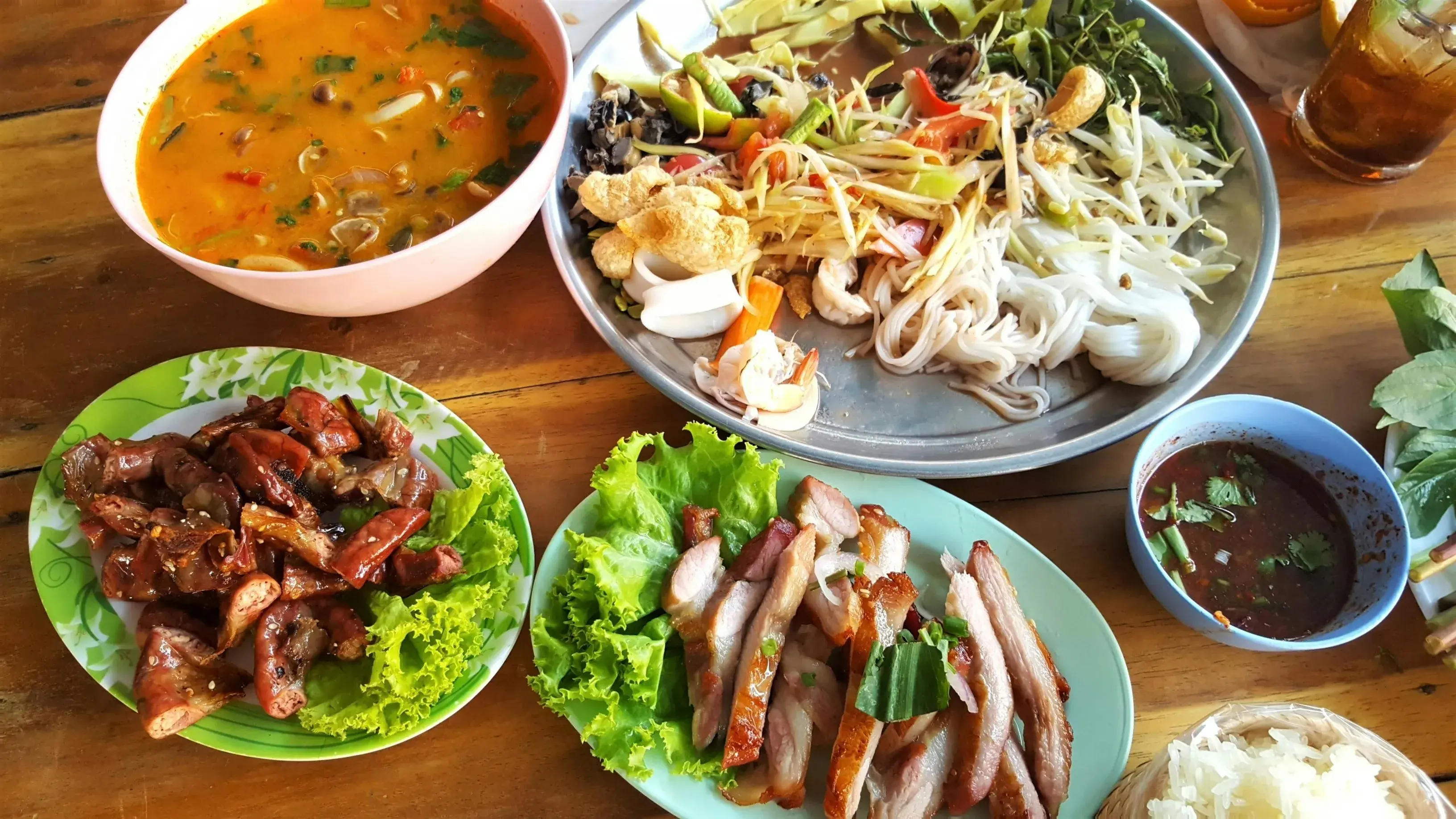
Burmese cuisine is one of Southeast Asia's most underrated food traditions. A few dishes to look for: Mohinga — widely considered Myanmar's national dish, a rich fish noodle soup with banana stem, lemongrass, and chickpea flour, eaten for breakfast across the country. Lahpet thoke (tea leaf salad) — fermented tea leaves tossed with crunchy peanuts, sesame seeds, fried garlic, dried shrimp, and lime. Unlike anything in neighboring cuisines. Ohn no khao swe (coconut chicken noodles) — a creamy coconut-milk based curry with egg noodles and chicken, topped with crispy fried noodles. Shan noodles — from the Shan State, rice noodles with a tomato-based meat sauce or a clear broth, often served with pickled greens. Burmese curry — distinct from Thai or Indian curries, built on a base of onions, garlic, ginger, and turmeric, typically less spicy and more oil-rich. Samosas — reflecting the Indian influence on Burmese cuisine, often served in a salad (samosa thoke) with onions, lime, and chili flakes.
Cross the River: St. Paul & Roseville
The real Burmese and Karen food in the Twin Cities is in St. Paul and the inner-ring suburbs, particularly along Rice Street and University Avenue. If you are serious about eating Burmese food, you need to go here. None of these are far — 15 to 20 minutes from downtown Minneapolis.
Mandalay Kitchen
383 University Ave W, St. Paul (Frogtown)
Type
Burmese, Thai, and Karen cuisine
Price Range
$10–$18
Standout Dish
Lahpet thoke, mohinga, pumpkin curry
The closest thing the Twin Cities has to a dedicated Burmese restaurant, and well worth the drive across the river. Mandalay Kitchen opened in late 2023 on University Avenue in St. Paul’s Frogtown neighborhood. The menu weaves together Burmese, Thai, and Karen traditions: silky pumpkin curries, fermented tea leaf salad (lahpet thoke), mohinga (Myanmar’s beloved fish noodle soup), khao soi, and cream cheese wontons. The restaurant occupies a bright storefront with a takeout counter downstairs and additional seating upstairs, plus a small market selling traditional Burmese and Karen goods. Note: Mandalay Kitchen has been dark since a car crashed through its front window in January 2026. A hoped-for February reopening came and went, and as of mid-2026 the restaurant has not reopened — Yelp now lists it as closed. Call or check their social media before making the drive.
Friends Cafe
1711 Rice St, Roseville
Type
Burmese and Thai cuisine
Price Range
$8–$15
Standout Dish
Burmese curry, tea leaf salad, egg noodle salad
The Twin Cities’ original Burmese restaurant, opened in 2014 by a group of Burmese friends and now run by the family of one of the founders. Friends Cafe sits on Rice Street in Roseville, just north of St. Paul, in a corridor that has become a hub for Karen and Burmese businesses. The menu is large and covers both Burmese and Thai dishes, but the Burmese side is where the kitchen shines. The curries — roughly half a dozen, simmered with onion, garlic, chili, and cilantro — are the stars. The tea leaf salad is fresh and crunchy, the shrimp and eggplant curry has a loyal following, and the deep-fried gourd is an unexpected favorite. The space is humble and the prices are low. This is home cooking served in a restaurant, and it is the real thing. Open Monday through Saturday, 10 a.m. to 8 p.m.
K’nyaw and Thai Kitchen
1048 Rice St, St. Paul
Type
Karen (K’nyaw) and Thai cuisine
Price Range
$9–$16
Standout Dish
Karen-style curries and stir-fries
Another Rice Street spot serving authentic Karen (K’nyaw) and Thai cuisine, K’nyaw and Thai Kitchen represents the growing visibility of Karen food in St. Paul. The Karen people are an ethnic group from Myanmar’s Kayin State, and their cuisine shares roots with Burmese cooking while maintaining its own identity — lighter curries, fresh herbs, and rice-centric preparations. The menu here covers both Karen and Thai dishes, with the Karen specialties being the reason to visit. The restaurant is relatively new and still building its reputation, but for anyone interested in the intersection of Burmese and Karen food traditions, this is an important addition to the Rice Street corridor.
The Honest Take
Burmese food in the Twin Cities is where Hmong food was ten years ago — present in the community, invisible in the restaurant scene. The Karen diaspora in Minnesota is over 20,000 strong, but the restaurant options remain small: a handful of spots in St. Paul and Roseville, nothing dedicated within Minneapolis city limits. That will likely change. Mandalay Kitchen showed what a focused Burmese restaurant could be, and the Karen community on Rice Street is growing. For now, this is a guide to a scene that is tiny, meaningful, and worth seeking out — even if it requires crossing the river.