Why Hmong Food Matters Here
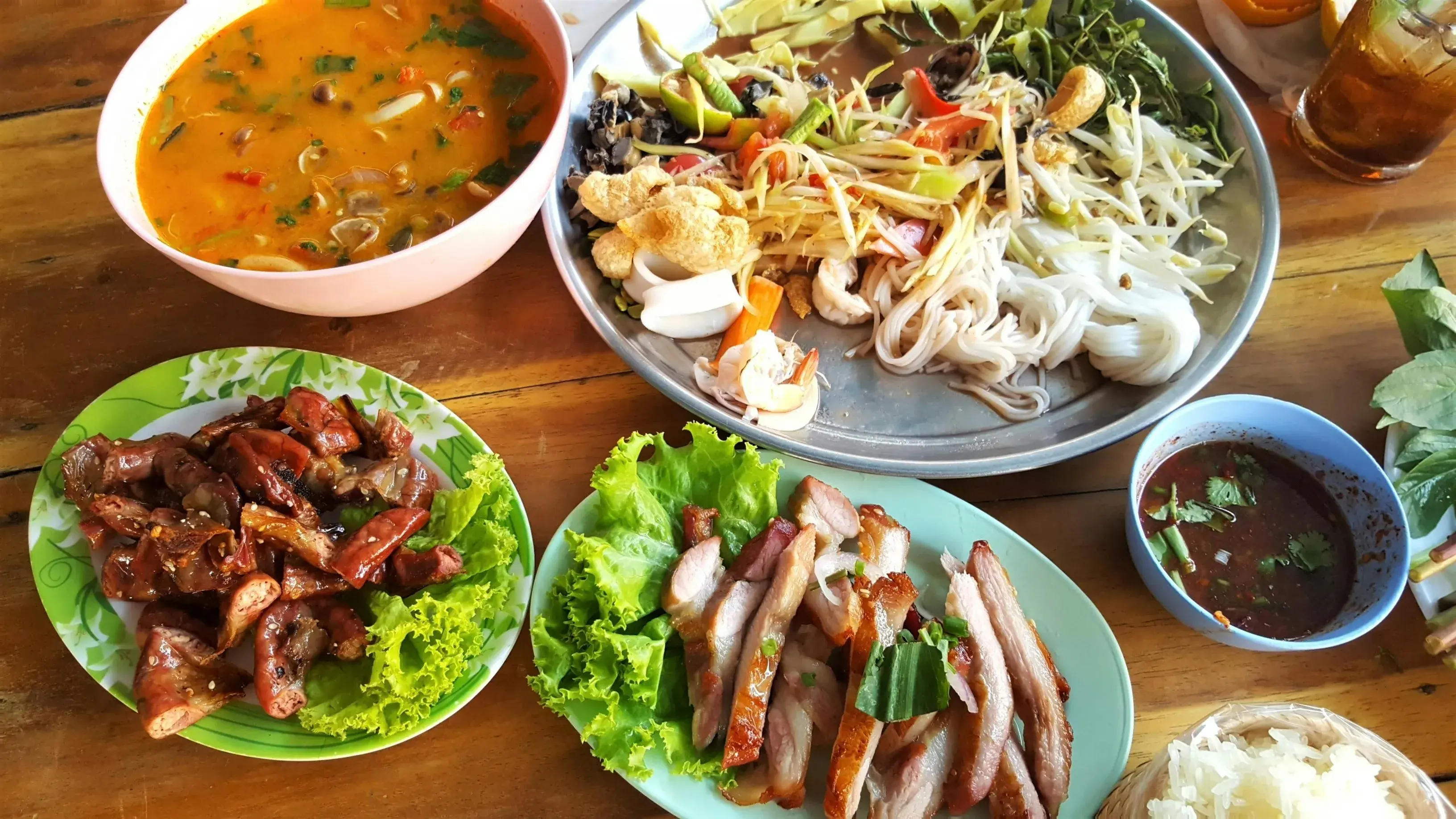
Hmong refugees began arriving in Minnesota in the mid-1970s after the fall of Laos, many having fought alongside U.S. forces during the Vietnam War. The community grew rapidly through the 1980s and 1990s, drawn by employment opportunities, social services, and the pull of family already established here. Today, the Twin Cities Hmong population exceeds 90,000 — and the food traditions they brought are finally gaining the recognition they deserve. Hmong cuisine centers on grilled meats, fresh herbs, sticky rice (including the distinctive purple variety), bold dipping sauces, larb (minced meat salad), papaya salad, Hmong sausage seasoned with garlic and lemongrass, and egg rolls. These are dishes built for communal eating — big platters, shared bowls, rice passed hand to hand. Chefs like Yia Vang and Diane Moua are not inventing a new cuisine. They are translating their families' cooking for a restaurant context, and the results have earned national attention that is long overdue.
Hmong Spots
2
Price Range
$15–$65
Best For
Two nationally recognized Hmong restaurants within walking distance
Vinai
Chef Yia Vang’s dream restaurant, named after the Ban Vinai refugee camp in Thailand where his parents met and where he was born before his family immigrated to Minnesota in 1988. This is the standard-bearer for elevated Hmong cuisine in the United States. The menu is built around four pillars of Hmong cooking — proteins, vegetables, rice, and hot sauce — and the dishes are meant to be shared family-style. Expect grilled meats with bold dipping sauces, bright vegetable sides, sticky rice, and braised meat soups that feel both deeply traditional and unmistakably modern. Vinai landed on the New York Times’ list of the 50 best restaurants in America in 2024, and reservations open on the first of the preceding month for a reason. The 88-seat dining room at 1300 NE 2nd Street fills fast. This is not casual dining — plan ahead and come hungry. Tuesday through Saturday, 5 p.m. onward.
Diane’s Place
Chef Diane Moua’s Hmong American restaurant in the Food Building on 14th Avenue NE, and Food & Wine magazine’s 2025 Restaurant of the Year. Moua is a James Beard-nominated pastry chef who spent years leading dessert programs at some of Minneapolis’s most acclaimed fine dining spots before opening her own place in spring 2024. The result is something singular: Hmong comfort food filtered through serious culinary technique. Hmong sausage served over sticky rice, Thai tea French toast on croissant bread, a Spam and nori croissant sandwich that sounds odd and tastes perfect. The restaurant serves breakfast, brunch, lunch, and dinner, and it is expanding in 2026 to meet demand. The two-star New York Times review brought national attention, but the food was already drawing crowds from across the metro. Closed Wednesdays.
The scene: Northeast Minneapolis has become the undisputed center of Hmong fine dining in the United States. Having both Vinai and Diane’s Place within the same neighborhood is remarkable — two James Beard-recognized chefs, two distinct approaches to Hmong cuisine, both operating at the highest level. Yia Vang’s cooking leans into traditional Hmong family-style dining with a modern lens. Diane Moua blends her pastry background with the comfort recipes of her Hmong heritage. Together, they represent a cuisine that is finally receiving the national recognition it deserves.
Explore Northeast →Hmong Spots
1–2
Price Range
$8–$14
Best For
Affordable Southeast Asian food in a dense restaurant corridor
My Huong Kitchen
Not a Hmong restaurant in the strict sense, but a Vietnamese spot on Eat Street that serves dishes shared across Southeast Asian traditions — papaya salad, rice plates, vermicelli bowls, and other preparations that overlap significantly with Hmong home cooking. My Huong is the kind of place where the food is honest, the prices are low, and the portions are real. Most rice dishes land between $10 and $12. The lemongrass chicken over broken rice is excellent. This is not where you come for an elevated Hmong dining experience. This is where you come when you want something fast, good, and cheap that feels like the food Hmong and Vietnamese families actually eat at home. The lines are shorter than Quang across the street, which is a bonus.
The scene: Eat Street’s strength is its density of affordable Southeast Asian restaurants, many of which serve dishes that cross cultural boundaries between Vietnamese, Lao, Thai, and Hmong cooking traditions. You will not find a dedicated Hmong restaurant here, but you will find papaya salad, sticky rice, larb-adjacent dishes, and grilled meats at prices that make Northeast’s fine dining options feel like a different planet. For the broader Hmong culinary experience — the everyday food rather than the special-occasion food — Eat Street delivers.
Explore Whittier →Hmong Spots
1–2
Price Range
$6–$13
Best For
Midtown Global Market’s rotating Southeast Asian vendors
Midtown Global Market
The old Sears building on Lake Street houses dozens of food vendors from around the world, and the Southeast Asian options rotate over time. While not exclusively Hmong, you can often find vendors selling papaya salad, egg rolls, sticky rice, and other dishes that are staples of Hmong cooking. The market has hosted Hmong vendors in the past, and the broader Southeast Asian presence here means you are likely to find dishes that feel familiar to anyone who has eaten at a Hmong family gathering. The tradeoff is inconsistency — vendors come and go, hours vary, and the specific Hmong offerings depend on who is operating at any given time. Check before you go. When the right vendors are in, the food is excellent and absurdly cheap.
The scene: Midtown Global Market is not a dedicated Hmong food destination, but it is a place where Hmong and Southeast Asian food traditions show up in rotating vendor stalls alongside Somali, Mexican, and East African cuisine. The prices are the lowest you will find for this kind of food in Minneapolis, and the communal seating makes it a great place to sample dishes from multiple vendors in one visit. Think of it as a starting point for exploring Southeast Asian flavors, not a deep dive into Hmong cuisine specifically.
Explore Midtown Phillips →Hmong Spots
1
Price Range
$11–$18
Best For
Lao cuisine with Hmong culinary overlap in a walkable downtown location
Gai Noi
Chef Ann Ahmed’s Laotian restaurant at 1610 Harmon Place, which landed on the New York Times’ list of the 50 best restaurants in America in 2023. Gai Noi is Lao, not Hmong — an important distinction — but the culinary traditions share deep roots. Sticky rice, larb, papaya salad, grilled meats, and herb-forward preparations are central to both cuisines. Ahmed, who was born in Vientiane, Laos, and immigrated to Minnesota as a child, has been a James Beard semifinalist in 2026. The food is casual, affordable, and genuinely excellent. The crispy tofu and pad see ew are crowd favorites, but the sticky rice and larb are where the Hmong-Lao connection is most apparent. Walk-ins only, no reservations. Open daily.
The scene: Gai Noi is not a Hmong restaurant and does not claim to be. But Hmong and Lao cuisines are close relatives — born from the same geography, the same ingredients, the same refugee experience that brought both communities to Minnesota. If you are interested in Hmong food, understanding the broader Southeast Asian context matters, and Gai Noi is one of the best places in Minneapolis to taste that shared tradition. Ann Ahmed’s cooking is a reminder that the boundaries between Hmong, Lao, and Thai cuisines are far more porous than restaurant categories suggest.
Explore Loring Park →Don't Sleep on St. Paul
This guide focuses on Minneapolis, but the honest truth is that St. Paul has more Hmong food options — and it is not close. Hmong Village on Johnson Parkway is a sprawling indoor market with more than 250 vendors, including dozens of food stalls serving papaya salad pounded to order, Hmong sausage with purple sticky rice, stuffed chicken wings, khao poon noodle soup, and egg rolls by the bag. Hmongtown Marketplace on Como Avenue is another essential stop. University Avenue in St. Paul is lined with Southeast Asian restaurants, grocery stores, and bakeries that serve the Hmong community directly. If you are serious about exploring Hmong food in the Twin Cities, you need to cross the river. Minneapolis has the fine dining stars. St. Paul has the everyday depth.