Minneapolis Neighborhood
Near North
A historic heart of Black Minneapolis — where generations of culture, faith, and community organizing have shaped a neighborhood that has endured disinvestment and broken promises while building something no outside force has been able to take away.
№ 57 of 87 · Near North community · Last updated: October 2026 · A complete neighborhood guide
On a Sunday morning in Near North, the sound that carries farthest is singing. It comes from the churches — the ones that have been here since before the freeways, since before redlining had a name, since before the neighborhood became a case study in what happens when a city decides that some of its people matter less than others. A choir at Zion Baptist raises a hymn that has been sung in this building for nearly sixty years. Down the block, a grandmother walks two kids to the corner store, waving at a neighbor on a porch. A man fixes a lawnmower in his driveway. The block is quiet, ordinary, alive — and if you only knew this neighborhood from the news, you would not recognize it. That gap between the headlines and the reality is one of the defining features of Near North, and understanding it is the first step toward understanding what this place actually is.
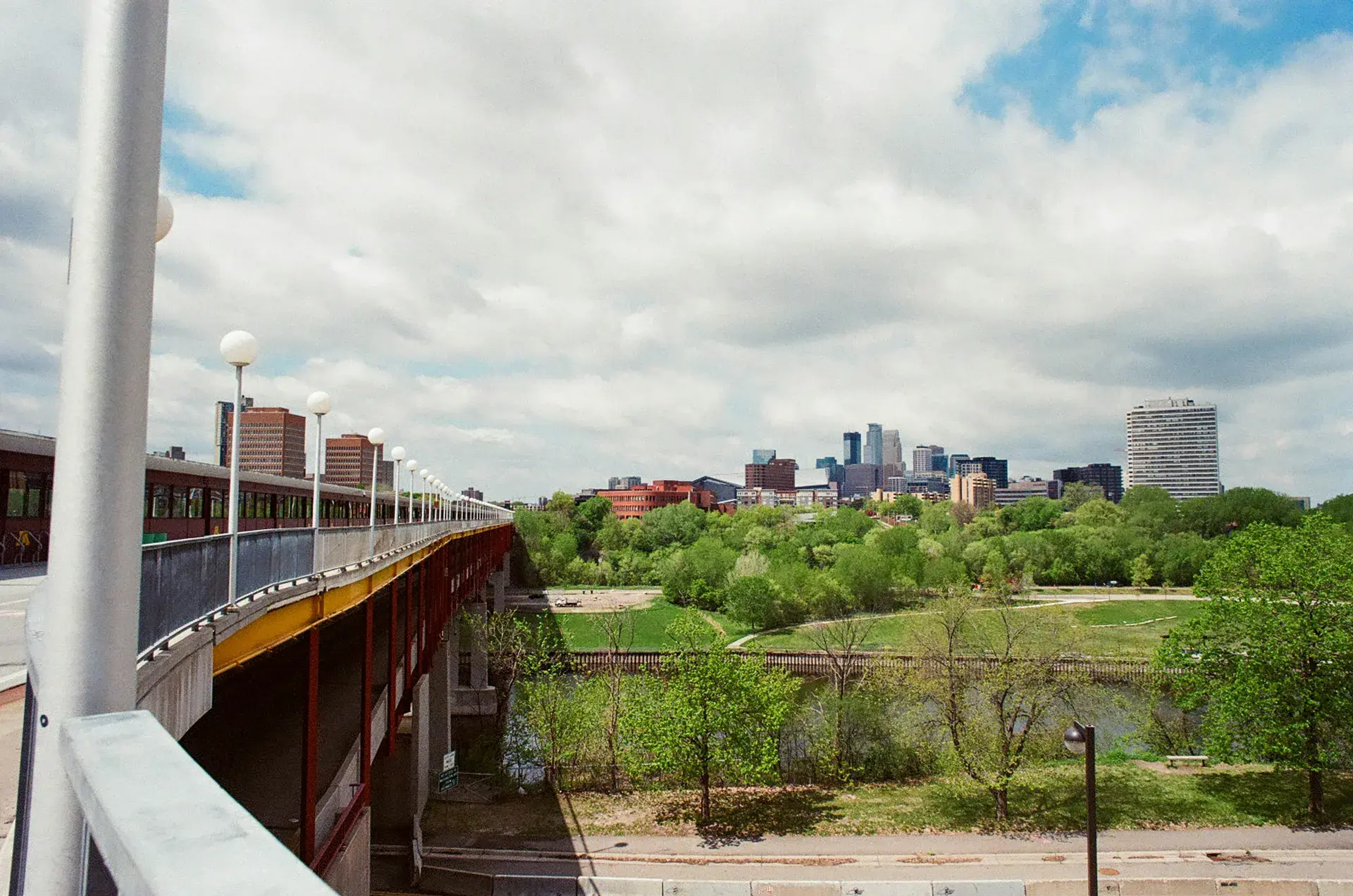
What is Near North, Minneapolis?
Near North is a residential neighborhood in North Minneapolis, bounded roughly by Olson Memorial Highway and Plymouth Avenue to the south, West Broadway to the north, Interstate 94 and the Mississippi River to the east, and Penn Avenue to the west. It is home to approximately 6,700 residents and is a historic center of Black life in Minneapolis — a community whose identity has been forged by over a century of culture, faith, organizing, and the consequences of systemic racism that the city is still reckoning with.
Near North sits within the broader North Minneapolis community, alongside neighborhoods like Hawthorne, Jordan, Harrison, and Willard - Hay. When people in Minneapolis say "the Northside," they often mean this broader area — but Near North, with its proximity to downtown and its concentration of historic institutions, occupies a particular place in that geography and in the city's conscience.
Near North Neighborhood Sign

Near North, Minneapolis — Key Stats (2025–2026)
- Residents (2020 Census)
- ~6,700
- Median home sale price (2025 data)
- $237K
- Era most homes were built
- 1900s–1920s
- Black residents (2020–24 ACS)
- 59%
- Primary commercial corridor
- Broadway Ave
- Drive to downtown Minneapolis
- 10 min
- Walk Score (Oct 2026)
- 61
- Bike Score (Oct 2026)
- 75
Near North History & Origins
The history of Near North is inseparable from the history of race in Minneapolis. In the late nineteenth and early twentieth centuries, the area was home to immigrant families, and much of the Twin Cities' Jewish population lived here. As Minneapolis's Black population grew — drawn by wartime jobs and the promise of a northern city less overtly hostile than the Jim Crow South — discriminatory housing covenants and real estate practices funneled Black families into a small number of neighborhoods. Near North became one of the largest.
By the 1920s through 1950s, Near North had developed into a vibrant Black community, alongside the North Side's Jewish one. Sixth Avenue North — today's Olson Memorial Highway, along the neighborhood's southern edge — was the commercial spine, lined with immigrant businesses and, in the 1920s and 1930s, with nightclubs where jazz was played. The Phyllis Wheatley Community Center, founded in 1924, became a center of Black life in Minneapolis, providing services, organizing space, and cultural programming. Churches — Zion Baptist among them — anchored the spiritual and social life of the community.
The destruction came in stages. In the late 1930s, Sixth Avenue North was rebuilt as Olson Memorial Highway, and Sumner Library had to be moved to make way for it. In 1963 the highway was widened, destroying businesses along its south side and splitting the community. In the 1970s, Interstate 94 came through the east end of the neighborhood — the Phyllis Wheatley building, a few blocks south, was razed for it — and further cut the North Side off from downtown. In St. Paul, the same highway had already cut the Rondo neighborhood in half. In both cities, the highway was routed through Black communities — a pattern repeated in cities across America that was not coincidental. The loss was devastating: not just buildings, but the social fabric of a community, the proximity that made a neighborhood work, the businesses that had served it for decades.
What followed was a cascade of disinvestment that has never been fully reversed. Banks redlined the neighborhood, refusing mortgages and business loans. Grocery stores, pharmacies, and retailers left. Housing stock deteriorated as owners — many of them absentee landlords who had purchased cheaply — deferred maintenance. Rising crime in the 1980s further destabilized blocks that were already struggling. Through all of this, the community persisted — the churches stayed, the organizers organized, the families who could afford to stay did — but the damage accumulated in ways that are still visible on every block.
The murder of George Floyd in 2020 and the subsequent unrest brought renewed national attention to the systemic inequities that neighborhoods like Near North have endured. For many residents, the attention was both welcome and exhausting — the problems were not new, only newly visible to people who had not been paying attention.
Living in Near North
Living in Near North means living with contradictions that most Minneapolis neighborhoods never have to hold. The block where you know every neighbor by name is three blocks from the intersection where a shooting happened last month. The church with the hundred-year history sits across from a vacant lot where a house used to be. The community garden that produces more tomatoes than the volunteers can eat is around the corner from the boarded-up storefront that nobody has invested in for a decade. These contradictions are not abstractions — they are the daily texture of life, and residents navigate them with a matter-of-factness that comes from long practice.
The community here is tight in ways that wealthier neighborhoods rarely achieve. People know each other. Block clubs function as mutual aid networks. Church communities provide social services that the city does not. When something happens — a house fire, a family crisis, a shooting — the response comes from neighbors before it comes from institutions. This is not romanticizing hardship; it is describing what happens when a community has learned, through generations of experience, that it cannot rely on outside help to arrive on time or at all.
The neighborhood is predominantly Black, but its demographics have diversified in recent decades. East African immigrant families — primarily Somali — have become a significant presence, adding new businesses, mosques, and cultural energy. Latino and Southeast Asian residents have also put down roots. The neighborhood's diversity is real but also layered with the complexities of different communities sharing space and resources in a neighborhood that has never had enough of either.
There is pride here — quiet, persistent, hard-won. Not the booster pride of a neighborhood trying to brand itself, but the pride of people who stayed when they were told their neighborhood was worthless, who built community when institutions failed them, who raised children and buried elders and kept going. If you move to Near North, you will not be a spectator. The community will expect you to show up.
Near North Food, Drink & Local Spots
Near North's food scene is shaped by its community — it is not a dining destination in the way that Uptown or Northeast markets itself, but the food that exists here is real, rooted, and reflective of the people who live in the neighborhood. Soul food kitchens, Somali restaurants, corner stores that have been here for decades, and community-driven food initiatives all contribute to a food landscape that is modest in scale but rich in meaning. The neighborhood has also been a food desert for significant stretches of recent history, and efforts to address food access remain ongoing and imperfect.
The Anchors
A North Minneapolis food justice organization, based a few blocks north of Broadway in Hawthorne, that operates urban farms, cooking programs, and community food initiatives. Their brick-and-mortar cafe, Breaking Bread, has closed, but the organization continues its food sovereignty work through farm stands, meal boxes, and community cooking workshops. The mission — building food access and job training in a neighborhood that has long been underserved — is backed by real, sustained work.
Broadway Avenue hosts a rotating mix of small restaurants, takeout spots, and cafes — Somali restaurants serving sambusa and goat, soul food joints with catfish and mac and cheese, and corner spots that locals know by reputation rather than Yelp reviews. The commercial corridor has struggled with vacancy but also contains pockets of genuine culinary character.
Also Worth Knowing
Food access has been a persistent challenge in Near North. When grocery stores left, the gap was filled partially by corner stores and partially by community initiatives like community gardens and food co-ops. Appetite for Change, a North Minneapolis food justice organization, operates urban farms, cooking programs, and community food initiatives as part of a broader effort to build food sovereignty on the Northside. These are not quaint urban farming projects — they are responses to a real crisis of access that conventional markets have not solved.
Parks & Outdoors Near Near North
North Minneapolis has parks — good ones, with real history and genuine community significance. What it has lacked, historically, is the level of investment that the Minneapolis Park Board has directed toward parks in wealthier parts of the city. That disparity is a documented fact and a source of ongoing advocacy. But the parks that are here are used, loved, and central to daily life in ways that go well beyond recreation.
Sumner Field Park
Sumner Field, just across the line in Sumner - Glenwood, has been a park since 1911 and has served the community through every era of the neighborhood's history since. The park includes walking paths and open green space. Its significance is as much historical as recreational — this is a place where community events, protests, and gatherings have happened for generations.
Farview Park
Farview Park sits in Hawthorne, about half a mile north of Broadway, and includes a recreation center, wading pool, basketball courts, playing fields, and a playground. The rec center provides year-round programming for youth and adults, and the park is one of the most actively used spaces on the Northside. Summer evenings at Farview are a community gathering — kids playing, families grilling, neighbors catching up.
The Mississippi River
Near North's east end reaches the Mississippi River's western bank between Plymouth Avenue and Broadway, and the riverfront offers trails, overlooks, and green space that are among the neighborhood's most underappreciated assets. The North Mississippi Regional Park, about two miles upriver, is accessible and provides a genuine natural retreat within the city. Efforts to improve Northside riverfront access and park quality have been ongoing and are beginning to yield results.
Near North Schools
Schools in Near North reflect the profound educational inequities that have defined Minneapolis for decades. The neighborhood is served by Minneapolis Public Schools, and the achievement gap between Black students in North Minneapolis and white students in Southwest Minneapolis is one of the widest and most persistent in the nation. This is not a reflection of the children or their families — it is a reflection of resource allocation, systemic racism, and decades of policy choices that have concentrated poverty while distributing opportunity unevenly.
Hall STEM Academy (PreK–5) and Franklin STEAM Middle School (6–8) sit a block apart on Aldrich Avenue North, inside the neighborhood; assignments depend on the address, so check the district's school finder for a specific house. North High School has undergone multiple restructuring efforts in recent years as the district has attempted to address declining enrollment and outcomes. The school has passionate staff and community supporters but has struggled with the effects of poverty, instability, and inadequate resources. Many Near North families use the district's open enrollment system to access magnet programs and schools in other parts of the city. Charter schools provide additional options.
Community-based educational organizations — after-school programs, tutoring initiatives, cultural education — fill gaps that the formal school system has not closed. These organizations are often run by Near North residents and reflect the neighborhood's tradition of building its own institutions when existing ones fail to serve its needs.
Near North Real Estate & Housing
Near North has some of the most affordable housing in Minneapolis — and that affordability tells a story. Near North's median sale price was $237,000 in 2025, according to Minneapolis Area REALTORS, well below the citywide median of $350,000. For buyers, this represents genuine opportunity: homeownership in a centrally-located Minneapolis neighborhood at a fraction of the cost of South or Southwest neighborhoods. For the neighborhood, the low prices reflect decades of disinvestment that have depressed property values and deterred the kind of investment that would raise them.
The housing stock is mixed. Hennepin County's property records date about half the houses to between 1900 and 1930 and nearly a quarter to the 1970s and 1980s — sturdy structures that have aged differently depending on the care they've received. Well-maintained homes sit alongside properties with deferred maintenance and occasional vacancy. Some new construction and rehab work has been done by community development corporations and nonprofits working to create quality affordable housing. These efforts are meaningful but have not yet reached the scale needed to transform the neighborhood's overall housing conditions.
What Your Money Buys
At the lower end, you're looking at smaller homes that likely need updating — new mechanicals, kitchen renovation, general modernization. Above the neighborhood's $237,000 median, you find well-maintained three-bedroom homes and recently rehabbed properties. The homes that did sell in 2025 sold quickly — an average of 22 days on the market. Duplexes and small multifamily properties are available and offer investment opportunities, though the rental market here is different from trendier neighborhoods.
About half of Near North's households rent, by Census estimates — roughly the same split as the city as a whole. Absentee landlordship has been a persistent issue, and the quality of rental housing varies widely. Community organizations have pushed for stronger tenant protections and landlord accountability.
Getting Around Near North
Near North is close to downtown — ten minutes by car, and closer than many neighborhoods that are perceived as more central. The neighborhood earns a Walk Score of 61 and a Bike Score of 75, reflecting a street grid that is well-connected but commercial corridors that have gaps in services.
Metro Transit bus routes serve the neighborhood along Broadway Avenue, Plymouth Avenue, and Lyndale Avenue North, providing connections to downtown and other parts of the city. The bus service is functional but not as frequent as in more heavily invested corridors. Many residents rely on cars, though the neighborhood's flat terrain and grid streets make biking a practical option for those who choose it.
Interstate 94, which cuts through the east end of the neighborhood, is simultaneously Near North's connection to the regional highway system and the barrier that severed it from downtown. The highway provides quick car access to the rest of the metro but creates a physical and psychological wall between Near North and the city center — a daily reminder of an infrastructure decision that did the neighborhood lasting damage.
What's Changing: The Honest Version
Near North is a neighborhood where the tensions are not hypothetical or emerging — they are long-standing, deeply structural, and resistant to easy solutions. Being honest about what's changing here means being honest about what has not changed enough, and about the forces that continue to shape this community's possibilities.
Disinvestment and Its Consequences
The fundamental tension in Near North is the gap between what the neighborhood needs and what it receives. Decades of redlining, highway construction, and institutional neglect created a deficit of investment — in housing, in commercial corridors, in infrastructure, in services — that has never been fully addressed. Vacant lots dot the neighborhood where houses once stood. Commercial corridors have gaps where businesses should be. Basic services that wealthier neighborhoods take for granted — a nearby grocery store, a functioning commercial strip, well-maintained infrastructure — have been intermittent or absent.
This is not a story of natural decline. It is the result of specific policy choices made by specific institutions over specific decades. The highway was routed here. The banks denied loans here. The grocery stores left here. The police treated residents here differently. Acknowledging this history is not an exercise in blame — it is a prerequisite for understanding why the neighborhood looks and functions the way it does, and for evaluating whether current efforts at change are addressing root causes or just symptoms.
Crime and Safety
Crime rates in Near North are higher than in most Minneapolis neighborhoods, and this is the issue that dominates outside perceptions. Violent crime — including gun violence — is a reality that affects residents' daily lives and choices. The causes are systemic (concentrated poverty, lack of economic opportunity, inadequate services) but the effects are personal and sometimes devastating.
Residents have complicated relationships with both crime and policing. Many want more effective public safety while simultaneously harboring deep distrust of the Minneapolis Police Department, whose relationship with North Minneapolis communities has been contentious for decades. Community-based safety initiatives — violence interrupters, youth programs, block clubs — represent an alternative approach, though their resources are limited compared to the scale of the challenge.
Development Without Displacement
The most contested question in Near North is how to attract investment without displacing the people who have held the neighborhood together through its hardest years. New development is happening — mixed-use projects, housing rehabs, small business support — but every project raises the same question: who is this for? Long-term residents have watched other neighborhoods transform in ways that pushed out the people who made them worth transforming in the first place. The determination to avoid that outcome is strong, but the forces driving gentrification in proximity-to-downtown neighborhoods are powerful and not easily controlled by community organizing alone.
Community Resilience
Against all of this — the disinvestment, the crime, the displacement pressure — Near North's community organizations continue to function, adapt, and fight. Block clubs, churches, nonprofits, and informal networks of neighbors provide the infrastructure that holds the neighborhood together. This is not resilience as a buzzword — it is the daily, unglamorous work of people who refuse to give up on a place that has been given up on by too many institutions for too long.
Near North FAQ
Is Near North a good neighborhood in Minneapolis?
Near North is a neighborhood with deep history, strong community bonds, and genuine challenges. It is a historic center of Black life in Minneapolis, with cultural institutions, churches, and community organizations that have anchored the area for over a century. The neighborhood faces real issues — disinvestment, crime, and housing instability — but it also offers affordable housing, proximity to downtown, and a sense of community identity that is difficult to find elsewhere in the city.
Is Near North, Minneapolis safe?
Near North has higher crime rates than many Minneapolis neighborhoods, particularly for violent crime. This is a documented reality that reflects decades of systemic disinvestment, not the character of the people who live here. Safety varies significantly by block and time of day. Many residents report feeling safe on their own streets while acknowledging broader neighborhood challenges. Community organizations and block clubs actively work on safety initiatives.
What is Near North, Minneapolis known for?
Near North is known as a historic heart of Black Minneapolis. It is home to Sumner Library (one of the oldest libraries in the city), numerous historically Black churches, and the Broadway Avenue commercial corridor. The neighborhood has produced generations of community leaders, musicians, and activists. It is also, honestly, known for the challenges of poverty and crime that have resulted from decades of redlining, highway construction, and institutional neglect.
How much do homes cost in Near North, Minneapolis?
Near North has some of the most affordable housing in Minneapolis. The median sale price was $237,000 in 2025, down from $268,250 a year earlier, according to Minneapolis Area REALTORS — only 17 homes sold, so the number moves around. This reflects both opportunity and the effects of long-term disinvestment. Some homes require significant renovation. For buyers willing to invest in the community, the cost of entry is far below the citywide median of $350,000.
What is the history of Near North Minneapolis?
Near North became a center of Black life in Minneapolis in the first half of the twentieth century, as discriminatory housing covenants and, later, redlining restricted where Black families could live. The neighborhood developed a vibrant community with its own businesses, churches, jazz clubs, and cultural institutions. The widening of Olson Memorial Highway in 1963 destroyed businesses and split the neighborhood, and Interstate 94, built in the 1970s, further cut the community off from downtown. Decades of disinvestment followed, and the neighborhood is still working to recover from those wounds.
What schools serve Near North, Minneapolis?
Near North is served by Minneapolis Public Schools. Hall STEM Academy (PreK–5) and Franklin STEAM Middle School (6–8) sit a block apart on Aldrich Avenue North, inside the neighborhood, and North High School has undergone significant restructuring in recent years. Assignments depend on the address, so check the district's school finder. Families also access charter schools, magnet programs, and the district's open enrollment system. Educational outcomes in the area reflect the broader achievement gap that Minneapolis has struggled to close.
Is Near North being gentrified?
Near North has seen some new development and investment, particularly along the Broadway corridor and near the edges closest to downtown. Whether this constitutes gentrification depends on who benefits. Long-term residents and community organizations have pushed for development that serves existing residents rather than displacing them. The tension between attracting investment and preserving affordability and community character is ongoing and deeply felt.
Where exactly is Near North in Minneapolis?
Near North is located in North Minneapolis, roughly bounded by Olson Memorial Highway and Plymouth Avenue to the south, West Broadway to the north, the Mississippi River and Interstate 94 to the east, and Penn Avenue to the west. It sits northwest of downtown Minneapolis, just beyond the North Loop, making it one of the closest residential neighborhoods to the city center.
What community resources are in Near North?
Near North has numerous community organizations, churches, and nonprofits that serve residents. The Sumner Library, Phyllis Wheatley Community Center, NorthPoint Health and Wellness Center (just over the line in Willard - Hay, at Penn and Plymouth), and several historic Black churches provide services, gathering spaces, and organizing infrastructure. These institutions are the backbone of the neighborhood and have been for generations.
Is Near North a good place to buy a home?
For buyers who want affordable homeownership in a neighborhood with deep roots and proximity to downtown, Near North offers genuine opportunity. Prices are well below the citywide median, and the community is welcoming to people who want to invest in the neighborhood long-term. Buyers should be clear-eyed about the challenges — deferred maintenance on older housing stock, higher crime rates, and ongoing disinvestment — but also about the genuine assets and the people who have made this neighborhood their home through everything.
What Makes Near North Irreplaceable
Near North is not a neighborhood you can understand from a drive-through or a crime statistic. It is a place that has been systematically denied the resources that other Minneapolis neighborhoods took for granted — and despite that, has produced culture, community, faith, resistance, and resilience that have shaped the entire city. The churches that have been here for generations are still here. The families that stayed when everyone told them to leave are still here. The organizers who fight for this neighborhood every single day are still here.
This is not a neighborhood that needs saving. It is a neighborhood that needs what was taken from it — investment, respect, and the basic assumption that the people who live here deserve the same quality of life as people anywhere else in Minneapolis. Near North has earned that, many times over, and the fact that it has not received it says everything about the systems that govern American cities and nothing about the people who call this place home.

Keep exploring