Minneapolis Neighborhood
Whittier
One of the most diverse square miles in Minneapolis — where Eat Street feeds you the world on a single avenue, the Minneapolis Institute of Art has been free since 1989, and a dozen languages drift through the aisles of every corner store.
№ 84 of 87 · Powderhorn community · Last updated: October 2026 · A complete neighborhood guide
On a Friday evening in September, Nicollet Avenue is doing what it does best — feeding everyone. A family of four is working through a table of pho at Quang, steam rising from bowls that have been served the same way here for more than three decades. Up the street, someone is ordering injera and doro wot from an Ethiopian spot that doesn't have a website. Two blocks north, Pimento Jamaican Kitchen fills the sidewalk with the smell of allspice and scotch bonnet. This is Eat Street on a warm night, and it is one of the best food miles in the American Midwest. The rest of Whittier — the art museum, the dense apartment blocks, the arguments about gentrification — radiates outward from this corridor like heat from a kitchen.
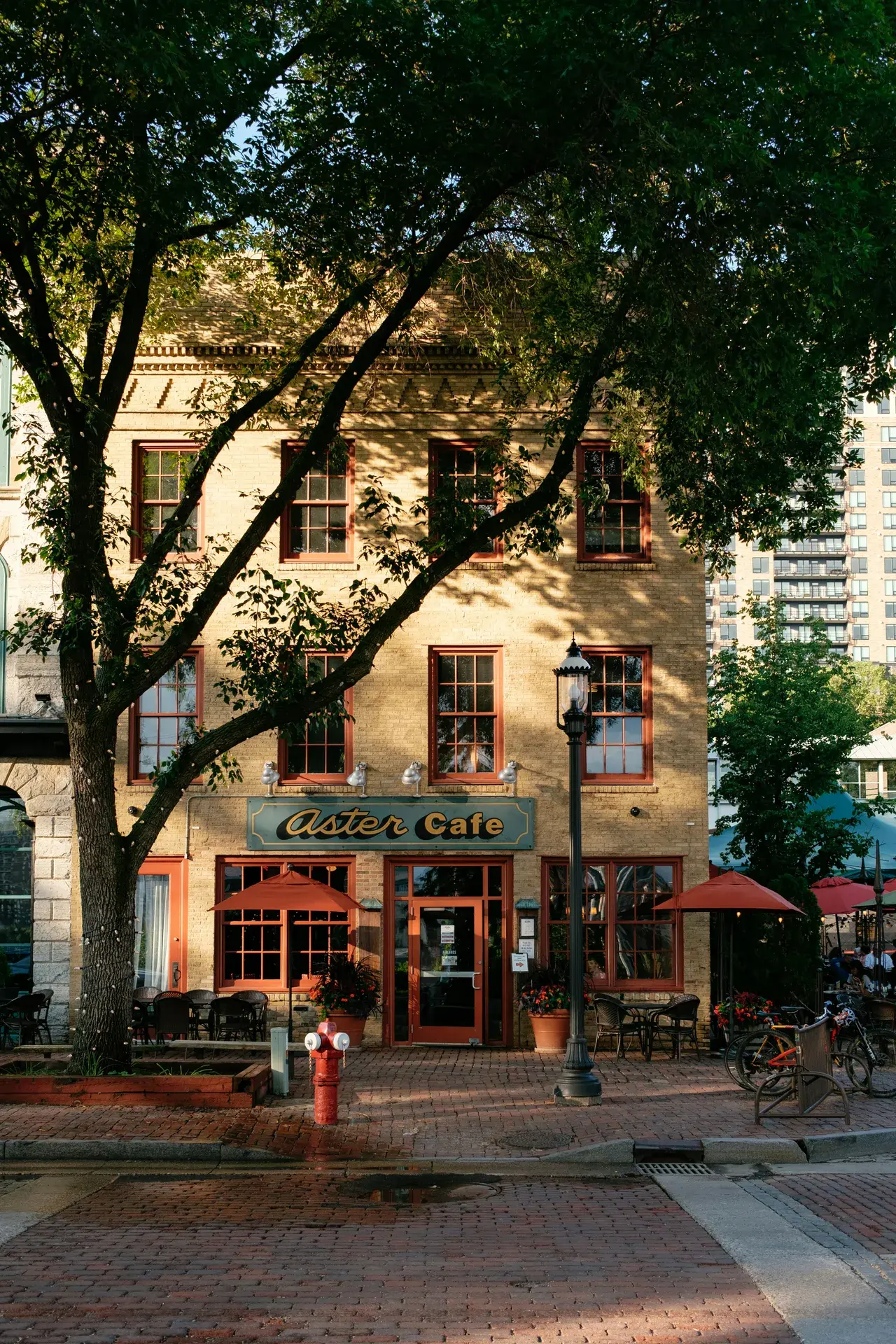
What is Whittier, Minneapolis?
Whittier is a densely populated, strikingly diverse neighborhood in south-central Minneapolis, bounded roughly by Franklin Avenue to the north, I-35W to the east, Lake Street to the south, and Lyndale Avenue to the west. With about 14,500 residents packed into less than a square mile, it is one of the most densely populated neighborhoods in the city — and one of the most diverse. Its defining features are Eat Street (the Nicollet Avenue restaurant corridor), the Minneapolis Institute of Art, a housing stock dominated by apartments and duplexes, and a community that includes substantial Black, Somali and other East African, and Latino populations alongside Southeast Asian families, long-term white residents, artists, students, and young professionals.
Whittier sits directly south of downtown Minneapolis, making it one of the most centrally located residential neighborhoods in the city. That centrality — combined with walkability, transit access, and relatively affordable rents — has made it a landing place for immigrants, a launching pad for young professionals, and an increasingly contested site of urban change. It is not a quiet neighborhood. It is not trying to be.
Whittier Neighborhood Sign
The sign, printed
Whittier, Minneapolis — Key Stats (2025–2026)
- Residents (2020 Census)
- ~14,500
- Median sale price, homes and condos (2025 data)
- $213K
- Median rent, all units (2020–24 ACS)
- $1,327
- Walk Score (Oct 2026)
- 91
- Bike Score (Oct 2026)
- 95
- Transit Score (Oct 2026)
- 63
- Renter-occupied homes (2020–24 ACS)
- 79%
- Restaurants within neighborhood boundaries
- 100+
Whittier History & Origins
The neighborhood is named for John Greenleaf Whittier, the 19th-century abolitionist poet from Massachusetts — a choice that feels historically apt, given that Whittier the neighborhood would go on to become one of the most racially and ethnically diverse places in the state. Whittier Park was named for the neighborhood's elementary school, which carries the poet's name.
Before European settlement, this land was part of the homeland of the Dakota people — the Mdewakanton band in particular — for whom the confluence of the Mississippi and Minnesota Rivers at Bdote, just miles to the southeast, was a site of profound spiritual significance.
Development came rapidly in the late 19th century as Minneapolis boomed on the back of flour milling and lumber. By the turn of the 20th century, Whittier was filling in with a mix of modest single-family homes, duplexes, and small apartment buildings. The area around Third Avenue South attracted wealthier residents, and several grand homes from this era still survive, including the Washburn-Fair Oaks Mansion district on the east side of the neighborhood. The Minneapolis Institute of Art opened at 2400 Third Avenue South in 1915, anchoring the neighborhood's cultural identity from its earliest decades.
The mid-20th century brought the familiar American story of suburban flight and urban decline. After World War II, some of Whittier's larger houses were divided into apartments, and the housing stock — already older and more modest than in wealthier neighborhoods — began to deteriorate. The construction of Interstate 35W in the 1960s carved through the neighborhood's eastern edge, destroying homes and severing connections to the Phillips neighborhood next door. By the 1970s, Whittier was going through a period of high crime, run-down housing, and vacant storefronts.
But low rents do something that high rents cannot: they attract people who are building something from nothing. In the decades that followed, Whittier became a landing place for immigrant communities arriving in the Twin Cities — first Southeast Asian refugees from Vietnam, Laos, and Cambodia, then East African immigrants from Somalia, Ethiopia, and Eritrea, alongside Mexican and Central American families. These communities opened restaurants, groceries, and small businesses along Nicollet Avenue and Lake Street, transforming the commercial corridors into something genuinely global. The “Eat Street” nickname came later, a name for what had already been happening organically for years.
By the 2000s, Whittier was in a new phase — still diverse, still dense, still gritty in places, but increasingly attractive to young professionals and artists. The neighborhood has been navigating that transition ever since, with all the tensions it implies.
Living in Whittier
Walk through Whittier on any given weekday and you will hear Somali in the halal market on Nicollet, Spanish at the taqueria on Lake Street, Vietnamese at Quang, and English in at least three different accents at the coffee shop on Lyndale. This is not a curated multicultural experience. Nobody planned it. It's the result of decades of immigration, affordable housing, and the kind of organic commercial ecosystem that develops when a neighborhood is cheap enough to take a chance on — and central enough that the chance is worth taking.
The physical fabric of Whittier is dense and varied. This is not a neighborhood of uniform bungalows or consistent setbacks. You'll find three-story walk-up apartment buildings from the 1920s next to postwar duplexes next to converted Victorian houses next to newer four-story mixed-use buildings with ground-floor retail. The housing stock reflects a century of Minneapolis building in a neighborhood that was never precious about its architecture — it built what people needed, when they needed it, and the result is a streetscape that is more interesting than beautiful.
Whittier is overwhelmingly a renter's neighborhood. Nearly 80 percent of its homes are renter-occupied, according to Census estimates, which gives the neighborhood a different social texture than homeowner-dominated areas. There is more turnover, more transience, more of the anonymity that comes with apartment living. But there are also long-term renters — families who have lived in the same building for a decade or more — and the community organizations, particularly the Whittier Alliance, work hard to create civic infrastructure that bridges the gap between old-timers and newcomers.
The arts community is a significant presence. Whittier's proximity to the Minneapolis College of Art and Design (MCAD), the Minneapolis Institute of Art, and the relatively affordable rents have drawn painters, musicians, writers, and performers for decades. The neighborhood's creative energy is quieter than Northeast Minneapolis's gallery district but no less real — it shows up in the murals on building walls, the independent bookstores and record shops, and the live music venues that anchor the Nicollet and Lyndale corridors.
Neighboring Lowry Hill East (the Wedge) to the west and South Uptown to the southwest share some of Whittier's density and youthful energy, but Whittier is distinctly more diverse and less polished than either — and most of the people who live here consider that a feature, not a bug.
Whittier Food, Drink & Local Spots
This is the section that could be its own article. Whittier's food scene — anchored by Eat Street but extending well beyond it — is arguably the most interesting in Minneapolis, not because every restaurant is excellent (some aren't), but because the range is unmatched. Within a fifteen-minute walk, you can eat Vietnamese, Somali, Ethiopian, Mexican, Thai, Japanese, Chinese, Indian, Southern American, and farm-to-table New American. You can spend $8 on a bowl of pho that will change your week, or $80 on a tasting menu. The corridor rewards curiosity over brand recognition, and the best meals are often at the places with the least marketing.
Eat Street Institutions
2719 Nicollet Ave. S. Quang has been serving pho, bun, and Vietnamese home cooking since 1989, and it remains one of the most beloved restaurants in the Twin Cities — not despite its simplicity but because of it. The pho is deeply flavored and enormous. The spring rolls are hand-wrapped. The prices are almost aggressively reasonable. This is the restaurant that people who left Minneapolis still dream about. Cash preferred; lines on weekends.
2940 Lyndale Ave. S., on the Lowry Hill East side of Lyndale, about half a mile west of Eat Street. When it opened in 2008, Moto-i was, by its own account, the first sake brewpub outside of Japan — brewing junmai ginjo sake in-house and pairing it with izakaya-style food. The rooftop patio is one of the best warm-weather spots in south Minneapolis. The ramen is solid; the sake flights are the real draw.
2528 Nicollet Ave. S. Part restaurant, part live music venue, Icehouse occupies a space that few places manage — genuinely good food and genuinely good music under the same roof. The menu is creative and seasonal; the music leans jazz, folk, and experimental. Late-night shows draw a different crowd than the dinner service, and both are worth experiencing.
2524 Nicollet Ave. S. Jerk chicken, oxtail, curry goat, and plantains — authentic Jamaican food that fills the room with the smell of allspice and scotch bonnet peppers. The lunch specials are one of the best deals on the street. Pimento has quietly become one of Eat Street's anchor restaurants.
2739 Nicollet Ave. S. A neighborhood anchor for decades, Rainbow Chinese has outlasted trendier competitors by being exactly what it is: consistently good Chinese-American cooking at reasonable prices, in a dining room that hasn't changed much since the Clinton administration. The walleye — a nod to Minnesota — is a beloved local curiosity.
3157 Hennepin Ave. S. (in South Uptown, about half a mile southwest of Whittier's corner at Lake and Lyndale, but deeply part of the ecosystem). Exceptional pastries, bread, and coffee in a space that feels like it was designed by someone who actually bakes. The cardamom rolls and croissants are worth the trip. Morning lines are common on weekends.
More Eat Street & Beyond
2105 Lyndale Ave. S. The Wedge is one of the largest natural foods co-ops in the country and a neighborhood institution. The co-op itself is as much a community gathering point as a grocery store — local and organic produce, an excellent cheese section, and a bulletin board that functions as Whittier's unofficial town square.
Lyndale Avenue Corridor
Nicollet gets the fame, but Lyndale Avenue — Whittier's western boundary — has its own cluster of bars, restaurants, and shops that form a second commercial spine. The stretch between Franklin and Lake includes cocktail bars, breweries, vintage shops, and some of the neighborhood's more recent restaurant openings. Where Eat Street is defined by immigrant entrepreneurship and accessible pricing, Lyndale trends slightly more upscale and nightlife-oriented — though the two corridors are close enough that most residents move between them without thinking about it.
Coffee & Drink
Whittier and its immediate surroundings are rich in coffee. Spyhouse Coffee on Nicollet is a local chain with a loyal following and excellent single-origin pour-overs. For bars, the Lyndale corridor offers options from dive bars to craft cocktail spots — CC Club, a legendary Minneapolis dive with decades of history, sits just across the Lyndale border in Lowry Hill East.
Parks, Culture & Outdoors Near Whittier
Whittier is not a parks-and-lakes neighborhood in the way that southwest Minneapolis is — you won't step out your front door onto a lake trail. But what it lacks in lakefront it makes up for in cultural infrastructure that most neighborhoods would envy, and its parks, while smaller, are well-used and well-loved.
Minneapolis Institute of Art (Mia)
The Minneapolis Institute of Art sits on the east side of Whittier at 2400 Third Avenue South, and it is, without exaggeration, one of the great art museums of the United States. The collection spans over 90,000 works across 5,000 years — from ancient Egyptian artifacts to contemporary photography, from Rembrandt to Kehinde Wiley. The building itself is a neoclassical landmark designed by McKim, Mead & White, with later additions by Kenzo Tange in 1974 and Michael Graves in 2006.
The most remarkable thing about Mia is also the simplest: general admission is free. When the museum opened in 1915 it was free three days a week, and in 1989 it stopped charging admission except for special exhibitions, a return to the spirit of its 1911 agreement with the Park Board to keep the museum open to the people of Whittier. In a neighborhood where median household income is well below the city's, this matters enormously. Mia is Whittier's living room — a place where teenagers wander in after school, where families spend rainy Saturdays, where artists come to study and be humbled.
Minneapolis College of Art and Design (MCAD)
MCAD sits adjacent to Mia on the same campus, a small but well-regarded art and design college that has been training artists, designers, and filmmakers since 1886. Its galleries are open to the public, and its students and faculty contribute to the creative economy of the neighborhood. MCAD's presence helps explain why Whittier has a higher concentration of working artists than almost any other Minneapolis neighborhood.
The Children's Theatre Company
Also located on the Mia/MCAD campus at 2400 Third Avenue South, the Children's Theatre Company (CTC) is the largest theater for young audiences in the country and the only one to have received the Tony Award for Outstanding Regional Theatre. Its productions — which range from adaptations of beloved children's books to new commissions dealing with complex themes — draw families from across the Twin Cities. CTC is a genuinely excellent institution, and its location in Whittier rather than a suburban campus is a meaningful statement about where culture belongs.
Whittier Park
The neighborhood's namesake park sits at 425 West 26th Street and includes a recreation center, a playground, basketball courts, and a wading pool. It's a neighborhood park in the truest sense — not a regional destination, but a place where kids play after school and families gather on summer evenings. The rec center hosts youth programming, fitness classes, and community events year-round.
Washburn-Fair Oaks Park
A green space on the neighborhood's east side, Washburn-Fair Oaks Park sits near the historic mansion district of the same name. The park offers open green space and some of the best skyline views in south Minneapolis — the downtown towers are visible just to the north, framed by mature trees. It's a quieter, more contemplative park than Whittier Park, and a good place to remember that this neighborhood was once home to some of the city's wealthiest families.
Getting to the Lakes
Whittier doesn't have lakefront, but the Chain of Lakes — Bde Maka Ska, Lake Harriet, Lake of the Isles — are a short bike ride west, reachable via the Midtown Greenway or surface streets. Many Whittier residents consider the lakes part of their extended backyard, accessible within 10–15 minutes by bike. The Midtown Greenway, a converted rail corridor running through the south end of the neighborhood just north of Lake Street, provides a car-free east-west route to the lakes and beyond.
Whittier Schools
Schools in Whittier reflect the neighborhood's diversity and its challenges. The student populations here are among the most multilingual and multicultural in the Minneapolis Public Schools system, which is both an asset and a source of complexity for educators and families.
Whittier Elementary School, an International Baccalaureate school on West 26th Street, serves pre-K through 5th grade and is the neighborhood's own public elementary. The school embraces its diversity explicitly, with programming designed to serve students from dozens of linguistic and cultural backgrounds. Test scores have historically been below city averages, which reflects the socioeconomic challenges many families face rather than the quality of teaching. The school has a committed parent community and strong relationships with neighborhood organizations.
MPS lists Andersen United Middle School and South High School as Whittier Elementary's pathway schools, though assignments depend on address, so check the district's school finder for a specific building; families can also apply to other Minneapolis Public Schools options through the district's open enrollment system. South High School is located just south of Lake Street in the Corcoran neighborhood, about a mile and a half to the east, and offers a variety of college and career pathways in one of the district's most diverse student bodies.
Charter and private school options, including various faith-based programs, are also available. Families with flexibility also access the broader Minneapolis magnet school system, which allows enrollment across the city based on interest and availability.
Whittier Real Estate & Housing
Whittier's housing market is fundamentally different from the owner-occupied, single-family markets that dominate much of Minneapolis. This is a renter's neighborhood — nearly 80 percent of homes are renter-occupied — and the housing stock reflects that reality. You're looking at apartments, condos, duplexes, triplexes, and the occasional converted Victorian. Single-family homes exist but are relatively rare, and when they come on the market, they attract a mix of owner-occupants and investors.
Rental Market
Census estimates put Whittier's median rent at about $1,330 a month across all units in 2020–2024, close to the citywide median of $1,371. The newest apartment buildings along Nicollet and Lyndale, with in-unit laundry, rooftop decks, and fitness centers, command the top of the market. Older courtyard buildings and walk-ups offer more character and lower prices but fewer amenities.
Whittier's centrality, walkability, and transit access make it attractive to young professionals who want urban living without downtown prices, and the rental market reflects that demand.
Buying in Whittier
For buyers, the market is dominated by condominiums and small multi-family properties. The median sale price was $212,500 in 2025, up from $184,000 a year earlier, according to Minneapolis Area REALTORS — well below the citywide median of $350,000, largely because about two-thirds of the 64 homes sold were condos, which makes Whittier one of the more affordable entry points for homeownership in central Minneapolis. Homes sold slowly: cumulative days on market averaged 122, against 55 citywide, and sellers received 95.1 percent of their original list price. Duplexes and triplexes — many of them older buildings with conversion potential or existing rental income — and the handful of single-family homes that trade each year vary enormously in condition.
The investment market is active. Whittier's density, rental demand, and relatively low per-unit prices attract both small-scale landlords and institutional investors. This creates tension — investor purchases can drive up prices while also deferring maintenance in favor of cash flow — that is a recurring theme in neighborhood housing conversations.
New Development
Several mid-rise apartment buildings have gone up along Nicollet and Lyndale in recent years, adding market-rate and some affordable units to the neighborhood's housing supply. The development has been controversial — new buildings bring density and sometimes ground-floor retail, but they also tend to raise surrounding rents and change the physical character of streets that were previously lower-rise. The 2040 Plan, Minneapolis's comprehensive plan that eliminated single-family-only zoning citywide, has enabled additional development in Whittier, though the neighborhood was already one of the densest in the city.
Getting Around Whittier
Whittier is, by Minneapolis standards, exceptionally well-connected. A Walk Score of 91 makes it one of the most walkable neighborhoods in the city — nearly everything you need for daily life is within a 15-minute walk, from groceries to restaurants to pharmacies to the art museum. The Bike Score of 95 reflects strong cycling infrastructure, including the 1st Avenue bikeway and connections to the Midtown Greenway, the converted rail corridor running east-west through the south end of the neighborhood, just north of Lake Street.
Transit is a legitimate option here in a way it isn't in most Minneapolis neighborhoods. Multiple Metro Transit bus routes serve Nicollet Avenue, Lyndale Avenue, Franklin Avenue, and Lake Street, connecting Whittier to downtown (a 10-minute ride), Uptown, the University of Minnesota, and the light rail system. The Transit Score of 63 is among the highest in the city. About one in five Whittier households has no car, according to Census estimates, against about one in six citywide, and many residents — particularly those without children — live car-free by choice, a lifestyle that is feasible here in a way it simply isn't in most of Minneapolis.
Driving is easy in terms of access — I-35W borders the neighborhood to the east and I-94 runs a few blocks north, putting downtown within a five-minute drive and MSP Airport within 15–20 minutes. Parking, however, is the trade-off that comes with density. Street parking can be competitive, especially near the Nicollet and Lyndale corridors in the evenings. Most apartment buildings include some parking, but not always enough. If easy parking is a priority, Whittier will test your patience.
The Midtown Greenway deserves special mention. This 5.5-mile paved trail runs along a below-grade former rail corridor from the Chain of Lakes to the Mississippi River, cutting through the south end of Whittier. It's one of the most heavily used bike commuter routes in Minneapolis and a genuine piece of urban infrastructure that makes car-free living more practical. From Whittier, you can reach Bde Maka Ska or the river in about 15 minutes by bike via the Greenway.
What's Changing: The Honest Version
Whittier is a neighborhood where the tensions of American urban life are visible on the surface — not hidden behind privacy fences and cul-de-sacs, but playing out on public sidewalks and in community meetings. That honesty is part of what makes it compelling to live here. It's also what makes it hard.
Gentrification and Displacement
This is the big one, and it's not theoretical. As Whittier has become more attractive to young professionals and developers, rents have risen, older buildings have been renovated or demolished, and some of the immigrant communities that gave the neighborhood its character have been priced out. The pattern is familiar to anyone who has watched urban neighborhoods change: artists and immigrants make a place interesting; that interestingness attracts capital; capital raises prices; the original community can no longer afford to stay.
Whittier hasn't lost its diversity the way some gentrifying neighborhoods have — it remains one of the most diverse places in Minneapolis, and many immigrant-owned businesses continue to thrive. But the direction of change is clear, and the people most affected by it are the least likely to be heard in public meetings conducted in English during business hours. Community organizations including the Whittier Alliance have pushed for affordable housing requirements in new development, but the market pressures are significant.
Crime and Safety
Whittier's crime rates are higher than the city average, particularly for property crime. Car break-ins, bike theft, and package theft are common enough to be expected rather than surprising. Violent crime — assaults, robberies — is concentrated in certain areas, particularly along the Lake Street corridor and near some of the larger intersections. The situation improved from the peaks seen in 2020–2021 but remains a persistent concern.
This is a place where you lock your bike with a good lock, where you don't leave valuables visible in your car, where you pay attention to your surroundings at night. It's not a place where most residents feel unsafe walking during the day, and many walk the neighborhood freely at night. But the gap between Whittier's reality and the reality in southwest Minneapolis is real, and anyone considering a move should be honest with themselves about their comfort level.
Homelessness and Visible Poverty
Whittier's centrality, its proximity to social services on Franklin Avenue and downtown, and its transit access mean that homelessness is more visible here than in most Minneapolis neighborhoods. Encampments have appeared along freeway overpasses and in some park spaces. This is a citywide and regional crisis, not a Whittier-specific one, but it shows up here more than in neighborhoods farther from the urban core. Residents hold a range of views, from compassion-first approaches to frustration with the impact on public spaces. What most agree on is that the status quo isn't working for anyone.
Development and Density
New apartment buildings continue to go up, particularly along Nicollet and Lyndale. For some residents, this is welcome — more housing supply helps moderate rents, adds street-level retail, and brings investment. For others, particularly long-term residents and small-business owners, new development threatens the physical character and affordability that made the neighborhood work. The debate over density is ongoing in Whittier, shaped by the 2040 Plan's elimination of single-family zoning and by the broader question of what Minneapolis wants to become.
The Post-2020 Reckoning
The murder of George Floyd in May 2020 — which occurred at 38th and Chicago, less than two miles southeast of Whittier — set off a reckoning across Minneapolis that touched every neighborhood. Whittier, with its diverse population and proximity to the events, experienced the upheaval directly: businesses on Lake Street were damaged during the unrest that followed, and the subsequent debates about policing, public safety, and racial justice played out intensely in a neighborhood that was already navigating these questions. The experience left scars — both physical and psychological — that are still part of the neighborhood's conversation with itself.
Whittier FAQ
Is Whittier a good neighborhood in Minneapolis?
It depends on what you value. Whittier is one of the most walkable, diverse, and culturally rich neighborhoods in Minneapolis. It has world-class dining on Eat Street, free access to the Minneapolis Institute of Art, and excellent transit connections. It's also dense, loud in places, and has higher crime rates than southwest Minneapolis neighborhoods. If you want urban energy, cultural variety, and don't need a big yard, Whittier is outstanding. If you want quiet residential streets and easy parking, look elsewhere.
Is Whittier, Minneapolis safe?
Whittier's safety profile is mixed. Property crime — car break-ins, bike theft, package theft — is a regular reality. Violent crime is higher than the city average, concentrated in certain blocks and often connected to specific circumstances rather than random targeting. Many residents live here for years without incident, but situational awareness matters more here than in quieter neighborhoods. The Whittier Alliance and community organizations are active in safety initiatives.
What is Eat Street in Minneapolis?
Eat Street is the local name for the stretch of Nicollet Avenue running roughly from Grant Street south to 29th Street, passing through Whittier. It's one of the most diverse restaurant corridors in the Midwest, with Vietnamese, Somali, Mexican, Ethiopian, Thai, Japanese, Chinese, Indian, and American restaurants packed together over more than a mile. The name celebrates the corridor's food culture.
How much does it cost to live in Whittier, Minneapolis?
Whittier is one of the more affordable inner-city neighborhoods in Minneapolis, though prices have been rising. Census estimates put the median rent at about $1,330 a month, close to the city's $1,371. The median sale price was $212,500 in 2025, up from $184,000 in 2024, according to Minneapolis Area REALTORS — well below the citywide median of $350,000, largely because about two-thirds of the homes sold were condos. Single-family homes are relatively rare.
Is Whittier walkable?
Extremely. Whittier has a Walk Score of 91, one of the highest in Minneapolis. Nicollet Avenue (Eat Street), Lyndale Avenue, and Franklin Avenue provide dense commercial corridors within walking distance of most addresses. Grocery stores, restaurants, bars, coffee shops, pharmacies, and cultural institutions are all accessible on foot. Many residents live here specifically because they don't need a car.
What schools serve Whittier, Minneapolis?
Whittier Elementary School (pre-K through 5th grade), an International Baccalaureate school on West 26th Street, is inside the neighborhood and serves a remarkably diverse student body. MPS lists Andersen United Middle School and South High School as its pathway schools. Assignments depend on address, so check the MPS school finder for a specific building. The neighborhood is also near several charter and private school options.
What are the best restaurants on Eat Street?
Highlights include Quang (Vietnamese, an institution since 1989), Icehouse (live music and creative American food), Pimento Jamaican Kitchen (jerk chicken and oxtail), and Rainbow Chinese. But the real answer is that Eat Street rewards exploration — there are over 50 restaurants on the corridor, and the best meal you'll have might be at a place you've never heard of.
Where exactly is Whittier in Minneapolis?
Whittier is in south-central Minneapolis, bounded roughly by Franklin Avenue to the north, I-35W to the east, Lake Street to the south, and Lyndale Avenue to the west. It sits directly south of downtown and Stevens Square–Loring Heights, making it one of the most centrally located residential neighborhoods in the city.
What is the Minneapolis Institute of Art?
The Minneapolis Institute of Art (Mia) is a world-class encyclopedic art museum located on the east side of Whittier at 2400 Third Avenue South. It holds over 90,000 works spanning 5,000 years, and general admission has been free since 1989. It's one of the largest art museums in the United States and a defining cultural anchor for the neighborhood and the city.
Is Whittier gentrifying?
Yes, though the process is complicated. Rising rents and new development have displaced some long-term residents and immigrant communities, particularly along Nicollet and Lyndale Avenues. At the same time, the neighborhood's diversity — which is its defining asset — has proven more resilient than in some comparable neighborhoods. The tension between preserving affordability and accommodating growth is one of the most active conversations in Whittier civic life.
What Makes Whittier Irreplaceable
There are neighborhoods in Minneapolis that are quieter, safer, greener, more polished. There are neighborhoods with better parking and bigger yards and fewer conversations about what the city owes its most vulnerable residents. Whittier is not competing with those places and never has been. What it offers is something rarer and harder to manufacture than comfort: the daily experience of living among people who are genuinely different from you — who cook different food, speak different languages, pray in different buildings, and somehow share the same sidewalks and bus stops and grocery store aisles without it being remarkable. In Whittier, diversity isn't an aspiration or a talking point. It's Tuesday.
The neighborhood has real problems — crime that can't be hand-waved, displacement that's already happened, tensions between growth and preservation that don't have clean answers. But the people who love Whittier love it with their eyes open. They love the pho at Quang and the free galleries at Mia and the fact that you can hear three languages on a single block. They love that it's messy and loud and complicated, because they know that's what a real city actually sounds like.

From the shop
Take the Whittier sign home.
Whittier — Minneapolis Neighborhood Sign Print
Keep exploring
Whittier appears in
- Best Bakeries
- Best Brunch
- Best Cheap Eats in Minneapolis — Under $15
- Best Chinese Food & Dim Sum
- Best Coffee Shops by Neighborhood
- Best Food Neighborhoods
All 32 guides ↓Show fewer ↑
- Best Food Trucks
- Best Happy Hours
- Best Hmong Food
- Best Ice Cream
- Best Jamaican and Caribbean Food
- Best Mexican Food
- 10 Best Neighborhoods
- Best Neighborhoods for Artists and Creatives
- Best Neighborhoods for Dog Owners
- Best Neighborhoods for Nightlife
- Best Neighborhoods for Public Transit
- Best Neighborhoods for Remote Workers
- Best Neighborhoods for Renters
- Best Neighborhoods for Young Professionals
- Best Patios and Outdoor Dining by Neighborhood
- Best Pizza
- Best Ramen
- Best Restaurants on Eat Street
- Best Sushi
- Best Thai Food
- Best Vietnamese Food
- Best Neighborhoods for Surviving (and Enjoying) Winter
- The History of Minneapolis Neighborhood Signs
- Most Bikeable Neighborhoods
- Most Walkable Neighborhoods
- Moving to Minneapolis