Minneapolis Neighborhood
Camden Industrial
An industrial district along the Mississippi where the city still makes things — rail yards, manufacturing, and commercial operations on land that has been working since the mills ran. Not a neighborhood for living, but a neighborhood that keeps Minneapolis running.
№ 8 of 87 · Camden community · Last updated: October 2026 · A complete neighborhood guide
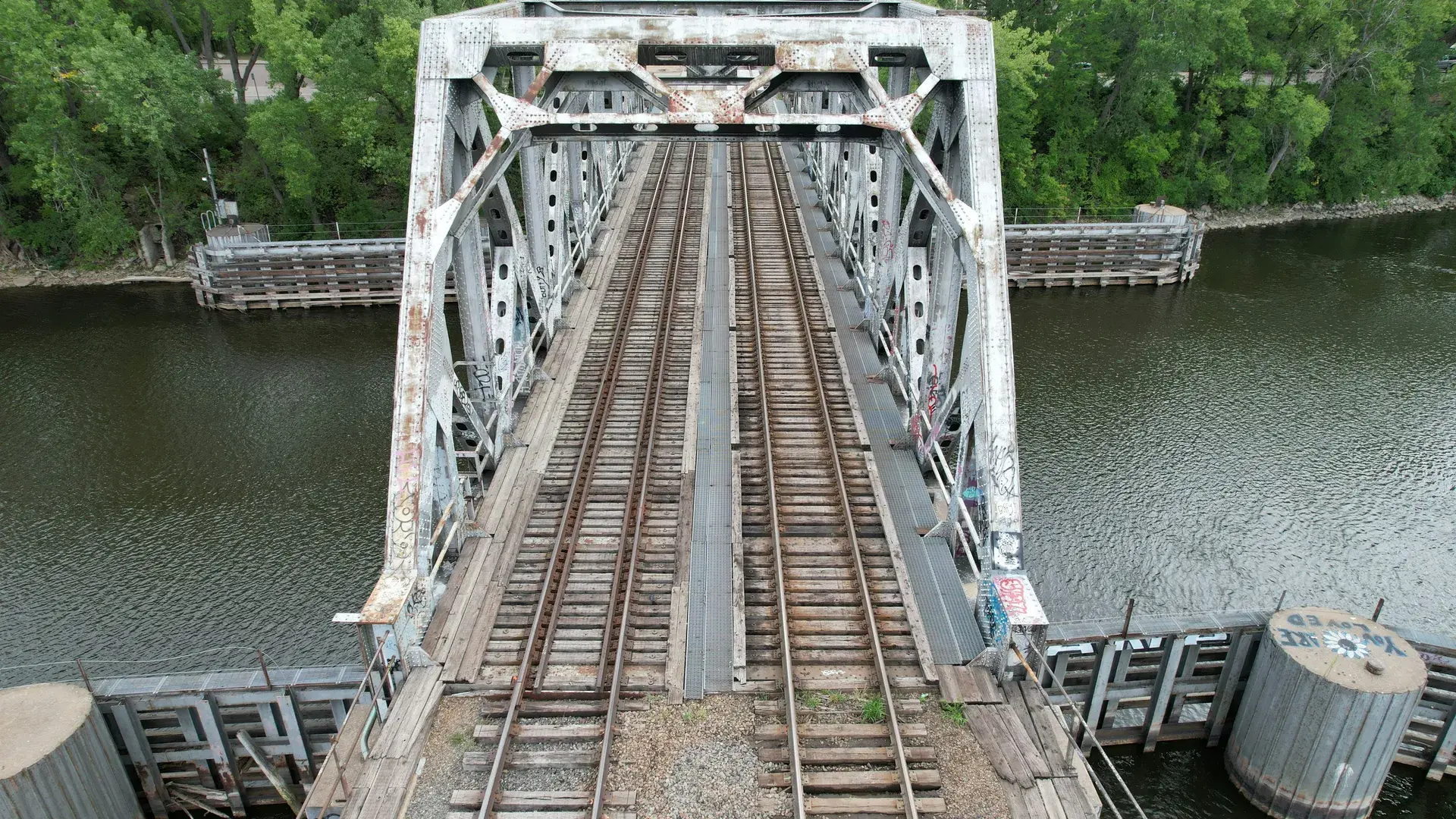
At seven in the morning on a Thursday, a semi-truck backs into a loading dock along a potholed industrial road in Camden Industrial. The driver has been making this delivery for six years — building materials, always building materials — and he could navigate the approach in his sleep. Across the road, a fabrication shop is already lit up, the sound of a plasma cutter audible through the corrugated steel walls. A rail spur runs behind both properties, its tracks stained with rust but still in use. The Mississippi River is a few hundred yards to the east, but you would not know it from here — the riverbank is blocked by industrial properties. This is Camden Industrial. Almost nobody lives here. Plenty of people work here.
What is Camden Industrial, Minneapolis?
Camden Industrial is an industrial district in the northern section of Minneapolis, occupying a strip of land between the Mississippi River and the residential neighborhoods of the Camden community. With fewer than 100 residents, it is a neighborhood in name only — in practice, it is a working industrial zone where manufacturing, distribution, and commercial operations occupy land whose industrial history goes back to the lumber yards and mills that once stood on this stretch of the river.
The district is characterized by warehouses, fabrication shops, rail spurs, storage yards, and the kind of utilitarian infrastructure that cities need but rarely celebrate. The Mississippi River forms the eastern boundary. Most of this stretch of riverbank belongs to North Mississippi Regional Park, but a short run just south of the rail bridge is still occupied by industrial properties.
Camden Industrial exists in the shadow of the residential Camden neighborhoods — Webber-Camden to the west, Lind-Bohanon to the northwest — serving as the industrial infrastructure that supports the broader community without participating in its residential life. The workers who staff the district's businesses drive in from surrounding neighborhoods and the broader metro, punch their shifts, and leave. The land stays, doing what it has always done.
Camden Industrial Neighborhood Sign
As far as we can tell, Camden Industrial doesn’t have a neighborhood welcome sign — at least, nobody has documented one that we can find. If you’ve seen one, tell us where it is — we’d love to be wrong about this.
Camden Industrial, Minneapolis — Key Stats (2025–2026)
- Residents (US Census / ACS estimates)
- <100
- Median home sale price (minimal residential)
- N/A
- Typical apartment rent (minimal residential)
- N/A
- Primary land use designation
- Industrial
- Eastern boundary
- Mississippi River
Camden Industrial History & Origins
Before European settlement, the riverbanks that now comprise Camden Industrial were part of the Dakota homeland, taken by the U.S. government in the treaties of 1851; a Native American trail followed the river through this stretch. The river would later make the land attractive for industrial use.
Lumber yards and mills were among the early industrial uses along this stretch of the Mississippi. When the park board drew up plans in 1917 to extend Camden Park to the river, part of the land it wanted was a former lumber yard. In 1946 the city asked the state not to sell the riverfront land it held: the city wanted the bank from 42nd Avenue down toward downtown for an upper harbor, and the land to the north could become a park. The proximity to both rail and river transportation made Camden Industrial a logical location for businesses that needed to move heavy materials.
Through the 20th century, the district evolved as industries changed. Between 1968 and 1987 the Upper Harbor Terminal was developed along the river at the district's southern edge, a barge terminal near the head of commercial navigation on the Mississippi; barging there ended in 2014, ahead of the closing of the Upper St. Anthony Falls Lock in 2015. The rail infrastructure remained, even as trucking became the dominant mode of freight transportation, and the district maintained its industrial character while the residential neighborhoods around it settled into more stable patterns.
The deindustrialization trends of the late 20th and early 21st centuries affected Camden Industrial, as they affected industrial districts nationwide. Some businesses closed or relocated, leaving vacant parcels that have been slow to redevelop. Environmental contamination from decades of industrial use complicated the reuse of some sites. But the district has not emptied — a core of active industrial and commercial operations persists, and the land remains zoned and used for the purpose it has served for generations.
Camden Industrial Character & Land Use
Camden Industrial's character is defined by its function. The landscape is utilitarian — flat, paved or graveled, dominated by low-slung industrial buildings, chain-link fencing, and the infrastructure of freight movement. There are no sidewalks in most of the district, no street trees, no design elements intended for aesthetic pleasure. The buildings are metal-sided or concrete block, built for durability and function rather than appearance.
The businesses that operate here are varied but share a common profile: they need space, they need vehicle access, they may need rail access, and they do not need foot traffic. Building material suppliers, metal fabricators, recycling operations, auto repair shops, and distribution centers are typical tenants. The employment these businesses provide is blue-collar and essential — the kind of work that keeps a city's physical infrastructure maintained and supplied.
The Mississippi River is adjacent, but most of the district's riverbank is not industrial at all. North Mississippi Regional Park runs along it from about 42nd Avenue north, with trails along the water, and the industrial properties reach the river only along a short stretch just south of the rail bridge. That split — a working district with a regional park for a riverfront — makes Camden Industrial both practically useful and philosophically interesting in a city that has invested heavily in reclaiming its riverfront as public space.
Camden Industrial Food & Local Spots
Camden Industrial does not have restaurants, cafes, or bars. Workers in the district bring lunches, use food trucks that occasionally service the area, or drive to nearby commercial corridors for meals. The nearest dining options are in the surrounding residential neighborhoods — Webber-Camden and the broader Camden area provide the closest restaurants and convenience stores. This is a working district, not a commercial one, and the absence of food and drink options reflects that reality.
Parks & Outdoors Near Camden Industrial
Camden Industrial has regional parkland within its boundaries. North Mississippi Regional Park takes up most of the district's riverfront, from about 42nd Avenue north, and Upper Harbor Park, opened in September 2026, reaches across Dowling Avenue into the southern tip. Only a short stretch of riverbank, just south of the rail bridge, is closed off by industrial land use. For outdoor recreation, workers and any residents in the area also use Webber Park, just to the west in Webber-Camden.
The broader Grand Rounds trail system passes near Camden Industrial, and the North Mississippi Regional Park trail network runs through the district along the river. These trails provide the closest recreational opportunities and connect to the larger park system that is one of Minneapolis's defining amenities.
Camden Industrial Schools
There are no schools in Camden Industrial. The district's industrial character and near-absence of residential population make schools irrelevant to this area. Families in the surrounding residential neighborhoods use Minneapolis Public Schools options in the Camden community and the broader North Minneapolis area.
Camden Industrial Real Estate
Real estate in Camden Industrial is commercial and industrial rather than residential. The market consists of warehouse space, manufacturing facilities, storage yards, and commercial lots. Property values reflect the industrial zoning, the proximity to rail and river transportation, and the environmental condition of individual parcels — sites with contamination histories trade at discounts that reflect cleanup costs.
There is no meaningful residential real estate market in Camden Industrial. The handful of residential structures that exist are anomalies rather than a market, and the area is not zoned for new residential development. Investors in Camden Industrial are purchasing industrial and commercial properties, not homes.
Getting Around Camden Industrial
Camden Industrial is car-dependent by design. The district was built for freight movement and vehicle access, not pedestrian or transit use. Away from the park trails, there is a near-total absence of pedestrian infrastructure, and public transit stays on the western edge, where Route 22 buses run along Lyndale Avenue. Workers drive to their jobs, and trucks drive to the loading docks.
The road network connects Camden Industrial to the broader city — Dowling Avenue, 42nd Avenue, and connecting north-south streets provide access to the freeway system and to the surrounding residential neighborhoods. The infrastructure is built for trucks, with wide streets, limited signalization, and the generous turning radii that commercial vehicles require.
Biking through Camden Industrial is possible but not always comfortable — apart from the Washington Avenue bikeway, the roads are not designed for cycling, and the truck traffic requires attention. The river trails in North Mississippi Regional Park provide better cycling options for those passing through the area.
What's Changing in Camden Industrial
The primary tension in Camden Industrial is the same tension that affects industrial districts in cities nationwide: the competition between continued industrial use and the pressure to convert valuable land — particularly riverfront land — to higher-value residential and commercial uses. Minneapolis has seen this transformation play out dramatically in the North Loop, where former warehouse and rail yard land became one of the most desirable residential neighborhoods in the city.
Camden Industrial's future depends on policy decisions about the value of industrial employment land. The city's comprehensive plan recognizes the importance of maintaining industrial districts that provide blue-collar employment, but market forces push toward conversion as land values rise and industrial businesses face pressure to relocate to cheaper suburban locations. Environmental remediation costs add complexity — cleaning up contaminated sites is expensive, and the economics often favor the higher-value residential and commercial uses that can absorb those costs.
For now, Camden Industrial remains what it has been: an industrial district doing industrial work on industrial land. Whether that continues for another decade or another century is a question that the city, the market, and the surrounding communities will answer together.
Camden Industrial FAQ
Is Camden Industrial a residential neighborhood?
No. Camden Industrial is an industrial district with very few residents. The area is zoned primarily for industrial and commercial use, and the land is occupied by manufacturing facilities, warehouses, rail yards, and commercial operations. There is minimal housing stock, and the neighborhood does not function as a residential community. People who work in Camden Industrial live in surrounding neighborhoods like Webber-Camden, Lind-Bohanon, and Marshall Terrace.
Where is Camden Industrial in Minneapolis?
Camden Industrial is in the northern section of Minneapolis, along the Mississippi River. It is bounded roughly by the river to the east, with Marshall Terrace and Columbia Park on the far bank, the residential neighborhoods of Webber-Camden and Lind-Bohanon to the west, and McKinley to the south across Dowling Avenue. The area sits between the river and the residential Camden community, serving as the industrial counterpart to the surrounding residential neighborhoods.
What kinds of businesses are in Camden Industrial?
Camden Industrial hosts a mix of manufacturing, distribution, and commercial operations. The businesses range from small fabrication shops and building material suppliers to larger industrial operations that take advantage of the rail access and Mississippi River proximity. The area also includes some auto repair, recycling, and storage operations. The specific businesses change over time, but the industrial character has been consistent for decades.
Can you access the Mississippi River from Camden Industrial?
Yes, more easily than the name suggests. Like the park-lined riverfront in other parts of Minneapolis, most of this stretch of the Mississippi is parkland: North Mississippi Regional Park runs along the river from about 42nd Avenue north, with trails along the water. Industrial properties reach the riverbank only along a short stretch just south of the rail bridge.
Is Camden Industrial safe?
Camden Industrial is a low-traffic area outside of business hours. Because it is an industrial district rather than a residential or commercial neighborhood, there is limited pedestrian activity, especially at night and on weekends. The area is generally unremarkable from a safety perspective during business hours when workers are present, but the isolation of an industrial district after hours requires standard awareness. Crime that does occur tends to be property-related — theft from businesses, vehicle break-ins — rather than violent.
Are there environmental concerns in Camden Industrial?
As with many industrial districts, some sites in Camden Industrial have histories of contamination from manufacturing processes, fuel storage, and industrial waste. Environmental remediation has been addressed on some parcels, while others remain in various stages of assessment and cleanup. The Minneapolis Health Department and the Minnesota Pollution Control Agency monitor sites in the area. Proximity to the Mississippi River makes environmental stewardship particularly important, as contamination can affect water quality downstream.
Will Camden Industrial ever become residential?
The conversion of industrial land to residential use is a possibility that the city of Minneapolis considers as part of its comprehensive planning process. Some former industrial areas in Minneapolis — notably the North Loop — have successfully transitioned to residential and mixed-use districts. However, Camden Industrial's active industrial operations, environmental remediation needs, and the city's interest in maintaining industrial employment land make a near-term residential conversion unlikely. Any transition would take decades and require significant public investment.
What neighborhoods are near Camden Industrial?
Camden Industrial is bordered by several residential neighborhoods. Webber-Camden is to the west, Lind-Bohanon to the west and north, McKinley to the south, and Marshall Terrace and Columbia Park across the river. The broader Camden community — Victory, Folwell, and the other North Minneapolis neighborhoods — is accessible via the road network. The Mississippi River forms the eastern boundary, with Northeast Minneapolis neighborhoods across the river reachable over the Camden Bridge.
What Camden Industrial Means to Minneapolis
Camden Industrial is not a neighborhood in the way most people use the word. Outside the riverside parks, nobody walks their dog here on a Sunday morning. There is no corner coffee shop, no neighborhood association potluck, no debate about school boundaries. What there is, is work — the physical, unglamorous work of manufacturing, storing, transporting, and processing the materials that a functioning city requires. The rail yards move freight. The fabrication shops cut metal. The distribution centers load trucks. None of it is photogenic, and none of it is optional.
In a city that is increasingly oriented around knowledge work, remote employment, and service industries, places like Camden Industrial are easy to overlook. They occupy valuable land near the river that some will inevitably want to convert to condominiums and breweries. But the people who work here — the machinists, the drivers, the warehouse workers — are part of the economic ecosystem that makes Minneapolis function, and the land they work on is doing something that the city needs done. Whether Minneapolis continues to value industrial employment land in an era of deindustrialization is a policy question with no easy answer, but Camden Industrial is still, for now, doing what it was built to do.

Keep exploring