Minneapolis Neighborhood
Marshall Terrace
A stretch of Northeast along the Mississippi — where industrial history meets a small-town residential feel, the river is the backyard, and most of Minneapolis has no idea this neighborhood exists.
№ 51 of 87 · Northeast community · Last updated: October 2026 · A complete neighborhood guide
On a Saturday morning in late May, a man in canvas work pants is walking a yellow Lab along the river trail at the western edge of Marshall Terrace. The Mississippi is high and fast with spring runoff, pushing branches and debris past the bank at a pace that makes standing water look like a time-lapse. Behind him, a block and a half of modest houses sit under old-growth elms, their yards unfenced, a kid's bicycle lying on its side in a driveway. There is no one else on the trail. From here, downtown Minneapolis is a skyline in the distance — close enough to see, far enough to forget. This is Marshall Terrace. Most of Minneapolis does not know it exists.
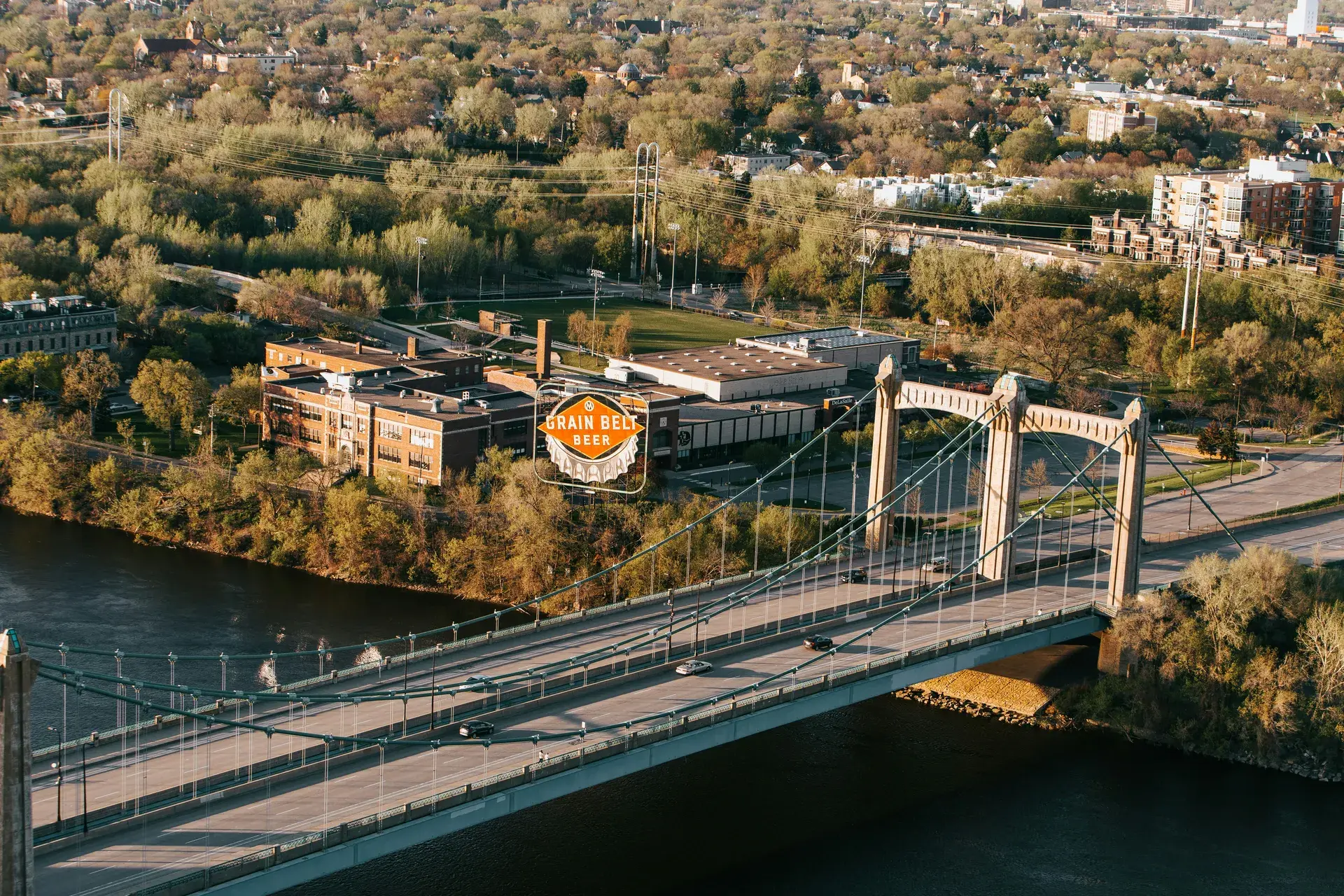
What is Marshall Terrace, Minneapolis?
Marshall Terrace is a small residential neighborhood in the northwest section of Northeast Minneapolis, perched between the Mississippi River to the west and the railroad corridor and industrial lands to the east. With about 1,500 residents spread across about seven-tenths of a square mile, it is one of the smallest neighborhoods in the city by population — a fact that contributes directly to its character as a place where neighbors actually know each other and the pace of life is several notches slower than what most people associate with Minneapolis.
The neighborhood's identity is shaped by two forces: its industrial heritage and its relationship to the river. Marshall Terrace grew up beside the rail lines, power plant, and riverfront industry along this stretch of the Mississippi. Some of that industry is still here, and so is the housing built alongside it — modest bungalows, small frame houses, the occasional duplex — and with it a working-class sensibility that has not been displaced by the craft-cocktail-and-condos energy that has transformed other parts of Northeast.
The Mississippi River is the neighborhood's western boundary and its primary amenity. River trails, bluff views, and direct water access give Marshall Terrace a connection to the natural landscape that few urban neighborhoods in Minneapolis can match. For residents, the river compensates for the lack of walkable restaurants, bars, and shops — a trade that most of them seem willing to make.
Marshall Terrace Neighborhood Sign
As far as we can tell, Marshall Terrace doesn’t have a neighborhood welcome sign — at least, nobody has documented one that we can find. If you’ve seen one, tell us where it is — we’d love to be wrong about this.
Marshall Terrace, Minneapolis — Key Stats (2025–2026)
- Residents (2020 Census)
- ~1,500
- Median home sale price (2025 data)
- $344K
- Median rent, all units (2020–24 ACS)
- $967
- Walk Score (Oct 2026)
- 43
- Bike Score (Oct 2026)
- 84
- Transit Score (Oct 2026)
- 41
- Owner-occupied homes (2020–24 ACS)
- 63%
- Neighborhood area
- 0.7 sq mi
Marshall Terrace History & Origins
Before European settlement, the riverbanks and bluffs that now define Marshall Terrace were part of the homeland of the Dakota people — the Mdewakanton band in particular, for whom the Mississippi River corridor was a vital route for travel, trade, and sustenance. In 1837, Dakota leaders brought to Washington were pressured into ceding all their land east of the Mississippi, this riverbank included.
European settlement in the late 19th and early 20th centuries turned this stretch of riverfront over to industry. Lumber yards and mills stood on the opposite bank, rail lines ran through, and by the 1920s a power plant stood beside the riverside park. Marshall Terrace's homes went up alongside — most of them between about 1900 and 1930, with another round of building in the 1950s. The housing stock reflected the economics of its residents: functional, compact, built for shelter rather than display.
The neighborhood shares its name with Marshall Terrace Park on the river. The Park Board bought the land in 1914 and named the park the next year for Marshall Street, which runs past it; the street honors William Marshall, a former Minnesota governor.
Through the 20th century, Marshall Terrace settled into a quiet existence as a residential pocket between the river and the rail lines, and the neighborhood never developed the commercial infrastructure that would have made it a destination. This trajectory — stable, quiet, unspectacular — is the essence of Marshall Terrace's identity. It has never been the neighborhood that anyone was talking about, and that has been, for its residents, the point.
Living in Marshall Terrace
Living in Marshall Terrace is living in a neighborhood that asks very little of you and gives back a specific, quiet set of rewards. The streets are residential in the most literal sense — houses, yards, sidewalks, parked cars. There is no commercial strip and no coffee shop, and the corner bars are out on Lowry, at the edge. The closest thing to a landmark is the river itself, which runs along the western edge with the kind of indifference to human development that makes it a good neighbor.
The community is small enough that social dynamics work differently than in larger neighborhoods. People recognize each other. Block clubs function with actual participation rather than aspirational email lists. The neighborhood association, while small, operates with a directness that larger organizations cannot match — when an issue comes up, the relevant people are in the room because there are not that many rooms to be in.
The industrial edges — rail yards to the east, remnant commercial and industrial properties along the river — give Marshall Terrace a roughness that prevents it from feeling suburban. This is not a manicured enclave. It is a working neighborhood that happens to sit on a beautiful piece of river. The juxtaposition is part of the appeal for people who prefer their cities honest rather than curated.
Neighboring Bottineau to the south and Columbia Park to the north and east share Marshall Terrace's quiet residential character, though both have more commercial access. The broader Northeast Minneapolis arts and brewery scene is a short drive or bike ride south, providing the cultural amenities that Marshall Terrace itself does not offer.
Marshall Terrace Food, Drink & Local Spots
Marshall Terrace has almost nothing in the way of restaurants, bars, or cafes within its boundaries — a couple of corner bars on its Lowry Avenue edge and a brewery taproom in the industrial blocks farther north. This is a residential neighborhood without a commercial corridor, and honesty requires acknowledging that fact rather than pretending otherwise. For dining, groceries, and nightlife, residents look to adjacent neighborhoods and the broader Northeast Minneapolis and North Minneapolis corridors.
Nearby Options
The Lowry Avenue corridor, accessible to the south and east, provides the nearest commercial options. Northeast Minneapolis's concentration of breweries, restaurants, and bars — including the taprooms along Marshall Street NE and the dining options in Nordeast — are within a short drive or bike ride. The North Minneapolis side of the river also offers options along Lowry and West Broadway.
For groceries, residents typically drive to stores in Columbia Heights, along Central Avenue NE, or in the Lowry corridor. The absence of a neighborhood grocery store is the most frequently cited practical inconvenience of living in Marshall Terrace.
Parks & Outdoors Near Marshall Terrace
The outdoors is where Marshall Terrace comes alive. The Mississippi River, which forms the neighborhood's western boundary, is the dominant natural feature and the reason many residents chose to live here. River trails, bluff overlooks, and bank access provide year-round recreational opportunities that most urban neighborhoods in Minneapolis cannot match.
Mississippi Riverfront
Marshall Terrace's section of the Mississippi riverfront connects to the broader Grand Rounds trail system, providing biking and walking routes that extend south toward downtown Minneapolis and north toward the city limits. The riverbank here is less developed than the stretches further south — no Stone Arch Bridge, no Mill City Museum — but that relative wildness is part of the appeal. Great blue herons, bald eagles, and other riparian wildlife are regular visitors. In winter, the frozen river and snow-covered trails offer cross-country skiing and snowshoeing opportunities.
Neighborhood Parks
Marshall Terrace Park, the neighborhood's primary green space, provides a playground, open lawn area, and gathering space for community events. It is a small neighborhood park serving a small neighborhood — functional rather than scenic, but important as one of the few public gathering spaces in an area without commercial alternatives. The park hosts neighborhood events in summer, including block parties and community picnics organized by the neighborhood association.
Broader Park Access
Columbia Park, the large park to the northeast, is accessible by bike or on foot and offers amenities that Marshall Terrace's small parks cannot — a golf course, larger play areas, and mature tree canopy. The Grand Rounds connection means that Marshall Terrace residents have, within a few minutes' pedaling, access to one of the best urban park and trail systems in America. The neighborhood's outdoor assets are not within its boundaries so much as connected to them — a distinction that matters for daily life but rewards anyone willing to get on a bike.
Marshall Terrace Schools
Marshall Terrace does not have a district school within its boundaries. The neighborhood's small size and population do not support a dedicated school, so families use Minneapolis Public Schools options through the district's enrollment and assignment system.
Nearby Minneapolis Public Schools options in Northeast include Pillsbury Elementary School, Northeast Middle School on St. Anthony Parkway, and Edison High School. Assignments depend on the address, so check the district's school finder for a specific house.
Several charter schools in Northeast Minneapolis also draw enrollment from Marshall Terrace families. The practical reality is that schooling requires transportation — by bus, car, or bike — to schools outside the neighborhood, which is consistent with the broader pattern of Marshall Terrace life requiring movement outward for most services and amenities.
Marshall Terrace Real Estate & Housing
Marshall Terrace's housing market is small, priced about in line with the rest of Northeast Minneapolis, and dominated by single-family homes. The housing stock is predominantly early-to-mid 20th century construction — bungalows, one-and-a-half story frame houses, and modest two-stories. There are some duplexes and small multi-family properties, but this is overwhelmingly a single-family neighborhood.
Pricing & Market
Marshall Terrace's median sale price was $344,000 in 2025, up from $306,750 a year earlier and $280,000 in 2021, according to Minneapolis Area REALTORS — about even with Northeast Minneapolis as a whole ($348,125) and just under the citywide median of $350,000. That figure rests on only 14 sales, so it can swing from year to year. What buyers get for it is the Northeast address and river proximity.
Inventory is limited by the neighborhood's small size: only 14 homes sold in 2025. The owner-occupancy rate exceeds 60 percent, reflecting a stable community of long-term residents who buy and stay rather than flip.
Development Potential
Some former industrial parcels along the river and the rail corridor present potential redevelopment opportunities, though environmental remediation costs and the neighborhood's limited infrastructure have kept large-scale development at bay. Residents are generally wary of development that would change the neighborhood's character, and the neighborhood association has been active in monitoring proposals that affect the riverfront and industrial-to-residential transitions.
Getting Around Marshall Terrace
Marshall Terrace is a car-dependent neighborhood by Minneapolis standards. The Transit Score of 41 reflects limited bus service, with no light rail access and infrequent route coverage. Metro Transit provides bus service along Lowry Avenue and connecting corridors, but headways are long enough that most residents treat transit as a backup rather than a primary mode.
Biking is the neighborhood's strongest alternative to driving. The river trail connections and generally flat terrain make cycling practical for commuting to downtown (about 3 miles south) or to commercial areas in Northeast. The Bike Score of 84 reflects this infrastructure.
Driving is the default mode for most errands. Interstate 94 is a short drive across the river via Lowry Avenue, providing highway connections to downtown and the broader metro. Street parking is abundant and free — one of the practical advantages of living in a neighborhood that most people are not trying to visit. The lack of congestion on local streets is a small but genuine quality-of-life benefit.
What's Changing in Marshall Terrace
Marshall Terrace is changing slowly, which is how most of its residents prefer it. The primary forces of change are the broader Northeast Minneapolis real estate market — where the median sale price rose from $305,000 in 2021 to $348,125 in 2025, according to Minneapolis Area REALTORS — and the ongoing question of what happens to the industrial and formerly industrial land along the river and the rail corridor.
Environmental remediation of former industrial sites is an ongoing concern. Some parcels carry contamination from decades of manufacturing and processing, and the timeline and cost of cleanup affect both property values and development potential. The neighborhood association monitors these issues closely, balancing the desire for cleanup and improvement against the concern that remediated land will attract development at a scale the neighborhood does not want.
The riverfront is the most consequential piece of Marshall Terrace's future. How the city manages the transition of industrial riverfront land — whether it becomes parkland, housing, mixed-use development, or some combination — will determine whether Marshall Terrace remains a quiet residential pocket or becomes something different. For now, the neighborhood's obscurity is its protection. Whether that lasts is an open question.
Marshall Terrace FAQ
Is Marshall Terrace a good neighborhood in Minneapolis?
Marshall Terrace is one of Minneapolis's quietest and most overlooked neighborhoods. If you want a small residential enclave with river access, home prices in line with the rest of Northeast, and a genuine sense of being off the beaten path, it delivers. The tradeoff is limited walkable commercial options, minimal nightlife, and the reality that you will need to drive or bike to reach most amenities. For families and people who value quiet over buzz, Marshall Terrace punches above its weight.
Is Marshall Terrace, Minneapolis safe?
Marshall Terrace has low crime rates by Minneapolis standards. Its small size, residential character, and relative isolation contribute to a feeling of safety that residents frequently cite as one of the neighborhood's best qualities. Like all Minneapolis neighborhoods, property crime occurs, but violent crime is uncommon. The industrial areas along the river can feel isolated at night, so standard urban awareness applies.
Where exactly is Marshall Terrace in Minneapolis?
Marshall Terrace is in the northwest part of Northeast Minneapolis, bounded roughly by the Mississippi River to the west, Lowry Avenue to the south, University Avenue to the east, and St. Anthony Parkway to the north. It sits across the river from McKinley and Camden Industrial, with Bottineau to the south and Columbia Park to the north and east. It is one of the smallest neighborhoods in Minneapolis by population.
What is the housing market like in Marshall Terrace?
Marshall Terrace's prices sit close to the Northeast norm. The housing stock is predominantly modest homes from the early-to-mid 20th century — bungalows, one-and-a-half story houses, and some duplexes. The median sale price was $344,000 in 2025, up from $306,750 in 2024, according to Minneapolis Area REALTORS — about even with Northeast as a whole ($348,125) and just under the city's $350,000. That figure rests on only 14 sales, so it can swing from year to year. The neighborhood's small size means inventory is limited.
Can you access the Mississippi River from Marshall Terrace?
Yes. Marshall Terrace has direct access to the Mississippi River along its western boundary. The river trail system connects to the broader Grand Rounds network, and the riverfront parks provide walking, biking, and scenic access. The riverfront is one of the neighborhood's defining amenities and a major reason people choose to live here despite its distance from commercial corridors.
Is Marshall Terrace walkable?
Not particularly. The Walk Score is 43, reflecting the neighborhood's residential character and limited commercial options. There are no grocery stores or significant retail within the neighborhood boundaries, and little to eat beyond a couple of corner bars on Lowry. Residents typically drive or bike to adjacent neighborhoods like Bottineau or the Lowry Avenue corridor for daily errands. The neighborhood is, however, very bikeable, with good trail connections along the river.
What are the schools near Marshall Terrace?
Marshall Terrace does not have a district school within its boundaries. Families use Minneapolis Public Schools options through the district's enrollment system, with nearby schools in Northeast Minneapolis serving the area — among them Pillsbury Elementary School, Northeast Middle School, and Edison High School. Assignments depend on the address, so check the district's school finder for a specific house.
How does Marshall Terrace compare to other Northeast neighborhoods?
Marshall Terrace is the quietest and most residential of the Northeast neighborhoods, lacking the arts scene of Logan Park or the brewery buzz of Northeast Park. It trades those amenities for river access and a genuinely small-town feel within city limits. People who love Marshall Terrace tend to love it specifically because it is not like the rest of Northeast.
What Makes Marshall Terrace Worth Knowing
Marshall Terrace is the kind of neighborhood that does not advertise itself and does not need to. About fifteen hundred people live between the Mississippi River and a railroad corridor, in modest houses, most of them about a century old, on streets where the loudest thing on a Tuesday evening is a dog barking two blocks away. There is no brewery district, no taproom row, no Instagram-worthy mural. There is a river, there are neighbors who know each other, and there is the particular satisfaction of living in a place that has resisted the impulse to become something it is not.
The industrial heritage is still visible — in the bones of the streets, in the proximity to rail lines and commercial yards, in the working-class architecture that makes no apologies for its simplicity. But the river is the thing. Stand on the bluff at the edge of Marshall Terrace on a September evening and watch the light come off the Mississippi, and you will understand why people stay in a neighborhood that most Minneapolitans cannot find on a map. Some places earn loyalty by being exciting. Marshall Terrace earns it by being steady.

From the shop
Made for people who love it here.
From Minneapolis, With Love - Large Tote Bag
Keep exploring