Minneapolis Neighborhood
East Bde Maka Ska
The east shore of Minneapolis's most popular lake — where Uptown's energy bleeds into lakeside living, the trail is always busy, and the address alone does most of the work.
№ 20 of 87 · Bde Maka Ska-Isles community · Last updated: October 2026 · A complete neighborhood guide
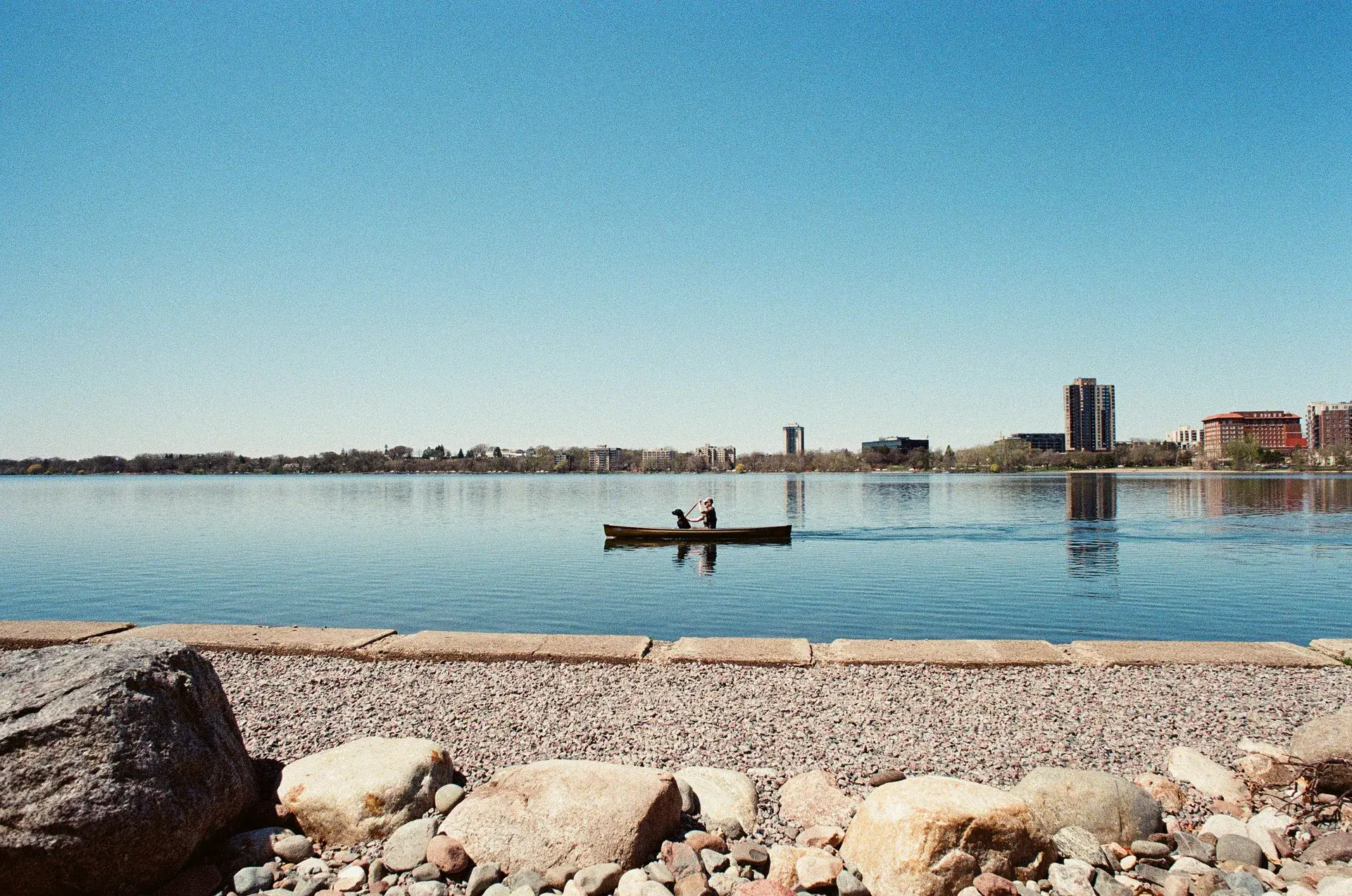
On a July evening, the east shore of Bde Maka Ska is one of the busiest stretches of public space in Minneapolis. Runners are weaving through walkers. Cyclists are ringing bells. Someone on a paddleboard is gliding past the beach, where families are wringing out towels and loading sandy kids into strollers. The concession stand has a line. The parking lot is full. A group of twentysomethings has staked out a patch of grass with a Bluetooth speaker and a cooler. Across the water, the sun is dropping toward the west shore, and the light on the lake is doing the thing that makes everyone with a phone stop and take a picture. This is East Bde Maka Ska at peak performance — the neighborhood where Minneapolis most fully becomes the lake city it claims to be.
What is East Bde Maka Ska, Minneapolis?
East Bde Maka Ska is a small neighborhood on the eastern shore of Bde Maka Ska — Minneapolis's largest and most popular lake. It covers roughly 0.4 square miles, nearly half of it open lake, and is home to about 2,400 residents. The neighborhood is bounded roughly by Lake Street to the north, Hennepin Avenue to the east, West 36th Street to the south, and the lake to the west. It takes in the southwest corner of the Uptown commercial district, with East Isles across Lake Street to the north, South Uptown across Hennepin to the east, and East Harriet to the south.
The lake is the point. Everything about this neighborhood — the prices, the density, the demographics, the lifestyle — flows from the fact that Bde Maka Ska is right there, across the parkway, with its beaches, its 3.1-mile trail loop, its kayak and paddleboard rentals, and its status as the recreational center of Minneapolis. If you want to live on the lake without leaving the city, this is one of the neighborhoods that makes it possible.
The name: Bde Maka Ska is the lake's Dakota name, meaning "White Earth Lake." It was officially restored in 2018, replacing the name Lake Calhoun (after John C. Calhoun, the pro-slavery politician). The name change was contested and remains a point of discussion in some circles, but Bde Maka Ska is the legal and official name. Residents and visitors use both names in practice, though Bde Maka Ska is increasingly the default.
East Bde Maka Ska Neighborhood Sign
East Bde Maka Ska, Minneapolis — Key Stats (2025–2026)
- Residents (2020 Census)
- ~2,400
- Median sale price, homes and condos (2025 data)
- $692K
- Days on market (2025 data)
- 83 days
- Neighborhood area
- 0.4 sq mi
- Era most homes were built
- 1900s–20s
- Drive to downtown Minneapolis
- 10 min
- Walk Score (Oct 2026)
- 80
- Bike Score (Oct 2026)
- 90
East Bde Maka Ska History & Origins
Before European settlement, Bde Maka Ska and the surrounding lakes were central to Dakota life in this region. The lake was part of a network of waterways — including Lake Harriet, Lake of the Isles, and Cedar Lake — where Dakota people had lived for a very long time. The name Bde Maka Ska is the Dakota name for the lake, meaning "White Earth Lake." In 1829 the Dakota leader Cloud Man founded a farming village, Heyáta Othúŋwe, on its shore; about ten years later the village moved to Oak Grove, in what is now Bloomington, and Dakota people were later forcibly exiled from the Bdote area. But the lake itself — its shape, its shoreline, its role as a gathering place — predates every building, every street, and every neighborhood boundary by millennia.
The area around the lake developed in the late 19th and early 20th centuries as Minneapolis expanded southwest from downtown. The streetcar lines of Thomas Lowry's company made the lakes accessible to residents who lived and worked further from the water, and the parkway system designed by Horace Cleveland gave the lakeshores their public, democratic character. The homes on the east side of the lake were built primarily between the 1900s and the 1920s, with a mix of styles reflecting the era's residential conventions: bungalows, Tudors, Colonial Revivals, and the multi-family buildings that gave this side of the lake its denser, more urban character.
The Uptown commercial district, centered around Lake Street and Hennepin Avenue, grew through the 20th century as a retail and entertainment hub serving the neighborhoods around the lakes. Its proximity to East Bde Maka Ska has always been part of the neighborhood's identity — the lake provides the natural amenity, Uptown provides the commercial and cultural life, and the neighborhood sits at the intersection of the two.
Living in East Bde Maka Ska
Living in East Bde Maka Ska means living on the lake — or at least within a few blocks of it. The daily rhythm here is organized around the water: morning runs on the trail, evening walks along the parkway, weekend hours at the beach or on a paddleboard. The lake is not a backdrop — it's a utility, used actively and daily by people who chose this neighborhood specifically because of what it provides.
The neighborhood is denser and more urban than the quieter lake neighborhoods to the south. The housing mix includes single-family homes, duplexes, triplexes, and apartment buildings — particularly along the streets closer to Hennepin Avenue and the Uptown commercial district. This density creates a different demographic than the family-oriented neighborhoods in Southwest Minneapolis: East Bde Maka Ska skews younger, more single and coupled, more rental-oriented, and more transient. People move here in their twenties and thirties for the lifestyle; some stay, many eventually move south to the family neighborhoods when kids arrive.
The Uptown adjacency is central to the neighborhood's character — and to its complications. Uptown's restaurants, bars, shops, and cultural venues are within walking distance, which gives East Bde Maka Ska a commercial convenience that most lake neighborhoods lack. But Uptown has also been through a difficult period since 2020 — business closures, social unrest, and an identity transition that's still unfolding. The neighborhood feels the effects of Uptown's struggles directly, and the commercial landscape that residents walk to is different — less complete, less predictable — than it was five years ago.
Despite all of this, the lake carries the neighborhood. On a warm evening, when the trail is full and the water is golden and someone is playing guitar on the grass, the reason people pay a premium to live here is self-evident. The lake is the amenity that justifies everything else.
East Bde Maka Ska Food, Drink & Local Spots
East Bde Maka Ska benefits from its proximity to Uptown and the Hennepin Avenue corridor — the commercial options within walking distance are more extensive than in most lake neighborhoods.
The Go-To Spots
On the lake. The concession stands at Bde Maka Ska serve the kind of food you want after swimming — burgers, ice cream, drinks on the patio with a lake view. Seasonal, casual, and inseparable from the lake experience.
Lake Street and Hennepin Avenue, at the neighborhood's northeast corner. The Uptown dining and shopping scene has evolved significantly since 2020, with some closures and many new openings. The options span casual to upscale, with bars, restaurants, coffee shops, and retail along the main corridors.
Lyndale Avenue, half a mile east on the far side of South Uptown, hosts a string of restaurants, bars, and shops. The stretch between Lake Street and 36th Street is one of the more interesting dining corridors in Minneapolis — independent, diverse, and less tourist-oriented than Hennepin.
On West Lake Street off the lake's northwest corner, in Cedar - Isles - Dean. Excellent pastries, bread, and coffee in a clean, modern space. A go-to for weekend mornings.
Also Worth Knowing
The dining landscape around East Bde Maka Ska is in transition. Some longtime Uptown favorites have closed; new spots continue to open. The Lyndale corridor has proven more resilient than the Hennepin corridor in recent years. For groceries, Kowalski's, up Hennepin in East Isles, is walkable and well-stocked — a reflection of the neighborhood's preference for quality over convenience.
Parks & Outdoors in East Bde Maka Ska
The outdoor story here is simple: the lake. Everything else is secondary.
Bde Maka Ska
Bde Maka Ska is the largest lake in Minneapolis — roughly 401 acres — and the most heavily used. The 3.1-mile paved trail around the lake is one of the busiest multi-use trails in the state, popular with runners, walkers, cyclists, and rollerbladers. The east shore includes a beach, kayak and paddleboard rentals, and the kind of summer-afternoon scene that makes Minneapolis feel like a lakeside resort town that happens to have a skyline. In winter, the lake freezes and becomes a platform for ice fishing, skating, and the particular Minnesota pleasure of walking across a frozen body of water in the middle of a city.
Chain of Lakes Trail
The Chain of Lakes trail connects Bde Maka Ska to Lake Harriet, Lake of the Isles, and Cedar Lake — an interconnected loop that totals roughly 13 miles and is one of Minneapolis's signature public assets. From East Bde Maka Ska, you can bike south to Lake Harriet's Bandshell, north to Lake of the Isles, or northwest to Cedar Lake without ever touching a road. The Bike Score of 90 reflects this connectivity — it's genuinely world-class urban cycling infrastructure.
Lakeside Recreation
The east shore of Bde Maka Ska is the recreational hub of the lake — the 32nd Street Beach, the boat launch, the rental facilities. Seasonal concession operations provide casual lakeside dining during warm months. The parkway that rings the lake separates the residential blocks from the shoreline and provides a scenic driving, walking, and cycling loop. The Minneapolis Park Board manages the shoreline and the facilities, and the ongoing investment in the lake infrastructure reflects its importance to the city.
East Bde Maka Ska Schools
East Bde Maka Ska is not a neighborhood where the school pipeline is the primary draw — unlike the family-oriented Southwest neighborhoods, the demographic here skews younger and less family-dense, and the school landscape reflects that.
Elementary school options depend on the Minneapolis Public Schools assignment and magnet system. Families in the area use a variety of schools, including neighborhood options, magnet programs, and private schools. The neighborhood's density and rental-heavy housing stock mean that school-age children are a smaller share of the population than in places like Kenny or Armatage.
For families who do have school-age children here, the broader Southwest Minneapolis school infrastructure — including Southwest High School — is nearby, though assignment depends on address, so check the district's school finder. The city's magnet system provides options beyond the default assignment.
East Bde Maka Ska Real Estate & Housing
Real estate in East Bde Maka Ska is driven by one factor above all others: the lake. Proximity to Bde Maka Ska creates a premium that puts the neighborhood among the more expensive in Minneapolis. The median sale price was $692,170 in 2025, up from $420,000 in 2024, according to Minneapolis Area REALTORS — but that is on only 34 sales, about four in ten of them condos, and the figure swings widely from year to year.
The housing stock is more diverse than in most Minneapolis neighborhoods. Single-family homes — bungalows, Tudors, and Colonials from the 1900s through the 1920s — sit alongside duplexes, triplexes, and apartment buildings of various eras. The multi-family housing gives the neighborhood its density and its younger, more rental-oriented demographic. Condos in converted buildings and newer construction have added to the mix.
Homes averaged 83 days on market in 2025 — well above the citywide 55 and far longer than the family neighborhoods in Southwest Minneapolis, reflecting the higher price points and more varied buyer pool. Sellers got about 97 percent of their original asking price on average.
Getting Around East Bde Maka Ska
East Bde Maka Ska is one of the more walkable and bikeable neighborhoods in Minneapolis. The Walk Score of 80 reflects the proximity to Uptown's commercial corridor, and the Bike Score of 90 reflects the lake trail system and connections to the broader city cycling network.
Bus service along Hennepin Avenue, and along Lyndale half a mile east, connects to downtown, Uptown, and the broader Metro Transit system. The frequency is better here than in most Minneapolis neighborhoods, and genuine car-free living is feasible — particularly for residents without children.
By car, downtown is about 10 minutes. The lakes provide scenic driving loops, and I-35W is accessible for southbound commutes to the airport, Bloomington, and the southern suburbs. Parking can be challenging during peak lake-use hours in summer — the east shore parking lots fill up on warm weekends, and residential streets absorb the overflow.
What's Changing: The Honest Version
East Bde Maka Ska sits at the intersection of several of Minneapolis's most visible transitions.
Uptown's Identity Crisis
The Uptown commercial district — the neighborhood's primary commercial anchor — has been in flux since 2020. Business closures, social unrest, the pandemic, and shifting retail patterns have left gaps in the commercial landscape that are still being filled. New businesses continue to open, and the area retains its walkable bones, but the Uptown of 2026 is a different place than the Uptown of 2019. East Bde Maka Ska residents feel this transition directly — the restaurants and shops they walk to are not the same ones they walked to five years ago.
The Name Question
The restoration of the lake's Dakota name — from Lake Calhoun to Bde Maka Ska — became official in 2018 after a lengthy process, and the Minnesota Supreme Court upheld it in 2020. The change is legally settled, but cultural adoption is ongoing. Some longtime residents and businesses still use "Calhoun" informally. The neighborhood itself carries the new name officially, and the generational divide on usage is noticeable. The name question is part of a larger conversation about how Minneapolis reckons with its Dakota heritage and its settler-colonial history.
Lake Usage Pressure
Bde Maka Ska is the most heavily used lake in Minneapolis, and the east shore bears a disproportionate share of that pressure. Trail congestion, parking overflow, noise, and the general wear of high-volume recreational use affect the blocks closest to the lake. The Minneapolis Park Board continues to invest in infrastructure, but the tension between residential quality of life and public recreational access is inherent and ongoing.
Density and Development
The neighborhood's proximity to Uptown and the lake makes it a target for development — both new apartment construction and the conversion of older single-family homes to multi-unit properties. Some residents welcome the density and the energy it brings; others worry about the loss of the neighborhood's remaining single-family character. The tension between density and preservation plays out block by block, proposal by proposal.
East Bde Maka Ska FAQ
Is East Bde Maka Ska a good neighborhood in Minneapolis?
Yes. East Bde Maka Ska offers direct access to Minneapolis's most popular lake, proximity to Uptown's commercial life, strong walkability and bikeability, and the kind of lakeside address that defines desirable urban living in Minneapolis. The trade-off is price — this is one of the more expensive neighborhoods in the city.
Is East Bde Maka Ska, Minneapolis safe?
East Bde Maka Ska is generally safe, though its proximity to the Uptown commercial district means it experiences more property crime and occasional incidents than the quieter neighborhoods further south and west. Vehicle break-ins and bike theft are the most common issues. The lake and trails are busy with people during daylight hours, which adds a layer of natural safety.
What is East Bde Maka Ska known for?
East Bde Maka Ska is known for its direct access to Bde Maka Ska (formerly Lake Calhoun), its proximity to the Uptown commercial district, its walkable and bikeable lifestyle, and its mix of single-family homes, duplexes, and apartment buildings that create a denser, more urban feel than the quieter lake neighborhoods to the south.
What was Bde Maka Ska called before?
Bde Maka Ska was previously known as Lake Calhoun. The name was officially restored to its Dakota name — Bde Maka Ska, meaning 'White Earth Lake' — in 2018 by the Minnesota DNR after years of advocacy. The name change was contentious and remains a point of discussion, but Bde Maka Ska is the lake's official name.
How much do homes cost in East Bde Maka Ska?
The median sale price in East Bde Maka Ska was $692,170 in 2025, up from $420,000 in 2024, according to Minneapolis Area REALTORS — about twice the $350,000 citywide median. With only 34 sales, about four in ten of them condos, the figure swings widely from year to year; in 2023 it was $360,000. The lake proximity drives a significant premium.
Where exactly is East Bde Maka Ska in Minneapolis?
East Bde Maka Ska is on the eastern shore of Bde Maka Ska, bounded roughly by Lake Street to the north, Hennepin Avenue to the east, West 36th Street to the south, and the lake to the west. It takes in the southwest corner of the Uptown commercial district, at Lake Street and Hennepin.
Is East Bde Maka Ska walkable?
Very. East Bde Maka Ska earns a Walk Score of 80 and a Bike Score of 90. The proximity to Uptown's restaurants, shops, and services, combined with the lake trail system, makes it possible to live here without a car for many daily needs.
What schools serve East Bde Maka Ska?
The neighborhood is served by Minneapolis Public Schools, with elementary options varying based on the district's assignment and magnet system. Families use a mix of neighborhood schools, magnet schools, and private options. The school picture is less neighborhood-centric than in Southwest Minneapolis's family-oriented neighborhoods.
How is East Bde Maka Ska different from West Maka Ska?
East Bde Maka Ska is more urban, more connected to Uptown's commercial energy, and has a denser housing mix including apartments and condos. West Maka Ska (formerly West Calhoun) is quieter, more residential, and more oriented toward the lake itself. East Bde Maka Ska skews younger and more rental-heavy — about two-thirds of its homes are rented, by Census estimates; West Maka Ska has a larger share of homeowners and families, though renters are the majority there too.
How is the Uptown area changing?
Uptown — the commercial district adjacent to East Bde Maka Ska — has experienced significant change since 2020. Some businesses have closed, new ones have opened, and the area's identity is in flux. The neighborhood remains walkable and commercially active, but the Uptown of 2026 is different from the Uptown of 2019. This transition affects East Bde Maka Ska directly, as the neighborhood's commercial life is closely tied to Uptown's fortunes.
What Makes East Bde Maka Ska Worth Knowing
East Bde Maka Ska is the neighborhood where the lake and the city meet without either one winning. The trail is always busy, the restaurants are within walking distance, and the address carries a weight that opens conversations at dinner parties. It's the kind of place where you can paddleboard in the morning, walk to brunch, bike to work, and be home in time to watch the sunset over the lake from your porch — and that sequence is not a fantasy, it's a Tuesday.
The premium is real, the Uptown adjacency is a mixed blessing, and the neighborhood doesn't have the settled, family-oriented calm of Southwest Minneapolis's deeper residential pockets. But for people who want urban energy and lake access in equal measure — who want to live in the part of Minneapolis that most looks like the postcard — East Bde Maka Ska is the answer.

Keep exploring