Minneapolis Neighborhood
Lowry Hill East
Better known as The Wedge — the triangular sliver between Hennepin, Lyndale, and Lake Street where Minneapolis packs more bikes, co-op members, and fourth-floor walk-up apartments per block than anywhere else in the state.
№ 47 of 87 · Bde Maka Ska-Isles community · Last updated: October 2026 · A complete neighborhood guide
On a Tuesday evening in June, a cyclist threads south on Bryant Avenue — no car, no helmet, one hand on the bars and the other holding a canvas bag from the Wedge Co-op. She turns onto a side street lined with three-story walk-ups and courtyard apartments, locks up at a rack that's already full, and disappears into a building that houses more people per square foot than most single-family blocks in Edina. Two doors down, someone is grilling on a shared patio the size of a parking space. Across the street, the bass line from a second-floor apartment is audible but not quite loud enough to complain about. Two blocks east, Lyndale Avenue hums with restaurant noise and the particular energy of a commercial strip that never fully quiets down. A few blocks west, Hennepin Avenue does the same. This is The Wedge — a neighborhood shaped like its name, compressed between two of Minneapolis's busiest corridors, and somehow one of the most deliberately chosen places to live in the city.
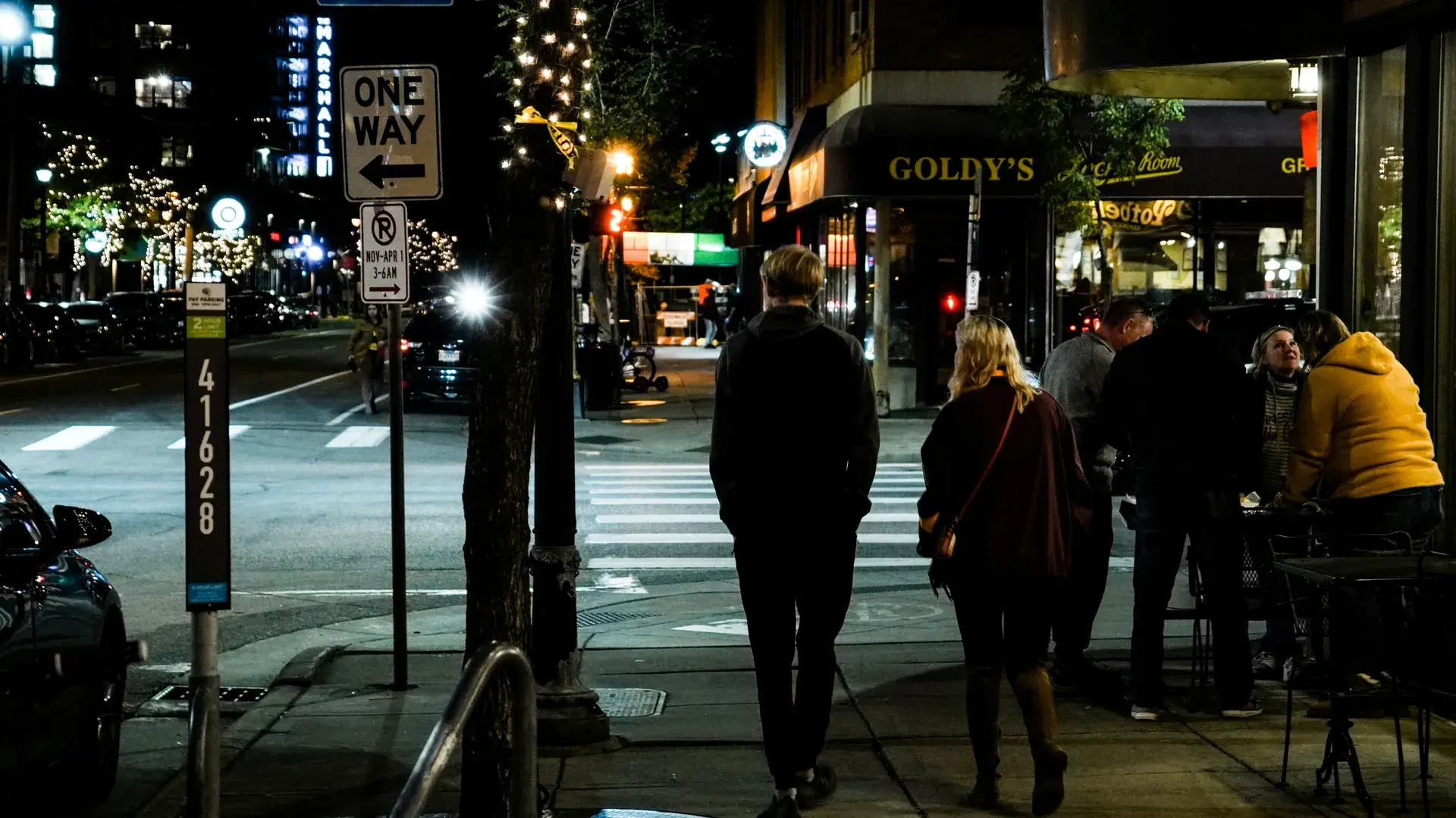
What is Lowry Hill East (The Wedge)?
Lowry Hill East — universally known as The Wedge — is a small, densely populated neighborhood in south-central Minneapolis, shaped by the triangular convergence of Hennepin Avenue to the west and Lyndale Avenue to the east, with the two meeting at Interstate 94 at the northern tip and Lake Street marking the south. At roughly 0.4 square miles, it is one of the smaller officially designated neighborhoods in the city. It is also one of the most densely packed — about 9,300 people lived here at the 2020 Census, the vast majority of them renters, giving it a population density that rivals anything in the metro area outside of downtown.
The neighborhood's defining characteristics are its walkability, its bike culture, and the fact that it sits between two of Minneapolis's strongest commercial corridors without being overwhelmed by either of them. The interior streets — Bryant, Aldrich, Colfax, Dupont — are surprisingly residential and tree-lined for a neighborhood this dense, creating a contrast with the arterial noise that is one of The Wedge's recurring themes. It is young, progressive, overwhelmingly renter-occupied, and right across Lyndale from the Wedge Community Co-op, which is both a grocery store and something closer to a neighborhood religion.
The Wedge sits directly south of the Walker Art Center and Minneapolis Sculpture Garden, west of Whittier, and north of South Uptown. Downtown is about a mile and a half north. The Chain of Lakes is a ten-minute walk west. If you drew a circle around the geographic center of everything that makes Minneapolis Minneapolis, The Wedge would be inside it.
Lowry Hill East Neighborhood Sign
Lowry Hill East (The Wedge), Minneapolis — Key Stats (2025–2026)
- Residents (2020 Census)
- ~9,300
- Median sale price, homes and condos (2025 data)
- $305K
- Median rent, all units (2020–24 ACS)
- $1,405
- Walk Score (Oct 2026)
- 93
- Bike Score (Oct 2026)
- 95
- Transit Score (Oct 2026)
- 61
- Renter-occupied homes (2020–24 ACS)
- 85%
- Neighborhood area
- 0.4 sq mi
Lowry Hill East History & Origins
The land that became Lowry Hill East was, like all of Minneapolis, part of the homeland of the Dakota people, who lived, hunted, and gathered across the prairies and woodlands surrounding the Chain of Lakes and the Mississippi River for centuries before European settlement. The lakes to the west and the river to the east were not recreational amenities but the organizing features of a lived landscape. That history predates everything that follows and should not be treated as a footnote.
The neighborhood takes its official name from Lowry Hill, the prominent rise to the northwest named for Thomas Lowry, the streetcar magnate whose transit empire helped shape Minneapolis's early geography. “Lowry Hill East” simply marks it as the eastern, downhill side of the Lowry Hill area. The “Wedge” nickname is plain geography: Hennepin, Lyndale, and Lake Street box the neighborhood into a wedge, and the name stuck.
Development in the late 19th and early 20th centuries followed the streetcar, which came down Lyndale Avenue from downtown in the 1880s and made the triangle a streetcar suburb. Many of the early houses were two- and two-and-a-half-story Queen Annes and Colonial Revivals. On the blocks of Bryant, Aldrich, and Colfax that the city designated in 2015 as the Lowry Hill East Residential Historic District, the houses' early owners included lawyers, doctors, business owners, and managers of milling and railroad companies. A good many of the neighborhood's Victorian houses survive, some still single-family and others divided into apartments, and apartment buildings filled in around them over the decades that followed.
The mid-20th century brought the familiar arc of American urban neighborhoods: suburban flight and an aging housing stock. The construction of Interstate 94 in the late 1960s cut across the neighborhood's northern tip, severing connections to the Loring Park area and downtown. The freeway brought noise, pollution, and the particular psychic weight of living next to a concrete river of traffic that treats your neighborhood as something to pass through rather than arrive at.
But the same forces also created the conditions for its reinvention. By the 1970s the aging housing stock was drawing students, artists, and counterculture types — the kind of people who start food co-ops and ride bicycles before either is fashionable. The Wedge Community Co-op was founded in 1974. It opened in a small garden-apartment storefront and grew into one of the largest natural foods co-ops in the country, anchoring both the neighborhood's commercial life and its identity.
By the 1990s and 2000s, The Wedge was gentrifying — slowly at first, then unmistakably. Young professionals discovered what the students and co-op members already knew: this was one of the most walkable, bikeable, well-located neighborhoods in Minneapolis, and the rents were still reasonable. New apartment construction began along the corridors. The demographic center of gravity shifted from counterculture to young professional, though the co-op and the bike culture remained as through-lines connecting the old Wedge to the new one.
Living in The Wedge
The first thing you notice about The Wedge is the bikes. They are locked to every available surface — racks, sign posts, fence rails, each other. They lean against apartment building walls in various states of repair and ambition, from $3,000 road bikes to spray-painted fixies held together by optimism and electrical tape. The Bike Score of 95 is not an abstraction here; it is a way of life. More people commute by bicycle from The Wedge than from almost any other neighborhood in Minneapolis, and the culture around it — the bike shops, the winter riding, the gentle evangelism — is one of the neighborhood's most distinctive features.
The physical texture of The Wedge is dense and layered. The residential interior mixes walk-up apartment buildings from across the twentieth century with Victorian houses from the streetcar era, some still single-family and others divided into duplexes and apartments. Newer four- and five-story apartment buildings have gone up along Hennepin and Lyndale, adding density to streets that were already dense. The result is a neighborhood where the built environment is never uniform — you turn a corner and the era shifts, the scale changes, and the setback adjusts. It is visually more interesting than beautiful, which is a compliment.
The demographics skew young and educated, and the racial mix is close to the city's: about four in ten residents are people of color, by Census estimates. The median age is well below the city average. The neighborhood is overwhelmingly renter-occupied — about 85 percent of homes — which gives it a transient quality that some find liberating and others find lonely. People move in for a year or two, move out when they couple up or have kids or want more space, and are replaced by the next wave of twentysomethings who want the same things they did: walkability, cheap rent (relatively), and proximity to everything without having to drive.
The political culture is progressive in a way that is both genuine and occasionally performative. The co-op bulletin board is a reliable barometer: community land trust meetings, mutual aid requests, bike advocacy events, composting workshops, and the occasional flyer for a cause so niche it could only exist in a neighborhood where earnestness is a core value. The Wedge takes itself seriously about the things it cares about — sustainability, transportation, food systems, housing policy — and that seriousness is part of its character, even when it tips into self-parody.
Neighboring Whittier to the east shares some of The Wedge's density and youthful energy but is significantly more diverse and more commercially defined by Eat Street. The Lowry Hill neighborhood to the northwest is wealthier and quieter — grand homes around the Walker Art Center — and the contrast across Hennepin Avenue between the two neighborhoods is one of the sharpest class gradients in Minneapolis.
The Wedge Food, Drink & Local Spots
The Wedge doesn't have its own iconic food corridor the way Whittier has Eat Street — but it doesn't need one, because it sits between two of them. Lyndale Avenue on the east and Hennepin Avenue on the west both carry strong restaurant and bar scenes through and adjacent to the neighborhood, and the Wedge Co-op itself functions as a culinary institution in its own right. The dining here trends toward the creative and the sustainable, with a healthy dose of bar food and late-night options mixed in. You won't find the global range of Eat Street, but you'll find places that care deeply about where their ingredients come from — sometimes more than is strictly necessary.
Neighborhood Institutions
2105 Lyndale Ave. S., just across Lyndale in Whittier. More than a grocery store. The Wedge is one of the largest natural foods cooperatives in the country, founded in 1974 and now serving over 18,000 member-owners. The produce is local and organic when possible, the cheese section is genuinely excellent, the bulk aisle is a lifestyle commitment, and the bulletin board near the entrance is the neighborhood's unofficial town square.
810 W. Lake St. Part bowling alley, part restaurant, part black-box theater — a combination that shouldn't work but has been working since 1993. The brunch is solid, the bowling is charmingly old-school (eight wooden lanes in an alley that dates to 1935), and the theater hosts fringe performances, comedy, and community events. BLB is The Wedge in miniature: eclectic, slightly chaotic, and doing several things at once with more enthusiasm than polish.
2600 Lyndale Ave. S. A Minneapolis dive bar institution: there has been a bar here since 1933, and it has been the CC Club since 1975. It has the kind of patina that cannot be manufactured — the wood is dark, the jukebox is serious, and the crowd ranges from old-timers nursing a beer to first-daters who wanted somewhere unpretentious. The burgers are better than they need to be. The happy hour is one of the best deals in the neighborhood. It's a bar that knows exactly what it is and has never tried to be anything else.
Coffee & Drink
The Wedge and its immediate surroundings are well-supplied with caffeine. Spyhouse Coffee has a location on Hennepin that draws the laptop crowd and the pour-over devotees. For beer, Moto-i on Lyndale and a handful of bars along Hennepin serve the after-work and weekend crowd. For cocktails, the options multiply as you move south toward Lake Street and the South Uptown bar scene.
Parks, Culture & Outdoors Near The Wedge
The Wedge is not a parks neighborhood in the classic Minneapolis sense — it doesn't have lakefront, and its green spaces are modest in scale. But what it lacks in acreage it compensates for in proximity to some of the city's most significant cultural and recreational assets. The Walker Art Center and Sculpture Garden are about a mile north. The Chain of Lakes is a ten-minute walk west. And the parks in and around it, while small, serve the dense population well.
Minneapolis Sculpture Garden & Walker Art Center
The Minneapolis Sculpture Garden — eleven acres of outdoor sculpture including Claes Oldenburg and Coosje van Bruggen's iconic Spoonbridge and Cherry — sits just north of The Wedge at the base of Lowry Hill. It is free and open daily, which makes it something close to The Wedge's front yard. On summer evenings and weekend mornings, residents walk or bike through the garden the way other neighborhoods use their parks — casually, routinely, as part of the texture of daily life.
The Walker Art Center, adjacent to the garden, is one of the top contemporary art museums in the country — exhibitions of modern and contemporary art, a strong film program, performing arts, and a permanent collection that ranges from Andy Warhol to Kara Walker. Unlike Mia in Whittier, the Walker charges admission for its galleries, but the Sculpture Garden remains free and is arguably the more beloved civic asset.
Bryant Square Park
Bryant Square Park, at 31st Street and Bryant Avenue South, sits a block south of Lake Street in South Uptown but works as The Wedge's neighborhood park too — a compact green space with a playground, a basketball court, a wading pool, and a recreation center that hosts community programming year-round. It's a neighborhood park in the most literal sense: heavily used by the surrounding apartment dwellers who don't have backyards, and serving as one of the few open-air gathering spaces in a neighborhood where shared outdoor space is scarce. Summer evenings bring pickup basketball, families at the playground, and the occasional informal gathering that spills from a nearby apartment's too-small patio.
Kenwood Park & the Lagoon
Just west of Hennepin Avenue, the Lake of the Isles lagoon system, and Kenwood Park beyond it, are within easy biking distance. Lake of the Isles itself — with its 2.6-mile walking path and 2.8-mile bike path — is one of the most scenic urban lakes in the country, and Wedge residents access it frequently enough to consider it part of their neighborhood even though it technically belongs to East Isles, Kenwood, and Cedar-Isles-Dean. The mental map of The Wedge extends well beyond its official boundaries, which is part of why living in a 0.4-square-mile triangle doesn't feel confining.
Midtown Greenway
The Midtown Greenway — a 5.5-mile paved bike and pedestrian trail built in a below-grade former rail corridor — runs through the southern end of The Wedge, just north of Lake Street. It connects the Chain of Lakes to the west with the Mississippi River to the east, and it is one of the most heavily used bike commuter routes in Minneapolis. For Wedge residents, the Greenway is how you get to the lakes, how you commute east to the U of M, and how you avoid car traffic on days when Hennepin and Lyndale are doing their worst. It is, along with the co-op, one of the pieces of infrastructure that makes car-free living genuinely feasible here.
The Wedge Schools
Schools are not the first thing most Wedge residents think about, which tells you something about the neighborhood's demographics. The population skews young and childless — singles, couples, roommates — and families with school-age children are a relatively small share of the community. That said, schools exist and serve the families who are here.
Nearby Minneapolis Public Schools elementaries include Kenwood Elementary School (K–5), located less than a mile northwest of the neighborhood in Kenwood, one of the higher-performing schools in the district. It benefits from a relatively affluent parent community and strong PTA involvement. Whittier Elementary (pre-K–5), in Whittier to the east, is another option, serving a more diverse student body with multilingual programming.
Middle school options include Anwatin Middle School (6–8), and high school options include South High School and Southwest High School. Assignments depend on the address, so check the district's school finder for a specific building. Minneapolis's magnet and charter school systems provide additional options for families willing to look beyond the immediate neighborhood.
The honest truth is that The Wedge is a neighborhood most families move into before they have children and move out of once they do — not because the schools are bad, but because the housing stock (small apartments, limited outdoor space) and the density don't suit the practical realities of raising kids. Families who stay tend to be deliberately urban, committed to the neighborhood's values, and willing to make trade-offs that most suburban parents would not consider.
The Wedge Real Estate & Housing
If you are looking for a single-family home with a two-car garage, The Wedge is not your neighborhood. If you are looking for a dense, walkable, urban living situation dominated by apartments and the particular freedoms and compromises that come with renting — this is one of the best places in Minneapolis to find it.
Rental Market
About 85 percent of The Wedge's homes are renter-occupied, by Census estimates, making it one of the most renter-heavy neighborhoods in the city. The same estimates put the median rent across all units at about $1,400 a month, close to the citywide median of $1,371. The range is wide because the housing stock is varied: an unrenovated one-bedroom in a 1920s walk-up without in-unit laundry might still be found at the lower end, while a newer unit in one of the recently built mixed-use buildings on Lyndale or Hennepin — with modern appliances, a rooftop deck, and a fitness center — will cost well above it.
Turnover is high. The tenant population is young and mobile, and August and September — when leases turn over in the university cycle — bring a wave of moving trucks through streets not designed for moving trucks. This transience is both a feature and a bug: it keeps the neighborhood dynamic and keeps rents somewhat competitive, but it also makes it harder to build the kind of long-term neighbor relationships that define more stable residential areas.
Buying in The Wedge
The ownership market is small but functional. Condos dominate the for-sale inventory — about seven in ten of the 45 sales Minneapolis Area REALTORS counted in 2025 — and the median sale price across homes and condos was $305,000, below the citywide median of $350,000 and among the more affordable entry points for homeownership in central Minneapolis. Sales are slow: listings spent an average of 115 days on the market, more than twice the city's 55. Many condos are conversions in older apartment buildings, offering character (hardwood floors, built-in bookshelves, arched doorways) but also the quirks of aged construction (uneven floors, galley kitchens, radiator heat that is either too much or not enough).
Duplexes and fourplexes are often purchased by small-scale investors or owner-occupants who live in one unit and rent the others — a model that has worked in this neighborhood for a century. True single-family homes are rare. They are curiosities in The Wedge — relics of a less dense era, surrounded by apartment buildings that dwarf them.
New Development
New construction has been concentrated along the Hennepin and Lyndale corridors — four- and five-story mixed-use buildings with ground-floor retail and market-rate apartments above. These buildings have added housing supply, which is needed, and ground-level commercial space, which is welcome. They have also changed the physical scale of streets that were previously lower-rise, and the architectural quality of the new construction is, to be diplomatic, inconsistent. Some of the newer buildings are thoughtfully designed; others look like they were extruded from a developer's spreadsheet. The 2040 Plan has enabled more of this development, and the pipeline suggests more is coming.
Getting Around The Wedge
Getting around The Wedge is, in many ways, the neighborhood's strongest selling point. The Walk Score of 93 and Bike Score of 95 are not marketing numbers — they reflect a genuinely walkable and bikeable neighborhood where car-free living is not a sacrifice but a rational choice. Both Hennepin and Lyndale carry bus routes connecting to downtown in about ten minutes, and the Lake Street corridor provides east-west bus service. The Transit Score of 61 is solid by Minneapolis standards, though it doesn't reach the levels you'd find along the light rail corridors.
Cycling infrastructure is strong and getting stronger. Bike lanes serve several streets through and adjacent to the neighborhood, and the Midtown Greenway across the southern end provides a car-free commuter route that connects to the Chain of Lakes, the U of M campus, and the Mississippi River trail system. In The Wedge, bikes are not a lifestyle accessory — they are transportation. Winter riding is common, aided by the city's expanding protected bike lane network and the stubbornness of Minneapolis cyclists who refuse to acknowledge that it's negative ten.
Driving is the weak link, but that's by design — or at least by consequence. The neighborhood's density and narrow streets make parking competitive, especially in the evenings when residents are home and restaurant-goers fill the corridor spots. Most apartment buildings include some off-street parking, but not always enough, and street parking in winter involves the uniquely Minneapolis ritual of digging out a spot and then watching someone else take it. If you own a car in The Wedge, you will develop a complicated relationship with it. If you don't own one, you'll occasionally need to rent one for IKEA runs and airport trips — but those occasions are rarer than most people expect.
Interstate 94 borders the neighborhood to the north, providing quick freeway access to downtown (five minutes), the airport (fifteen to twenty minutes), and the western suburbs. The proximity is a transportation asset and a livability cost — the freeway noise and pollution are real, particularly for residents of buildings near the northern tip.
What's Changing: The Honest Version
The Wedge is a neighborhood that has been changing for decades — from streetcar suburb to counterculture, from counterculture to young professional, from affordable to less affordable — and the current chapter is a continuation of that trajectory rather than a break from it. The tensions here are real, and they are worth naming.
Density and Development Battles
The Wedge is already one of the densest neighborhoods in Minneapolis, and new development is making it denser. This is, in theory, what urbanist policy recommends: add housing in walkable, transit-served locations to reduce sprawl and moderate rents. In practice, every new four-story building on Lyndale or Hennepin triggers a fight — about parking, about shadows, about scale, about who the new units are for. Long-term residents who chose The Wedge when it was scrappy and affordable now watch it become polished and expensive, and the irony is not lost on them: the density they valued is being used to justify more density that serves a different economic class.
Parking and Cars
Parking in The Wedge is a perpetual source of friction. The neighborhood was built before car ownership was universal, and the streets and buildings reflect that history. As density has increased — more residents, more restaurant patrons, more delivery vehicles — the parking supply has not kept pace. New buildings often include less parking than older residents think they should, reflecting a policy choice (encourage transit and cycling) that doesn't align with the reality that many residents still own cars. Snow emergencies — when the city plows streets and requires cars to move — add a seasonal layer of chaos. The parking fight is, in miniature, a fight about what kind of neighborhood The Wedge wants to be.
Noise and the Arterials
Living between Hennepin and Lyndale means living between two of Minneapolis's busiest and loudest streets. Traffic, bar crowds, emergency vehicles, and the general hum of commercial corridors are the sonic backdrop of The Wedge. The interior streets are genuinely quieter, but if your apartment faces either arterial — especially on a Friday or Saturday night — you will need earplugs or thick windows or the ability to treat ambient noise as white noise. Interstate 94 adds a constant low drone at the northern tip that is easy to forget about until you visit a neighborhood that doesn't have a freeway next door.
Gentrification and Identity
The Wedge's counterculture roots — the co-op, the bike activism, the leftist politics — are still visible, but they sit increasingly alongside a young professional population that values the same walkability and density for different reasons. The person buying organic kale at the co-op might be doing it out of a 40-year commitment to food sovereignty, or because they read an article about gut health on their phone while waiting for their $6 oat milk latte. Both are valid; neither is going anywhere. But the tension between The Wedge as a place with a political identity and The Wedge as a lifestyle product is real, and it shows up in community meetings, in co-op governance debates, and in the quiet resentment of old-timers who remember when this neighborhood was weirder and cheaper and more genuinely itself.
Safety Concerns
Crime in The Wedge is not as severe as in some adjacent neighborhoods, but it's not suburban either. Bike theft is endemic — lock it well or lose it. Car break-ins along the corridors happen regularly. The Hennepin and Lyndale corridors can feel unpredictable late at night, particularly near certain intersections. The post-2020 period saw increased concerns about public safety citywide, and The Wedge was not exempt. Things have stabilized, but the conversation about what “safe enough” means in a dense urban neighborhood continues — as it does across Minneapolis.
Lowry Hill East (The Wedge) FAQ
Why is Lowry Hill East called The Wedge?
The nickname comes from the neighborhood's triangular shape. Hennepin Avenue forms the western boundary, Lyndale Avenue the eastern boundary, and the two avenues converge as they run north toward downtown, meeting at Interstate 94. The resulting shape is a wedge — narrow at the top, wider at the bottom near Lake Street. The name has been in casual use since at least the 1970s and is far more commonly used than the official designation of Lowry Hill East.
Is Lowry Hill East a good neighborhood to live in?
If you want walkability, bikeability, and urban density without the price tag of downtown, The Wedge is one of the best options in Minneapolis. It's young, progressive, well-connected to transit, and sits between two of the city's strongest commercial corridors. It's also loud on the arterials, parking-challenged, and dominated by rentals — which means more turnover and less of the block-party neighborliness you'd find in quieter residential areas. If you're under 40 and don't own a car, it's excellent. If you need a garage and a backyard, keep looking.
Is The Wedge safe?
The Wedge's safety profile is about average for an urban Minneapolis neighborhood. Property crime — bike theft especially, given the number of bikes here — is a persistent reality. Car break-ins happen, particularly along the Hennepin and Lyndale corridors. Violent crime is lower than in some adjacent neighborhoods but higher than in southwest Minneapolis. The arterial streets feel busier and less predictable at night than the residential interior, which is generally quiet. Most residents feel comfortable walking the neighborhood at any hour, but common-sense awareness applies.
What is the Wedge Co-op?
The Wedge Community Co-op, at 2105 Lyndale Avenue South — just across Lyndale in Whittier — is one of the largest natural foods cooperatives in the United States. Founded in 1974, it grew out of the neighborhood's counterculture roots and now serves over 18,000 member-owners. The co-op sells organic produce, local meats, bulk goods, natural products, and an extensive cheese selection that rivals specialty shops. It's a grocery store, a community institution, and a political statement rolled into one — the bulletin board alone tells you everything about what this neighborhood values.
How much does it cost to live in Lowry Hill East?
The Wedge is moderately affordable by central Minneapolis standards, though prices have risen. Census estimates put the median rent across all units at about $1,400 a month, close to the citywide median of $1,371. Older walk-ups without in-unit laundry sit at the lower end; newer construction with rooftop decks and fitness centers pushes well above it. For buyers, the median sale price across homes and condos was $305,000 in 2025, according to Minneapolis Area REALTORS, below the citywide $350,000; about seven in ten sales were condos. True single-family homes are rare.
Is Lowry Hill East walkable?
Very. With a Walk Score of 93, The Wedge is one of the most walkable neighborhoods in Minneapolis. Hennepin and Lyndale Avenues provide dense commercial corridors on both sides of the neighborhood, with grocery stores, restaurants, bars, coffee shops, and services all within a short walk. The interior residential streets are quieter but still within easy reach of both corridors. Many residents live here specifically because they can handle most daily needs on foot.
What is the Walker Art Center?
The Walker Art Center, at 725 Vineland Place, sits just north of Lowry Hill East in the adjacent Lowry Hill neighborhood. It's one of the most respected contemporary art museums in the United States, with a permanent collection focused on modern and contemporary art, a cinema program, and a performing arts series. The adjacent Minneapolis Sculpture Garden — featuring Claes Oldenburg's iconic Spoonbridge and Cherry — is free and open daily. Together they form one of the defining cultural landmarks of Minneapolis, and their proximity is one of The Wedge's genuine advantages.
Where exactly is Lowry Hill East in Minneapolis?
Lowry Hill East occupies a triangular area in south-central Minneapolis, bounded by Hennepin Avenue to the west and Lyndale Avenue to the east, which meet at Interstate 94 at the northern tip. West Lake Street forms the southern boundary. The neighborhood sits between Lowry Hill and East Isles to the west, Whittier to the east, and South Uptown to the south. Downtown Minneapolis is about a mile and a half north.
What are the best restaurants near The Wedge?
The Wedge benefits from sitting between two major restaurant corridors. On Lyndale: the CC Club and a rotating cast of newer establishments. On Lake Street: Bryant Lake Bowl (bowling, theater, brunch). On Hennepin: several bars and eateries. The Wedge Co-op itself has a strong grocery selection with excellent cheese and produce. And the proximity to Eat Street in Whittier and the Uptown dining scene means you're never more than a ten-minute walk from dozens of options.
Is Lowry Hill East gentrifying?
Yes, though it's further along in the process than some neighboring areas. The Wedge was already gentrifying in the 2000s as young professionals moved in, attracted by the walkability and density that earlier generations of residents — students, artists, counterculture types — had established. New apartment construction along the corridors has accelerated the shift. Rents have risen and some older buildings have been replaced. The co-op and some legacy businesses provide continuity, but the direction of change is unmistakable.
Can I live in The Wedge without a car?
Absolutely, and many residents do. The Bike Score of 95 is among the highest in the city, the Walk Score of 93 means most errands can be done on foot, and bus routes on Hennepin, Lyndale, and Lake Street connect to downtown and the broader transit network. The Midtown Greenway, which crosses the south end of the neighborhood, provides a car-free bike corridor across the city. Winter complicates things — as it does everywhere in Minneapolis — but dedicated cyclists ride year-round, and transit fills the gaps. A car is a convenience here, not a necessity.
What Makes The Wedge Irreplaceable
There are neighborhoods in Minneapolis with better parking, bigger apartments, quieter streets, and fewer arguments at community meetings about whether a new four-story building constitutes an act of violence against the urban fabric. The Wedge is not competing with those neighborhoods, and the people who love it would not trade it for them. What it offers — genuine walkability, a food co-op that functions as a civic institution, the Sculpture Garden a mile north and the lakes half a mile west, the ability to live a full urban life without ever starting a car — is rare in the Upper Midwest and getting rarer everywhere.
The Wedge has real problems. The arterials are loud and sometimes feel unsafe after midnight. The parking will make you reconsider your relationship with your vehicle. The apartment walls are thin in the older buildings, and your neighbor's music taste will become your music taste whether you wanted it or not. But the people who thrive here thrive precisely because they chose density over space, community over privacy, and the chaos of a real urban neighborhood over the curated calm of something further out. The Wedge is Minneapolis at its most compressed and most alive — a place that proves you don't need a yard to put down roots.

From the shop
Made for people who love it here.
From Minneapolis, With Love - Large Tote Bag
Keep exploring
Nearby
Lowry Hill East appears in
- Best Bakeries
- Best Cozy Winter Restaurants
- Best Food Neighborhoods
- Best Ice Cream
- 10 Best Neighborhoods
- Best Neighborhoods for Artists and Creatives
All 16 guides ↓Show fewer ↑
- Best Neighborhoods for Nightlife
- Best Neighborhoods for Remote Workers
- Best Neighborhoods for Renters
- Best Neighborhoods for Young Professionals
- Best Neighborhoods Near Downtown Minneapolis
- Best Restaurants on Lake Street
- The History of Minneapolis Neighborhood Signs
- Most Bikeable Neighborhoods
- Most Walkable Neighborhoods
- Moving to Minneapolis