Minneapolis Neighborhood
South Uptown
The quieter half of what everyone calls Uptown — where Bde Maka Ska is a ten-minute walk, Lyndale Avenue feeds you well without requiring reservations, and the Lyn-Lake corridor still has a pulse even if the brand doesn't mean what it used to.
№ 70 of 87 · Bde Maka Ska-Isles community · Last updated: October 2026 · A complete neighborhood guide
It's a Thursday in June and the sun is still high at 8 p.m. — that manic golden light that Minneapolis earns by surviving January. A woman is running the Bde Maka Ska loop with her dog, both of them slightly too fast for the heat. On the north shore, a group of twentysomethings is hauling paddleboards off a rental rack while a man in his sixties casts a line from the fishing pier with the patience of someone who's been doing this since the lake had a different name. A mile east, the patio at Volstead's Emporium is filling up with people who walked here — from the apartments on Aldrich, from the duplexes on Colfax, from the old houses on Bryant that have been carved into units and re-carved again. The Midtown Greenway hums with cyclists heading west toward the lake or east toward wherever the evening takes them. This is South Uptown on a summer weeknight — lake adjacent, patio dependent, quietly convinced that it got the better deal when the neighborhood boundaries were drawn.

What is South Uptown, Minneapolis?
South Uptown is a residential neighborhood in south-central Minneapolis, bounded roughly by Lake Street to the north, Lyndale Avenue to the east, 36th Street to the south, and Hennepin Avenue to the west, a few blocks east of Bde Maka Ska (formerly Lake Calhoun). It is the quieter, more residential half of what most people loosely call “Uptown” — a name that technically belongs to no single neighborhood but has been applied for decades to the commercial district centered on the Hennepin Avenue and Lake Street intersection, which sits at the neighborhood's northwest corner. South Uptown gets the lake access, the tree-lined side streets, and the relative calm. It also gets the Uptown association — for better and, increasingly, for worse.
With roughly 6,100 residents spread across a little over a third of a square mile, South Uptown is dense by Minneapolis standards but not overwhelmingly so. The housing stock is a mix of older single-family homes, duplexes, courtyard apartments from the 1920s through 1960s, and newer mid-rise apartment buildings that have gone up along the commercial corridors. It is predominantly a renter's neighborhood — more than 65 percent of housing units are renter-occupied — and the population skews younger than the city average, though there are long-term residents and homeowners who have been here for decades and will tell you what Uptown used to be with varying degrees of nostalgia and exasperation.
The neighborhood's defining geographic asset is its proximity to Bde Maka Ska, the largest lake in the Minneapolis Chain of Lakes and one of the most popular recreational destinations in the state. From most addresses in South Uptown, the lake is a 5-to-15-minute walk — close enough to be part of your routine rather than an occasional outing. The Midtown Greenway, a converted rail corridor running east-west a block north of the neighborhood, provides car-free bike access to the lake, downtown, and the Mississippi River. And the Lyn-Lake commercial district — the intersection of Lyndale Avenue and Lake Street — offers the neighborhood's densest concentration of restaurants, bars, and shops, serving as a more manageable, less chaotic alternative to the Hennepin Avenue strip that most outsiders associate with Uptown.
South Uptown Neighborhood Sign
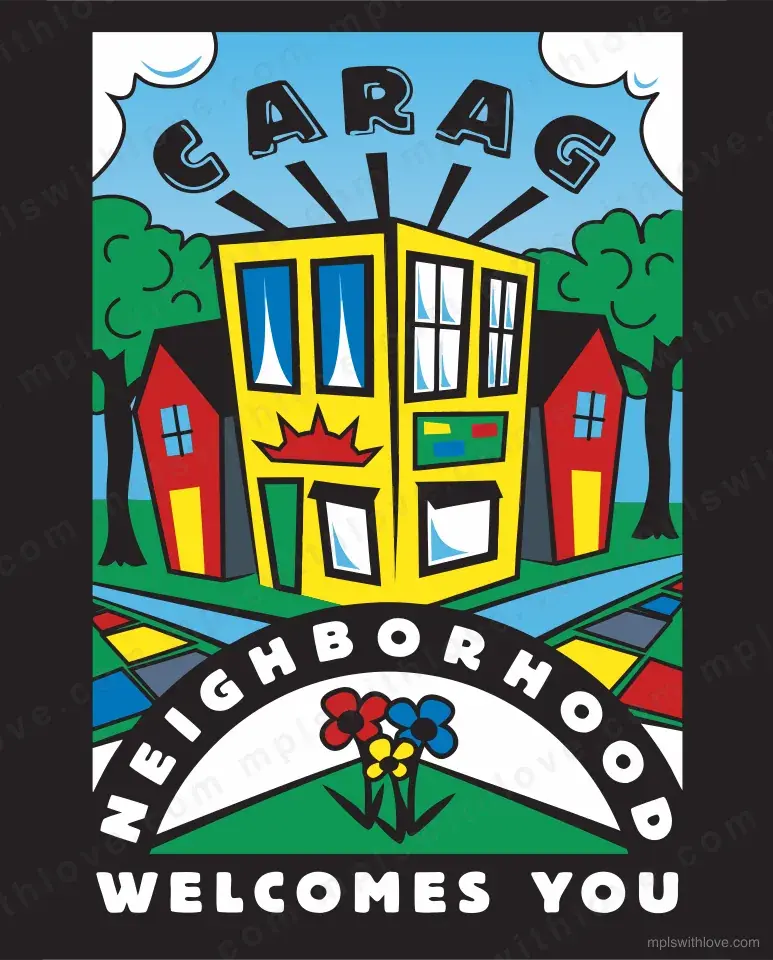
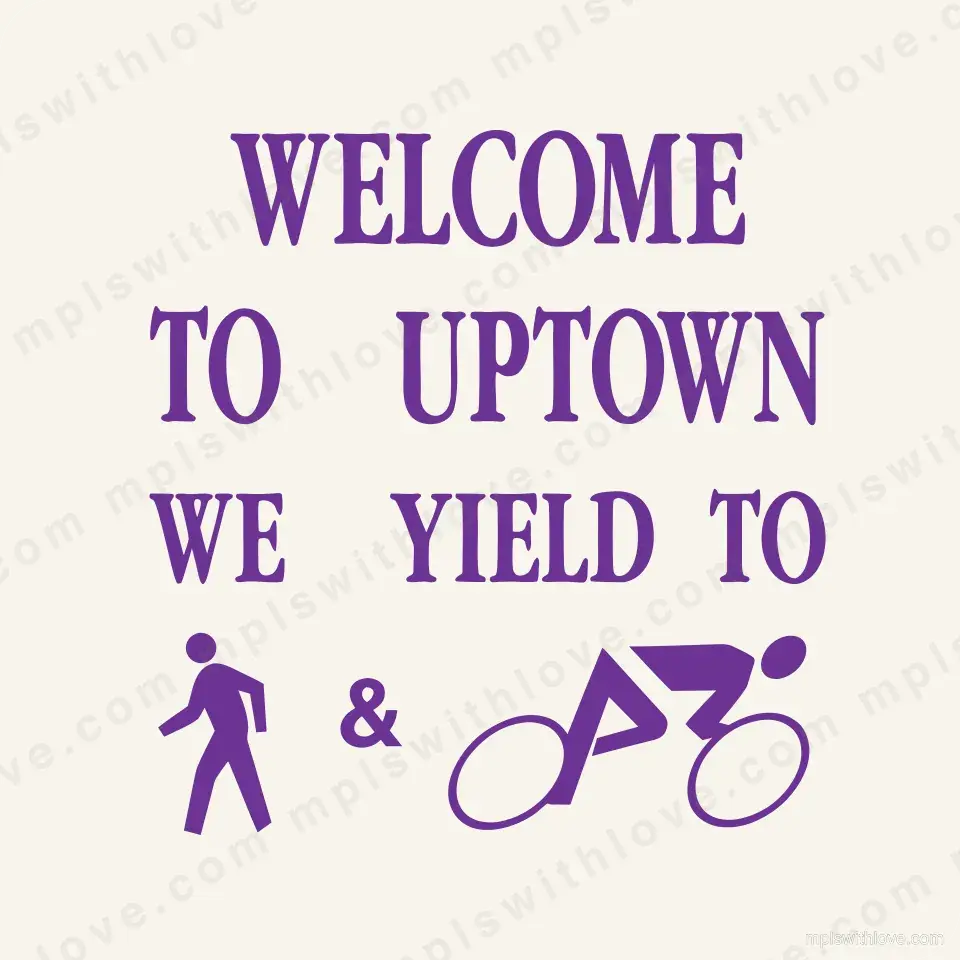
The sign, printed
South Uptown, Minneapolis — Key Stats (2025–2026)
- Residents (2020 Census)
- ~6,100
- Median home sale price (2025 data)
- $425K
- Median rent, all units (2020–24 ACS)
- $1,344
- Walk Score (Oct 2026)
- 87
- Bike Score (Oct 2026)
- 93
- Transit Score (Oct 2026)
- 58
- Renter-occupied homes (2020–24 ACS)
- 66%
- Distance to Bde Maka Ska shoreline
- 0.5 mi
- Restaurants & bars within neighborhood
- 40+
South Uptown History & Origins
Before European settlement, the land that is now South Uptown was part of the homeland of the Dakota people — specifically the Mdewakanton, for whom the lakes of this region were not recreational amenities but part of a landscape of spiritual and material sustenance. Bde Maka Ska — which translates to “White Earth Lake” in Dakota — was a fishing ground long before it was a beach destination. In 1829 the Dakota leader Cloud Man founded a farming village, Heyáta Othúŋwe, on the uplands east of the lake; an 1835 map shows it reaching east past Fremont Avenue, into blocks that are now part of South Uptown. The band left in 1839. The Dakota name of the lake was restored in 2018, with the approval of the Minnesota Department of Natural Resources, after it had been called Lake Calhoun for nearly 200 years, named after John C. Calhoun, a slaveholding U.S. Vice President and Secretary of War. The renaming was contested in court until the Minnesota Supreme Court upheld it in 2020 — a small correction to a large historical wrong, and one that still generates arguments at dinner parties across the city.
The area that would become South Uptown developed in the late 19th century as Minneapolis expanded outward from the milling district along the Mississippi River. The lake drew day-trippers and resort guests early on, but the bulk of South Uptown's residential development was more modest: small frame houses, duplexes, and modest bungalows. The neighborhood filled in rapidly between the 1880s and 1920s, following the streetcar lines that connected the area to downtown Minneapolis. The streetcar, which reached Lake Street in the 1880s, was the technology that made this neighborhood possible, turning lake-adjacent land into desirable urban real estate within a single generation.
The “Uptown” name dates to 1929, when local businessmen began using it for the district around Lake and Hennepin, and it has always referred more to the commercial district than to any specific neighborhood. By 1980, when Prince put the place in a song, the area around Lake and Hennepin had a low-rent, artsy, bohemian reputation. The Uptown Theatre on Hennepin Avenue, which opened as the Lagoon in 1916 and took the Uptown name in 1929, was a landmark of this era — the kind of place where you could see a double feature on a Tuesday night and run into half the people you knew.
South Uptown, as a name, came much later. One of the city's 83 residential neighborhoods, it went by CARAG until the late 2010s; the South Uptown Neighborhood Association put up South Uptown signs in place of the old CARAG ones in 2019.
The 1990s and 2000s brought the commercialization that would define — and eventually complicate — the Uptown brand. National retailers moved into Calhoun Square (now Seven Points) on Hennepin Avenue. New apartment buildings went up along the corridors. The area became a destination for young professionals and a genuine nightlife district, drawing crowds from across the metro on weekends. South Uptown benefited from the energy while being buffered from the worst of the weekend rowdiness by the physical barrier of Lake Street. It was close enough to walk to the fun, far enough to walk home to quiet.
Then came the reckoning. The period from 2019 to 2022 was devastating for the broader Uptown area. The pandemic shuttered businesses. The murder of George Floyd in May 2020 and the subsequent unrest damaged storefronts along Lake Street. In 2021, the fatal shooting of Winston Boogie Smith Jr. by deputies on a U.S. Marshals task force at a parking ramp near Lake and Girard sparked protests and further unrest in the immediate Uptown area. Businesses left. Foot traffic collapsed. The “Uptown is dead” narrative took hold in local media and never fully let go. South Uptown, again, weathered this better than the Hennepin corridor — but the psychological impact was real, and the commercial vacancies on Lake Street are a visible reminder that recovery is incomplete.
Living in South Uptown
The easiest way to understand South Uptown is to walk it on a summer evening and notice what you don't see. You don't see the crowds spilling out of Hennepin Avenue bars that you would a few blocks north. You don't see the bumper-to-bumper traffic circling for parking that defines Uptown proper on a Friday night. What you see instead are people on porches, dogs in yards, couples walking toward the lake with no particular urgency, and the low hum of a neighborhood that is close to the action without being consumed by it. South Uptown's defining quality is this proximity without immersion — you can walk to the Lyn-Lake bars in ten minutes and walk home to a street quiet enough to hear crickets.
The physical character of the neighborhood is a mix of eras and scales. The residential blocks south of Lake Street are mostly low-rise — two-story houses, many of them built between 1900 and 1940, interspersed with courtyard apartment buildings from the mid-20th century and the occasional newer infill development. Some blocks have a distinctly residential, almost suburban feel despite being three miles from downtown. Others, particularly those closer to Lyndale Avenue or Lake Street, have the density and variety of a neighborhood that has been building and rebuilding itself for over a century. The architectural coherence is low — this is not a neighborhood of consistent style — but the tree canopy is mature, the lots are well-maintained more often than not, and there is a pleasantness to the streetscape that photographs better in October than in description.
The demographic profile skews young and white, though the neighborhood is more diverse than it was a decade ago. South Uptown's population is heavily composed of renters in their twenties and thirties — young professionals, graduate students, people early in careers who want lake access and walkability and are willing to pay for it. There is a homeowner contingent — particularly on the blocks closest to the lake, where single-family homes are larger and more expensive — and a small but visible population of long-term residents who predate the neighborhood's transformation into a young-professional enclave. The blend creates a community that is transient in places and rooted in others, with the ratio shifting block by block.
The lake is the center of gravity. Bde Maka Ska is not just a recreational amenity for South Uptown — it is the reason the neighborhood exists in its current form, the thing that justifies the prices, the feature that makes the location work. Morning joggers circuit the 3.1-mile loop before work. Summer weekends bring paddleboarders, kayakers, swimmers, and sunbathers to the north shore. The lakeside paths connect to Lake of the Isles to the north and Lake Harriet to the south, creating a continuous recreational corridor that is one of the genuine treasures of urban America. If you live in South Uptown and you don't use the lake, you are paying a premium for a feature you're ignoring — which is your right, but the neighborhood will not understand you.
Neighboring Whittier to the northeast is denser, more diverse, and grittier — its Eat Street corridor offers food South Uptown can't match for range or price. East Bde Maka Ska to the west, across Hennepin, has the actual lakefront and is quieter still. Lowry Hill East (the Wedge) to the north has the co-ops, the density, and the longest-running countercultural streak in south Minneapolis. South Uptown sits in the middle of these influences — absorbing some of each, defined entirely by none.
The seasonal rhythm matters more here than in neighborhoods farther from the lakes. South Uptown in July and South Uptown in January are almost different places. Summer brings the porches to life, fills the Greenway with cyclists, turns the lakefront into an all-day social scene, and extends the evening by hours — the 9:00 p.m. sunsets of late June are part of the neighborhood's personality. Winter is the test. The lake freezes. The patios close. The Greenway goes quiet except for the hardiest commuters. The streets narrow to one lane between snowbanks. People who love South Uptown in winter love it differently — for the cross-country skiing on the lake, for the way the snow quiets the city, for the bars that feel warmer when it's dark at 4:30. People who can't find that love sometimes leave. The neighborhood doesn't blame them.
Community engagement in South Uptown is present but not overwhelming. The South Uptown Neighborhood Association (SUNA) holds regular meetings, weighs in on development proposals, and organizes community events. The Lyn-Lake Business Association advocates for the commercial corridor. Block clubs exist on some streets and are absent on others. The civic culture here is less intense than in neighborhoods with more active development controversies — South Uptown residents tend to be engaged enough to show up when something affects their block, but not so organized that there's a committee for everything. The culture is more live-and-let-live than activist, which is either a relief or a frustration depending on your temperament.
South Uptown Food, Drink & Local Spots
South Uptown's dining scene lives primarily on two corridors: Lyndale Avenue, which runs along the neighborhood's eastern edge and offers the most concentrated stretch of restaurants; and Lake Street, the northern boundary, where the options are more scattered and the vacancies are more visible. The Lyn-Lake intersection — where these two corridors meet — is the neighborhood's commercial nucleus, and it punches above its weight for a node this size. You won't find the ethnic range of Whittier's Eat Street, but what you will find is a curated-by-accident collection of bars, restaurants, and coffee shops that serve the neighborhood well without trying to be a destination — though a few of them are exactly that.
Lyndale Avenue Corridor
2940 Lyndale Ave. S., just north of Lake Street in Lowry Hill East. Billed as the first sake brewpub outside of Japan, brewing junmai ginjo sake in-house since 2008 and pairing it with izakaya-style food. The rooftop patio is one of the best warm-weather hangouts around Lyn-Lake. Ramen is solid; sake flights are the real draw.
711 W. Lake St. A speakeasy-style cocktail bar tucked behind an unmarked door — the kind of place that takes its drinks seriously without taking itself too seriously. The cocktails are excellent and creative, the lighting is dim, and the vibe is decidedly grown-up in a neighborhood that sometimes skews collegiate. Worth finding. Cash and cards accepted.
2600 Lyndale Ave. S., about half a mile up Lyndale in Lowry Hill East. A legendary Minneapolis dive bar that has outlasted every trend the neighborhood has cycled through. The burgers are good, the beer is cold, the jukebox is democratic, and the clientele spans every demographic that lives within walking distance. CC Club is the kind of bar that every neighborhood needs and few still have — unpretentious, consistent, and open when you need it to be.
Lake Street & Beyond
1600 W. Lake St., a few blocks west of Hennepin in East Isles. Barbette has been an anchor of the Uptown dining scene for over two decades, serving French-inflected bistro food in a space that manages to feel both casual and considered. The steak frites are reliable. The weekend brunch draws a crowd that skews toward people who know what a croque monsieur is and want a good one. The patio is excellent in summer — one of the better outdoor dining spaces in south Minneapolis.
2916 Hennepin Ave. S., on the East Isles corner of Lake and Hennepin. The closure of Chino Latino in 2020 — a fusion restaurant that had been an Uptown landmark for two decades — was a signal of the shifts hitting the area. Its former space has seen turnover since, a visible marker of Uptown's commercial instability.
Coffee & Morning Rituals
South Uptown's coffee options reflect the neighborhood's personality — a mix of local chains and independents that take their beans seriously without requiring you to have an opinion about extraction ratios. Spyhouse Coffee has a location on Nicollet in Whittier, about a mile northeast of the neighborhood, and draws South Uptown residents with reliable pour-overs and a minimalist aesthetic that photographs well. For something less curated, the neighborhood's corner cafés and bakeries serve the people who want coffee and a muffin without a brand experience.
The Grocery Situation
South Uptown's one notable gap is a full-service grocery store within the neighborhood's core. Kowalski's Market, an upscale local chain, has a location on Hennepin about six blocks north of Lake Street. The Wedge Co-op on Lyndale Avenue — one of the largest natural foods co-ops in the country — serves residents who want organic produce and are willing to pay for it. Between these options, the gap is manageable, but if a full-size grocery within walking distance of your front door is non-negotiable, check the map before you sign a lease.
Parks, Lakes & Outdoors Near South Uptown
This is South Uptown's strongest hand, and the neighborhood knows it. Access to the Minneapolis Chain of Lakes — one of the finest urban park systems in the country — is the fundamental reason this neighborhood commands the prices it does. The lakes are not a bonus feature here. They are the feature.
Bde Maka Ska
Bde Maka Ska (formerly Lake Calhoun) is the largest lake in the Minneapolis Chain of Lakes at 401 acres, and its eastern shore sits a few blocks west of South Uptown, past Hennepin Avenue. The lake offers a 3.1-mile paved loop for walking, running, and biking; three public swimming beaches (North Beach, 32nd Street Beach on the east shore, and Thomas Beach on the south shore, which has lifeguards in summer); canoe, kayak, and paddleboard rentals; sailing; fishing; and some of the best people-watching in the city. In winter, the frozen lake hosts ice fishing, fat tire biking, and cross-country skiing. The lakeside pavilion on the north shore has seasonal food and drink service.
For South Uptown residents, the lake is the backyard. Morning runners are on the loop by 6 a.m. After-work paddleboarding is a genuine lifestyle here, not an Instagram performance. The sunset views from the north shore — facing west over the water toward the tree line — are extraordinary on clear evenings and have sold more apartments in this neighborhood than any realtor.
The Chain of Lakes
Bde Maka Ska connects via parkway and trail to Lake of the Isles to the north and Lake Harriet to the south, creating a continuous chain of parkland, paths, and water that stretches for miles. The Grand Rounds Scenic Byway — the 50-mile loop of parkways and trails encircling the city — passes through here, and the Chain of Lakes segment is its crown jewel. You can bike from South Uptown to Lake Harriet's bandshell in 15 minutes, or north to Lake of the Isles and Cedar Lake in roughly the same time. The system was designed by landscape architect Horace Cleveland in the 1880s and refined over the following century — it is one of the great pieces of urban park design in the United States, and South Uptown sits just east of it.
The Midtown Greenway
The Midtown Greenway runs a block north of South Uptown, just past Lake Street — a 5.5-mile paved trail built in a below-grade former railroad trench, running from the Chain of Lakes in the west to the Mississippi River in the east. It is one of the most heavily used bike commuter routes in the Upper Midwest, carrying more than a million trips a year. The below-grade design means no street crossings for most of its length — a rare luxury that makes it faster and safer than surface-street cycling. In winter, it's plowed and maintained for year-round use. The Greenway is not just a trail — it is a piece of transportation infrastructure that fundamentally changes the calculus of car-free living in South Uptown.
Winter on the Lakes
Minneapolis earns its summers, and one of the ways it earns them is by using its winters. When Bde Maka Ska freezes — typically by late December or early January — the lake transforms into a different kind of public space. Ice fishing houses dot the surface. Cross-country skiers trace paths around the shore. Fat-tire bikers ride the plowed trails. The frozen expanse itself becomes a vast, flat, startlingly quiet playground for anyone willing to bundle up. South Uptown residents who embrace winter will tell you that the frozen lake at sunset — the sky pink and purple over a white surface that stretches to the far tree line — is as beautiful as anything the summer offers. They are not wrong.
Neighborhood Parks
In and around the neighborhood, smaller parks serve the daily needs that the lakes can't. Bryant Square Park, at 31st Street and Bryant Avenue, has a recreation center, a playground, and a winter skating rink. Painter Park, just across Lyndale Avenue on 34th Street, includes a playground, basketball courts, and a small community gathering space. The Minneapolis Park and Recreation Board — one of the only elected park boards in the country — maintains these spaces, and their quality reflects a city that takes its parks seriously even when budgets are tight. The park system here is not an afterthought — it is a defining public investment that makes dense urban living genuinely pleasant, and South Uptown sits close to the best of it.
South Uptown Schools
South Uptown's school options reflect both the strengths and the complexities of the Minneapolis Public Schools (MPS) system. Like most central Minneapolis neighborhoods, families here have choices — but navigating those choices requires understanding the district's open enrollment system and being realistic about the trade-offs.
For elementary-age children, nearby options include Lyndale Community School, a pre-K through 5th grade school that emphasizes community engagement and has a diverse student body; the district's school finder shows the assigned school for a specific address. Other MPS options are available through the district's enrollment process, which allows families to apply to schools across the city based on interest and availability. The system provides flexibility but also requires proactive navigation — this is not a neighborhood where you simply enroll at the school on the corner without research.
Middle school options include Anwatin Middle School in the Bryn Mawr neighborhood. For high school, the comprehensive schools in this part of the city include Southwest High School in the Linden Hills area — one of the higher-performing high schools in the MPS system, with strong programs in International Baccalaureate, arts, and athletics — and South High School, on 19th Avenue South, which has a diverse student body and programs in engineering, visual arts, and world languages.
Private and charter school options in the broader area include the Blake School (a well-regarded independent school with a campus in Hopkins and another in Minneapolis), Minnehaha Academy, and several smaller charter options. Many South Uptown families with school-age children are deliberate and active in their school choices — it's a neighborhood where parents talk about schools the way they talk about restaurants, with strong opinions and a willingness to drive across town for the right fit.
South Uptown Real Estate & Housing
South Uptown's housing market occupies a middle ground in the Minneapolis landscape — more expensive than the working-class and immigrant neighborhoods to the east, but well below the lakefront premiums of Linden Hills or Kenwood. What you get for your money is location — lake proximity, walkability, and urban convenience — in exchange for the older housing stock, denser living, and street parking competition that come with a central neighborhood.
Rental Market
The majority of South Uptown residents rent, and the rental market is the neighborhood's economic engine. Census estimates put the median rent across all units at about $1,340 a month, just under the city's $1,371, with newer buildings at the top of the range and older walk-ups — many of them charming courtyard buildings from the 1920s through 1950s — cheaper if you're lucky and persistent. The newest apartment complexes, with in-unit laundry, rooftop decks, and fitness centers, command the highest rents.
The rental market has softened slightly from its pre-pandemic peak, partly due to new supply coming online and partly due to the broader Uptown area's reputational challenges. This is actually a reasonable moment to look for an apartment here — landlords are more willing to negotiate than they were in 2018, and vacancy rates in some of the newer buildings have given renters modest leverage. That window may not stay open.
Buying in South Uptown
For buyers, the market splits into two distinct categories. Condominiums — which are common here, both in converted older buildings and in purpose-built condo developments, and made up about a quarter of 2025 sales — offer a more affordable entry point to homeownership than single-family homes. The condo market has been sluggish in recent years as buyer preferences have shifted toward more space, and HOA fees add a monthly cost that can make the total payment comparable to a small house in a less central neighborhood.
Single-family homes in South Uptown are the real prize — and they're priced accordingly. The neighborhood's median sale price, homes and condos together, was $425,000 in 2025, according to Minneapolis Area REALTORS, well above the city's $350,000, and older bungalows, Craftsman-style homes, and occasional Victorians closest to the lake and in the best condition sell for more than that. These are not large homes by suburban standards, and they sit on modest lots, but the location premium is baked into every square foot. Duplexes and small multi-family buildings, which are common throughout the neighborhood, attract both owner-occupants (who live in one unit and rent the other) and investors.
New Development
New construction in South Uptown has been concentrated along the commercial corridors — Lake Street and Lyndale Avenue — where zoning allows for mid-rise mixed-use buildings. Several four-to-six-story apartment buildings have gone up in the past decade, adding market-rate and some income-restricted units. The Minneapolis 2040 Plan, which eliminated single-family-only zoning citywide, has enabled additional density on the residential blocks, though teardowns and new construction on interior streets remain relatively uncommon. The development conversation here is less heated than in some neighborhoods — South Uptown was already dense enough that new buildings don't feel as jarring — but concerns about character, parking, and affordability accompany every new proposal.
Getting Around South Uptown
South Uptown is, by any reasonable measure, one of the most multi-modal neighborhoods in Minneapolis. The Walk Score of 87 reflects the fact that most daily needs — restaurants, coffee, bars, parks — are within a 15-minute walk. The Bike Score of 93 is among the highest in the city, driven by the Midtown Greenway, bike lanes on Lyndale and other streets, and the Chain of Lakes trail system. The Transit Score of 58 reflects good but not exceptional bus service — useful for commuting to downtown or the University of Minnesota, less reliable for cross-town trips.
Biking is the mode that South Uptown does best. The Midtown Greenway is essentially at the neighborhood's doorstep, a block north of Lake Street, providing a car-free, below-grade route east to the Mississippi River, with trail links north to downtown (about 15 minutes by bike). The Chain of Lakes trails offer recreational cycling that is hard to match anywhere in the Midwest. Bike-share stations are scattered throughout the area for those who don't own a bike. In a city where cycling infrastructure is taken seriously, South Uptown is one of the best-served neighborhoods.
Bus service runs on Lyndale Avenue (Route 4), Lake Street (the METRO B Line), and Hennepin Avenue (the METRO E Line) — the three main arterials bordering the neighborhood. The Route 4 on Lyndale connects to downtown in about 15-20 minutes during peak hours. The B Line on Lake Street runs east-west from France Avenue to downtown St. Paul, with stations at Lake and Lyndale and at Lake and Hennepin. The E Line on Hennepin stops at 33rd and 36th Streets, along the neighborhood's western edge.
Driving is fine — you're close to I-94 via Lyndale or Hennepin, putting downtown within a 10-minute drive and MSP Airport within 20 minutes. The challenge, predictably, is parking. Street parking on the residential blocks is usually manageable, but the commercial corridors near Lyn-Lake and the lakefront can be competitive on summer evenings and weekends. Most apartment buildings include some parking, but not always enough for every tenant. Winter snow emergencies add another layer of parking complexity — the city's alternate-side rules are strictly enforced, and towing is expensive.
What's Changing: The Honest Version
South Uptown sits at the intersection of several forces that are reshaping Minneapolis, and the neighborhood's evolution over the next five years will be shaped by how those forces resolve — if they resolve at all. A neighborhood guide that doesn't address these dynamics honestly is a brochure, not a guide.
The Uptown Identity Crisis
The elephant in every room in this neighborhood is the decline of the Uptown brand. From the mid-1990s through roughly 2018, “Uptown” was shorthand for young, urban, walkable Minneapolis — the part of the city where twentysomethings went on weekends, where the bars stayed open late, where the energy was. That identity has fractured. The Hennepin Avenue corridor around Lake Street has lost major tenants, including anchor businesses at the former Calhoun Square. Storefronts sit empty. Foot traffic on weekend evenings is a fraction of what it was a decade ago. The local media has been writing the “death of Uptown” story for years, and while the narrative is overstated — people still live here, businesses still open, the lakes still draw crowds — the gap between the brand's peak and its current reality is genuine.
South Uptown's relationship to this decline is complicated. The neighborhood is geographically “Uptown” but was never the part of Uptown that the brand was built on. Its identity was always more residential, more lake-oriented, less dependent on the Hennepin Avenue commercial strip. In some ways, the decline of Uptown proper has been clarifying — it has forced South Uptown to define itself on its own terms rather than as a supporting player in someone else's narrative. The Lyn-Lake corridor, in particular, has emerged as a commercial center in its own right, distinct from Hennepin and arguably more sustainable.
Crime and the Post-2020 Recovery
Crime in the broader Uptown area spiked dramatically in 2020 and 2021 — a pattern consistent with cities nationwide but intensified locally by the unrest following George Floyd's murder and the subsequent upheaval in policing and public safety. Carjackings, which had been relatively rare in the area, became a regular occurrence. Property crime — car break-ins, vandalism, catalytic converter theft — increased substantially. The shooting of Winston Boogie Smith Jr. by a U.S. Marshals task force in June 2021, and the protests and property damage that followed, was a particularly traumatic event for the immediate area.
By 2024 and 2025, the situation has improved from those peaks but has not returned to pre-2019 baselines. The Minneapolis Police Department, which lost hundreds of officers through attrition and resignation in the years after 2020, has been slowly rebuilding — but staffing remains below target, and response times for non-emergency calls can be long. South Uptown residents report feeling generally safe on the residential blocks during daylight but more cautious at night near the commercial corridors. Property crime remains a fact of life — lock your bike, lock your car, don't leave packages on the porch.
Commercial Vacancy and Recovery
The commercial corridors in and around South Uptown — Lake Street, Hennepin Avenue, and to a lesser extent Lyndale Avenue — still carry visible scars from the upheaval of 2020-2021. Storefronts that were damaged and never rebuilt. Spaces that have turned over multiple times. National chains that left and haven't returned. The recovery is real but uneven — Lyndale Avenue has fared better than Hennepin, and the Lyn-Lake node has maintained most of its anchors. But the overall commercial vitality of the area is below where it was five years ago, and the question of what fills those vacancies — and when — remains open.
There are signs of reinvestment. New restaurants and shops have opened. The neighborhood's fundamentals — lake proximity, density, young population — support commercial activity. But the pattern is one of slow recovery rather than rapid rebound, and anyone moving here should calibrate their expectations accordingly.
The Lake Name and Other Fault Lines
The renaming of Lake Calhoun to Bde Maka Ska — its Dakota name — has been resolved legally but remains a social fault line. Some residents use the Dakota name exclusively; others still say Calhoun; many alternate depending on audience. The debate, which peaked between 2015 and 2020, has quieted but not disappeared, and it maps imperfectly onto other divisions in the area — generational, political, racial. It is a reminder that even in a neighborhood this small, people experience the same geography through different histories.
Density and Development
New apartment construction continues along the corridors, adding units to a neighborhood that was already one of the denser parts of south Minneapolis. The Minneapolis 2040 Plan enables additional density on residential blocks as well, though teardowns on interior streets remain relatively uncommon. The development conversation in South Uptown is less contentious than in some neighborhoods — partly because the neighborhood was already dense, and partly because the renter-heavy population tends to be more supportive of new housing supply than homeowner-dominated communities. But concerns about parking, building scale, and affordability surface with every new project, and the tension between growth and character is a permanent feature of life in a desirable, centrally located neighborhood.
South Uptown FAQ
Is South Uptown a good neighborhood in Minneapolis?
South Uptown is one of the better-balanced neighborhoods in Minneapolis — walkable, bikeable, close to the lakes, and with enough restaurants and bars to keep you fed and entertained without driving. It's quieter and more residential than what people imagine when they hear 'Uptown,' with less nightlife chaos and more tree-lined side streets. The trade-offs are parking (competitive), crime (moderate — better than some central neighborhoods, worse than southwest), and the fact that some of the commercial energy along Lake Street and Hennepin has faded since the pandemic. If you want lake access and urban convenience without full-on downtown density, South Uptown delivers.
Is South Uptown, Minneapolis safe?
South Uptown's safety profile is moderate by Minneapolis standards. Property crime — car break-ins, bike theft, catalytic converter theft — is a regular occurrence, especially near the commercial corridors. Violent crime exists but is lower than in some adjacent neighborhoods and tends to concentrate around the Lyn-Lake intersection and parts of Lake Street. The area saw significant disruption during and after 2020, and recovery has been uneven. Most residents feel comfortable walking during the day and reasonably so at night on well-lit streets, but awareness matters here more than in suburban neighborhoods.
What is the difference between Uptown and South Uptown?
When most people say 'Uptown,' they mean the commercial district around Hennepin Avenue, Lake Street, and Lagoon Avenue — which is technically split between several neighborhoods including Lowry Hill East (the Wedge), East Bde Maka Ska, and parts of South Uptown. South Uptown is the official neighborhood name for the area south of Lake Street, west of Lyndale Avenue, north of 36th Street, and east of Hennepin Avenue. It includes the southwest corner of Lyn-Lake but is mostly residential. Think of it as the quieter backyard behind the Uptown show.
How much does it cost to live in South Uptown?
Census estimates put the median rent across all units at about $1,340 a month, close to the city's $1,371, with newer buildings at the higher end and older walk-ups cheaper if you're willing to sacrifice amenities. The median sale price for homes and condos was $425,000 in 2025, according to Minneapolis Area REALTORS, well above the city's $350,000; single-family homes — mostly older bungalows and Craftsman-style houses — are priced by condition and proximity to the lake. Sale prices run higher than in Whittier or Powderhorn but well below Linden Hills or Kenwood.
Is South Uptown walkable?
Very. The Walk Score of 87 reflects excellent access to restaurants, grocery stores, coffee shops, and transit along Lyndale Avenue and Lake Street. You can walk to Bde Maka Ska in 10-15 minutes from most addresses, and the Lyn-Lake commercial district is the neighborhood's front porch. Where it falls slightly short of a perfect walkability score is the relative lack of a full-service grocery store within the neighborhood boundaries — most residents walk or bike to the Kowalski's in Uptown proper.
What is the Lyn-Lake area?
Lyn-Lake refers to the commercial intersection and surrounding blocks where Lyndale Avenue meets Lake Street — the corner shared by South Uptown, Lowry Hill East, Whittier, and Lyndale. It's a nightlife and dining hub that has evolved considerably over the years — once a grittier bar corridor, it gentrified through the 2000s and 2010s, then lost some tenants post-pandemic. It still has a core of good restaurants, bars, and shops, and Lyndale Open Streets, when Lyndale Avenue closes to cars for a day, has been a major community event. It's not what it was in 2015, but it's not dead either.
What schools serve South Uptown?
South Uptown is served by Minneapolis Public Schools. Assignments vary by address, so check the district's school finder; MPS options in this part of the city include Lyndale Community School (pre-K through 5th grade), Anwatin Middle School, and Southwest High School. Several charter schools and private options exist within a short drive, and the MPS open enrollment system allows families to apply to schools across the city.
Can you live in South Uptown without a car?
Yes, and some people do — about one household in seven has no car, per Census estimates, a little under the city rate. The Bike Score of 93 is among the highest in Minneapolis, reflecting excellent cycling infrastructure including the Midtown Greenway (a car-free east-west bike highway), bike lanes on Lyndale and other streets, and proximity to the Chain of Lakes trail system. Bus routes on Lyndale Avenue and Lake Street connect to downtown and the light rail. Walking covers most daily needs. A car is helpful for suburban errands and winter convenience, but plenty of South Uptown residents live happily without one.
What is the Midtown Greenway?
The Midtown Greenway is a 5.5-mile paved bike and pedestrian trail built in a below-grade former railroad corridor that runs east-west across south Minneapolis. Its western end connects to the Chain of Lakes at Bde Maka Ska, and its eastern end reaches the Mississippi River. The Greenway runs a block north of Lake Street, just past South Uptown's northern edge, and is one of the most heavily used bike commuter routes in the region. It's also a recreational trail, a cross-country ski route in winter, and an increasingly important piece of urban infrastructure.
Is South Uptown gentrifying?
South Uptown has already gentrified considerably from its earlier decades — it was once a much more affordable neighborhood. The current dynamic is more about stabilization and identity crisis than active displacement. Rents have plateaued somewhat after years of increases, and the commercial vacancies along Lake Street and Hennepin that followed the pandemic have created an unusual moment where the neighborhood is simultaneously expensive for buyers and uncertain about its commercial future. New development continues, but the rapid change of the 2010s has slowed.
What happened to Uptown Minneapolis?
The 'Uptown' brand — which South Uptown shares by geography — has been in decline since roughly 2019-2020. The combination of pandemic closures, civil unrest following George Floyd's murder, rising crime, and shifting retail patterns hit the Hennepin-Lake corridor hard. Anchor businesses closed, storefronts went empty, and the area's reputation as a nightlife destination faded. Recovery has been slow and uneven. South Uptown, being more residential and less dependent on the Hennepin Avenue commercial strip, weathered the decline better than Uptown proper — but the association lingers, and the neighborhood's identity is still being renegotiated.
What Makes South Uptown Worth Knowing
South Uptown doesn't have a brand problem — it has an identity that most people never bother to discover beneath the larger 'Uptown' label. The neighborhood's real character lives in the residential blocks south of Lake Street, where century-old houses sit beside apartment buildings, where the lake is close enough to smell on a humid August evening, and where the Greenway offers a car-free commute that feels almost European in a city built for driving. It's a place that works well for people who want to be close to things without being in the middle of them — urban enough to walk everywhere, quiet enough to sleep with the windows open on most nights.
The honest version is that South Uptown is navigating an uncertain moment. The Uptown commercial district that once defined the area's energy has lost some of its shine, and the neighborhood is figuring out what comes next. But the fundamentals — lake access, walkability, a strong Lyndale Avenue dining corridor, the Greenway, tree-lined residential streets — haven't changed. The people who live here aren't waiting for Uptown to come back. They're building something quieter and more sustainable in the blocks where they actually sleep, and that version of South Uptown is worth paying attention to.

From the shop
Take the Uptown sign home.
Uptown — Minneapolis Neighborhood Sign Print
Keep exploring
South Uptown appears in
- Best Brunch
- Best Burgers and Juicy Lucys
- Best Chinese Food & Dim Sum
- Best Coffee Shops by Neighborhood
- Best Food Neighborhoods
- Best Food Trucks
All 29 guides ↓Show fewer ↑
- Best Happy Hours
- Best Ice Cream
- Best Indian Food
- Best Korean Food
- Best Late Night Food
- 10 Best Neighborhoods
- Best Neighborhoods for Dog Owners
- Best Neighborhoods for Nightlife
- Best Neighborhoods for Public Transit
- Best Neighborhoods for Remote Workers
- Best Neighborhoods for Renters
- Best Neighborhoods for Young Professionals
- Best Neighborhoods Near the Lakes
- Best Parks by Neighborhood
- Best Patios and Outdoor Dining by Neighborhood
- Best Pizza
- Best Ramen
- Best Restaurants on Lake Street
- Best Neighborhoods for Surviving (and Enjoying) Winter
- The History of Minneapolis Neighborhood Signs
- Most Bikeable Neighborhoods
- Most Walkable Neighborhoods
- Moving to Minneapolis