Minneapolis Neighborhood
Standish
South Minneapolis between 36th and 42nd, Cedar and Hiawatha — Standish is a neighborhood where the 38th Street corridor hums with immigrant-owned businesses, the residential blocks hold their ground, and daily life feels like the city at its most functional and least performative.
№ 73 of 87 · Powderhorn community · Last updated: October 2026 · A complete neighborhood guide
On a Saturday morning in September, 38th Street between Cedar and Hiawatha is doing what it does — functioning. Not performing, not branding, not waiting for a photographer from a lifestyle magazine. Functioning. A woman is buying injera from a Somali bakery while her daughter reads a book in the car. Two men are talking in Spanish outside a tienda. A cyclist threads between parked cars with a bag of groceries on his handlebars. The barber shop is already full. The laundromat is humming. Someone is loading a couch into a truck with the particular energy of a person who found it on Facebook Marketplace twenty minutes ago. Three blocks south, the residential streets are quiet in the way that south Minneapolis residential streets are always quiet on Saturday mornings — someone raking, someone walking a dog, a kid on a scooter going nowhere in particular. Standish doesn't announce itself. It doesn't have to. The people who live here know what it is, and the people who don't probably drove through on their way to somewhere else without noticing. That's fine. Standish has never needed the attention.
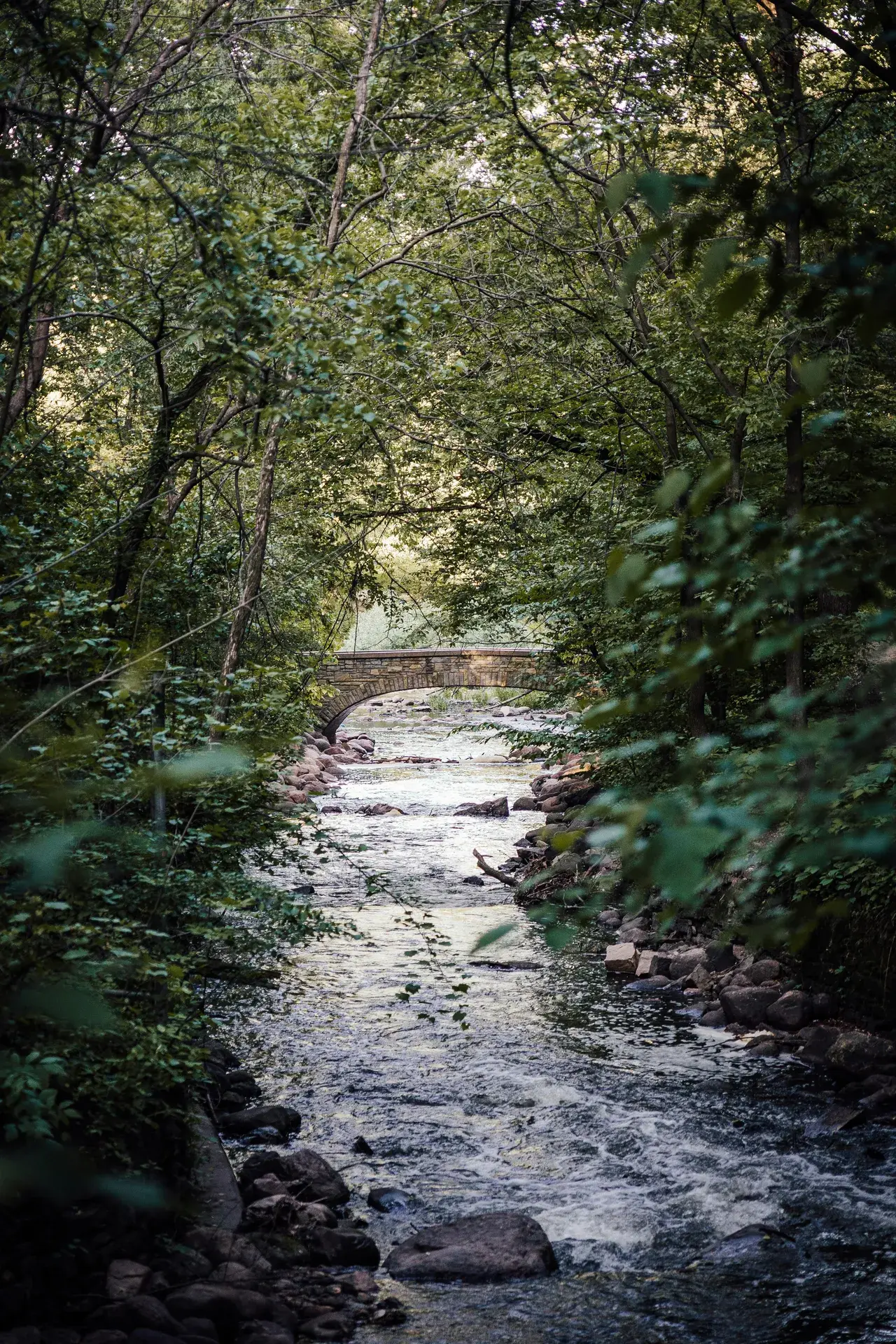
What is Standish, Minneapolis?
Standish is a residential neighborhood in south Minneapolis, bounded roughly by East 36th Street to the north, Hiawatha Avenue (Highway 55) to the east, East 42nd and 43rd streets to the south, and Cedar Avenue to the west. It covers a little over three-quarters of a square mile and is home to about 6,600 residents, according to the 2020 Census. To the north lies Corcoran. To the east, across Hiawatha Avenue, Howe and Hiawatha. To the south, Ericsson.
Standish shares its name with the Miles Standish School — named for the Plymouth Colony military leader — whose building on East 40th Street opened in 1920 and closed in 1981. There's nothing Pilgrim about Standish in 2026. What there is, instead, is a neighborhood that works: mostly owner-occupied, more racially mixed than the Nokomis neighborhoods to its south, anchored by a solid park, served by decent transit, and priced a little under the city median.
The 38th Street corridor through the neighborhood's northern half is the commercial and cultural backbone. It's not a curated restaurant row or a boutique shopping district — it's a working commercial strip where immigrant-owned businesses serve a diverse clientele, where the signage is in multiple languages, and where the food is authentic because it's cooked by people who grew up eating it. South of 38th, the neighborhood settles into the residential pattern that defines most of south Minneapolis: tree-lined streets, modest early-20th-century homes, deep lots, and the kind of lived-in stability that comes from blocks where people have been raising families for decades.
Standish Neighborhood Sign
Standish, Minneapolis — Key Stats (2025–2026)
- Residents (2020 Census)
- ~6,600
- Median home sale price (2025 data)
- $339K
- Days on market (2025 data)
- 22 days
- Neighborhood area
- 0.8 sq mi
- Era most homes were built
- 1900s–30s
- Drive to downtown or MSP airport
- 12–18 min
- Walk Score (Oct 2026)
- 69
- Bike Score (Oct 2026)
- 89
Standish History & Origins
Before European settlement, this land was Dakota homeland — part of the territory centered around Bdote, the sacred confluence of the Mississippi and Minnesota Rivers. The Dakota people lived, traveled, and gathered across these prairies and woodlands for centuries before treaties and forced removal reshaped the landscape: the land under Minneapolis was ceded in an 1805 treaty, and after the U.S.–Dakota War of 1862 most Dakota people were forced out of Minnesota. The flatlands of south Minneapolis were part of the broader Dakota world, and the ground here carries a history that predates every house sitting on it.
European settlement came to this area gradually through the late 19th century, and the city limits didn't reach past 38th Street until 1887. Houses followed in the early 1900s: the Miles Standish School opened in portable classrooms in 1915 and moved into a permanent building in 1920, and about two-thirds of Standish's homes date from before 1940.
The housing stock from this era tells the story of who built the neighborhood: working-class families. The homes are modest — Craftsman bungalows, simple two-story frame houses, the occasional Cape Cod — built to be functional rather than fashionable. These were houses for people who needed three bedrooms, a kitchen, a yard for the kids, and not much else. The lots are deep, the construction is solid, and the lack of pretension is baked into the architecture itself.
40th Street Park, known as Sibley Park until 2025, was established in the early 1920s and quickly became the neighborhood's anchor. The park, the school, and the church formed the trinity of community life that defined working-class south Minneapolis for most of the century. The neighborhood was stable, predictable, and self-contained — the kind of place where your kids and your neighbor's kids went to the same school and you all showed up at the same park on the same summer evenings.
Change in recent decades has been gradual. In 2000 the census counted Standish as about three-quarters white, with Black, Latino and Native American residents making up most of the rest, and the white share was about the same in 2020. The Latino population roughly doubled between 2000 and 2010. Today about a quarter of residents are people of color, and about one in ten was born outside the United States.
The events of 2020 — George Floyd's murder, the subsequent unrest, and the ongoing reckoning — touched Standish directly. The neighborhood sits close enough to 38th and Chicago (the site of Floyd's murder) that the reverberations were felt in daily life: protest marches, community meetings, difficult conversations about policing and race and what neighborhoods owe each other. Standish is still processing that moment, as is much of Minneapolis, and any honest account of the neighborhood has to acknowledge that 2020 changed things in ways that are still unfolding.
Living in Standish
Living in Standish means living in a neighborhood that isn't the Minneapolis of the lake neighborhoods and Southwest dinner parties, but the Minneapolis of working families and people who chose a neighborhood because they could afford it and then stayed because it turned out to be a real community. It is less diverse than the city as a whole — about three in four residents are white, by Census estimates, against about three in five citywide — but more mixed than the Nokomis neighborhoods to its south, and about seven in ten homes are owner-occupied.
The residential blocks south of 38th Street are calm and well- maintained — not manicured in the Southwest Minneapolis sense, but tidy in the way that blocks are tidy when the people who live there care about their homes without making a performance of it. Gardens are common. Porches are used. Kids ride bikes after school. The rhythms are seasonal and predictable: yard work in spring, grilling in summer, raking in fall, shoveling in winter. The basics of residential life, executed without drama.
40th Street Park is the community's center — a well-used park with a recreation center, ball fields, a playground, a wading pool, and winter skating. The rec center runs youth sports and community programming through the year. The park is where neighbors meet neighbors, where kids from different backgrounds end up on the same soccer team, where the neighborhood association holds its events. In a neighborhood without a commercial center or a natural landmark, the park is what makes Standish a community rather than just a collection of residential blocks.
The 38th Street corridor provides the commercial energy that the residential interior lacks. Walking 38th Street on any given day is a lesson in the actual economics of urban diversity — the small businesses here exist because there are customers who need what they sell, not because a developer identified a demographic and built a concept around it. The Somali tea shop exists because Somali families live nearby. The Mexican bakery exists because Mexican families live nearby. The business ecology is organic, responsive, and constantly shifting as the neighborhood's demographics evolve.
There's a groundedness to Standish that contrasts with the more self-conscious neighborhoods to the west and north. People here don't talk about their neighborhood the way Uptown residents or Northeast residents talk about theirs — as an identity, a brand, a lifestyle choice. Standish is where they live. The house was affordable. The park is good. The bus comes. That's the pitch, and for the people who live here, it's enough.
Standish Food, Drink & Local Spots
The food scene in Standish is defined by the 38th Street corridor — a commercial strip that won't win any design awards but will feed you honestly, affordably, and in ways that reflect the actual cultural composition of south Minneapolis. The rest of Standish is residential; the eating happens on 38th and at the edges.
The Go-To Spots
The stretch of Minnehaha Avenue just across Hiawatha in Howe hosts a mix of small businesses — coffee shops, neighborhood restaurants, and service businesses that serve the Longfellow-area neighborhoods.
The Real Food Economy
The honest truth about Standish's food scene is that it's built for residents, not visitors. The restaurants along 38th Street serve the people who live within a mile, and they price accordingly — $8 rice plates, $5 sambusa combos, $10 torta platters. This is not the kind of dining that generates reviews on Eater or makes "best of" lists. It's the kind of dining that feeds a neighborhood, and it does that job well. If you want a tasting menu and a wine pairing, you're in the wrong neighborhood. If you want food that tastes like someone's mother made it, you're in the right one.
Parks & Outdoors in Standish
Standish has solid park access anchored by 40th Street Park and connected to the broader south Minneapolis trail network.
40th Street Park
40th Street Park — Sibley Park until 2025 — is an 8-acre neighborhood park with a recreation center, ball fields, a playground, basketball courts, and open green space. The rec center offers year-round programming — youth sports, after-school activities, community meetings, and seasonal events. The playground was updated in recent years and draws families from across the neighborhood. In winter, the park maintains an ice skating rink. 40th Street Park isn't Minneapolis's most scenic park — it doesn't have a lake or a waterfall or a historic garden — but it does what neighborhood parks are supposed to do: provide a place for the community to gather, play, and connect.
Lake Nokomis
Lake Nokomis is about two-thirds of a mile south of Standish's border — a short bike ride or a longer walk. The lake offers a swimming beach, walking and biking paths, fishing, and the kind of lake access that makes Minneapolis's park system nationally famous. Nokomis is smaller and less crowded than Lake Harriet or Bde Maka Ska, which is part of its appeal. Standish residents use the lake regularly without having to pay the premium of living in the immediate lakeside neighborhoods.
The Trail Network
Standish connects to the broader Minneapolis trail network via the Hiawatha corridor, the Minnehaha Creek trail (accessible to the south), and the lakeside paths around Nokomis and Hiawatha. The Midtown Greenway is about a mile north — accessible by bike for commuting or recreation. The Bike Score of 89 reflects genuinely good cycling infrastructure, including bike lanes on key corridors and connections to the city's trail system. For a neighborhood at this price point, the outdoor access is a genuine selling point.
Standish Schools
Standish's school landscape is part of the broader south Minneapolis public school system — a system with real strengths in diversity and extracurricular programming, and real challenges in test scores and resource allocation.
Nearby elementary schools include Hiawatha and Howe, across Hiawatha Avenue in the neighborhoods of the same names, which the district runs as one school on two campuses. In September 2026 the district proposed either combining them in the Howe building or, in two of its three options, sending their students to Keewaydin, Northrop or Dowling; the school board is expected to vote Nov. 10. Assigned schools depend on the address, so check the district's school finder for a specific house.
Roosevelt High School sits inside the neighborhood, on 28th Avenue South, and South High School is a short way north in Corcoran.
Minneapolis's magnet school system provides alternatives for families seeking specialized programs, and many Standish families take advantage of the citywide options. Charter schools and private schools are also available in the surrounding area. The school decision in Standish is not simple — it requires research, visits, and honest assessment of what matters most to your family.
Standish Real Estate & Housing
Standish's median sale price was $338,750 in 2025, up from $308,000 in 2024, according to Minneapolis Area REALTORS — slightly below the citywide median of $350,000, and below Howe, Hiawatha and Ericsson next door. For buyers priced out of Southwest Minneapolis or the lake neighborhoods, Standish offers the chance to own a solid early-20th-century home with a real yard for something close to the cost of a condo in Uptown.
Homes sell quickly — 22 days on market in 2025 by the REALTORS' measure, against 55 citywide — and sellers received, on average, 101.8 percent of their original list price. Both figures beat Fulton and Linden Hills.
What Your Money Buys
Below the median, you're looking at small bungalows with original features — one bathroom, a narrow kitchen, maybe an unfinished basement with laundry. These homes need cosmetic work but are structurally sound. Around the median gets you a three-bedroom house with some updates — a remodeled kitchen, replacement windows, a finished basement or a deck. Well above it, you're into larger homes, extensive renovations, or occasional new construction.
The housing stock is mostly early 20th century — about two-thirds of it built before 1940, in the Craftsman bungalow and simple two-story frame styles that define working-class south Minneapolis. The construction is honest: hardwood floors, plaster walls, solid foundations. The lots are generous — deep backyards are a Standish hallmark. Most homes are modest in square footage but feel larger than they are because of the lot size and the room to expand.
Buyers should pay attention to location within the neighborhood. Blocks closest to Hiawatha Avenue are noisier. The quietest, most desirable blocks are on the residential interior, near 40th Street Park. The blocks along 38th Street get commercial traffic and associated noise. As with Corcoran to the north, the internal geography of Standish matters more than the neighborhood-level averages suggest.
Getting Around Standish
Standish has better transit access than most south Minneapolis neighborhoods, thanks to the Blue Line light rail running along Hiawatha Avenue. The 38th Street station is the most convenient for Standish residents, putting downtown Minneapolis approximately 15 minutes away by rail. MSP airport is about 12 minutes south on the same line. The Mall of America is at the end of the line.
Walk Score is 69 — good for a south Minneapolis residential neighborhood. The 38th Street corridor provides walkable access to grocery stores, restaurants, and services. 40th Street Park is walkable from most addresses. The Bike Score of 89 reflects strong cycling infrastructure — bike lanes, trail connections, and a cycling culture that makes two-wheeled commuting practical.
Bus routes along 38th Street and Cedar Avenue supplement the rail service. The Route 38 bus along 38th Street connects east to the Blue Line and west to Uptown and the lake neighborhoods — a crosstown route that's useful for residents who don't work downtown.
For car-based commuting, Standish is centrally located in south Minneapolis with good access to Hiawatha Avenue and I-35W. Downtown is 12–18 minutes depending on traffic. The airport is similarly accessible. Most residents own a car but use transit regularly enough that the Blue Line is a genuine part of daily life rather than a theoretical amenity.
The Hard Stuff
Standish has real challenges. Naming them honestly is more respectful than glossing over them.
Crime & Safety Perceptions
Standish's crime rates are higher than Southwest Minneapolis — a fact that shapes perceptions of the neighborhood more than any other single factor. Property crime is the most visible issue: vehicle break-ins, catalytic converter thefts, package theft. Violent crime exists but is concentrated in specific locations rather than evenly distributed. The 38th Street corridor sees more incidents than the residential interior. The perception of crime often exceeds the reality for people living on quiet residential blocks, but the perception matters — it affects property values, school enrollment decisions, and the narratives that outsiders build about the neighborhood.
The 2020 Impact
George Floyd's murder occurred at 38th and Chicago — close enough to Standish that the impact was direct and personal. The unrest, the protests, the conversations about policing and race, the disruption to commercial corridors — all of it touched Standish. The neighborhood is still navigating the aftermath, and any honest description of Standish in 2026 has to acknowledge that 2020 is part of the story — not the whole story, but an inescapable chapter.
Commercial Fragility
The small businesses along 38th Street that give Standish its commercial character are also fragile. Immigrant-owned businesses operate on thin margins, and the combination of rising rents, inflation, and the lingering effects of 2020's disruptions has made survival harder. When a Somali restaurant or a Mexican bakery closes, it doesn't get replaced by another version of itself — it might get replaced by a chain, or it might sit vacant. The commercial ecosystem that makes 38th Street authentic is also the commercial ecosystem most vulnerable to economic pressure.
Gentrification Pressure
Standish's affordability is its greatest strength and its greatest vulnerability. As housing costs rise across Minneapolis, more buyers are looking at neighborhoods like Standish — and when wealthier buyers move in, the price floor rises. The dynamic is slower here than in more fashionable neighborhoods, but it's visible: a median sale price that rose from $299,000 in 2021 to $338,750 in 2025, rental prices creeping up, longtime renters getting squeezed. The mix of people who live in Standish depends on the housing staying within reach. If affordability erodes, that mix narrows.
Standish FAQ
Is Standish a good neighborhood in Minneapolis?
Standish is a solid, unpretentious neighborhood that offers homes priced a little under the city median, good park access, and strong transit connections via the Blue Line. It's not a destination neighborhood — it's a living neighborhood, and it works well for people who value practicality over polish and prestige.
Is Standish, Minneapolis safe?
Standish's safety profile is comparable to the neighborhoods around it — higher property crime than Southwest Minneapolis, but manageable by urban standards. Violent crime occurs but is concentrated rather than pervasive. The 38th Street corridor sees more activity than the residential interior. Residents describe it as a neighborhood where common-sense precautions — locking cars, knowing your neighbors — are sufficient for comfortable daily life.
What is Standish known for?
Standish is known for the 38th Street corridor (a diverse commercial strip with immigrant-owned businesses), 40th Street Park (the former Sibley Park, with a rec center and athletic fields), and prices below the Nokomis neighborhoods to its south — its median sale price was still under $350,000 in 2025.
How much do homes cost in Standish?
Standish's median sale price was $338,750 in 2025, up from $308,000 in 2024, according to Minneapolis Area REALTORS. That is a little below the citywide median of $350,000, and below Howe, Hiawatha and Ericsson to the east and south, though above Corcoran, Powderhorn Park and Bancroft to the north and west.
Where exactly is Standish in Minneapolis?
Standish is in south Minneapolis, bounded roughly by East 36th Street to the north, Hiawatha Avenue to the east, East 42nd and 43rd streets to the south, and Cedar Avenue to the west. It borders Corcoran to the north, Howe and Hiawatha to the east, Ericsson to the south, and Bancroft and Powderhorn Park to the west. The Blue Line light rail runs along Hiawatha Avenue on its eastern edge.
What is the 38th Street corridor?
The 38th Street corridor in Standish and surrounding neighborhoods is a commercial strip that reflects the diversity of south Minneapolis — Somali restaurants, Mexican grocery stores, East African shops, and small service businesses serving a mixed community. It's more functional than fashionable, more authentic than curated, and it's where much of the neighborhood's daily commercial life happens.
What schools serve Standish?
Assigned schools depend on the address, so check the district's school finder for a specific house. Nearby Minneapolis Public Schools include Hiawatha and Howe elementary schools, across Hiawatha Avenue, and Roosevelt High School, on 28th Avenue South inside the neighborhood; South High School is a short way north in Corcoran. Hiawatha and Howe are part of the district's September 2026 consolidation proposals, with a school board vote expected Nov. 10. Families also access Minneapolis's magnet school system for alternative pathways, and charter and private options exist in the surrounding area.
Is Standish walkable?
Fairly. Standish earns a Walk Score of 69 and a Bike Score of 89. The 38th Street commercial corridor provides walkable access to shops and restaurants. The Blue Line stations at 38th Street and 46th Street are within walking distance. Many daily errands are manageable on foot, and the bike infrastructure is strong.
How is Standish different from Nokomis?
Standish and the Nokomis community share a border along 42nd and 43rd streets, but they feel different. Nokomis orients itself around Lake Nokomis — the lake provides a visual and recreational anchor that shapes the neighborhood's identity. Standish is more urban, more diverse, more affordable, and oriented around the 38th Street corridor rather than a natural feature. Nokomis skews whiter and more affluent; Standish reflects a broader cross-section of south Minneapolis.
Does Standish have good transit?
Yes. The Blue Line light rail on Hiawatha Avenue provides direct service to downtown Minneapolis (about 15 minutes), the airport, and the Mall of America. The 38th Street station is particularly convenient for Standish residents. Bus routes along 38th Street and Cedar Avenue supplement the rail service.
What Makes Standish Worth Knowing
Standish is a neighborhood that doesn't perform its identity — it just has one. The 38th Street corridor with its Somali restaurants and Mexican bakeries isn't a curated diversity showcase; it's what happens when a neighborhood is affordable enough for immigrant families to open businesses. The residential blocks with their Craftsman bungalows and deep lots aren't preserved for aesthetic tourists; they're where working people live because the houses are solid and the mortgage is achievable. The park with its rec center and ball fields isn't programmed for Instagram; it's programmed for kids who need somewhere to go after school.
In a Minneapolis that's increasingly stratified — wealthy neighborhoods getting wealthier, disinvested neighborhoods getting more disinvested — Standish occupies a middle ground that's both ordinary and increasingly rare. It's not fancy. It's not broken. It's a neighborhood where the daily mechanics of urban life work the way they're supposed to, for a broader cross-section of people than its neighbors to the south can claim. That's not a slogan. It's just the truth.

Keep exploring