Standish
Median Home
$339K
Vibe
Quiet residential, emerging commercial
Overlooked Because
Near flashier Longfellow
What's here: 38th Street corridor, Midtown Greenway access, Northbound Smokehouse Brewpub, affordable Craftsman homes, strong block clubs
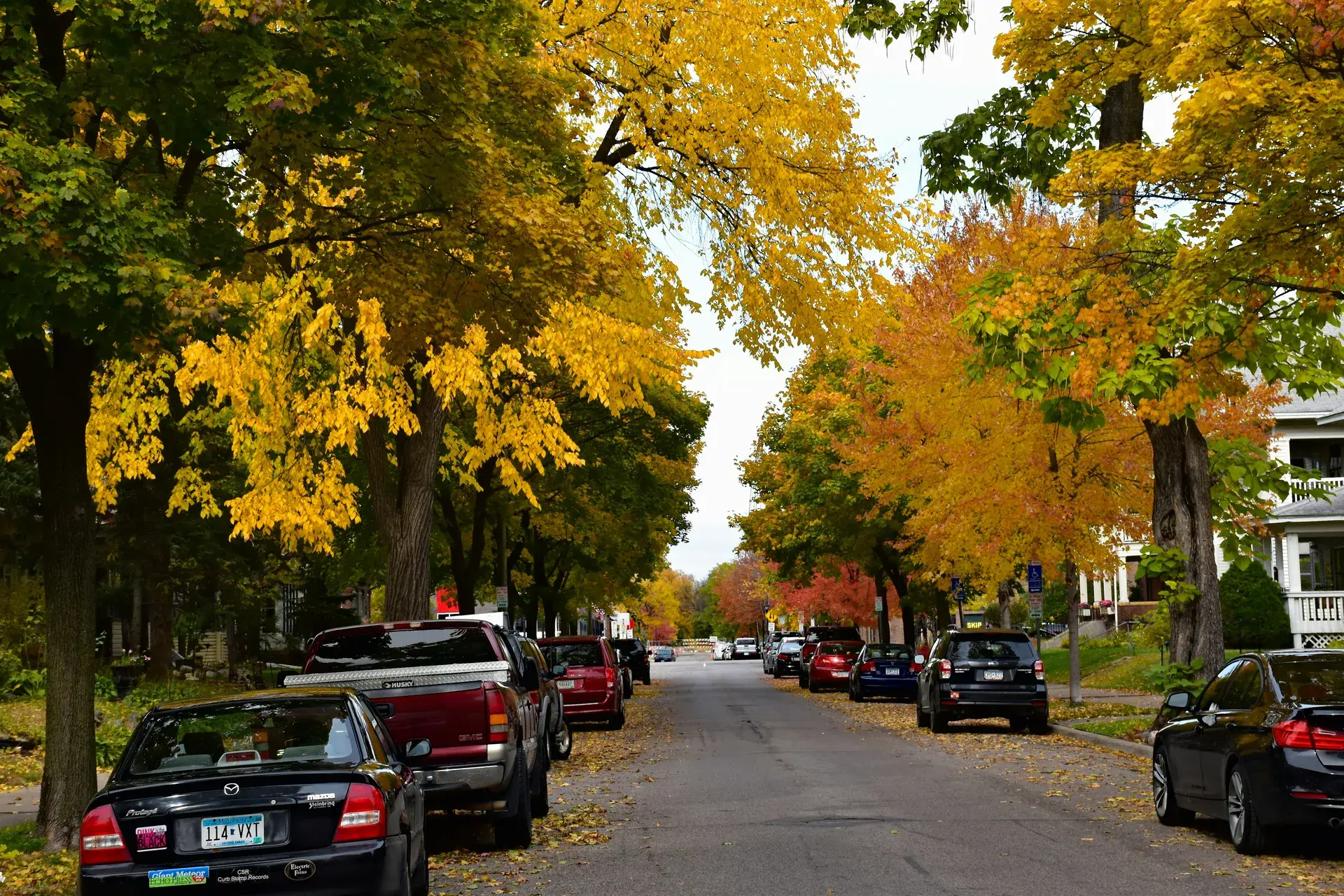
Standish is the neighborhood that people drive through on their way to Longfellow or Nokomis and never stop to look at. That is their loss. The 38th Street corridor has been quietly developing a commercial identity — Northbound Smokehouse Brewpub is a legitimate neighborhood anchor, the kind of corner brewpub that came home from the 2026 World Beer Cup with a gold medal. The housing stock is solid Craftsman bungalows, and Standish's 2025 median sale price of $338,750 was below the city's $350,000 and about half of Fulton's, according to Minneapolis Area REALTORS. The Hiawatha LRT Trail runs along the eastern edge and drops you onto the Midtown Greenway in about five minutes, opening up bike access to the entire city. The demographics are more mixed than in the southwest lake neighborhoods: about a quarter of residents are people of color, according to Census estimates. The block clubs are active and the community is engaged without being performatively political. What people miss: Standish has the bones of a neighborhood on the verge of a significant identity shift. The commercial development along 38th, the bike infrastructure, and the housing value proposition are all pointing in the same direction. This is the neighborhood you will wish you had bought into five years from now.
Read the full Standish guide →Hale
Median Home
$505K
Vibe
Established residential, family-oriented
Overlooked Because
No commercial district, no landmark
What's here: Minnehaha Creek parkway trails on the northern boundary, McRae Park rec center a few blocks north, excellent housing stock, 48th & Chicago node nearby, well-maintained infrastructure
Hale is invisible to most Minneapolis neighborhood conversations because it does not have a hook — no lake of its own, no commercial district, no cultural institution, no controversy. It is just a well-maintained residential neighborhood with solid 1920s-1940s houses, quiet streets where people walk their dogs and know their neighbors, and McRae Park's rec center a few blocks north. Minnehaha Creek and its parkway trails form the neighborhood's northern boundary. The 48th & Chicago node — home of the Parkway Theater — is a five-minute walk across the creek. For families and homeowners who prioritize quality of housing stock, safe streets, and community stability over commercial amenities and nightlife, Hale delivers everything the celebrated southwest neighborhoods deliver at a real discount: its 2025 median sale price was about $505,000, against $675,000 in Fulton. The reason it is underrated is the same reason it is good: it does not try to be interesting. It just works.
Read the full Hale guide →Diamond Lake
Median Home
$470K
Vibe
Suburban feel within city limits
Overlooked Because
Overshadowed by Nokomis, far south
What's here: Diamond Lake (small neighborhood lake), Diamond Lake Park, proximity to Lake Nokomis, good school access, quiet streets
Diamond Lake has something almost no Minneapolis neighborhood outside the famous chain of lakes can claim: its own lake. It is small — more of a pond, honestly — but Diamond Lake Park surrounds it with green space, wetland, and a fishing pier. Prices are not low: the 2025 median sale price was $470,000, well above the city's $350,000, though well below Fulton or Linden Hills. Lake Nokomis is bikeable in minutes. The housing stock is modest but well-maintained — mid-century ramblers and split-levels that suit families. The neighborhood's southern location means it gets overlooked in favor of neighborhoods closer to downtown, but for people whose lives do not revolve around downtown — families with south suburban jobs, retirees, remote workers — the location is not a disadvantage. What people miss: Diamond Lake lets a family buy a house, have park access, and live in a safe, stable community for less than the southwest lake neighborhoods charge. That is increasingly rare and increasingly valuable.
Read the full Diamond Lake guide →Bancroft
Median Home
$330K
Vibe
Diverse, evolving, community-oriented
Overlooked Because
Sandwiched between Powderhorn and Nokomis
What's here: Affordable housing, diverse population, Chicago Avenue corridor, proximity to Midtown Global Market, strong community organizations, evolving food scene
Bancroft sits between Powderhorn Park and Nokomis — two neighborhoods with strong identities that overshadow their quieter neighbor. But Bancroft has its own thing going on. The diversity is real and unforced — the neighborhood is a mix of white, Latino, Black, and Asian residents living alongside each other in a way that is more normal than notable, which is exactly how genuine diversity works. The housing is priced below the city median: $330,000 in 2025. Chicago Avenue, on the western edge, is developing as a commercial corridor with taquerias, small groceries, and service businesses that reflect the actual population. The proximity to Midtown Global Market (a straight ten-minute bike ride north to Lake Street in Midtown Phillips) adds food and cultural access. What people miss: Bancroft is a neighborhood where a new immigrant family and a fourth-generation Minnesotan live on the same block and use the same park. It is not polished, it is not curated, and it does not photograph well for real estate listings. But as a place to live an honest, affordable, community-connected life in Minneapolis, it is genuinely undervalued.
Read the full Bancroft guide →Windom
Median Home
$430K
Vibe
Family neighborhood, quiet and stable
Overlooked Because
Far south, no commercial anchor
What's here: Windom South Park (rec center, playground), single-family homes below southwest lake prices, good school access, near Lake Nokomis via bike
Windom is the neighborhood that people who grew up in south Minneapolis know about and people who moved here from out of state have never heard of. It sits in the far south of the city, north of the airport flight path but south of the lake neighborhoods that get all the attention. The housing stock is modest and well-maintained — the kind of neighborhood where people buy a house, raise their kids, and stay for decades. Windom South Park has a rec center with year-round programming. Lake Nokomis is a reasonable bike ride away. What people miss: Windom offers the stability and community that expensive neighborhoods sell as their brand, at a 2025 median sale price of $430,000 — above the city's $350,000, but far below Fulton or Lynnhurst. The airport noise is real on some blocks — check flight paths before buying — but most of the neighborhood is outside the significant noise zones. For families priced out of Fulton or Lynnhurst who want the same general lifestyle for a lot less, Windom is the answer.
Read the full Windom guide →Bryn Mawr
Median Home
$513K
Vibe
Village neighborhood, nature access
Overlooked Because
Small, not on the standard tour
What's here: Theodore Wirth Park (about 740 acres), tight-knit community, Cuppa Java, Bryn Mawr Market, near downtown but feels separate, active neighborhood association
Bryn Mawr is technically not underrated by the people who live there — they know exactly what they have and they are not especially interested in sharing it. But it is dramatically underrated by the broader Minneapolis population and by newcomers, who rarely consider a neighborhood that is small, tucked between Cedar Lake and Theodore Wirth Park, and absent from most "best of" lists. The neighborhood functions as a village: Bryn Mawr Market and Cuppa Java provide daily needs, the neighborhood association is one of the most active in the city, and Theodore Wirth Park gives every resident access to about 740 acres of trails, lakes, and gardens. Downtown is a 10-minute drive. The community is tight-knit in a way that takes time to enter but is genuinely rewarding once you do. What people miss: Bryn Mawr has the best nature-access-to-downtown-proximity ratio of any neighborhood in the city. You can mountain bike in a 740-acre park and be at work downtown in 15 minutes. That combination does not exist anywhere else in Minneapolis.
Read the full Bryn Mawr guide →Webber-Camden
Median Home
$230K
Vibe
Evolving, community investment, affordable
Overlooked Because
North Minneapolis stigma
What's here: Webber Park (natural swimming pool), Camden community, Mississippi riverfront just east, Victory Memorial Drive, some of the most affordable homes near parks, emerging restaurant scene
Webber-Camden carries the weight of the "North Minneapolis" label, which in the local conversation is shorthand for crime, disinvestment, and decline. Some of that reputation is earned — the Northside has genuine challenges with poverty, gun violence, and institutional neglect. But Webber-Camden specifically is a neighborhood that deserves to be evaluated on its own terms, not as a proxy for an entire quadrant of the city. Webber Park has a natural swimming pool — a chemical-free, naturally filtered pool that is one of the most innovative public amenities in the Minneapolis park system. The Mississippi riverfront is accessible and uncrowded. Victory Memorial Drive is a grand, tree-lined boulevard. The housing is some of the most affordable near significant park access anywhere in Minneapolis. What people miss: Webber-Camden has assets that would make it a far more expensive neighborhood if it were located in south Minneapolis; its 2025 median sale price was about $230,000, against $350,000 citywide. The park infrastructure, the river access, the housing stock, and the lot sizes are all objectively strong. The stigma-to-reality gap is the largest of any neighborhood on this list.
Read the full Webber-Camden guide →Corcoran
Median Home
$317K
Vibe
Diverse, artistic, community-organized
Overlooked Because
Overshadowed by Longfellow and Powderhorn
What's here: Corcoran Park, Midtown Greenway access, Lake Street corridor, strong community organizations, affordable homes, proximity to Midtown Global Market
Corcoran is the neighborhood between Longfellow and Powderhorn Park that absorbs the spillover energy from both without getting credit for its own identity. The Midtown Greenway runs a block north of Lake Street — from anywhere in Corcoran you are on it in minutes. Lake Street is the northern boundary, with Midtown Global Market and the commercial corridor accessible on foot. Corcoran Park is a neighborhood-scale green space with a playground and rec center. The community organizing culture is strong — Corcoran has organized hard against displacement, from cooperative housing pushes to development fights. The housing is affordable and the population is diverse. What people miss: Corcoran has built genuine anti-displacement organizing that other neighborhoods talk about but do not implement. The cooperative housing efforts and the organized response to development pressure are models that other neighborhoods study. For people who want to live in a diverse, affordable, organized community with good bike infrastructure and park access, Corcoran delivers — and it does so at prices that reflect its overlooked status rather than its actual value.
Read the full Corcoran guide →Field
Median Home
$396K
Vibe
Quiet, residential, family-oriented
Overlooked Because
No distinguishing feature, far south
What's here: McRae Park (rec center, playground) just across Chicago Ave in Northrop, housing priced well below the southwest lake neighborhoods, Lake Nokomis proximity, Minnehaha Creek access, good elementary schools, quiet residential character
Field is the neighborhood that exists to prove that not every good neighborhood needs a brand. There is no commercial district, no cultural institution, no natural landmark, and no controversy. There is McRae Park with its rec center and playground just across Chicago Avenue, housing priced well below the southwest lake neighborhoods, Minnehaha Parkway trails along the southern boundary, and proximity to Lake Nokomis. The elementary schools are solid. The streets are quiet. The neighbors are stable. Field is the neighborhood you choose when you have made peace with the idea that a neighborhood does not need to be interesting to be good. It just needs to be safe, well-maintained, and close to the things you care about. What people miss: Field's 2025 median sale price of about $396,000 was nearly $280,000 below Fulton's, with comparable safety statistics and school access. The premium you pay for a Fulton or Linden Hills address is for the brand and the lake access, not for fundamentally better daily life. Field is for people who do the math.
Read the full Field guide →Victory
Median Home
$289K
Vibe
Working-class, improving, community-invested
Overlooked Because
North Minneapolis stigma, far northwest
What's here: Victory Memorial Drive (grand boulevard), Webber Park proximity, affordable housing, Victory neighborhood commercial node, strong community pride, improving infrastructure
Victory sits in far northwest Minneapolis and carries the same North Minneapolis stigma as Webber-Camden, but with even less visibility. Victory Memorial Drive — the grand boulevard lined with elm trees and memorials to Hennepin County war veterans — runs through the neighborhood and is one of the most impressive residential streets in the city. The commercial node at 44th and Penn has a small cluster of businesses that serve daily needs. Webber Park and its natural swimming pool are nearby. The housing stock includes some of the best-value single-family homes in Minneapolis — three-bedroom houses with garages and yards, at a 2025 median sale price of $289,000. What people miss: Victory is a neighborhood where long-time residents have invested in their community through decades of disinvestment and are building something with real pride and real momentum. The infrastructure is improving, the housing values are rising (from a very affordable base), and the community organizations are active. This is not a neighborhood you move to for the restaurants or the nightlife. It is a neighborhood you move to because you want to own a home, have a yard, and be part of a community that is actively building its future. At these prices, the financial risk is low and the potential upside is significant.
Read the full Victory guide →A Note on “Underrated”
We are not listing neighborhoods that are underrated because they are bad and deserve a second look anyway. Every neighborhood on this list has genuine, concrete value — good housing stock, park access, community infrastructure, or some combination of the three — that is not reflected in its reputation or its real estate prices. Some of these neighborhoods have real challenges and we have been honest about them. “Underrated” means the gap between perception and reality is largest, not that the reality is perfect. Prices are 2025 median sale prices from Minneapolis Area REALTORS.
Frequently Asked Questions
What is the most underrated neighborhood in Minneapolis?+
Standish — the neighborhood people drive through on their way to Longfellow or Nokomis without stopping. Solid Craftsman bungalows at a 2025 median sale price of $338,750 (about half of Fulton's), a 38th Street corridor quietly building a commercial identity around Northbound Smokehouse, and the Hiawatha LRT Trail dropping you onto the Greenway in about five minutes.
Which Minneapolis neighborhoods do newcomers overlook?+
Hale and Diamond Lake — neither has a hook: no lake scene, no commercial district, no controversy. What they have is well-maintained housing from the 1920s through the 1950s, quiet streets where neighbors know each other, and everything the celebrated Southwest neighborhoods deliver for less: 2025 medians of about $505,000 in Hale and $470,000 in Diamond Lake, against $675,000 in Fulton. They're underrated for the same reason they're good: they don't try to be interesting.
Is Standish a good place to buy a house?+
The guide's honest read: Standish has the bones of a neighborhood on the verge of an identity shift — the 38th Street development, the bike infrastructure, and the housing value all point the same direction. That's a bet on trajectory, but it's a well-grounded one, with active block clubs today.
Why do the same neighborhoods top every Minneapolis list?+
North Loop, Linden Hills, Whittier, Longfellow — they deserve the attention. But some of the best values, strongest communities, and most honest versions of city living are in the places no one writes about. This list is ten neighborhoods that are better than their reputation, or that simply don't have one yet.