Minneapolis Neighborhood
Como
The quiet residential heart of Southeast Minneapolis — where professors and tradespeople share tree-lined blocks, Como Avenue connects the university to St. Paul, Van Cleve Park fills with soccer games on summer evenings, and the neighborhood's greatest accomplishment is the thing it never advertises: being a genuinely decent place to live without needing to be anything more.
№ 14 of 87 · University community · Last updated: October 2026 · A complete neighborhood guide
Not every neighborhood needs a story. Some neighborhoods just need to work — to provide solid houses on quiet streets, a park where kids play soccer on summer evenings, a commercial corridor that covers the basics, and the particular kind of stability that comes from people who choose to stay. Como is that neighborhood. Tucked into Southeast Minneapolis between the University of Minnesota campus and the St. Paul border, it is a place that almost no one visits intentionally and almost everyone who lives there values deeply. The houses are Craftsman bungalows and postwar ramblers. The streets are lined with mature elms and maples that form canopies in July. The residents are students who rent, and professors and nurses and electricians and retirees who bought in when the neighborhood was cheap and stayed because it turned out to be good. Como is not exciting. It is not trying to be. It is trying to be a decent place to live, and it succeeds at that with a consistency that more famous neighborhoods would envy.
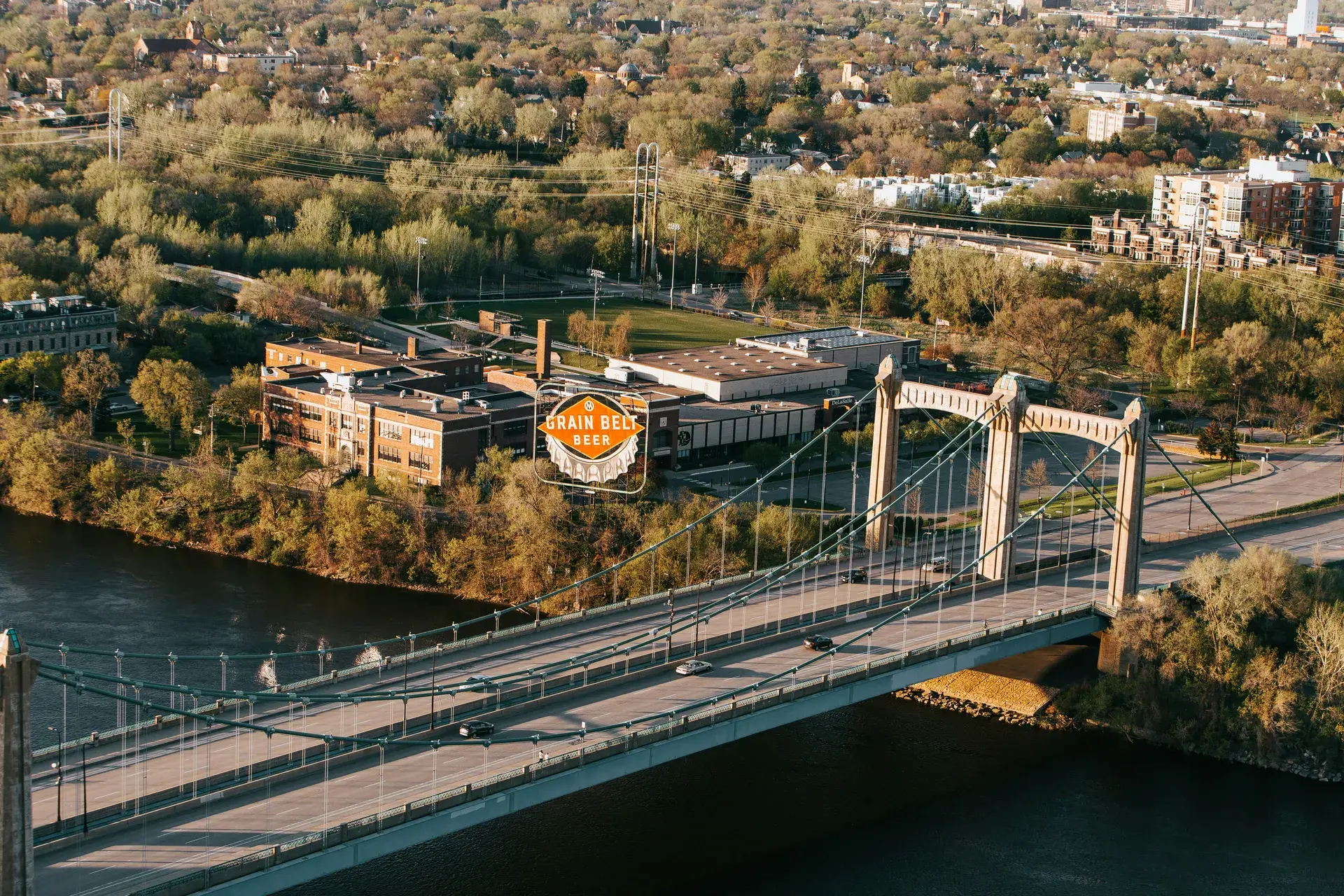
What is Como, Minneapolis?
Como is a compact residential neighborhood in Southeast Minneapolis, roughly bounded by the BNSF railroad tracks to the south (where it borders Marcy Holmes, the university, and Prospect Park), East Hennepin Avenue to the north, I-35W near its western tip, and the city limit at about 33rd Avenue SE to the east. With roughly 6,500 residents, it is a mid-sized neighborhood by Minneapolis standards, though its quiet character makes it feel smaller than the numbers suggest.
The neighborhood's identity is defined by what it is not as much as by what it is. It is not only a student neighborhood, though it sits close to the university and students rent a good share of its houses and apartments — Census estimates count about three in four households as renters. It is not a commercial destination, though Como Avenue carries enough small businesses to handle daily errands. It is not a cultural district, though its proximity to the U of M provides access to more cultural programming than most neighborhoods in the city. What Como is, fundamentally, is residential — a grid of houses on tree-lined streets, many of them rented, populated by students and by people who work at the university, at the hospitals, in the trades, or from home, and who chose this neighborhood because it offered a place they could afford on a block they could tolerate, with a commute they could manage.
That description makes Como sound unremarkable, and in the way that real estate listings and neighborhood guides typically measure things, it is. But there is a quality to a neighborhood that functions well without trying hard — where the houses are maintained because the owners care, where the parks are used because they're pleasant, where the streets are safe because people pay attention — that deserves more recognition than it typically receives. Como is one of those neighborhoods.
Como Neighborhood Sign
Como, Minneapolis — Key Stats (2025–2026)
- Residents (2020 Census)
- ~6,500
- Median home sale price (2025 data)
- $289K
- Median rent, all units (2020–24 ACS)
- $1,724
- Walk Score (Oct 2026)
- 69
- Bike Score (Oct 2026)
- 90
- Transit Score (Oct 2026)
- 53
- Decade of initial residential development
- 1880s
- To the University of Minnesota campus (across the tracks)
- Adjacent
Como History & Origins
The land that is now Como lies within the traditional homeland of the Dakota people — the Mdewakanton band in particular, for whom the Mississippi River corridor and the falls at St. Anthony were places of deep significance. In 1837, Mdewakanton leaders were pressured into ceding the Dakota land east of the Mississippi to the United States, and the treaties of that year opened Southeast Minneapolis to European-American settlement.
Como developed as a residential neighborhood in the 1880s and 1890s, growing outward from the older settlements closer to the river and the university. The first blocks were platted in 1882 by the developer James T. Elwell, on land along what was then the Como Road, and the initial housing stock reflected the modest means and practical needs of the working and middle-class families who settled here. Unlike the older streets of Marcy Holmes, where many houses were built for influential residents, Como was flat, unpretentious, and oriented toward the workaday economy of the growing city.
Como Avenue, the neighborhood's primary thoroughfare, runs east to the St. Paul border and on toward St. Paul's Lake Como. The avenue's name — derived from Lake Como in Lombardy, Italy, via that St. Paul lake — became the neighborhood's name as well, a source of perpetual confusion with the much larger and more famous Como Park across the city line.
The university's growth in the early 20th century shaped Como's development without dominating it. Faculty and staff from the growing university were among the neighborhood's early residents, alongside workers from the nearby rail yards, grain mills, and factories.
The postwar era brought the same forces that reshaped residential neighborhoods across the Midwest: some families left for the suburbs, others stayed and aged in place. At the same time, university enrollment swelled after World War II, and student renters increasingly moved into the neighborhood.
Living in Como
Living in Como is living in a neighborhood that has mastered the art of being unremarkable in the best possible sense. The daily experience is dominated by the things that residential neighborhoods are supposed to provide: quiet streets, neighbors who wave, a park within walking distance, a house with a yard and a garage, and the low-grade background hum of a community that functions without drama. If that sounds boring, it might not be the neighborhood for you. If it sounds like relief, you are Como's target audience.
The housing stock is the neighborhood's physical backbone: houses from the decades around 1900, Craftsman bungalows from the 1910s and 1920s, foursquare homes from the same era, some Tudor Revival and Colonial Revival houses from the 1930s, and a sprinkling of postwar ramblers and split-levels from the 1950s. These are not grand houses — they are 1,200 to 1,800 square feet on modest lots, with detached garages and the kind of original woodwork that either delights or exhausts new owners depending on their appetite for maintenance. The bungalows, in particular, have an honest charm: built-in bookcases, tapered porch columns, hardwood floors that have survived a century of use.
The demographics are a mix of renters — many of them students — and homeowners, long-term and new. University faculty and staff form a significant contingent — the commute to campus is easy, the houses are affordable on academic salaries (at least by coastal standards), and the neighborhood offers the quiet that academic work requires. Healthcare workers from the university hospitals are another significant group. Tradespeople, retirees, and young families fill out the roster. The result is a neighborhood that is economically mixed — no great wealth, a median household income near the city's, and a poverty rate, about one resident in four by Census estimates, well above it.
Community life in Como is not organized around a single institution or event. There is no Art-A-Whirl, no Eat Street, no signature festival. Instead, community happens in the accumulation of small interactions: conversations at Van Cleve Park while kids play, nods at the coffee shop on Como Avenue, the neighborhood email list that circulates information about lost dogs and city council agendas with equal urgency. The Como Community Council is active and engaged, focused on the practical concerns — traffic, development proposals, park maintenance — that sustain a residential neighborhood.
Como Food, Drink & Local Spots
Como is not a food destination. This is worth stating directly, because anyone reading a neighborhood guide is probably wondering about restaurants, and the honest answer is that Como's dining scene is thin. What exists along Como Avenue is functional — a few restaurants, a coffee shop, a convenience store — and serves the neighborhood's daily needs without attracting anyone from outside the area. For a more developed restaurant and bar scene, Como residents walk or bike to Dinkytown, to Nicollet Island - East Bank's East Hennepin corridor, or to Stadium Village near campus.
Nearby Dining Worth the Trip
Como's real dining scene is borrowed from its neighbors. Dinkytown — a ten-minute walk or five-minute bike ride from the west end of the neighborhood — offers Al's Breakfast, Shuang Cheng, and a dozen other options. East Hennepin has Kramarczuk's, Surdyk's, and an expanding restaurant row. The Stadium Village area near the U of M campus provides additional options. And the full breadth of Northeast Minneapolis's brewery and restaurant scene — from Logan Park's taprooms to Central Avenue's global food corridor — is within easy biking distance. Como residents don't lack for dining options; they just have to leave the neighborhood to find most of them.
Parks & Outdoors in Como
Como's outdoor amenities are modest but well-used. The neighborhood is not a parks-and-lakes destination — it lacks lakefront access and has no trails that draw users from across the city — but it provides the green space and recreational facilities that a residential neighborhood needs.
Van Cleve Park
Van Cleve Park, located on the west side of Como at Como Avenue and 15th Avenue SE, is the neighborhood's primary park and one of its most important community spaces. The park occupies roughly 9 acres and offers athletic fields (soccer, baseball), a playground, a wading pool, tennis courts, and open green space. On summer evenings, the soccer fields fill with pickup games — a mix of university students, neighborhood families, and immigrant communities from across Southeast Minneapolis. The wading pool draws families with young children. The playground is well- maintained and age-appropriate. Van Cleve is the kind of neighborhood park that doesn't appear on any best-of list but that serves its community faithfully, day after day, season after season.
Biking & River Access
Como's Bike Score of 90 reflects the neighborhood's excellent cycling infrastructure and connectivity. The flat terrain, residential streets with low traffic, and connections to the university's bike network make cycling the most efficient way to move through and beyond the neighborhood. The Mississippi River trail system — part of the Grand Rounds — is accessible via a short ride to the west through Marcy Holmes, providing paved paths along the river gorge. The university campus itself provides extensive cycling connections southward. For a neighborhood without its own riverfront or major trail, Como is remarkably well-connected to the broader cycling and outdoor network.
Como Schools
Como has relatively few school-age children — Census estimates put households with children at about one in ten, half the city rate — and Minneapolis Public Schools has no school inside the neighborhood.
Nearby MPS elementary schools include Pratt Elementary (PK–5), in Prospect Park, and Marcy Arts Elementary (PK–5), an arts-focused school in neighboring Marcy Holmes.
Assignments depend on the address, so check the district's school finder for a specific house. Nearby MPS middle and high schools include Northeast Middle School and Edison High School, both in Northeast, with citywide magnets and charter schools available through the district's open enrollment system. The University of Minnesota's Child Development Lab School provides an early childhood option for families connected to the university.
Como is a reasonable choice for families with school-age children, particularly those who value the university's proximity and resources. The schools are not the neighborhood's primary selling point, but they are competent, and the supplementary resources available through the university — libraries, tutoring programs, cultural events — add an educational layer that few neighborhoods can match.
Como Real Estate & Housing
Como's housing market is straightforward: modest prices on the houses that sell, and a large rental side — Census estimates count about three in four households as renters. The market lacks the drama of gentrifying neighborhoods (where prices spike and neighbors fight about development) and the excitement of up-and-coming areas (where investors speculate and new construction transforms blocks). It has not been a steady climber, either. The median sale price was $289,000 in 2025, up from $271,500 a year earlier but still below the $310,000 of 2021, according to Minneapolis Area REALTORS — and below the city's $350,000. Homes averaged 64 days on market, longer than the city's 55, and sold for about 94 percent of their original list price.
Buying in Como
The typical Como home is a single-family bungalow or foursquare built between 1900 and 1930, with 1,200 to 1,800 square feet, a detached garage, and a lot of 5,000 to 7,000 square feet. Fully renovated homes or larger properties sell above the $289,000 median. The prices are within reach of first-time buyers with university or hospital incomes.
Duplexes and small multi-family properties exist too. Condos are rare — none sold in 2025. New construction is infrequent — the neighborhood's lots are largely built out, and the scale of existing homes tends to discourage tear-down-and- rebuild projects. When new construction does appear, it is typically an infill project on a vacant lot or a major renovation of an existing structure.
Rental Market
Census estimates put Como's median rent at about $1,720 a month across all units, against $1,371 citywide. The rental stock is a mix of older apartment buildings, converted homes, and some newer construction, plus the University of Minnesota's Como Student Community Cooperative, family housing for students on 27th Avenue SE. The proximity to the university means that much of the rental market serves students, along with postdocs and visiting faculty.
Getting Around Como
Como's transportation profile reflects its residential character: biking is excellent, driving is easy, transit is adequate, and walking covers the basics but not much more. The Walk Score of 69 means you can walk to the nearest coffee shop and pick up a few groceries on Como Avenue, but anything beyond daily necessities requires a bike or car. The Bike Score of 90 is the real story — Como is flat, compact, and well-connected to the university's cycling infrastructure, making a bike the most practical mode of transportation for most trips.
Transit service runs along Como Avenue and connecting routes, with bus lines providing service to the university campus, downtown Minneapolis, and St. Paul. The Green Line light rail, running along Washington Avenue through the U of M campus, is accessible via a short bike ride or bus transfer. The Transit Score of 53 is honest — transit here is a supplement to biking and driving, not a primary mode for most residents.
For drivers, Como is well-positioned. Interstate 35W is accessible via University Avenue, putting downtown Minneapolis about 10 minutes away and MSP Airport about 15 to 20 minutes. Highway 280 provides a quick route to St. Paul and the Interstate 94 corridor. Parking is generally not an issue — most homes have garages or off-street parking, and the residential streets have ample on-street parking outside of game days and university events.
What's Changing: The Honest Version
Como is not a neighborhood in crisis. Its changes are incremental rather than dramatic, and the tensions it faces are the ordinary ones of urban residential life rather than the existential challenges confronting neighborhoods like Logan Park or the North Loop. That said, several trends are worth noting honestly.
Density & the 2040 Plan
The Minneapolis 2040 Plan, which eliminated single-family- only zoning citywide, has created theoretical development possibilities in Como that some residents welcome and others resist. The plan allows duplexes and triplexes on lots that were previously restricted to single-family homes, and permits greater density along transit corridors like Como Avenue. In practice, the impact in Como has been modest so far — the economics of tearing down a bungalow to build a triplex don't pencil out at current prices in most of the neighborhood. But the possibility of future densification is a topic of ongoing conversation, particularly along Como Avenue and at the neighborhood's edges near the university.
University Expansion Pressure
The University of Minnesota's footprint has grown steadily over the past century, and that growth exerts pressure on adjacent neighborhoods. Como has been partially shielded by the rail corridor that separates it from campus, though student renters have been part of the neighborhood since the postwar years. Graduate student and staff housing demand also affects Como, and the neighborhood watches university development plans carefully. Any significant expansion of the campus or the medical center would have ripple effects on Como's housing market and traffic patterns.
Generational Turnover
Like many stable residential neighborhoods, Como is experiencing generational turnover as long-term homeowners age and sell to younger buyers. This is natural and generally healthy — it brings new energy and investment into the housing stock — but it also changes the social fabric. The retiree who has lived on the block for forty years and the young couple with a toddler who just bought next door have different needs, different schedules, and different expectations for what the neighborhood should be. Managing that transition gracefully is an ongoing project, and Como is managing it better than most.
Como FAQ
Is Como a good neighborhood in Minneapolis?
Como is one of the better neighborhoods in Minneapolis for people who want a stable, residential environment close to the University of Minnesota and the Southeast Minneapolis corridor. It's quiet, well-maintained, and walkable to daily necessities along Como Avenue and the university campus. It's particularly popular with university faculty, hospital workers, and families who want proximity to the U of M without the noise and density of student-heavy neighborhoods like Marcy Holmes. The trade-off is that Como is not exciting — it lacks the dining scene, nightlife, and cultural energy of neighborhoods like Logan Park or Uptown. If you want interesting, look elsewhere. If you want good, Como delivers.
Is Como, Minneapolis safe?
Como is one of the safer neighborhoods in Minneapolis. Crime rates are well below the city average for both violent and property crime. The neighborhood's residential character, stable population, and proximity to the university (which brings its own security infrastructure) contribute to an environment that feels and measures as safe. The most common issues are the ordinary ones: occasional bike theft, rare car break-ins, package theft during the holidays. Residents generally feel comfortable walking the neighborhood at all hours.
How much does it cost to live in Como?
Como is moderately priced to buy by Minneapolis standards and pricier to rent. Homes — mostly Craftsman bungalows, foursquares, and postwar rambler-style houses — sold at a median of $289,000 in 2025, up from $271,500 a year earlier but below the $310,000 of 2021, according to Minneapolis Area REALTORS, and below the city's $350,000. No condos or townhouses were among the 32 sales. Census estimates put the median rent at about $1,720 a month across all units, against $1,371 citywide. Sale prices reflect a good location without the premium that comes with trendier addresses.
What is Como Avenue?
Como Avenue is the primary commercial and arterial street running through the neighborhood, connecting Southeast Minneapolis to the St. Paul border and beyond to Como Park in St. Paul (the same Como, which is why the shared name confuses everyone). The avenue carries a mix of small businesses, restaurants, and services that serve the neighborhood's daily needs. It's not a destination commercial corridor — it's a working one, with a dentist, a hardware store, a couple of restaurants, and the kind of independently owned shops that survive on repeat local business rather than destination traffic.
Is Como near the University of Minnesota?
Yes. Como's southern boundary, the railroad tracks, touches the north edge of the University of Minnesota's east bank campus. Many Como residents work at the university or the adjacent medical campus. The proximity provides access to university resources — libraries, athletic facilities, cultural events — without the noise and student-housing density of neighborhoods like Marcy Holmes. Biking to the university from Como takes 5 to 10 minutes; driving or taking transit is similarly quick.
Where exactly is Como in Minneapolis?
Como is in Southeast Minneapolis, roughly bounded by the BNSF railroad tracks to the south (bordering Marcy Holmes, the university, and Prospect Park), East Hennepin Avenue to the north, I-35W near its western tip, and the city limit at about 33rd Avenue SE to the east, where St. Paul and Lauderdale begin. It's a compact, primarily residential neighborhood that stretches from the University of Minnesota campus to the city's eastern edge.
Is Como walkable?
Moderately. Como's Walk Score of 69 reflects a neighborhood where some daily errands are walkable — particularly along Como Avenue — but where the primarily residential character means that reaching restaurants, groceries, and other commercial destinations often requires a short bike ride or drive. The Bike Score of 90 is the more telling number: Como is flat, well-connected to bike infrastructure, and small enough that cycling reaches most destinations in the neighborhood or surrounding areas within minutes. Most Como residents use some combination of biking and driving.
What parks are in Como?
Van Cleve Park, on the neighborhood's west side just across the tracks from Marcy Holmes, is the primary park — a well-used community green space with athletic fields, a playground, a wading pool, and open green space that fills with soccer games and picnics on summer evenings. The neighborhood also benefits from proximity to the university campus's open spaces and the Mississippi River trail system, which is accessible via a short bike ride to the southwest.
What's the difference between Como in Minneapolis and Como in St. Paul?
This confuses everyone. Como in Minneapolis is a residential neighborhood in Southeast Minneapolis near the University of Minnesota. Como Park in St. Paul is a large park and surrounding neighborhood on the other side of the city border, famous for the Como Park Zoo & Conservatory. They share a name because Como Avenue connects the two areas: the avenue leads to St. Paul's Lake Como, which was named after Lake Como in Italy. The Minneapolis Como neighborhood is smaller, quieter, and has no zoo. If someone says 'Let's go to Como,' they almost certainly mean the St. Paul park and zoo, not the Minneapolis neighborhood.
Is Como good for families?
Yes — Como is one of the better family neighborhoods in the University of Minnesota area, though only about one household in ten has children, by Census estimates, half the city rate. It's quieter than the student-heavy neighborhoods to the west, safer than the city average, and offers good park access via Van Cleve Park. The houses, many with yards, are family-friendly in scale. Schools are serviceable, with options in both Minneapolis Public Schools and the broader magnet system. The main challenge is that the neighborhood is not walkable to a wide range of family amenities (no neighborhood commercial district with a kids' bookstore and an ice cream shop), so a car or bike is necessary for most activities.
What Makes Como Worth Knowing
Como is not the kind of neighborhood that inspires essays or attracts visitors. Nobody moves to Minneapolis because they heard about Como. There is no festival, no arts district, no iconic restaurant, no landmark that draws people from across the city. What Como has instead is the thing that matters most to the people who actually live in cities rather than write about them: it works. The streets are quiet. The houses are solid. The neighbors know each other but don't surveil each other. The parks are used. The commute to the university or downtown is short. The property taxes are reasonable. The trees are old and tall and the shade in July is genuine.
That kind of unglamorous functionality is easy to overlook and hard to create. It requires decades of steady upkeep, consistent municipal investment, a housing stock that's good enough to maintain but not so valuable that speculation distorts the market, and a community that cares about the place without needing it to be exceptional. Como has all of those things, quietly, without fanfare, in the way that the best neighborhoods always do. It is not the most interesting neighborhood in Minneapolis. It might be one of the most livable.

Keep exploring