Minneapolis Neighborhood
Lynnhurst
The quiet middle child of Southwest Minneapolis — where Minnehaha Creek runs a few blocks south of Lake Harriet, the commercial strip on 50th & Lyndale anchors daily life, and tree-lined blocks of well-kept bungalows make the case that a neighborhood doesn't need to be flashy to be deeply loved.
№ 49 of 87 · Southwest community · Last updated: October 2026 · A complete neighborhood guide
On a Saturday morning in early June, Lynnhurst Park is already full in the way that only a Southwest Minneapolis park gets full — not packed, but populated. Two soccer games are running simultaneously on the fields. A dad is pushing a stroller around the perimeter path while holding a coffee from the shop on 50th. A group of kids are climbing the playground structure with the focused intensity of people doing the most important thing in the world. Somewhere beyond the trees, Lake Harriet is glinting in the morning light, a ten-minute walk north. A neighbor waves. You wave back. You don't remember their name exactly, but you know their dog. This is Lynnhurst on a Saturday. The rest of the week, it's quieter — but the bones are always there.
Lynnhurst is the neighborhood between the neighborhoods — bordered by Linden Hills and Fulton and East Harriet, sharing their DNA but holding its own quieter identity. It doesn't have a boutique village or a famous shopping district. What it has is a park, a school, a creek, a lake, and a set of streets where people have been raising families for more than a century. Sometimes the simplest formula is the most durable.
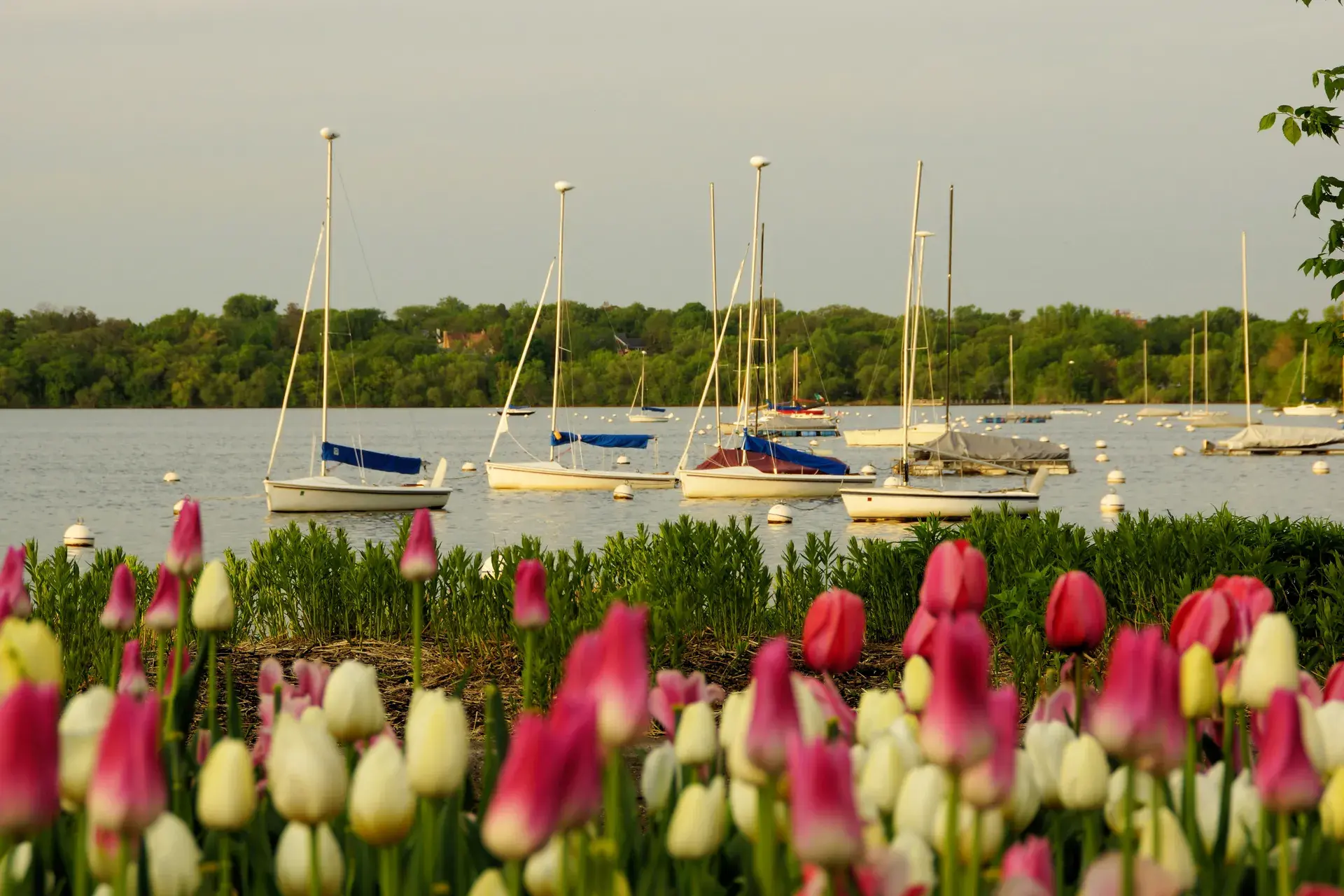
What is Lynnhurst, Minneapolis?
Lynnhurst is a residential neighborhood in Southwest Minneapolis, bounded roughly by Lake Harriet and West 46th Street to the north, Lyndale Avenue South to the east, West 54th Street to the south, and Penn Avenue South to the west. It sits next to two of Southwest Minneapolis's most recognized neighborhoods — Linden Hills to the northwest and Fulton to the west — and shares much of their character: tree-lined streets, well-maintained housing stock from the 1910s through the 1930s, strong schools, and direct access to Lake Harriet and the Minneapolis park system. Home to about 5,700 residents, Lynnhurst is quieter and less commercially active than its neighbors, which is precisely the point for many who choose to live here.
The neighborhood's commercial life centers on the 50th & Lyndale corridor — a modest strip of restaurants, cafes, and service businesses that serves daily needs without aspiring to destination status. Lynnhurst Park, the neighborhood's namesake green space, provides a central gathering point with ball fields, a playground, and a recreation center that hosts youth sports and community events. Burroughs Elementary School, one of the most highly regarded elementary schools in the Minneapolis Public Schools system, sits near the heart of the neighborhood and functions as a social anchor for families.
What distinguishes Lynnhurst from its neighbors isn't any single feature — it's a cumulative quality. The slightly lower profile. The sense that you're getting the full Southwest Minneapolis experience — the lake, the creek, the trees, the schools, the community — without the boutique village or the name recognition. Just don't mistake the lower profile for a lower price: Lynnhurst's median sale price was $773,000 in 2025, above both Linden Hills and Fulton, according to Minneapolis Area REALTORS.
Lynnhurst Neighborhood Sign
Lynnhurst, Minneapolis — Key Stats (2025–2026)
- Residents (2020 Census)
- ~5,700
- Median home sale price (2025 data)
- $773K
- Days on market (2025 data)
- 34 days
- Loop trail around Lake Harriet
- 3 miles
- Era most homes were built (Hennepin County property records)
- 1910s–30s
- Drive to downtown or MSP airport
- 15–20 min
- Walk Score (Oct 2026)
- 63
- Bike Score (Oct 2026)
- 76
Lynnhurst History & Origins
The land that is now Lynnhurst sits within the ancestral homeland of the Dakota people. Lake Harriet, which defines the neighborhood's northern identity, was known to the Dakota as Bde Unma, and Mdewakanton Dakota people lived near these lakes for hundreds of years before European settlement. Bdote — the sacred confluence of the Mississippi and Minnesota Rivers — lies about six miles to the east. The ground here carries centuries of history that predates any neighborhood boundary or street grid.
European and American settlement reached this part of Minneapolis in the latter half of the 19th century, accelerating after the Civil War as the city expanded outward from the milling district along the Mississippi. By the 1880s, the Minneapolis Street Railway Company had extended tracks to Lake Harriet and built a pavilion for summer entertainment — an entrepreneurial move to drive ridership that inadvertently created one of Minneapolis's most enduring public traditions: free lakeside concerts that continue at the Bandshell today.
Development began in 1893, when nine houses went up east of the lake, and picked up in the early 1900s; most of the neighborhood took shape in the 1910s and 1920s, as Minneapolis's expanding middle class pushed southwestward, drawn by Lake Harriet and the parkway built around it in the 1880s. The homes built during this period — Craftsman bungalows, Tudor Revival cottages, Cape Cods, and Colonial Revivals — reflect the architectural preferences of a generation that valued solidity, modesty, and craftsmanship over scale. Most sit on generous lots with deep setbacks, mature trees, and detached garages accessed by back alleys. It's a streetscape that feels deliberate and lived-in, the physical record of more than a century of continuous occupation.
Lynnhurst Park, the neighborhood's central gathering place, was acquired by the Minneapolis Park Board in 1921 and developed in 1928 as playing fields and playgrounds. The park's recreation center has served as a hub for youth sports, community meetings, and seasonal programming for decades. Where the name itself comes from is uncertain. The City credits the linden trees that line the streets; the Park Board's history says it may as likely come from Lyndale Farm, William King's farm that once took in most of Lake Harriet. "Hurst" is an old English word for a wooded hill.
Like much of Southwest Minneapolis, Lynnhurst remained relatively stable throughout the 20th century — it never experienced the cycles of disinvestment and reinvention that marked neighborhoods closer to downtown. That long continuity is part of what makes it feel so settled today. It's also part of what makes it expensive.
It is important to note — as it is across all of Southwest Minneapolis — that this stability was not accidental or purely organic. Racially restrictive covenants — deed clauses explicitly barring the sale or occupancy of homes by Black families and other people of color — were common in the neighborhoods just to the south. Mapping Prejudice, the University of Minnesota project that has mapped them across Hennepin County, found hundreds in Armatage and Kenny, though only a couple of dozen in Lynnhurst itself. Covenants were ruled unenforceable by the Supreme Court in 1948 and later outlawed by federal law, but the demographic patterns they helped establish proved remarkably persistent. Lynnhurst's history is in many ways a story of Southwest Minneapolis as a whole: beautiful, well-maintained, deeply community-oriented — and shaped by exclusionary practices whose effects endure.
Living in Lynnhurst
If you spent an afternoon walking Lynnhurst's residential blocks, you might not immediately know you'd left Fulton or entered from Linden Hills. The trees are the same. The houses are the same vintage. The porches are deep, the lawns are tended, and a kid's bike is abandoned in a driveway somewhere on every block. The difference is subtle but real: Lynnhurst is slightly less commercial, slightly more inward-facing, slightly more content to just be a place where people live rather than a place people come to visit. That's its appeal.
The Lynnhurst Neighborhood Association is active and well-organized, coordinating block parties, ice cream socials, park cleanups, and seasonal events that give the neighborhood its connective tissue. Block clubs are real here — not a formality but a genuine expression of how neighbors stay in touch. People know each other. They watch each other's houses when someone travels. They bring meals when someone is sick. It's the kind of community fabric that's easy to take for granted until you realize how rare it is.
The neighborhood skews toward families with school-age children and long-term homeowners. Burroughs Elementary is a significant anchor — many families move to Lynnhurst specifically for the school, and the parent community around Burroughs creates its own social network. On any given evening, you'll see families walking to the park, runners heading toward the lake, and dog walkers making their rounds along the creek. The pace is unhurried. The ambition is domestic. It works.
There's a particular rhythm to Lynnhurst that reveals itself across the seasons. In spring, the crack of aluminum bats at Lynnhurst Park signals the start of little league. In summer, the sound of Bandshell concerts carries across the water and into backyards — you can hear the music from your porch if the wind is right. In fall, the elms and maples turn the streets into a canopy of gold and copper, and the crunch of leaves underfoot is the neighborhood's ambient soundtrack. In winter, the cross-country ski trails along the creek and around the lake turn the same paths you walked in July into something entirely different. Each season gives the neighborhood a new reason to be outside, and people here take all of them.
Lynnhurst Food, Drink & Local Spots
Lynnhurst's commercial life is concentrated along a short stretch of 50th Street near Lyndale Avenue — a modest but functional corridor that serves everyday needs without trying to be a destination. It's not the boutique-lined village of Linden Hills or the upscale shopping of 50th and France. It's a neighborhood commercial strip: a place to grab coffee, pick up groceries, eat a good meal, and get on with your day. Residents also draw heavily from nearby Linden Hills and the 54th & Lyndale corridor just to the southeast.
The 50th & Lyndale node has seen gradual turnover and improvement in recent years, with newer restaurants and cafes joining long-standing businesses. The corridor doesn't attract much attention from outside the neighborhood, which is arguably its strength — it remains scaled to the people who actually live here, not to weekend visitors or Instagram tourists. The result is a commercial strip that feels genuinely local in a way that's increasingly rare.
Nearby Anchors
2726 W. 43rd Street, across the lake in Linden Hills. Chef Steven Brown's neighborhood restaurant has become one of the best in Southwest Minneapolis — inventive, seasonal American cooking in a warm, unpretentious space. The burger is famous. The wine list is smart. It draws from across the city but still feels like a neighborhood place.
4321 Upton Ave. S., also in Linden Hills. A Minneapolis institution with a loyal following. The Pavarotti flavor (banana ice cream with caramel swirl and chocolate chunks) is legendary. Lines out the door in summer are a feature, not a bug.
At the Lake Harriet Bandshell Pavilion, on the lake's north shore in Linden Hills. Sandwiches, salads, and beer on the lake. The food is secondary to the setting — grab something before a concert and eat on the lawn.
5327 Lyndale Ave. S., just across Lyndale in Tangletown. A locally owned, upscale grocery chain and a daily stop for many Lynnhurst residents. Good produce, good deli, good bakery. The kind of grocery store that feels like a neighborhood institution.
Also Worth Knowing
The nearby Linden Hills commercial district on 43rd Street offers additional dining and shopping — Wild Rumpus Books and a string of boutiques that complement Lynnhurst's more utilitarian strip. The 50th & France district in Fulton and Edina is also a short drive or bike ride west. Between the three corridors, Lynnhurst residents have access to one of the strongest independent retail ecosystems in the Twin Cities.
Parks & Outdoors Near Lynnhurst
Outdoor access is arguably the single strongest argument for living in Lynnhurst. Between Lake Harriet, Minnehaha Creek, and the neighborhood's own park, there's an almost unfair concentration of natural amenities within walking distance of every address in the neighborhood.
Lake Harriet
Lake Harriet sits at Lynnhurst's northern edge and is one of the jewels of the Minneapolis Chain of Lakes Regional Park — a string of interconnected lakes linked by parkways, trails, and greenways that give Minneapolis its reputation as one of America's most park-rich cities. The 3-mile paved loop around the lake accommodates walkers, runners, cyclists, and rollerbladers through all but the coldest months. In summer, kayak and canoe rentals launch from the north shore. There are two beaches for swimming, a fishing pier, gardens, and tennis courts at Beard's Plaisance. In winter, the lake freezes solid enough for cross-country skiing, ice fishing, and fat-tire biking — extending the outdoor season in a way that only Minnesota can. The lake is Lynnhurst's front yard in every season, and proximity to it is the single most valuable amenity the neighborhood offers.
The Lake Harriet Bandshell
Free concerts at the lake have been a Minneapolis tradition since the 1880s, when the street railway company built a pavilion to draw weekend crowds. The current Bandshell hosts the Minneapolis Music and Movies in the Parks series throughout the summer. The Minneapolis Pops Orchestra, with more than 75 seasons of performances, plays regularly. On any warm evening, the lawn fills with blankets and folding chairs. It's the kind of civic tradition that sounds corny until you're sitting on the grass with a glass of wine listening to jazz drift across the water — and then it just feels like the reason you live here.
Lynnhurst Park
The neighborhood's namesake park sits near the center of the community and serves as its day-to-day gathering place. It includes ball fields, a playground, tennis courts, open green space, and the Lynnhurst Recreation Center, which hosts youth sports leagues, community meetings, fitness classes, and seasonal programming. The park isn't dramatic — it's not the lake — but it's the place where neighborhood life actually happens: where kids play after school, where families gather on weekends, where the summer ice cream social draws half the block. It's the park that makes Lynnhurst feel like a neighborhood rather than just a collection of houses.
The Lynnhurst Recreation Center, located within the park, runs programming year-round: youth basketball and soccer leagues in winter, summer camps, fitness classes, and community events. It's the kind of modest civic amenity that you don't think much about until you need it — and then you realize it's one of the things holding the neighborhood together.
Roberts Bird Sanctuary & Lyndale Park Gardens
Just northeast of Lake Harriet, the Thomas S. Roberts Bird Sanctuary preserves a pocket of woods and wetland that feels almost impossibly wild for a city neighborhood. Walking trails wind through the sanctuary, and birders can spot dozens of species during spring and fall migration. Adjacent Lyndale Park Gardens — featuring the Peace Garden, rose gardens, and perennial gardens — offer a more cultivated but equally beautiful outdoor experience. Both are within easy biking or walking distance from anywhere in Lynnhurst.
Minnehaha Creek
The creek runs through Lynnhurst's southern third and is one of the great hidden assets of Southwest Minneapolis. The paved trail alongside it connects to the Grand Rounds Scenic Byway, Minneapolis's 51-mile network of parkways and bike paths. In summer, kids float the shallow stretches on inner tubes. In winter, the path doubles as a cross-country ski trail. The creek corridor also functions as a wildlife corridor — herons, turtles, and the occasional fox are regular sightings.
Lynnhurst Schools
Schools are one of the primary reasons families choose Lynnhurst, and the neighborhood's public school anchor — Burroughs Elementary School — is a genuine draw.
Burroughs serves students from kindergarten through fifth grade and consistently earns strong ratings from school evaluation platforms. It's known for an engaged parent community, strong academics, and a sense of school identity that extends into the surrounding neighborhood. For many Lynnhurst families, Burroughs is the center of social life as much as it is an educational institution — the place where parents meet, friendships form, and the rhythms of the school year structure the rhythms of family life.
Nearby Minneapolis Public Schools middle and high schools include Anthony Middle School and Southwest High School, which serves much of Southwest Minneapolis; assignments depend on the address, so check the district's school finder for a specific house. Southwest is a well-regarded International Baccalaureate World School that also offers career and technical education programs. It is known particularly for its performing arts program and strong extracurriculars.
Private and alternative options accessible from Lynnhurst include the broader Minneapolis magnet school system, as well as private schools in the surrounding area. Families seeking Montessori, language immersion, or faith-based education have multiple options within a short drive.
It's worth noting that the quality of the school pipeline is a self-reinforcing cycle in Lynnhurst: strong schools attract engaged families, engaged families invest in the schools, and the cycle continues. This is a genuine community asset, but it also contributes to the neighborhood's high home prices — you're paying for the schools whether or not you have children, and the market knows it.
Lynnhurst Real Estate & Housing
Lynnhurst is expensive by Minneapolis standards — lately more expensive than neighboring Fulton and Linden Hills, and far above the citywide median. Lynnhurst's median sale price was $773,000 in 2025, up from $700,000 a year earlier and $625,000 in 2021, according to Minneapolis Area REALTORS. The citywide Minneapolis median was $350,000, so Lynnhurst trades at a steep premium — driven by the schools, lake proximity, and overall neighborhood quality.
Homes here sell relatively quickly. Lynnhurst homes averaged 34 days on market in 2025, against 55 citywide, and sellers got slightly more than their original asking price on average, according to Minneapolis Area REALTORS. Well-priced homes in good condition near the lake or within easy walking distance of Burroughs often attract multiple offers.
The market in Lynnhurst is driven by a combination of factors that are difficult to replicate: proximity to Lake Harriet and Minnehaha Creek, access to strong public schools, a mature tree canopy, low crime, and a deeply engaged community. These are not features a developer can build — they're accumulated assets of a neighborhood that has been well-maintained and well-loved for a century. That accumulation is what you're paying for, and it's why prices here remain resilient even when the broader market softens.
What Your Money Buys
Every Lynnhurst sale in 2025 was a house, at a median of $773,000; there were no condo sales. Below that, you're looking at smaller bungalows or Cape Cods that need updating — functional but dated kitchens, original windows, modest square footage. Around the median, a well-maintained three- or four-bedroom home with updated systems and a usable yard. Well above it, you're into larger renovated properties, newer construction, or homes with direct lake or creek proximity.
The dominant styles are 1910s–1930s Craftsman bungalows, Tudor Revival cottages, Cape Cods, and Colonial Revivals. Most homes are owner-occupied, sitting on generous lots with mature landscaping and detached garages on back alleys. Newer construction — typically larger, contemporary-styled homes built on teardown lots — is increasingly visible but still a minority of the housing stock.
The Teardown Factor
As in neighboring Fulton, teardowns are reshaping parts of the housing stock. When a modest bungalow on a large lot sells, there's a reasonable chance it's purchased by a builder who will demolish it and replace it with a significantly larger home priced well above the neighborhood median. This process brings new construction into the neighborhood and satisfies demand for more square footage, but it also changes the character of individual blocks and pushes the neighborhood's overall price point higher. The teardown premium — the difference between what the land is worth with an old bungalow on it versus what it's worth with a new 3,000-square-foot home — is a significant driver of Lynnhurst's rising median prices.
Getting Around Lynnhurst
Lynnhurst is walkable for daily errands — the 50th & Lyndale corridor and Lynnhurst Park are reachable on foot from most addresses, and the lake and creek trails encourage movement by foot and bike. Lynnhurst earns a Walk Score of 63 and a Bike Score of 76, reflecting strong cycling infrastructure and reasonable pedestrian access for a residential neighborhood.
For getting beyond the neighborhood, cars remain the primary mode. Downtown Minneapolis is 15–20 minutes by car; MSP International Airport is similarly accessible via I-35W. Bus routes along Lyndale Avenue and 50th Street provide connections to Uptown and downtown, though frequency can be limited outside of peak hours. The Midtown Greenway, accessible from the neighborhood's northern reaches via the lake trails, offers a car-free bike commute corridor into Uptown and toward downtown for cyclists willing to ride year-round.
The Lake Harriet Parkway and William Berry Parkway provide scenic driving and biking routes that connect Lynnhurst to the broader Chain of Lakes system — you can bike from Lynnhurst to Bde Maka Ska, Lake of the Isles, and Cedar Lake without touching a road with car traffic, which is one of the genuinely remarkable things about living in this part of Minneapolis. Parking on residential streets is ample, and the commercial nodes have adequate surface lot and street parking. Winter parking rules (odd/even sides, snow emergencies) apply as they do across Minneapolis.
What's Changing: The Honest Version
Lynnhurst is a stable, well-functioning neighborhood. But stable and well-functioning doesn't mean static, and there are real conversations happening here — some comfortable, some not.
Teardowns and Character
The same story playing out across Southwest Minneapolis is playing out in Lynnhurst: as land values rise, modest 1920s and 1930s bungalows on generous lots become attractive teardown candidates. The replacement homes are typically much larger, often built to the maximum allowable footprint, and styled in a contemporary idiom that can feel jarring next to the Tudor cottages and Craftsman bungalows that define the neighborhood's character. Long-term residents worry about the cumulative effect on the streetscape. Newer buyers see the teardowns as the only way to get the square footage they want in the neighborhood they want. There's no clean resolution — only a block-by-block negotiation between preservation and change.
Affordability and Access
Lynnhurst's median home price puts it out of reach for a large portion of Minneapolis residents. The neighborhood is overwhelmingly white, overwhelmingly homeowning, and overwhelmingly upper-middle class. This demographic homogeneity isn't accidental — it's the product of historical housing policies, including racially restrictive covenants that were common in parts of Southwest Minneapolis in the early and mid-20th century. Those covenants are no longer enforceable, but their legacy persists in the demographics, the price points, and the cultural character of the neighborhood. Acknowledging this isn't a criticism of Lynnhurst's current residents — it's an honest accounting of how the neighborhood came to look the way it does.
Density and Zoning Debates
Minneapolis's 2040 comprehensive plan, which eliminated single-family-only zoning citywide, has prompted ongoing conversations in Lynnhurst about the possibility of duplexes and triplexes on blocks that have historically been exclusively single-family. Opinions are divided. Some residents welcome modest density as a way to bring more people into a desirable neighborhood and address the affordability gap. Others worry about parking, traffic, and changes to the neighborhood's residential feel. As of 2026, actual construction of new multi-unit housing in Lynnhurst under the 2040 plan has been limited, but the conversation continues.
Property Crime
Like most of Southwest Minneapolis, Lynnhurst's reputation for safety is generally well-earned. Violent crime is rare. However, residents report a noticeable uptick in property crime in recent years — particularly vehicle break-ins, catalytic converter thefts, and package theft. These patterns are consistent with trends across the city and not unique to Lynnhurst, but they are real enough to shape daily behavior: people lock their cars, bring in packages promptly, and keep an eye on unfamiliar vehicles. The neighborhood's active block club network functions in part as an informal watch system. Lynnhurst is safe in the ways that matter most, but it is not immune to the property crime pressures facing Minneapolis as a whole.
Lynnhurst FAQ
Is Lynnhurst a good neighborhood in Minneapolis?
Yes — Lynnhurst consistently ranks among the most desirable neighborhoods in Minneapolis. Its combination of Lake Harriet access, Minnehaha Creek, strong public schools, well-maintained housing stock, and a genuine sense of community makes it a top choice for families and long-term residents. It shares the same quality of life as neighboring Fulton and Linden Hills, and in 2025 its median sale price was higher than either.
Is Lynnhurst, Minneapolis safe?
Lynnhurst is considered one of the safer neighborhoods in Minneapolis. Violent crime is uncommon. Property crime — vehicle break-ins, package theft — has ticked up in recent years, as it has across much of Southwest Minneapolis. Overall, families with children feel comfortable here and the neighborhood has an engaged, watchful community culture.
What is Lynnhurst, Minneapolis known for?
Lynnhurst is best known for its proximity to Lake Harriet, the Lake Harriet Bandshell concerts, Lynnhurst Park, Burroughs Elementary School, the 50th & Lyndale commercial node, and its quiet, family-oriented residential character. It sits next to the better-known Linden Hills and Fulton neighborhoods but holds its own identity through its park, its commercial corridor, and a strong neighborhood association.
How much do homes cost in Lynnhurst, Minneapolis?
Lynnhurst's median sale price was $773,000 in 2025, up from $700,000 a year earlier, according to Minneapolis Area REALTORS — more than twice the citywide median of $350,000, and above both Fulton and Linden Hills. Every one of the neighborhood's 85 sales that year was a house; there were no condo sales.
Is Lynnhurst walkable?
Yes, within the neighborhood. The commercial node at 50th & Lyndale is walkable from most Lynnhurst addresses. Lake Harriet and Minnehaha Creek are accessible on foot or bike. For commuting beyond the neighborhood, most residents rely on cars. Lynnhurst has a Walk Score of 63 and a Bike Score of 76.
What schools serve Lynnhurst, Minneapolis?
The neighborhood's public elementary school is Burroughs Elementary School (K–5), which earns strong ratings and is a significant draw for families. Nearby Minneapolis Public Schools middle and high schools include Anthony Middle School and Southwest High School — an International Baccalaureate World School with strong academic and arts programs. Assignments depend on the address, so check the district's school finder for a specific house.
What are the best restaurants near Lynnhurst, Minneapolis?
Popular spots include Tilia (inventive American fare on 43rd & Upton) and Sebastian Joe's Ice Cream, both across the lake in Linden Hills, and the 50th & Lyndale corridor with its mix of cafes and restaurants. Residents also easily access the rest of Linden Hills' dining scene and the 50th & France district in neighboring Fulton and in Edina.
Where exactly is Lynnhurst in Minneapolis?
Lynnhurst is in Southwest Minneapolis, bounded roughly by Lake Harriet and West 46th Street to the north, Lyndale Avenue South to the east, West 54th Street to the south, and Penn Avenue South to the west. It borders Linden Hills to the northwest, East Harriet to the north, Fulton to the west, Kenny and Armatage to the south, and Tangletown to the east.
Is Lynnhurst a good place to raise a family?
Lynnhurst is widely considered one of the best family neighborhoods in Minneapolis. Burroughs Elementary is a highly rated public school. The neighborhood is safe, walkable, and rich with parks, trails, and outdoor activities. Lynnhurst Park offers playgrounds, sports fields, and a recreation center. The community is actively engaged through block parties, neighborhood events, and the Lynnhurst Neighborhood Association.
What is the difference between Lynnhurst, Fulton, and Linden Hills?
The three neighborhoods share a similar character — tree-lined streets, early-20th-century housing stock, Lake Harriet access, strong schools, and family-oriented culture. Linden Hills has the most active commercial village and boutique shopping. Fulton has 50th & France. Lynnhurst sits next to them with its own commercial strip at 50th & Lyndale, Lynnhurst Park, and Burroughs Elementary as distinguishing features — and, as of 2025, the highest median sale price of the three. All three are among the most desirable neighborhoods in Minneapolis.
How far is Lynnhurst from downtown Minneapolis?
Lynnhurst is approximately 15–20 minutes from downtown Minneapolis by car, depending on traffic. Bus routes along Lyndale Avenue and 50th Street connect to Uptown and downtown. MSP International Airport is also roughly 15–20 minutes away via I-35W.
What Makes Lynnhurst Irreplaceable
Lynnhurst doesn't have the boutique cachet of Linden Hills or the name recognition of 50th and France. It doesn't try to. What it has is the thing that actually matters when you're raising a family or settling into a life: consistency. The park is always there. The school is strong and has been for years. The creek runs through and the lake is close. Your neighbors know your name and your dog's name and probably your kid's teacher's name. The summer concerts drift across the water and land somewhere in your backyard.
Lynnhurst is the kind of neighborhood that earns its reputation quietly, one block party and one snowy sidewalk shoveled for a neighbor at a time. It's not trying to impress anyone. It doesn't need to. The people who live here know what they have, and they tend to stay.
If you're looking for the Southwest Minneapolis package — the lake, the creek, the trees, the schools, the community — and you want it in a neighborhood that still feels like a discovery rather than a brand name, Lynnhurst is where you start looking. Just don't wait too long. The word has been getting out for a while now.

From the shop
Made for people who love it here.
From Minneapolis, With Love - Tote Bag
Keep exploring