Minneapolis Neighborhood
Tangletown
The neighborhood where the grid breaks. Winding streets, century-old trees, the Washburn Park Water Tower standing sentinel over it all — Tangletown is Southwest Minneapolis at its most idiosyncratic, a place that traded straight lines for character and never looked back.
№ 76 of 87 · Southwest community · Last updated: October 2026 · A complete neighborhood guide
You know you're in Tangletown when you get lost. Not dramatically lost — you're in Southwest Minneapolis, not the backcountry — but the particular kind of lost where you turn left and the street curves right, and then dead-ends into a cul-de-sac you didn't see coming, and suddenly you're looking at the Washburn Park Water Tower from an angle you've never seen before even though you've driven past it a hundred times. The grid that defines the rest of Minneapolis dissolves here into something older and more organic — streets that follow the contours of the land rather than the ambitions of surveyors, houses set at odd angles to the road, mature elms and oaks creating a canopy so thick that summer afternoons feel like dusk. A jogger passes you going the other direction. A dog watches from a porch. The water tower rises above the treeline, pale and improbable, like something transplanted from a European hill town. This is Tangletown at its most essential — a neighborhood that traded legibility for character and has never regretted the bargain.
What is Tangletown, Minneapolis?
Tangletown is a residential neighborhood in Southwest Minneapolis, roughly bounded by West 46th Street to the north, I-35W to the east, West 54th Street and Diamond Lake Road to the south, and Lyndale Avenue to the west. It covers approximately 0.7 square miles and is home to about 4,600 residents, according to the 2020 Census. The neighborhood sits on some of the highest terrain in south Minneapolis — gentle hills and elevation changes that, along with Minnehaha Creek in the south, gave the original streets their distinctive winding layout. To the west lies Lynnhurst. To the north, King Field. To the south, Windom, and across I-35W to the east, Field and Page.
The name says it all. "Tangletown" isn't a historical designation or a nod to some founding father — it's a description. The streets here tangle. They curve where other streets go straight. They dead-end where other streets continue. They intersect at angles that would make a city planner weep and a delivery driver curse. This layout, born from the terrain, is the single most defining feature of the neighborhood. It slows traffic to a crawl. It discourages cut-throughs. It makes every walk feel like a small adventure. And it creates a sense of enclosure and privacy that no amount of urban planning on a flat grid can replicate.
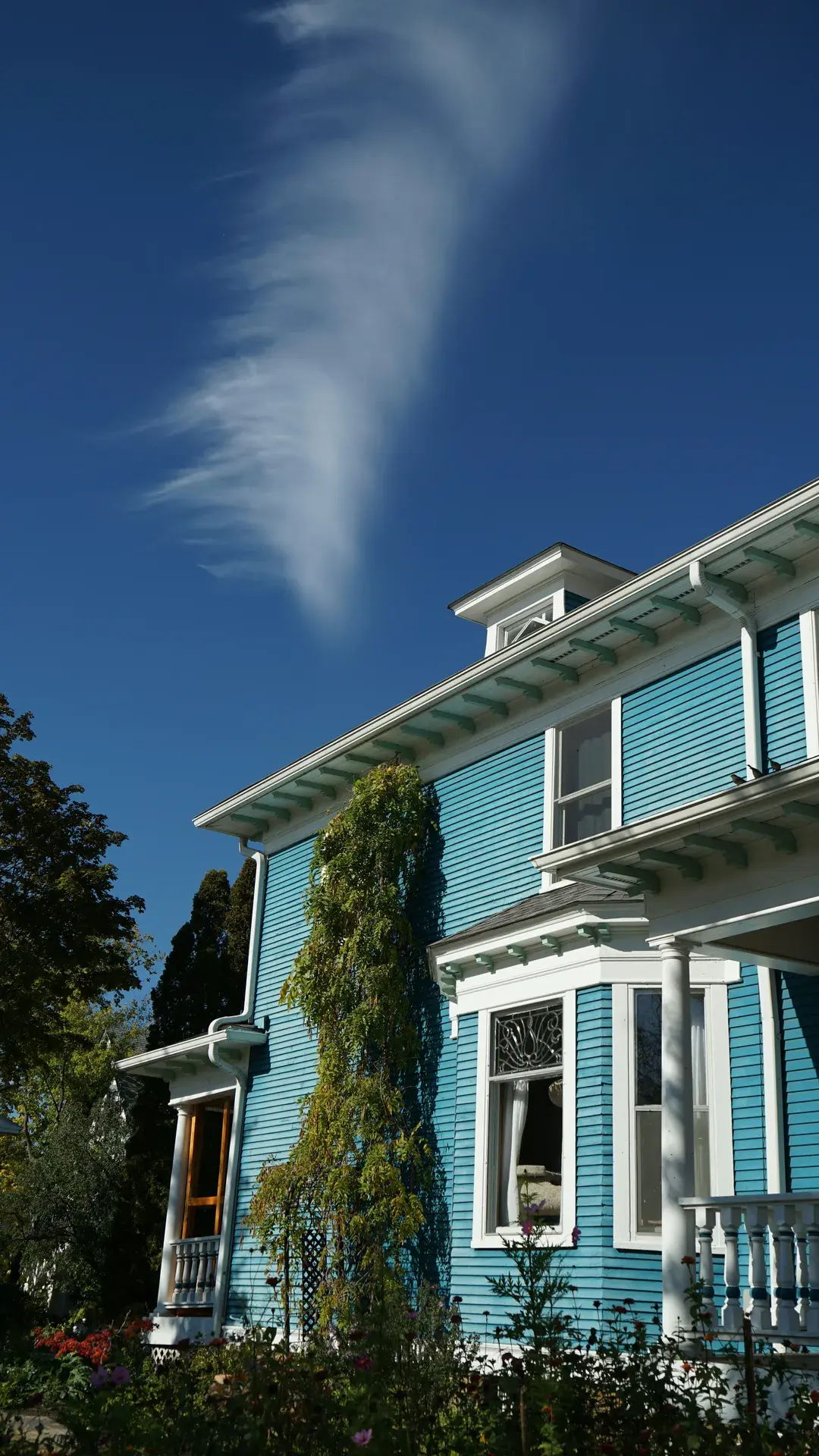
The neighborhood's visual anchor is the Washburn Park Water Tower — a 110-foot concrete structure built in 1931–32 that rises above the tree canopy like a medieval bell tower. It's listed on the National Register of Historic Places and gives Tangletown a sense of place that most Minneapolis neighborhoods have to work much harder to achieve. Below the tower, the streets wind through some of the most architecturally interesting residential blocks in the city — Tudors and Colonials and Craftsmans set into hillsides at unexpected angles, framed by gardens that have been tended for generations.
Tangletown is family-oriented and residentially focused, but it has more personality than that description suggests. The Nicollet Avenue corridor through its east side provides walkable commercial life. The topography gives the neighborhood visual drama that flat Southwest Minneapolis neighborhoods lack. And the street layout creates a sense of community cohesion — when it's hard to get in and out, the people inside tend to know each other.
Tangletown Neighborhood Sign

Tangletown, Minneapolis — Key Stats (2025–2026)
- Residents (2020 Census)
- ~4,600
- Median home sale price (2025 data)
- $638K
- Days on market (2025 data)
- 41 days
- Neighborhood area
- 0.7 sq mi
- Era most homes were built
- 1910s–40s
- Drive to downtown or MSP airport
- 12–18 min
- Walk Score (Oct 2026)
- 70
- Bike Score (Oct 2026)
- 77
Tangletown History & Origins
Before any European settler arrived, this land was Dakota homeland — part of the territory centered around the sacred confluence at Bdote where the Mississippi and Minnesota Rivers meet. The Dakota people lived, hunted, and traveled across these prairies and woodlands for centuries before treaties and forced removal reshaped the landscape: the land under Minneapolis was ceded in an 1805 treaty, and after the U.S.–Dakota War of 1862 most Dakota people were forced out of Minnesota. Minnehaha Creek, which runs through southern Tangletown, was part of the Dakota cultural landscape long before it became a feature on a city map. The ground here holds longer memories than the houses sitting on it.
Tangletown began on paper in 1886, when William D. Washburn and other landowners filed the plat for Washburn Park, a residential development of wooded, hilly lots designed by landscape architect H. W. S. Cleveland around the Washburn Memorial Orphan Asylum at 50th and Nicollet. The city annexed it the next year, but most of the houses came after 1915, when the area was finally hooked up to city water. What makes Tangletown's history architecturally distinctive is the terrain. Most of Minneapolis is flat enough that the standard grid works fine — you lay out the streets at right angles, plat the lots, and build. But the area around the water tower sits on rolling hills, with elevation changes significant enough to make the grid impractical. The streets were laid out to follow the contours of the land — curving around hills, dead-ending at ravines, intersecting at angles dictated by topography rather than geometry. The result was a neighborhood that looked, from the air, like someone had crumpled the city grid into a ball and dropped it.
The name "Tangletown" started as a nickname — a description that stuck because the streets were, in fact, tangled. It was in use by 1981, when a University of Minnesota paper on the water tower referred to the "Washburn Park–Tangletown" neighborhood, and it is now the neighborhood's official name.
The Washburn Park Water Tower, built in 1931–32, became the neighborhood's landmark. Designed by Harry Wild Jones (who also designed Lakewood Cemetery's chapel and the Butler Brothers Building, now Butler Square), the tower is an extraordinary piece of civic architecture — a concrete structure, medieval in tone, with a domed crown, sculptor John K. Daniels's eagles and 18-foot "guardians of health," and a height that makes it visible from blocks away. It's a product of an era when cities still believed that infrastructure should be beautiful. The tower was built to hold 1.35 million gallons, and it still anchors the neighborhood's sense of identity.
The housing stock reflects the neighborhood's early-to-mid 20th century build-out. Tudors are more common here than in many Southwest Minneapolis neighborhoods — the hilly terrain and winding streets seemed to invite the style — alongside Craftsman bungalows, Colonial revivals, and a smattering of storybook cottages that look like they wandered in from the English countryside. The architectural diversity is notable. Because the lots vary in size and orientation (a consequence of the non-grid layout), builders adapted their designs to the terrain rather than stamping out identical houses on identical lots. This gives Tangletown a visual richness that more uniform neighborhoods lack.
Through the postwar decades, Tangletown settled into the quiet stability that defines it today. The housing stock aged gracefully. The trees matured. The tangled streets that were once a quirk became a point of pride.
Living in Tangletown
Living in Tangletown means knowing shortcuts that only make sense if you've lived here for years. It means giving directions by landmark rather than street address — "turn left at the big oak past the water tower, then follow the curve until you see the yellow Tudor" — because the street names change and the house numbers skip in ways that confuse even longtime residents. It means your Amazon driver texts you from two blocks away, baffled. It means your pizza arrives cold more often than it should. And it means that once you're inside the tangle, the city falls away in a way that feels almost rural.
The neighborhood is decidedly family-oriented. Young couples buy here when they're ready for a yard and a school district, and many stay through retirement. The community is tight-knit in the organic way that difficult geography encourages — when you can't easily cut through the neighborhood, you end up walking the same routes and seeing the same faces. Block clubs are active. The Tangletown Neighborhood Association has genuine engagement, not just a mailing list. The annual neighborhood events — ice cream socials, park cleanups, the occasional block party that spills across three cul-de-sacs — draw enough people to feel like a community rather than a formality.
There's an artsy undercurrent in Tangletown that distinguishes it from the more buttoned-up Southwest Minneapolis neighborhoods to the south. The gardens here are wilder — more perennials and native plantings, fewer manicured lawns. The houses have more personality — hand-painted mailboxes, stained glass windows, the occasional yard sculpture that would raise eyebrows in Fulton. The proximity to Nicollet Avenue and the slightly younger demographic compared to Kenny or Armatage gives Tangletown an energy that its winding streets belie. This is not a neighborhood that fell asleep in the 1970s. It's a neighborhood that found its groove and has been deepening it for decades.
The elevation matters to daily life more than you'd expect. The hills mean you get sightlines — views across rooftops to the downtown skyline, or south toward the airport — that flat neighborhoods simply don't offer. They also mean that sledding is excellent, that biking home from the grocery store is a genuine workout, and that your basement floods on a different schedule than your neighbor's two blocks over. The topography gives every block a slightly different character, and Tangletown residents learn to read those differences the way people in other neighborhoods read street numbers.
Tangletown Food, Drink & Local Spots
Tangletown's interior is almost entirely residential — you won't find a coffee shop tucked between the Tudors on a winding side street. But the neighborhood's edges and Nicollet Avenue, on its east side, provide genuinely good commercial life. The stretch of Nicollet from roughly 46th to 54th has developed into one of the more interesting neighborhood restaurant corridors in south Minneapolis — less polished than 50th & France, less trendy than Eat Street, but with a quality-to-pretension ratio that longtime residents appreciate.
The Go-To Spots
5353 Nicollet Ave. S. More than a garden center — Tangletown Gardens is a neighborhood institution. Plants, locally-sourced groceries, prepared foods, and a community gathering space. The name says it all about the connection to the neighborhood.
The Nicollet Avenue Corridor
The stretch of Nicollet Avenue that runs through Tangletown's east side is one of the more promising commercial corridors in south Minneapolis. It doesn't have the density or foot traffic of Eat Street (Nicollet in the Whittier neighborhood to the north), but it's developing a character of its own — a mix of independent restaurants, small businesses, and neighborhood institutions that serve the surrounding residential areas without trying to be a destination. The Tangletown Gardens complex at 54th and Nicollet is the anchor — part garden center, part market, part community space — and it draws people from across the metro.
Also Worth Knowing
Tangletown residents also frequent the commercial strips along 48th and Chicago to the east (Pumphouse Creamery territory, in Field), the 50th & France district to the west (technically Edina), and the Linden Hills shops on 43rd Street. The neighborhood's central location in south Minneapolis means multiple dining scenes are accessible by bike or short drive. For a neighborhood with no commercial establishments on its winding interior streets, Tangletown residents eat remarkably well.
Parks & Outdoors in Tangletown
Tangletown's park access is anchored by Fuller Park and Minnehaha Creek, and supplemented by connections to the broader Minneapolis park system that consistently ranks among the best in the country.
The Water Tower
The water tower sits on one of the highest points in south Minneapolis, and at 110 feet it is visible from blocks away. There's no park around it — the tower and its grounds belong to the city's water works — but its role in the neighborhood is outsized. With its domed crown and sculpted guardians, the tower gives the whole scene an almost European quality that's unlike anything else in Minneapolis.
Fuller Park
Fuller Park, in the northern portion of the neighborhood, provides a recreation center, a playground and tot lot, a wading pool, and half-court basketball and pickleball courts. It's the more utilitarian counterpart to the water tower — less scenic, more functional, and a genuine hub for after-school programming. Between Fuller and the creek, Tangletown has solid park coverage without needing to leave the neighborhood.
Minnehaha Creek & the Chain of Lakes
Minnehaha Creek runs through southern Tangletown, providing trail access, green space, and a corridor that connects to the broader Chain of Lakes system. Lake Harriet is roughly a mile to the northwest — a bikeable distance that many Tangletown residents cover regularly. The creek trail itself is a pleasant walk or run, winding through backyards and under bridges with the kind of dappled-light-through-trees quality that makes Minneapolis's park system genuinely special. From Tangletown, you can bike to Lake Harriet, continue around Bde Maka Ska, loop Lake of the Isles, and be home for dinner — a 15-mile ride through some of the best urban parkland in America.
The Hills Themselves
This sounds obvious, but the topography is itself an outdoor amenity. Tangletown has hills — modest by any mountain standard, but significant for Minneapolis — and those hills create sledding runs in winter, elevation-gain running routes in summer, and the kind of varied landscapes that make a neighborhood walk interesting rather than repetitive. Runners train on the inclines. And on a clear day, the views from the higher points stretch to the downtown skyline and beyond.
Tangletown Schools
Schools are one of Tangletown's strongest draws for families, and the pipeline here mirrors the broader Southwest Minneapolis pattern that parents seek out.
Two Minneapolis Public Schools sit inside the neighborhood, on West 49th Street: Justice Page Middle School and Washburn High School, an International Baccalaureate World School. Nearby elementary schools include Burroughs, to the west in Lynnhurst, and Kenny (K–5), to the southwest in Kenny. In September 2026 the district proposed closing Kenny Elementary in all three of its school-transformation options, with a board vote expected Nov. 10.
Anthony Middle School and Southwest High School — also an IB World School — are farther west. Which of these schools serves a given house depends on the address, so check the district's school finder for a specific house. The schools are one of the key reasons families buy in Tangletown and stay through their children's school years.
Families also have access to Minneapolis's magnet school system, and private options in the surrounding area include various faith-based schools. The school landscape is rich enough that most families find a good fit within a short commute.
Tangletown Real Estate & Housing
Tangletown sits in the upper tier of Minneapolis's housing market — not as expensive as Linden Hills, Fulton or Lynnhurst, but well above the citywide median. Tangletown's median sale price was $638,000 in 2025, according to Minneapolis Area REALTORS, against $350,000 citywide, so Tangletown commands a meaningful premium — one that reflects the schools, the character, and the kind of housing stock that doesn't exist in newer developments.
Homes move faster here than in the city as a whole — 41 days on market in 2025 by the REALTORS' measure, against 55 citywide — reflecting strong demand from families who specifically target this neighborhood. Competitive offers are common: sellers received, on average, 101.7 percent of their original list price.
What Your Money Buys
Below the median, you're looking at smaller bungalows or Cape Cods that need updating — original kitchens, single-car garages, the kind of deferred maintenance that comes with a 90-year-old house. Around the median gets you a well-maintained three- or four-bedroom Tudor or Colonial with updates, a deeper lot, and possibly a view of the water tower from your upstairs window. Well above it, you're into the larger renovated homes, new construction on teardown lots, or the occasional showpiece that takes advantage of Tangletown's hillside terrain to dramatic effect.
The architectural diversity here is wider than in most Southwest Minneapolis neighborhoods. The non-grid layout means lots vary in size, shape, and orientation, which encouraged builders to design for specific sites rather than repeating the same plan. You'll find Tudor revivals, Colonial revivals, Craftsman bungalows, storybook cottages, and the occasional Prairie-style home — often on the same block. This variety is one of Tangletown's genuine charms and a reason architecture enthusiasts seek it out.
One thing buyers should know: the winding streets and irregular lots make parking and access quirky. Some homes have alley access; some don't. Some driveways curve in ways that challenge anything larger than a sedan. The things that make Tangletown charming on foot can be mildly annoying in a moving truck.
Getting Around Tangletown
Tangletown earns a Walk Score of 70 and a Bike Score of 77 — numbers that reflect a neighborhood where daily life is manageable without a car but most people still own one. Nicollet Avenue provides walkable access to restaurants, a garden center, and neighborhood services. The interior streets are excellent for walking — quiet, shaded, constantly surprising — but they don't lead to commercial destinations. If you want milk, you're walking to Nicollet or biking to a grocery store.
Biking is strong. The network of trails along Minnehaha Creek and the Chain of Lakes is accessible from southern Tangletown, and the broader Minneapolis bike infrastructure — dedicated lanes, well-maintained paths, a cycling culture that treats two-wheeled commuting as normal — makes Tangletown a good neighborhood for people who ride. The hills add a workout that flat-neighborhood cyclists miss, but the payoff is coasting home.
For car-based commuting, Tangletown is well-positioned. Downtown Minneapolis is 12–18 minutes depending on traffic and route. I-35W is accessible to the east; Highway 62 (the Crosstown) runs along the southern edge of the broader area. MSP International Airport is roughly 15 minutes. The western suburbs are easily accessible via Crosstown or Highway 100. Most residents drive for their commute, though the bus routes along Nicollet Avenue provide a public transit option for downtown-bound workers.
One thing worth noting: the tangled street layout that gives the neighborhood its name also makes it genuinely hard for through- traffic to cut through. This is a feature. Tangletown streets are quiet because they're confusing — and that confusion translates to lower traffic speeds, fewer non-local cars, and the kind of pedestrian-friendly environment that traffic engineers spend millions trying to create artificially in other neighborhoods. The tangle is Tangletown's best traffic calming device.
What's Changing: The Honest Version
Tangletown is not a neighborhood in crisis. It's stable, desirable, and well-maintained. But like all of Southwest Minneapolis, it has tensions worth naming.
Teardowns & Scale
The same dynamic reshaping Fulton and Kenny has arrived in Tangletown: older homes on desirable lots are being purchased, demolished, and replaced with larger, more expensive homes. In Tangletown, this dynamic has an extra edge because the neighborhood's character depends so heavily on its architectural variety and human scale. A two-story new-build that maxes out the lot coverage looks merely oversized on a grid street; on a curving Tangletown lane, set between a 1920s Tudor and a storybook cottage, it can feel like a violation. Residents have pushed back through historic preservation advocacy, but the market pressure is persistent.
Affordability & Access
Tangletown has never been cheap, but it used to be accessible to the middle class — teachers, social workers, city employees who wanted a characterful home in a good school district. As the median sale price has climbed past $600,000 — $638,000 in 2025 — that accessibility has narrowed considerably. The neighborhood is mostly white (about 85 percent of residents, by Census estimates), mostly owner-occupied, and affluent: its median household income is about $139,000, against about $81,000 citywide. This homogeneity is a product of housing costs and historical patterns, and it limits the diversity that many residents say they value. The tension between wanting an inclusive community and living in a place where the entry price excludes most people is real and largely unresolved.
The Infrastructure Question
Tangletown's winding streets are charming but aging. The irregular layout makes snow plowing challenging, street maintenance expensive, and utility work complicated. Some streets are narrow enough to be effectively one-lane with parked cars on both sides. The infrastructure that gives the neighborhood its character also makes it more expensive to maintain than a standard grid, and as the city faces competing demands on its maintenance budget, Tangletown's quirky streets don't always win the priority contest. Residents occasionally debate whether the charm is worth the plowing delays, and the answer is usually yes — but the question keeps coming up.
Property Taxes
Rising home values mean rising assessments, and long-term Tangletown homeowners — especially retirees — feel the squeeze. When new construction on a teardown lot sells far above the neighborhood median, the assessor takes note, and surrounding homeowners see their tax bills climb whether they asked for the neighborhood's increased desirability or not. This is a Southwest Minneapolis problem, not uniquely a Tangletown problem, but the pace of appreciation here has made it particularly acute.
Tangletown FAQ
Is Tangletown a good neighborhood in Minneapolis?
Yes. Tangletown is one of the most desirable residential neighborhoods in Southwest Minneapolis, with strong schools, mature tree canopy, architecturally interesting homes, and an unusually strong sense of community identity. It's quieter and more residential than Uptown but more walkable and characterful than neighborhoods further south.
Why is it called Tangletown?
The name comes from the neighborhood's famously winding, non-grid street layout. Unlike most of Minneapolis, which follows a rigid grid pattern, Tangletown's streets curve, dead-end, and intersect at odd angles — the result of an 1886 plat, designed by landscape architect H. W. S. Cleveland, for the hilly ground around what is now the water tower. The tangled layout makes it easy to get lost and hard to cut through, which residents consider a feature, not a bug.
Is Tangletown, Minneapolis safe?
Tangletown is one of the safer neighborhoods in Minneapolis. Violent crime is uncommon. Property crime — vehicle break-ins and package theft — has increased modestly in recent years, consistent with broader city trends, but the overall safety profile is strong. The winding streets that define the neighborhood also make it difficult for through-traffic, which contributes to a sense of seclusion and calm.
How much do homes cost in Tangletown?
Tangletown's median sale price was $638,000 in 2025, up from $502,000 in 2021, according to Minneapolis Area REALTORS. That is well above the citywide median of $350,000, though still below Linden Hills, Fulton and Lynnhurst.
What is the Washburn Park Water Tower?
The Washburn Park Water Tower is a 110-foot concrete tower built in 1931–32, designed by architect Harry Wild Jones, with eagles and 18-foot “guardians of health” by sculptor John K. Daniels. It's listed on the National Register of Historic Places and is the neighborhood's most recognizable landmark. It belongs to the city, though it's no longer used for drinking water.
What schools serve Tangletown?
Assigned schools depend on the address, so check the district's school finder for a specific house. Two Minneapolis Public Schools sit inside the neighborhood on West 49th Street: Justice Page Middle School and Washburn High School, an International Baccalaureate World School. Nearby elementary schools include Burroughs and Kenny, and Anthony Middle School and Southwest High School, also an IB World School, are farther west. In September 2026 the district proposed closing Kenny Elementary; the school board is expected to vote Nov. 10.
Is Tangletown walkable?
Moderately to good. Tangletown earns a Walk Score of 70 and a Bike Score of 77. The Nicollet Avenue commercial corridor on the east side provides walkable access to restaurants, coffee shops, and services. The winding interior streets are pleasant for walking but have no commercial destinations of their own. Biking infrastructure is strong.
Where exactly is Tangletown in Minneapolis?
Tangletown is in Southwest Minneapolis, roughly bounded by West 46th Street to the north, I-35W to the east, West 54th Street and Diamond Lake Road to the south, and Lyndale Avenue to the west. It borders Lynnhurst to the west, King Field to the north, Field and Page across I-35W to the east, and Windom to the south. The neighborhood sits on some of the highest ground in south Minneapolis.
What are the best restaurants near Tangletown?
Tangletown's restaurant scene centers on Nicollet Avenue, with the 48th & Chicago node east across I-35W, where Field meets Northrop. Standouts include Pumphouse Creamery (ice cream made on-site) and the various shops and eateries along Nicollet.
How is Tangletown different from other Southwest Minneapolis neighborhoods?
The street layout is the most obvious difference — Tangletown's winding roads are unique in a city defined by its grid. Beyond that, Tangletown has more topographic variety (hills, elevation changes) than most Southwest neighborhoods, more architectural diversity in its housing stock, and a stronger sense of distinct identity. It feels less suburban than Kenny or Armatage while being just as family-oriented.
What Makes Tangletown Worth Knowing
Tangletown is a neighborhood that resists the grid — literally and figuratively. The winding streets that give it its name also give it its personality: a sense of discovery around every curve, a feeling of being tucked away even though you're ten minutes from downtown. The Washburn Park Water Tower rises above the tree canopy like a landmark from another century, which it is, and the homes beneath it have the kind of architectural ambition that most Minneapolis neighborhoods reserve for the blocks closest to the lakes.
What keeps people here isn't one thing — it's the accumulation of small things. The way the streets discourage through-traffic and encourage walking. The way the elevation changes give you unexpected sightlines. The way the neighborhood feels both connected to the city and slightly apart from it. Tangletown figured out a long time ago that the grid isn't the only way to build a neighborhood, and the people who live here have been quietly grateful for that ever since.

From the shop
Made for people who love it here.
From Minneapolis, With Love - Tote Bag
Keep exploring