Minneapolis Neighborhood
Midtown Phillips
The heart of Phillips — where the Midtown Global Market puts a dozen cuisines under one roof, Lake Street hums with immigrant entrepreneurship, and a neighborhood that has long been affordable fights to stay that way.
№ 54 of 87 · Phillips community · Last updated: October 2026 · A complete neighborhood guide
Walk into the Midtown Global Market on a Saturday afternoon and the world contracts to a single building. At one stall, a Somali woman is ladling out bowls of suqaar and rice. Ten feet away, a Mexican vendor is pressing fresh tortillas for tacos al pastor. Around the corner, Vietnamese spring rolls share counter space with Hmong sausage, and somewhere near the back, someone is frying up walleye bites because this is still Minnesota. The market sits in a converted Sears building on Lake Street, and it has been doing what Midtown Phillips does naturally — putting the world on a single block — since 2006. Step outside and the neighborhood picks up where the market leaves off.
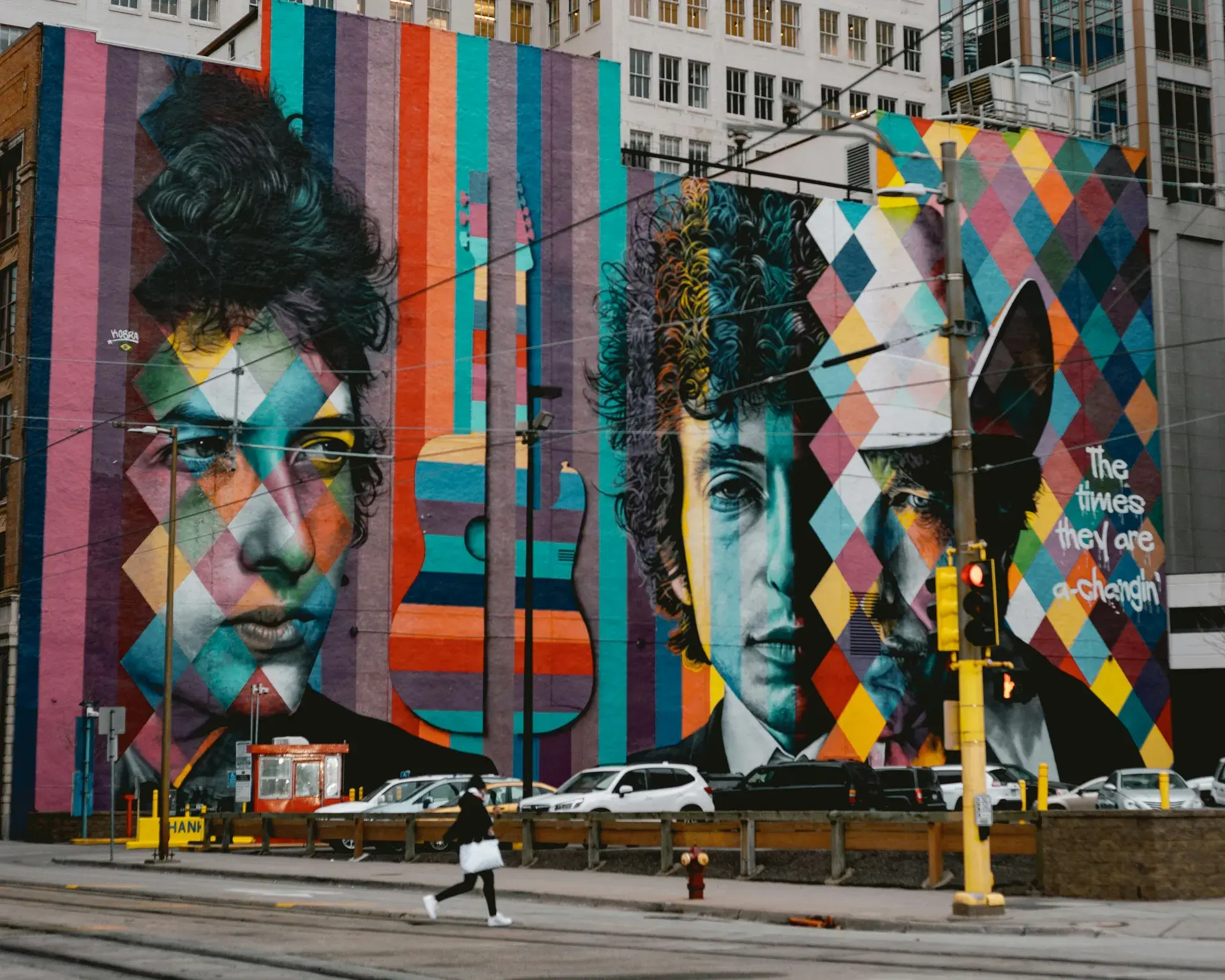
What is Midtown Phillips, Minneapolis?
Midtown Phillips is a densely diverse neighborhood in south-central Minneapolis, occupying the geographic heart of the larger Phillips community. Bounded roughly by East 24th Street to the north, Bloomington Avenue to the east, Lake Street to the south, and Chicago Avenue to the west, it is home to about 5,200 residents representing one of the most varied demographic mixes in the state. By Census estimates, three in four residents are people of color. Significant African American, Latino, Somali, and Native American populations share these blocks with long-term white residents, creating a community that is genuinely multicultural in ways that most neighborhoods only aspire to.
The neighborhood's defining landmark is the Midtown Global Market, housed in the historic Sears, Roebuck building on Lake Street — a public market that functions as both a food destination and a community gathering space for the cultures that make this area what it is. Beyond the market, Midtown Phillips is characterized by affordable housing, active community organizations, and the particular energy that comes from a place where people are building lives from scratch and have been for generations.
Midtown Phillips Neighborhood Sign
As far as we can tell, Midtown Phillips doesn’t have a neighborhood welcome sign — at least, nobody has documented one that we can find. If you’ve seen one, tell us where it is — we’d love to be wrong about this.
Midtown Phillips, Minneapolis — Key Stats (2025–2026)
- Residents (2020 Census)
- ~5,200
- Median sale price, homes and condos (2025 data)
- $210K
- Median rent, all units (2020–24 ACS)
- $1,403
- Renter-occupied homes (2020–24 ACS)
- 53%
- Residents of color (2020–24 ACS)
- 75%
Midtown Phillips History & Origins
The Phillips community — of which Midtown Phillips is the central section — is named for Wendell Phillips, the Boston abolitionist and advocate for Native American rights. The naming feels historically appropriate for an area that would become one of the most racially diverse in the upper Midwest.
Before European settlement, this land was part of the homeland of the Dakota people. The neighborhood grew quickly from the 1880s, after the Milwaukee Road's rail line drew industry to the 29th Street corridor, providing housing for workers and new immigrants. Those early residents were a mix: Norwegians, Swedes, Germans, Russians, Poles, and others, along with African American families.
The mid-20th century brought suburban flight and disinvestment. The construction of I-35W in the 1960s tore through the western edge of Phillips, destroying homes and fragmenting the community. As property values fell, the neighborhood became an entry point for newcomers — first Native American families relocating from reservations under federal relocation policies, then Southeast Asian refugees after the Vietnam War, and later Latino families and Somali and East African immigrants. Each wave layered new cultures onto the neighborhood without fully displacing the ones already there.
The conversion of the massive Sears building on Lake Street into the Midtown Exchange — offices, apartments, and the Midtown Global Market, which opened in 2006 — marked a turning point. It gave the neighborhood a destination that reflected its reality: not a monoculture pretending to be diverse, but a genuinely global community building something together.
Living in Midtown Phillips
Midtown Phillips is not a neighborhood you move to for curb appeal. The housing stock is older and often modest — small single-family homes, duplexes, and apartment buildings that show their age. Some blocks are well-maintained; others reflect years of deferred investment. The beauty here, to the extent that word applies, is human rather than architectural — it lives in the relationships between neighbors who share food across cultural lines, in the community gardens that appear in empty lots, in the way three languages might be spoken at a single bus stop.
The cultural diversity is not an abstraction. Walk down a residential street and you might pass a house with a Somali family, a duplex with Latino tenants, and a bungalow owned by a Native American elder who has lived there for forty years. The corner stores stock products from three continents. The community meetings require translators. This is diversity as lived experience, not as marketing copy.
Lake Street, the neighborhood's southern boundary, is the commercial spine — a corridor that is messy, vital, and endlessly interesting. Immigrant-owned businesses dominate: taquerias, halal groceries, African clothing shops, check-cashing stores, and cell phone repair places. It is not pretty in the way that magazine-feature commercial districts are pretty. It is alive in the way that places where people are working hard tend to be.
Neighboring East Phillips to the east and Ventura Village to the north share Midtown Phillips's diversity and affordability, while Powderhorn Park to the south adds a more activist, arts-inflected energy to the surrounding area.
Midtown Phillips Food, Drink & Local Spots
Midtown Phillips punches far above its weight on food, thanks largely to the Midtown Global Market and the immigrant-driven restaurant culture along Lake Street. This is not a white-tablecloth dining neighborhood — it's a place where the best meals come from stalls, counters, and small restaurants where the cook is also the owner and the menu reflects someone's home country.
Midtown Global Market Highlights
Midtown Global Market. Massive, overstuffed tortas and burritos at prices that feel like they haven't changed in a decade. The al pastor is excellent. This is the kind of food that makes you wonder why you ever paid more for less.
Midtown Global Market. Fresh salsas, tacos, and tortas from a vendor that brings serious heat and serious flavor. The kind of stall where regulars know their order and newcomers should ask for a recommendation — you won't be steered wrong.
Midtown Global Market. Smash burgers and fries in a market setting. Sometimes you want a burger, and Andy's makes a good one.
Lake Street Corridor
Beyond the market, Lake Street through Midtown Phillips is lined with small restaurants and groceries that reflect the neighborhood's demographics. Taquerias serve al pastor and birria. East African restaurants offer injera platters and goat stew. The selection changes as businesses open and close, but the corridor consistently delivers some of the most affordable and authentic food in Minneapolis. Bring cash — not every spot takes cards.
Grocery & Provisions
Daily grocery needs can be met at several neighborhood markets, including Latino and East African groceries on Lake Street that stock items you won't find at a conventional supermarket. For larger shopping trips, the Cub Foods on Lake Street (about a mile east, across Hiawatha in Longfellow) is the closest full-service supermarket.
Parks, Culture & Outdoors Near Midtown Phillips
Midtown Phillips is not a parks-rich neighborhood by Minneapolis standards, but the green spaces it has are well-used and meaningful to the community. The neighborhood's cultural life is less about institutions and more about the everyday expression of diversity — the community gardens, the cultural celebrations, the public art that reflects the people who live here.
Stewart Park
Stewart Park, at the center of the neighborhood on East 26th Street, is the primary green space — a community park with a playground, lighted athletic fields, a wading pool, and a recreation center that hosts youth programming and community events. It's a neighborhood park in the best sense: a place where kids from every background play together after school and families gather on summer evenings.
Community Gardens
Community gardens throughout the Phillips area are some of the most culturally diverse growing spaces in Minneapolis. Plots are tended by gardeners growing everything from tomatoes and squash to Somali crops like kale and maize to Southeast Asian herbs. The gardens function as both food production and social infrastructure — places where neighbors who might not share a language can share knowledge about growing things.
Midtown Greenway
The Midtown Greenway — the 5.5-mile paved bike and pedestrian trail running along a below-grade former rail corridor — passes just north of Lake Street and is one of the neighborhood's most valuable recreational assets. It connects Midtown Phillips to the Chain of Lakes to the west and the Mississippi River to the east, providing a car-free commute corridor and a recreational trail that is heavily used year-round.
Midtown Phillips Schools
Schools in Midtown Phillips serve one of the most linguistically diverse student populations in Minneapolis. The challenges are real — high poverty rates, students arriving with limited English, families juggling multiple jobs — but so is the commitment of educators and community organizations working to support children in this neighborhood.
Andersen United Middle School, an International Baccalaureate school for grades 6–8 and the district's dual-language middle school pathway, sits on Andersen Lane in the neighborhood. South High School is located nearby, just south of Lake Street. South is one of the most diverse high schools in Minnesota and offers a variety of college and career pathways. Assigned schools depend on the address, so check the district's school finder for a specific house.
Several charter schools operate in the broader Phillips area, including options with culturally specific programming for Native American, Somali, and Latino students. Minneapolis Public Schools' open enrollment system also allows families to access magnet and specialty programs across the city.
Midtown Phillips Real Estate & Housing
Midtown Phillips remains one of the most affordable neighborhoods in central Minneapolis, though “affordable” is doing increasingly heavy lifting as prices rise citywide. The housing stock is a mix of older single-family homes, duplexes, triplexes, and small apartment buildings — many dating to the early 20th century and showing varying degrees of maintenance and investment.
Rental Market
Rents here are closer to the city norm than home prices are. The median rent across all unit sizes was about $1,400 in the Census's 2020–2024 estimates, against $1,371 citywide. Much of the rental housing is in older buildings without modern amenities. Affordable housing developments, including units in the Midtown Exchange complex, provide income-restricted options for qualifying households.
Buying in Midtown Phillips
For buyers, Midtown Phillips offers some of the lowest entry points in central Minneapolis. The median sale price was $210,000 in 2025, down from $249,457 in 2024, according to Minneapolis Area REALTORS — though with only 23 sales, nearly half of them condos or townhouses, the figure swings from year to year. Condition varies enormously, and buyers should budget for potential renovations on older properties. Duplexes and small multi-family buildings often attract investors as well as owner-occupants. The neighborhood is accessible for first-time buyers in ways that much of Minneapolis is not.
Getting Around Midtown Phillips
Midtown Phillips benefits from its central location and proximity to major transit corridors. Lake Street is one of the most heavily bused routes in the Metro Transit system, with frequent service connecting the neighborhood to Uptown, the Blue Line light rail, and St. Paul. Chicago Avenue and Bloomington Avenue provide north-south bus connections to downtown and south Minneapolis neighborhoods.
The Midtown Greenway is a major asset for cyclists, providing a car-free east-west route that connects to the Chain of Lakes and the Mississippi River. The cycling infrastructure is strong — useful in a neighborhood where about a third of households don't have a car, by Census estimates.
Driving is straightforward — I-35W is about half a mile west, past Phillips West, providing quick access to downtown and the southern suburbs. Street parking is generally easier here than in denser neighborhoods like Whittier, though Lake Street can be congested during peak hours.
What's Changing: The Honest Version
Midtown Phillips is a neighborhood where urban challenges are visible and community responses are vocal. Nothing here is hidden behind comfortable facades.
Crime and Safety
Crime rates in Midtown Phillips are above the city average. Property crime is common — car break-ins, theft, vandalism. Violent crime, while concentrated in specific areas and circumstances, is a persistent reality that shapes daily life for residents. The Lake Street corridor sees more criminal activity than the residential interior. Community organizations including the Midtown Phillips Neighborhood Association work on safety initiatives, but the challenges are systemic and not easily solved at the neighborhood level.
Displacement Pressures
As Minneapolis housing costs rise overall, Midtown Phillips — one of the last genuinely affordable inner-city neighborhoods — faces increasing pressure. Investors are buying rental properties, and the threat of displacement hangs over communities that have built lives here precisely because it was affordable. The tension between welcoming investment and protecting existing residents is constant and unresolved.
Infrastructure and Investment
Parts of Midtown Phillips show the effects of decades of underinvestment — aging housing, uneven sidewalks, gaps in street lighting. The neighborhood has been vocal about demanding its fair share of city resources, and improvements are happening, but the pace is slower than in wealthier neighborhoods with more political leverage. The Lake Street corridor continues to rebuild from damage sustained during the 2020 unrest, with some businesses recovered and others still working toward it.
Midtown Phillips FAQ
Is Midtown Phillips a good neighborhood in Minneapolis?
Midtown Phillips is one of the most diverse and affordable neighborhoods in Minneapolis. It offers proximity to the Midtown Global Market, strong transit connections along Lake Street, and a deeply multicultural community. It also has higher-than-average crime rates and infrastructure challenges. If you value cultural richness and affordability over polish, Midtown Phillips has a lot to offer.
Is Midtown Phillips safe?
Crime rates in Midtown Phillips are above the Minneapolis average, particularly for property crime and some categories of violent crime. The Lake Street corridor and certain intersections see more activity than residential side streets. Many long-term residents feel comfortable here, but situational awareness is important. Community organizations are active in safety advocacy.
What is the Midtown Global Market?
The Midtown Global Market is a public market located at Lake Street and 10th Avenue South in the former Sears building. It houses dozens of food vendors, restaurants, and small businesses representing cuisines and cultures from around the world — including Somali, Mexican, Vietnamese, Hmong, and more. It opened in 2006 and has become one of the most vibrant food destinations in the Twin Cities.
How much does it cost to live in Midtown Phillips?
Midtown Phillips is one of the most affordable neighborhoods in central Minneapolis to buy in. The median sale price was $210,000 in 2025, according to Minneapolis Area REALTORS — well below the city's $350,000, though that rests on only 23 sales, nearly half of them condos or townhouses. Rents are closer to the city norm: the median rent across all unit sizes was about $1,400 in the 2020–2024 Census estimates, against $1,371 citywide. Duplexes and small multi-family buildings are common and often accessible for first-time buyers or investors.
What is Phillips in Minneapolis?
Phillips is a large, diverse area in south Minneapolis that is divided into four sub-neighborhoods: Midtown Phillips, East Phillips, Phillips West, and Ventura Village. Together, they form one of the most racially and ethnically diverse communities in Minnesota. Midtown Phillips sits at the geographic center of the larger Phillips area.
What schools serve Midtown Phillips?
Nearby Minneapolis Public Schools include Andersen United Middle School, an International Baccalaureate school for grades 6–8, and South High School. Assignments depend on the address, so check the district's school finder for a specific house. Multiple charter school options are also available nearby, and Minneapolis Public Schools' open enrollment system allows families to access programs across the district.
Is Midtown Phillips walkable?
Reasonably so, especially along the Lake Street corridor where grocery stores, restaurants, and services cluster, which means good access to daily needs without a car. The Midtown Greenway provides excellent east-west bike connectivity, and multiple bus routes serve the neighborhood.
Where exactly is Midtown Phillips in Minneapolis?
Midtown Phillips is in south-central Minneapolis, bounded roughly by East 24th Street to the north, Bloomington Avenue to the east, East Lake Street to the south, and Chicago Avenue to the west. It sits within the larger Phillips community, and the Midtown Global Market is at its southwest corner on Lake Street.
Is the Midtown Global Market worth visiting?
Absolutely. The Midtown Global Market is one of the most genuinely multicultural food experiences in the Twin Cities. You can eat Somali sambusas, Vietnamese pho, Mexican tamales, and Hmong egg rolls in a single visit, all from independent vendors. It's not a tourist-oriented food hall — it's a community market that happens to be excellent.
Is Midtown Phillips gentrifying?
The neighborhood has seen some new investment and development, particularly near the Midtown Greenway, but gentrification pressures are less intense here than in neighborhoods like Whittier or Uptown. Affordability remains a core characteristic, though rising housing costs citywide put pressure on it as well.
What Makes Midtown Phillips Irreplaceable
Midtown Phillips is not a neighborhood that markets itself. It doesn't have a catchy district name or an Instagram-friendly aesthetic. What it has is the real thing — a community where people from a dozen countries live on the same block, where the Midtown Global Market serves food from cultures that most of the metro has never encountered, and where a family can still afford to rent a house within a mile of downtown Minneapolis. That combination is rarer than it should be and more fragile than it looks.
The neighborhood has challenges that are impossible to ignore — crime, infrastructure gaps, the slow-motion displacement that comes when any affordable urban neighborhood starts attracting attention. But the people who live here aren't waiting for someone else to fix things. They're organizing, advocating, and showing up at community meetings in three languages. Midtown Phillips is a neighborhood that earns its resilience every day.

Keep exploring