Minneapolis Neighborhood
Ventura Village
One of the most diverse corners of Minneapolis — where Franklin Avenue carries the weight of Native American history and Somali commerce and Latino markets all at once, where Little Earth of United Tribes, just over the line in East Phillips, has housed Native families since 1973, and where the word 'neighborhood' means something more complicated and more real than the real estate listings suggest.
№ 78 of 87 · Phillips community · Last updated: October 2026 · A complete neighborhood guide
On a Saturday morning in July, Franklin Avenue in Ventura Village is conducting its weekly multilingual symphony. At a Somali mall near Cedar Avenue, women in hijabs are selecting goat meat and fresh produce while a television on the wall plays Al Jazeera. Two blocks west, a Mexican bakery is pulling conchas and cuernos from the oven, the smell of baked sugar drifting across the sidewalk where a man is selling elotes from a cart. At the Minneapolis American Indian Center, a group of teenagers is setting up for a powwow practice, the drums already audible from the parking lot. A city bus stops at the corner, and the passengers who step off are speaking Somali, Spanish, Ojibwe, English, and Oromo — five languages within ten seconds, none of them remarkable, all of them ordinary. This is what Ventura Village sounds like when it is simply being itself.
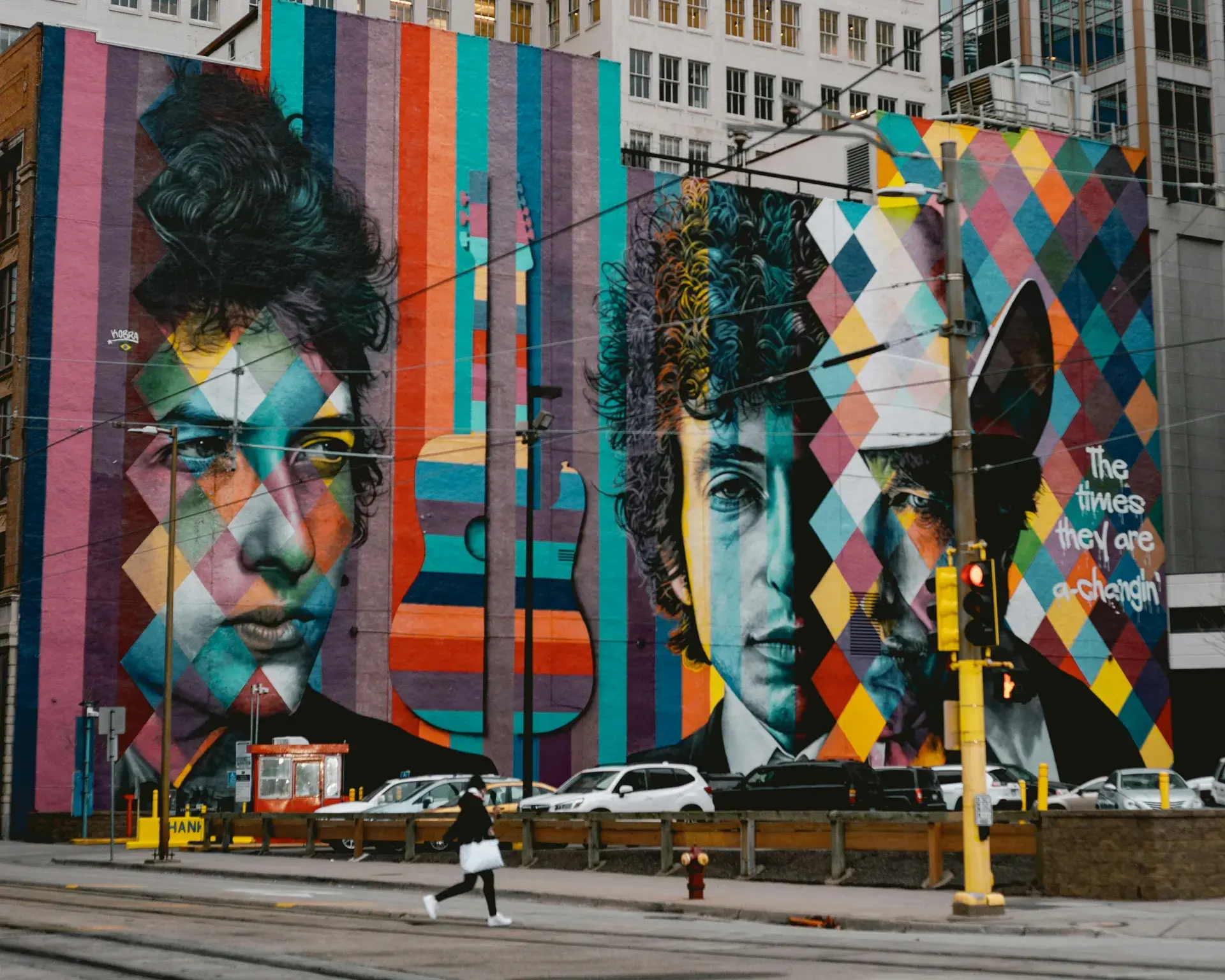
What is Ventura Village, Minneapolis?
Ventura Village is one of four neighborhoods that make up the Phillips community in South Minneapolis — a large, diverse, historically low-income area that sits between downtown and the more affluent neighborhoods to the south and west. Ventura Village occupies the northern portion of Phillips, roughly bounded by I-94 and I-35W to the north, East 22nd and East 24th Streets to the south, I-35W to the west, and the Blue Line and Hiawatha Avenue (Highway 55) to the east. It is home to about 7,100 people, according to the 2020 Census — more than most Minneapolis neighborhoods — and its cultural density is greater still.
This is one of the most racially and ethnically diverse neighborhoods in Minneapolis. About four in five residents are people of color, by Census estimates. The Native American community is anchored by Little Earth of United Tribes, the 212-unit Native-preference housing community in neighboring East Phillips. Somali, Ethiopian, and other East African communities have established a significant commercial and residential presence, particularly along Franklin Avenue and nearby Cedar Avenue. Latino families — many with roots in Mexico and Central America — have been part of the neighborhood for decades. The diversity is not a recent arrival or a marketing point. It is the neighborhood's core identity, built over decades by communities that settled here because it was affordable, because institutions served them here, and because they built the networks of support that make a place home. Phillips West shares much of this character. Cedar-Riverside has comparable diversity. But Ventura Village — with Franklin Avenue as its spine and Little Earth just over the line — has a particular gravity that is difficult to find anywhere else in the Twin Cities.
Ventura Village Neighborhood Sign
Ventura Village, Minneapolis — Key Stats (2025–2026)
- Residents (2020 Census)
- ~7,100
- Residents of color (2020–24 ACS)
- 81%
- Median sale price, homes and condos (2025 data)
- $172K
- Speak a language other than English at home (2020–24 ACS)
- ~50%
- Walk Score (Oct 2026)
- 84
- Transit Score (Oct 2026)
- 70
Ventura Village History & Origins
The land that is now Ventura Village was originally Dakota territory — part of the homeland of the Dakota (Sioux) people who lived in the region for centuries before European settlement. The Dakota were forcibly removed from Minnesota following the U.S.-Dakota War of 1862, one of the most violent and consequential episodes in Minnesota history. The fact that East Franklin Avenue, through Ventura Village, has been a center of Minneapolis's urban American Indian community since at least the 1960s carries the full weight of that history — Native people persisting on land that was taken from the Dakota.
The neighborhood developed in the late 19th and early 20th centuries. Grain dealer Frank Peavey's estate stood on Park Avenue at 22nd Street, where Peavey Park is now, and by the 1940s the Park Board was calling the area a thickly populated district short on playground space. Homes from before 1940 still make up nearly half of the neighborhood's housing, by Census estimates. Like much of Phillips, the area declined through the mid-20th century as freeway construction and disinvestment took their toll.
The most significant development in the area's modern history was the founding of Little Earth of United Tribes in 1973, just southeast of Ventura Village in what is now East Phillips. Created through grassroots Native activism in response to housing discrimination, Little Earth is a 212-unit, HUD-subsidized community with preference for Native American families, and by its own account the only Indigenous-preference project-based Section 8 community in the United States. It serves as a cultural anchor, a community center, and a gathering point for the Twin Cities' Native American population. The complex has faced challenges — poverty, crime, funding pressures, and the ongoing effects of intergenerational trauma — but it has persisted for over fifty years as a place where Native people can live in community, in a city that has often failed them.
The late 20th century brought new waves of immigration. Somali refugees, beginning in the 1990s, established a significant presence along Franklin and Cedar Avenues, opening restaurants, shops, and mosques. Latino families expanded their footprint in the neighborhood as Minneapolis's Latino community grew rapidly in the same decade. By the 2000s, Ventura Village had become a place where global displacement and American urbanization converged on a few square blocks of affordable housing.
Living in Ventura Village
Living in Ventura Village is not like living in the Minneapolis that most newcomers imagine. There are no craft breweries, no artisanal coffee shops with reclaimed wood, no boutiques selling locally made candles. The commercial landscape is functional and multicultural — grocery stores stocked with ingredients you might not recognize, restaurants where the menu is in Somali or Spanish first and English second, clothing shops selling fabrics and styles from East Africa and Central America. The aesthetic is not curated. It is organic, practical, and occasionally beautiful in the way that real places are beautiful — not because someone designed them to be, but because people are living their lives in them.
The residential blocks are a mix of older single-family homes, duplexes, and apartment buildings. Some are well-maintained by owners who take pride in their properties. Others show the effects of decades of deferred maintenance and absentee ownership. The streets are generally quieter than the commercial corridors — families, children playing, the rhythms of a working-class neighborhood. In summer, the porches fill up, the gardens go in, and the neighborhood feels genuinely alive. In winter, it contracts, as all Minneapolis neighborhoods do, into the insulated privacy of indoor life.
The community institutions are the backbone. Little Earth, just southeast in East Phillips, is more than housing — it hosts cultural events, youth programming, and gatherings that serve the broader Native community. The Minneapolis American Indian Center on Franklin Avenue — one of the first urban Indian centers in the country — provides cultural programming, social services, and a gathering space that draws people from across the metro. The Somali community has its own network of mosques, businesses, and mutual aid organizations. Churches serve the Latino and African American communities. These institutions do the work that government and the market do not — holding communities together, providing services, maintaining cultural identity in a city that does not always make space for it.
Ventura Village Food, Drink & Local Spots
Ventura Village's food scene is not the kind that food bloggers usually cover, but it is one of the most interesting and affordable in the city. The Franklin Avenue corridor and the surrounding blocks offer a culinary tour of the world — Somali, Ethiopian, Mexican, Native American, Vietnamese — at prices that make the North Loop look absurd. The restaurants are modest. The food is real. If you are willing to eat at places where the decor is an afterthought and the menu might not be in English, you will eat better and cheaper here than in most of Minneapolis.
The Anchors
1530 East Franklin Avenue. The American Indian Center hosts periodic community meals, cultural events, and gatherings that sometimes include traditional foods — wild rice, bison, fry bread. These are community events rather than restaurants, but they are an important part of the neighborhood's food culture. Check the center's calendar.
Several East African grocery stores along Franklin Avenue and nearby Cedar Avenue stock spices, grains, halal meats, and specialty ingredients from Somalia, Ethiopia, and beyond. For home cooks interested in East African cuisine, these shops are invaluable — and far cheaper than specialty stores in other parts of the city.
Mexican and Central American markets in and near Ventura Village sell fresh tortillas, dried chilies, queso fresco, pan dulce, and the full range of ingredients needed for home cooking. The bakeries are particularly excellent — fresh conchas and cuernos at prices that seem impossible.
Also Worth Knowing
Grocery shopping in Ventura Village is best done at the ethnic grocery stores and markets that serve the community — Somali shops for halal meat and spices, Latino markets for produce and tortillas. For conventional American-style grocery shopping, the main options are the Aldi on East Franklin Avenue and the Cub Foods on Lake Street (across Hiawatha in Longfellow). The absence of a full-service supermarket within the neighborhood is a persistent gap, though the ethnic markets fill much of the need for residents who know how to use them.
Parks, Culture & Outdoors in Ventura Village
Ventura Village has modest park resources within its boundaries but benefits from proximity to larger green spaces and cultural institutions in the surrounding area.
Peavey Park
Peavey Park, at Franklin and Chicago Avenues on the west side of Ventura Village, is the neighborhood's primary green space. It includes a recreation center, basketball courts, a playground, a wading pool, and a multi-use athletic field. The park is heavily used by neighborhood families, particularly in summer — soccer games, basketball, kids on the playground, community gatherings. The park is well-loved, and it long faced maintenance challenges consistent with under-investment in Phillips-area parks relative to wealthier parts of the city, until a two-phase Park Board overhaul, finished in 2019, brought new courts, play areas, a picnic pavilion, and the field.
The Minneapolis American Indian Center
The Minneapolis American Indian Center, at 1530 East Franklin Avenue, is one of the most significant cultural institutions in Ventura Village. Opened on Franklin Avenue in 1975, it was one of the first urban Indian centers in the United States. The center provides cultural programming — powwows, language classes, art exhibitions, elder gatherings — as well as social services including job training, youth programs, and health services. For the Twin Cities' Native American community, the center is a gathering point, a resource, and a cultural anchor. For non-Native visitors, it offers a window into a community and a history that Minneapolis often overlooks.
Midtown Greenway (Nearby)
The Midtown Greenway — the 5.5-mile bike and pedestrian trail running east-west through South Minneapolis — passes about five blocks south of Ventura Village. The Greenway provides recreational access and a commuter corridor connecting to the Chain of Lakes to the west and the Mississippi River trails to the east. The Franklin Avenue station on the Blue Line light rail, on the neighborhood's eastern edge, provides a multimodal connection point for neighborhood residents.
Minneapolis Institute of Art (Nearby)
The Minneapolis Institute of Art (Mia) — one of the great encyclopedic art museums in the United States, with free general admission — sits in neighboring Whittier, within walking distance of Ventura Village. Having a world-class art museum within a mile of one of the most affordable neighborhoods in the city is one of those Minneapolis contradictions that works in everyone's favor.
Ventura Village Schools
Ventura Village and the broader Phillips community are served by several Minneapolis Public Schools, some of which have deep community ties. Andersen United Middle School, in Midtown Phillips, is an International Baccalaureate middle school that runs a neighborhood program alongside the district's dual-language middle school pathway.
Whittier Elementary, an IB school in Whittier, is a nearby elementary option, and South High School is a short trip south in Corcoran. Assigned schools depend on the address, so check the district's school finder for a specific house. Charter schools and culturally specific schools — including schools serving Native American, Somali, and Latino students — provide alternatives that some families prefer. The Minneapolis Public Schools system allows citywide enrollment, so families can apply to magnet and specialty programs beyond the immediate neighborhood.
The educational landscape in Phillips is shaped by the same challenges affecting urban schools nationally — poverty, mobility, language barriers, and funding constraints. Some schools are doing innovative, community-centered work. Others struggle with the weight of systemic challenges. Parents in Ventura Village tend to be actively engaged in their children's education, but the system does not always meet them halfway.
Ventura Village Real Estate & Housing
Ventura Village's housing market is among the most affordable in Minneapolis, reflecting the neighborhood's economic profile and its historical underinvestment. The housing stock is a mix of older single-family homes, duplexes, small apartment buildings, and larger affordable housing complexes. Little Earth's 212 units, just over the line in East Phillips, are the most significant single housing development nearby, and subsidized and income-restricted housing is scattered throughout the neighborhood.
Few homes sell here: 16 in 2025, most of them condos or townhouses, at a median of $171,500, according to Minneapolis Area REALTORS — about half the citywide median of $350,000. With so few sales the figure swings from year to year; it was $202,500 in 2024. The single-family homes are generally older (1900s–1940s), modest in size, and in varying condition. Some have been lovingly maintained or renovated; others need significant work. For first-time homebuyers, particularly those using down-payment assistance programs, Ventura Village offers entry points that are increasingly rare in the central city.
The Rental Landscape
Rental housing dominates the market. Census estimates put the median rent across all units at about $920 a month, among the lowest in the city. Subsidized and income-restricted units are available through various programs, with waitlists that can be lengthy. Little Earth, next door in East Phillips, has its own application process with preference for Native American families. The rental market is generally affordable, but quality varies enormously — tenants should inspect units carefully and check landlord records with the city's rental licensing database before signing a lease.
Getting Around Ventura Village
Ventura Village has decent transit access thanks to the Blue Line light rail, which runs along the Hiawatha corridor on the neighborhood's eastern edge. The Franklin Avenue station provides direct service to downtown Minneapolis (10 minutes), the airport (20 minutes), and the Mall of America (30 minutes). The Lake Street/Midtown station, about a mile south, adds another access point. Multiple bus routes serve the area — the Route 2 on Franklin Avenue and the Route 22 on Cedar Avenue provide frequent east-west and north-south service.
Walking is practical for neighborhood errands — the Walk Score of 84 reflects that basic needs are accessible on foot, though the neighborhood lacks the retail density that would push the score higher. Franklin Avenue provides commercial services, and the ethnic grocery stores serve daily shopping needs. For trips to other parts of the city, transit and cycling are the primary alternatives to driving.
The Midtown Greenway, about five blocks south of the neighborhood, provides an excellent east-west cycling corridor that connects to the Chain of Lakes, Lake Street, and the Mississippi River trails. The flat terrain makes cycling practical throughout the neighborhood. Bike-share stations are available in the area.
By car, the neighborhood is well-connected to Highway 55 (Hiawatha Avenue), which provides access to the airport and southern suburbs. I-35W is accessible to the west. Street parking is generally available and free on residential blocks. Most households own cars — though more than a third don't, by Census estimates — and the neighborhood's infrastructure accommodates them: garages, driveways, and ample street parking are standard on residential blocks.
What's Changing: The Honest Version
Ventura Village's tensions are not new — they are the accumulated weight of decades of poverty, disinvestment, and systemic inequality, now intersecting with the pressures of a city that is growing and a real estate market that is discovering that affordable neighborhoods close to downtown are valuable.
Displacement and Development Pressure
As Minneapolis housing costs rise, neighborhoods like Ventura Village — affordable, centrally located, well-served by transit — become targets for development. New market-rate construction, property flips, and rent increases are slowly changing the neighborhood's economic profile. The risk is that the communities who built Ventura Village's identity — Native American families, Somali immigrants, Latino workers, low-income residents of all backgrounds — are priced out by the same forces that make the neighborhood attractive to newcomers. Community organizations have pushed for inclusionary zoning, community land trusts, and anti-displacement measures. Some of these efforts have produced results. Whether they are sufficient to preserve the neighborhood's character is an open question.
Safety and Policing
Crime is a persistent concern in Ventura Village, and the relationship between the community and the Minneapolis Police Department is complicated. Phillips-area residents — particularly Native American and Black residents — have long histories of tense interactions with police, including racial profiling, excessive force, and a pattern of over-policing minor infractions while under-policing violent crime. The murder of George Floyd in 2020, while it occurred in a different neighborhood, amplified dynamics that were already present. Community-led safety initiatives, restorative justice programs, and culturally specific intervention models are being explored as alternatives or supplements to traditional policing. The outcomes are uncertain but the work is serious.
Environmental Justice
The Phillips community — including Ventura Village — has been a focal point for environmental justice activism in Minneapolis. The neighborhood bears a disproportionate burden of environmental hazards — proximity to freeways, industrial sites, and polluting facilities. The fight over the Roof Depot site in East Phillips, where community members opposed a city plan to build a water maintenance facility and advocated instead for an urban farm and community center, became a landmark environmental justice case. These struggles are not abstract in Ventura Village — the health impacts of air pollution, soil contamination, and environmental racism are lived realities for residents who have been breathing this air and drinking this water for decades.
Ventura Village FAQ
Is Ventura Village a good neighborhood in Minneapolis?
Ventura Village is a good neighborhood for people who value diversity, affordability, and community in ways that go beyond marketing language. It is one of the most racially and ethnically diverse neighborhoods in Minneapolis, with strong Native American, Somali, and Latino communities. Housing is among the most affordable in the central city. The neighborhood has genuine character and genuine challenges — higher crime rates, visible poverty, under-investment in infrastructure — that make it unsuitable for people who expect a polished urban experience. But for people who want to live in a place that reflects the actual complexity of an American city, Ventura Village delivers something most Minneapolis neighborhoods cannot.
Is Ventura Village, Minneapolis safe?
Ventura Village has crime rates above the city average, including property crime and some violent crime. The Franklin Avenue corridor and certain residential blocks have been focus areas for police and community safety efforts. The neighborhood is not uniformly dangerous — many blocks are quiet and residential, and most residents go about their daily lives without incident. But safety is a real concern, and honest conversations about the neighborhood acknowledge it. Community organizations, cultural institutions, and block groups work actively on safety. Basic urban awareness is essential — know your block, know your neighbors, lock everything.
What is Little Earth of United Tribes?
Little Earth of United Tribes is a 212-unit, HUD-subsidized housing community just southeast of Ventura Village, in East Phillips, with preference for Native American families. It was founded in 1973, out of grassroots Native activism against housing discrimination, and describes itself as the only Indigenous-preference project-based Section 8 community in the United States. Little Earth is more than housing — it is a cultural center, a community anchor, and a gathering point for the Twin Cities' Native American population. The community offers programming, cultural events, and social services. It is a significant Native American institution and a defining feature of the Phillips community's identity.
What is the Phillips community?
Phillips is a large geographic community in South Minneapolis that encompasses four neighborhoods: Ventura Village, Phillips West, Midtown Phillips, and East Phillips. The Phillips community is one of the most diverse areas in the state, home to significant Native American, Somali, and Latino populations. It has historically been one of the poorest areas in Minneapolis, with challenges including high crime, housing instability, and health disparities. It is also a place of extraordinary cultural richness, community resilience, and institutional energy. The four Phillips neighborhoods share many characteristics but have distinct identities.
How much does it cost to live in Ventura Village?
Ventura Village is one of the most affordable neighborhoods in Minneapolis. Census estimates put the median rent across all units at about $920 a month, against $1,371 citywide — among the lowest in the city — with significant variation based on building quality and age. Homes rarely come up for sale: 16 sold in 2025, most of them condos or townhouses, at a median of $171,500, according to Minneapolis Area REALTORS — about half the citywide median of $350,000. The affordability is a major draw for first-time homebuyers, immigrants establishing themselves, and anyone priced out of trendier neighborhoods.
What is on Franklin Avenue in Ventura Village?
Franklin Avenue is the commercial spine of Ventura Village and the broader Phillips community. It is a genuinely multicultural corridor — Somali restaurants and shops, Latino markets and bakeries, Native American organizations and services, East African grocery stores, and longstanding institutions like the American Indian Center share the streetscape. Franklin is not polished or curated — many storefronts are modest, signage is multilingual, and the street feels more like a working commercial corridor than a destination retail strip. But it is one of the most culturally authentic streets in Minneapolis, and the food alone is worth the visit.
Where exactly is Ventura Village in Minneapolis?
Ventura Village is in the Phillips community of South Minneapolis, roughly bounded by I-94 and I-35W to the north, East 22nd and East 24th Streets to the south, I-35W to the west, and the Blue Line and Hiawatha Avenue (Highway 55) to the east. It sits south of Elliot Park, north of Phillips West and Midtown Phillips, and west of the Seward neighborhood across Hiawatha.
Is Ventura Village gentrifying?
Gentrification in Ventura Village is happening more slowly than in some adjacent neighborhoods, but the pressures are real. The neighborhood's proximity to downtown, its transit access, and its relative affordability make it attractive to developers and to higher-income residents looking for value. Some new construction — particularly along the Hiawatha corridor — has brought market-rate housing to an area that has been predominantly low-income. Community organizations have pushed for affordability protections and community benefit agreements. The pace of change is slower than in Elliot Park, but the direction is similar.
What community organizations serve Ventura Village?
Ventura Village is served by several community organizations including the Ventura Village Neighborhood Organization, the Phillips Community (which covers all four Phillips neighborhoods), the American Indian Center, Little Earth of United Tribes, and numerous culturally specific organizations serving Somali, Latino, and other communities. The Minneapolis American Indian Center, which opened on Franklin Avenue in 1975, was one of the first urban Indian centers in the country and provides cultural programming, social services, and community gathering space. These organizations are essential to the neighborhood's functioning — they provide services, advocate for residents, and maintain the cultural infrastructure that makes Ventura Village what it is.
Can you live in Ventura Village without a car?
Living in Ventura Village without a car is possible but requires more planning than in downtown or Uptown neighborhoods. The Walk Score of 84 reflects solid walkability — basic errands are achievable on foot — but the neighborhood lacks the density of retail and services that makes truly car-free living easy. Bus service is solid: the Route 2 on Franklin Avenue and the Route 22 on Cedar Avenue provide frequent service. The Blue Line light rail runs along Hiawatha on the neighborhood's eastern edge, with the Franklin Avenue and Lake Street stations providing connections to downtown, the airport, and the Mall of America. Cycling is practical on the flat terrain. More than a third of households have no car, by Census estimates — more than twice the city rate. A car is not essential, but it makes suburban errands and big grocery trips significantly easier.
What Makes Ventura Village Irreplaceable
Ventura Village does not appear on lists of Minneapolis's best neighborhoods. It does not have the restaurants of the North Loop, the parks of Southwest Minneapolis, or the renovated Craftsmans of Kingfield. What it has is something that cannot be manufactured by developers or marketed by real estate agents — a genuine, functioning, multicultural community where Native American elders and Somali shopkeepers and Latino families and East African students and longtime working-class residents of every background occupy the same blocks and use the same parks and walk the same streets. This is not the curated diversity of a corporate brochure. It is the messy, complicated, sometimes difficult real thing.
The challenges are real. The poverty is real. The crime is real. The under-investment in infrastructure, the displacement pressures, the health disparities, the educational gaps — all real. But so is the resilience. So are the community organizations that have been doing the work for decades. So is Little Earth, just over the line in East Phillips, which has been providing housing and cultural grounding for Native families for over fifty years. So are the Somali restaurants on Franklin Avenue, the murals on the buildings, the kids playing in the park on a summer evening. Ventura Village is not a neighborhood that asks to be admired. It is a neighborhood that asks to be understood. And if you take the time to understand it, you will find something here that most of Minneapolis has lost or never had — a place where the city's full complexity is visible, unavoidable, and unashamed.

Keep exploring