Minneapolis Neighborhood
Hale
South of Minnehaha Creek and west of Cedar Avenue, Hale is the kind of south Minneapolis neighborhood that doesn't show up on anyone's radar until they're looking for exactly what it offers — a quiet, family-oriented place near Lake Nokomis where the houses are solid, the parks are close, and the pace of life is slow enough to actually enjoy it.
№ 29 of 87 · Nokomis community · Last updated: October 2026 · A complete neighborhood guide
On a Tuesday evening in early October, Hale is doing its thing — which is to say, not much. A man is raking leaves into a pile that his dog keeps investigating. Two houses down, someone is putting away a lawn mower with the slightly defeated energy of a person who knows they'll have to do this again in a week. A woman jogs past with earbuds in, heading east — toward the lake, probably, because that's where the path goes. The light is that specific gold that October gives Minneapolis for about three weeks before everything turns gray for six months. A school bus rumbles down Cedar and turns. The houses sit in their rows — bungalows and Cape Cods and the occasional split-level, all of them solid, all of them lived-in, none of them trying to be anything other than houses. This is Hale at its most characteristic: a neighborhood that has made peace with its own quietness, that doesn't mistake simplicity for emptiness, and that would be genuinely confused if you told it to develop more personality. The personality is in the steadiness. It always has been.
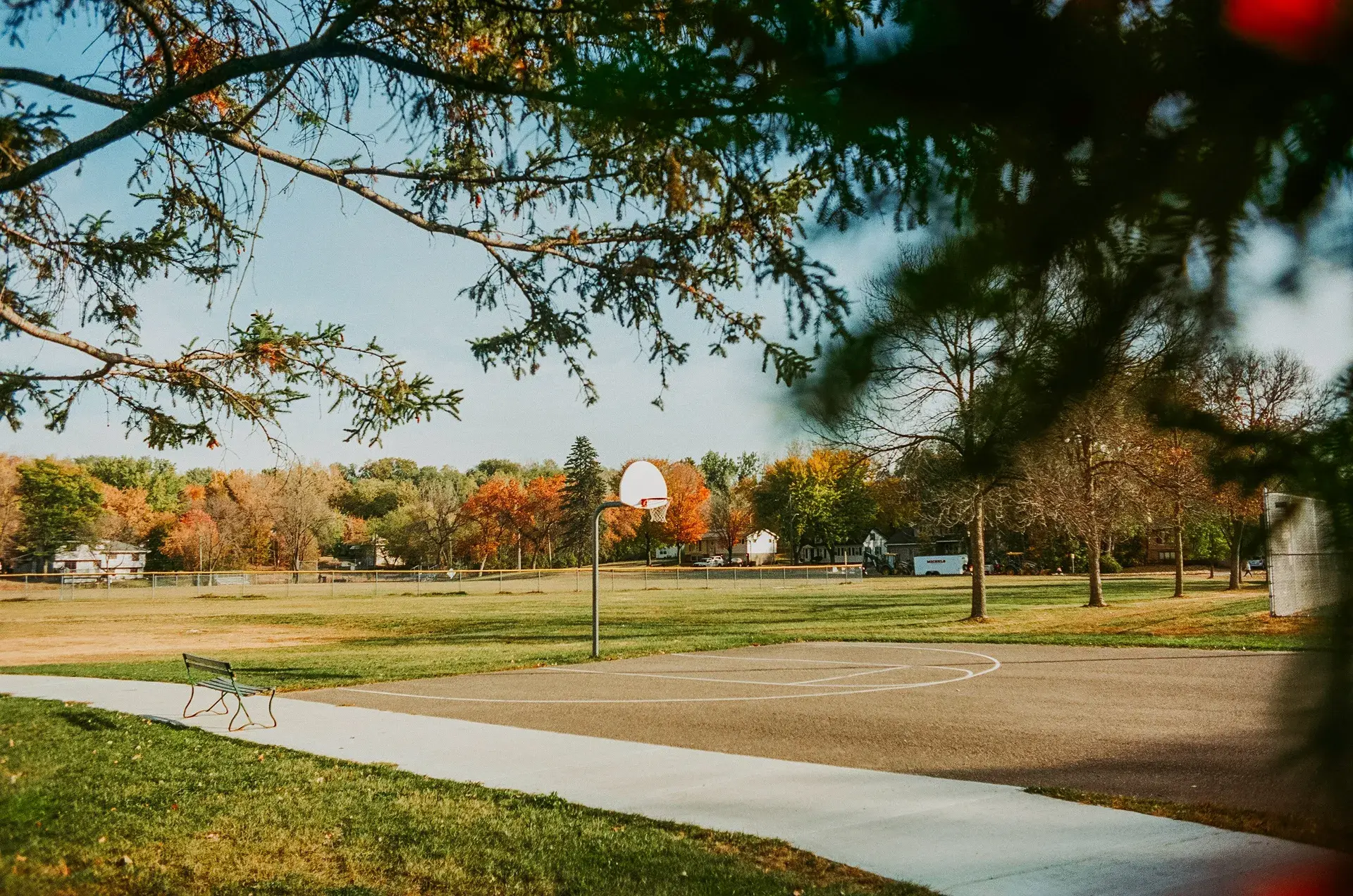
What is Hale, Minneapolis?
Hale is a residential neighborhood in south Minneapolis, bounded roughly by Minnehaha Creek to the north, Cedar Avenue to the east, East 55th Street to the south, and Chicago Avenue to the west. It covers approximately half a square mile and had about 3,300 residents at the 2020 Census. To the south lies Diamond Lake. To the east and north, Keewaydin and Northrop. To the west, across Chicago Avenue, Page.
Hale is not a neighborhood that demands attention. It doesn't have a lake (though a bay of Lake Nokomis reaches its southeast corner). It doesn't have a buzzing commercial strip (though Chicago and Bloomington Avenues have a handful of businesses). It doesn't have a landmark that draws visitors from across the city. What it has, instead, is the thing that most neighborhoods promise but few deliver this consistently: a genuinely quiet, stable place to raise a family or settle into a life that doesn't require constant stimulation.
The neighborhood takes its name from Hale Elementary, which opened in 1930 and was named for Nathan Hale, the Revolutionary War hero. Hale is a neighborhood of deep lots and mature trees, of houses built between the 1920s and 1950s that have aged the way good houses do — settling into their foundations, growing into their yards, becoming part of the landscape rather than sitting on top of it. The streets are grid-straight, the blocks are uniform in scale, and the visual effect is one of calm repetition rather than architectural ambition. This is not a complaint. For the people who live here, the uniformity is a form of comfort.
Hale Neighborhood Sign
Hale, Minneapolis — Key Stats (2025–2026)
- Residents (2020 Census)
- ~3,300
- Median home sale price (2025 data)
- $505K
- Days on market (2025 data)
- 23 days
- Neighborhood area
- 0.5 sq mi
- Era most homes were built
- 1920s–50s
- Drive to downtown or MSP airport
- 12–18 min
- Walk Score (Oct 2026)
- 66
- Bike Score (Oct 2026)
- 81
Hale History & Origins
Before European settlement, this land was Dakota homeland — part of the territory centered around Bdote, the sacred confluence of the Mississippi and Minnesota Rivers. Minnehaha Creek, which runs along Hale's northern edge, was part of the Dakota cultural landscape — a waterway they knew and used long before it became a boundary line on a city map. The ground here holds a history that extends far beyond the 100-year-old houses sitting on it.
European settlement in this far-south portion of Minneapolis came later than in neighborhoods closer to downtown or the lakes. At the turn of the 20th century, the land that would become Hale was still mostly farms and marsh, and the area's first subdivisions weren't platted until the 1910s. The neighborhood's development as a residential area began in earnest in the 1920s and continued through the 1940s and into the early 1950s.
The timing of development explains the housing stock. Hale's homes span the interwar and early postwar periods: Craftsman bungalows from the 1920s, Cape Cods from the 1930s and 1940s, and the occasional ranch or split-level from the early 1950s. The architectural diversity is modest — bungalows predominate, with Tudor and other period-revival houses mixed in — but the era range gives Hale a slightly different character than neighborhoods that were built out in a single decade. The houses get newer as you move south, which makes sense: the city expanded outward, and the blocks south of 54th Street were the last to fill.
The proximity to Lake Nokomis and Minnehaha Creek gave Hale a natural infrastructure of green space that has defined the neighborhood's identity as much as its housing stock.
Hale was also built in the era of racial covenants, deed clauses that barred anyone who was not white from buying or living in a home. Mapping Prejudice, the University of Minnesota project that has catalogued them, has found covenants on more than 650 lots in Hale, most of them written into deeds in the 1910s and 1920s.
Through the postwar decades, Hale was a quiet, middle-class neighborhood — the kind of place where families bought houses and stayed. It avoided the disruptions that reshaped other parts of Minneapolis — no highway construction cut through it, no urban renewal project displaced residents, no commercial decline hollowed out a main street. The result is a neighborhood that has been more or less continuously stable for the better part of a century.
Living in Hale
Living in Hale means accepting — and ideally embracing — a particular kind of quiet. This is not the vibrant quiet of a neighborhood with secret energy beneath the surface. This is the actual quiet of a place where most of the action is people mowing their lawns, walking their dogs, and driving to Target. If you want nightlife, culture, dining scenes, or the general hum of urban energy, you will find Hale stifling. If you want a deep backyard, a solidly built house, a park within walking distance, and the freedom to exist without anyone asking you to participate in neighborhood discourse, you will find Hale perfect.
The neighborhood skews toward families and long-term homeowners. The blocks have the settled quality of places where people know each other — not in the intense, committee-driven way of some Southwest Minneapolis neighborhoods, but in the practical way of people who have been picking up each other's garbage cans after windstorms for fifteen years. The Hale-Page-Diamond Lake Community Association provides organizational structure, but the real community life happens at the block level — the neighbor who snowblows your sidewalk, the family that watches your house when you're on vacation, the dad who coaches little league.
Hale's relationship to Lake Nokomis is worth understanding. The lake is close — just across Cedar Avenue — but apart from a short row of houses facing its southwest bay, Hale is not a lakeside neighborhood. From most blocks, you don't walk out your door and see water. You bike there, or you drive, and when you get there you have the same access as everyone else. This distinction matters for pricing and for daily life. Hale residents use the lake regularly — the swimming beach, the paths, the winter skating — but they do it as visitors rather than as neighbors.
Minnehaha Creek along the northern border provides a quieter natural amenity — a tree-lined waterway with a trail that's pleasant for walking and biking but doesn't attract the crowds that the lakes do. In spring, the creek runs high and fast enough to feel like actual nature. In late summer, it sometimes slows to a trickle. Either way, it gives Hale a natural northern edge that's more interesting than the typical street-grid boundary.
Hale Food, Drink & Local Spots
Let's be direct: Hale is not a food neighborhood. The interior is almost entirely residential, and the commercial options at the edges are limited. What Hale residents actually do is borrow from the surrounding neighborhoods — and the surrounding neighborhoods, fortunately, have things worth borrowing.
The Go-To Spots
Near Lake Nokomis in Keewaydin, a short bike ride from Hale. A neighborhood coffee shop that serves the lake-area communities. Good coffee, a relaxed vibe, and the kind of place where you end up staying longer than you planned.
Near Lake Nokomis. The successor to Sandcastle, offering seasonal lakeside dining with a patio that draws crowds in summer. Burgers, tacos, and drinks with a view of the lake. Hale residents consider it their neighborhood spot even though it's technically across Cedar in Keewaydin.
The stretch of Nicollet Avenue west of Hale, across I-35W, connects to the broader south Nicollet dining scene — including Tangletown Gardens and the 50th & Nicollet intersection. A short drive or bike ride opens up significantly more options.
The Grocery Situation
Hale residents do their primary grocery shopping outside the neighborhood — Cub Foods on Nicollet near 60th Street (just north of the Richfield border), or the Aldi and Target stores along the 494 corridor. The neighborhood doesn't have a full-service grocery store within its borders, which is a practical limitation that most residents navigate without difficulty but that underscores Hale's car-first reality for daily errands.
Parks & Outdoors in Hale
Hale's outdoor access is genuinely strong — a combination of proximity to Lake Nokomis and Minnehaha Creek along the northern edge gives residents more green space than the neighborhood's modest profile might suggest.
Lake Nokomis
Lake Nokomis — right along Hale's eastern edge — is the neighborhood's most significant outdoor amenity by proximity. The lake has two beaches (the main beach and the 50th Street beach on the east shore), a 2.7-mile walking/ biking loop, fishing access, and winter activities including skating, pond hockey, and ice fishing. Nokomis is smaller and less crowded than Lake Harriet or Bde Maka Ska, which gives it a more neighborhood-oriented feel. Hale residents bike there in summer the way suburban residents drive to a community pool — it's routine, not an event.
Minnehaha Creek
Minnehaha Creek runs along Hale's northern edge, providing a green corridor with walking and biking paths. The creek trail connects west toward the Chain of Lakes and east toward Minnehaha Falls — a route that covers some of the best urban parkland in America. In spring, the creek runs high and the banks are green; by late summer, water levels drop and the creek becomes more of a trickle in spots. Either way, the corridor provides a natural boundary between Hale and Northrop that's more pleasant than a highway or a commercial strip.
Diamond Lake
Diamond Lake — yes, there's actually a lake — sits just southwest of the neighborhood, near Pearl Park. It's a small lake, more of a pond by Minneapolis standards, but it adds another piece of green space and water to the area's outdoor portfolio. The lake and surrounding parkland provide a quiet alternative to the busier Nokomis scene.
Hale Schools
Hale Elementary, which serves kindergarten through second grade, sits inside the neighborhood on 13th Avenue South. Field Elementary, in neighboring Field, serves grades three through five.
Nearby middle and high schools include Justice Page Middle School and Washburn High School, west across I-35W. Which schools serve Hale families depends on boundary lines, which have shifted over the years as Minneapolis Public Schools has reorganized; the district's school boundary map shows the current assignment for a specific block.
Families also have access to Minneapolis's magnet school system, which provides citywide options in STEM, arts, language immersion, and other specialized programs. Private and charter options in the area include Minnehaha Academy and various faith-based schools. The school landscape is robust enough that most Hale families find a good fit within a reasonable commute.
Hale Real Estate & Housing
Hale sits toward the upper end of the south Minneapolis housing market — below Tangletown and the neighborhoods around Lake Harriet, but above most of its Nokomis-area neighbors, including Keewaydin along the lake itself. It has housing stock and lot sizes similar to the pricier neighborhoods, and better outdoor access than many cheaper alternatives further from the lakes and trails.
Hale's median sale price was $505,050 in 2025, up from $470,000 in 2024 and $440,000 in 2021, according to Minneapolis Area REALTORS — well above the citywide median of $350,000. Homes sell quickly — 23 days on market on average in 2025, against 55 citywide — and sellers received, on average, a little more than their original asking price.
What Your Money Buys
Below the median, you're looking at smaller bungalows or Cape Cods with original features — one bathroom, a compact kitchen, maybe an unfinished basement. These homes need updating but are structurally sound and sit on lots that are generous by city standards. Around the median gets you a well-maintained three-bedroom home with updates — a remodeled kitchen, replacement windows, possibly a finished basement or an addition. Well above it, you're into larger renovated homes or new construction on teardown lots.
The housing stock spans a wider era range than many Minneapolis neighborhoods. You'll find 1920s Craftsman bungalows alongside 1940s Cape Cods and early-1950s ranch homes — sometimes on the same block. The mix gives buyers more style options than neighborhoods that were built out in a single decade. Lots are consistently deep, with backyards that feel spacious even on the smaller lots. Most homes are single-family and owner-occupied, giving the neighborhood a stable, invested feel.
One note for buyers: the northern blocks closest to Minnehaha Creek are the most desirable — proximity to the creek trail, slightly larger lots, and the psychological benefit of living near water. These blocks command a modest premium over the interior blocks, but the premium is smaller than you'd pay for actual lakeside addresses on Lake Nokomis.
Getting Around Hale
Hale earns a Walk Score of 66 — walkable enough for a stroll to the park, but most errands take a car. The neighborhood is almost entirely residential, which means there's little to walk to within its borders besides the handful of businesses along Chicago and Bloomington Avenues. The 48th & Chicago node, a few blocks north across the creek, provides the closest concentration of commercial life, and Lake Nokomis to the east is a walkable destination for recreation.
Biking is a genuine daily-life option. The Bike Score of 81 reflects connections to the Minnehaha Creek trail, the Lake Nokomis loop, and the broader Minneapolis bike network. A bike opens up the Nokomis area, the Chain of Lakes, and the Minnehaha Falls corridor in ways that walking doesn't quite manage. Many Hale residents bike to the lake as part of their regular routine.
For car-based commuting, Hale is reasonably well-positioned. Downtown Minneapolis is 12–18 minutes depending on traffic and route. I-35W is accessible to the west, and Highway 62 (the Crosstown) runs less than a mile south of the neighborhood, along the Minneapolis-Richfield border. MSP airport is roughly 15 minutes. The western suburbs are accessible via the Crosstown. Most Hale residents drive for their commute, though bus routes along Chicago Avenue, including the D Line, provide public transit options.
The Blue Line light rail is accessible from the 46th Street station on Hiawatha Avenue — about two miles northeast of Hale's center. This isn't door-to-door transit access, but it's close enough that some residents bike to the station and train downtown. For a quiet residential neighborhood, the transit proximity is better than you'd expect.
What's Changing in Hale
Hale is a stable neighborhood with relatively low-grade tensions, but naming them honestly is still worthwhile.
Rising Prices
Hale's prices have climbed: the median sale price rose from $440,000 in 2021 to $505,050 in 2025, according to Minneapolis Area REALTORS, and the neighborhood now sells for more than most of its Nokomis-area neighbors. Teardowns are beginning to appear — modest bungalows replaced by larger, more expensive homes that raise the comps on the whole block. The process is slower in Hale than in Fulton or Linden Hills, but it's visible, and it's pushing the neighborhood's price profile further from the city median.
Commercial Gaps
Hale's lack of internal commercial life is not a crisis, but it's a limitation that residents feel. The absence of a grocery store or a coffee shop within the neighborhood's borders means that daily life requires a car or a bike — there's no walking to the corner for milk. This is a trade-off that residents accept in exchange for the quiet, but it's worth noting for anyone comparing Hale to more walkable alternatives.
Infrastructure Aging
The housing stock ranges from 70 to 100 years old, and while the construction is solid, the maintenance demands are real. Aging sewer lines, settling foundations, outdated electrical systems — the things that come with old houses — are common enough that buyers should budget for them. The city's infrastructure (streets, water, sewer) is similarly aging, and the pace of replacement and repair doesn't always match the pace of deterioration.
Property Taxes
As in most of south Minneapolis, rising assessments mean rising property taxes. The increases are less dramatic in Hale than in the most rapidly appreciating neighborhoods, but they're still a concern for long-term homeowners, particularly retirees on fixed incomes. The gap between what you paid for your house twenty years ago and what the assessor says it's worth today can be jarring — even when the market value increase is theoretically good news.
Hale FAQ
Is Hale a good neighborhood in Minneapolis?
Yes. Hale is a quiet, family-oriented residential neighborhood in south Minneapolis with good park access, proximity to Lake Nokomis, and housing prices that, while well above the city median, are below Tangletown and the neighborhoods around Lake Harriet. It's not a destination — it's a neighborhood for people who want calm, space, and the fundamentals of residential life done well.
Is Hale, Minneapolis safe?
Hale is one of the safer neighborhoods in south Minneapolis. Violent crime is uncommon. Property crime — vehicle break-ins and package theft — occurs at rates similar to other south Minneapolis residential neighborhoods, but the overall safety profile is strong. The streets are quiet, and the residential character keeps foot traffic and through-traffic low.
What is Hale, Minneapolis known for?
Hale is known for being quiet, residential, and close to Lake Nokomis. It's also known for Minnehaha Creek along its northern edge. It's one of those neighborhoods that's better known to the people who live in it than to anyone else.
How much do homes cost in Hale?
Hale's median sale price was $505,050 in 2025, up from $470,000 in 2024, according to Minneapolis Area REALTORS — well above the citywide median of $350,000. Homes that need updating sell below the median; renovated homes sell above it.
Where exactly is Hale in Minneapolis?
Hale is in south Minneapolis, roughly bounded by Minnehaha Creek to the north, Cedar Avenue to the east, East 55th Street to the south, and Chicago Avenue to the west. It borders Northrop to the north (across the creek), Keewaydin and Wenonah to the east, Diamond Lake to the south, and Page to the west. Lake Nokomis sits just to the east, along Cedar Avenue.
Is Hale walkable?
Moderately. Hale earns a Walk Score of 66 — fine for neighborhood walks, but most errands take a car. The interior is almost entirely residential. Chicago Avenue along the western edge and the 48th & Chicago node a few blocks north, across the creek, provide the closest commercial options. The Bike Score of 81 reflects decent cycling infrastructure and connections to the trail network.
What schools serve Hale?
Hale Elementary (K–2) sits inside the neighborhood on 13th Avenue South, and Field Elementary (grades 3–5) is in neighboring Field. Nearby middle and high schools include Justice Page Middle School and Washburn High School. Assignments depend on exact address, so check the Minneapolis Public Schools boundary map for a specific block. Minneapolis's magnet school system provides additional options.
How far is Hale from Lake Nokomis?
Lake Nokomis is about half a mile east of Hale's center — a 5-minute bike ride or a 10-minute walk. Residents use the lake regularly for swimming, walking, biking, and winter activities without having to pay the premium associated with lakeside addresses.
How is Hale different from Diamond Lake?
Hale and Diamond Lake share a border along East 55th Street and have similar character, though Diamond Lake's houses are generally newer, many of them built after World War II. Otherwise the differences are geographic: Diamond Lake is to the south, closer to Diamond Lake itself and Highway 62. Hale is closer to Lake Nokomis and Minnehaha Creek. Both are quiet, residential, and family-oriented. The differences are subtle enough that some residents use the names interchangeably.
Is Hale a good place for first-time buyers?
It's a stretch for many. Hale's median sale price was $505,050 in 2025, according to Minneapolis Area REALTORS — well above the citywide $350,000, though below Tangletown and the neighborhoods around Lake Harriet. Buyers who can reach it get solid construction, generous lot sizes, and proximity to Lake Nokomis; homes below the median tend to need updating.
What Makes Hale Worth Knowing
Hale is a neighborhood that does one thing well: it provides a quiet, stable place to live in a city where those qualities are getting harder to find in combination. There's no hook, no marquee attraction, no commercial strip buzzing with energy. There are solid houses on deep lots, a bike ride to the lake, and neighbors who wave when they see you. The trees are old enough to form a canopy. The foundations are strong enough to last another century.
For people who want the Minneapolis park system, the Minneapolis school district, and a Minneapolis address without the Lake Harriet price tag — or who simply want a neighborhood where the loudest sound on a Tuesday evening is someone's sprinkler — Hale is the kind of place that rewards a closer look. It won't try to sell you on itself. But once you're here, you'll understand why people stay.

Keep exploring