Minneapolis Neighborhood
Holland
A quiet residential neighborhood in Northeast Minneapolis that sits just west of Central Avenue, keeps a low profile, and offers the kind of affordable, unpretentious homeownership that the trendier parts of Northeast have priced out.
№ 33 of 87 · Northeast community · Last updated: October 2026 · A complete neighborhood guide
The thing about Holland is that nothing in particular happens here, and that is the entire point. On a Thursday evening in May, a man is watering the flowers along his front walk — the same flowers he has planted every spring for fifteen years, in the same beds, in the same order. His neighbor is sitting on her porch reading a book. Two blocks over, a group of kids is playing basketball in a driveway, and the sound of the ball on concrete carries in the quiet like a metronome. Central Avenue is a five-minute walk east, with its restaurants and bars and the energy of Northeast's ongoing reinvention, but here — on the residential blocks west of the avenue — the energy is different. Slower. More domestic. More like a neighborhood and less like a scene. Holland does not have a narrative. It has neighbors, and for the people who live here, that is enough.
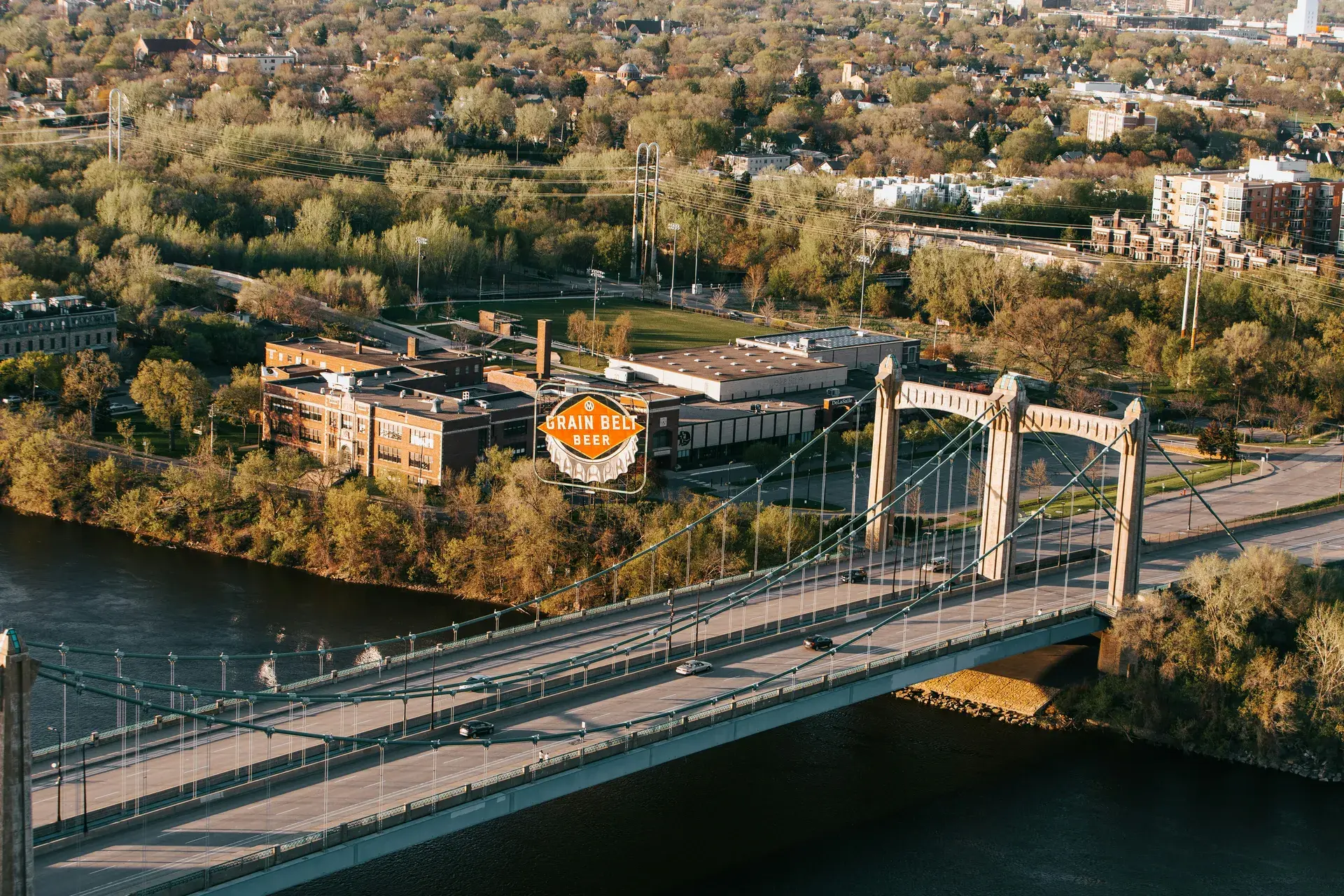
What is Holland, Minneapolis?
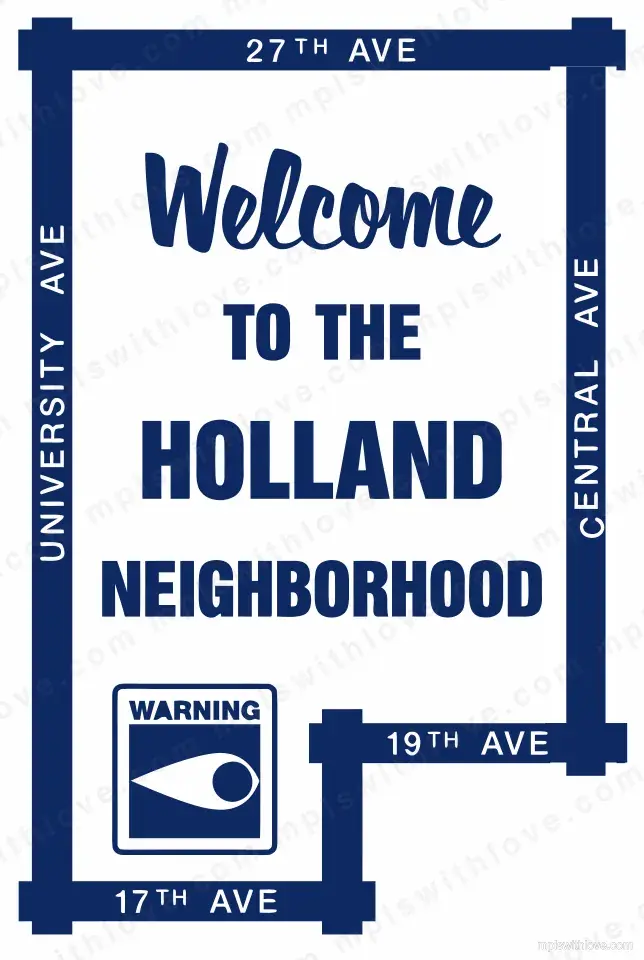
Holland is a residential neighborhood in Northeast Minneapolis, roughly bounded by 27th Avenue NE to the north, Central Avenue NE to the east, 17th and 19th Avenues NE to the south, and University Avenue NE to the west. Home to about 5,000 residents at the 2020 Census, it is one of the quietest and least well-known neighborhoods in Northeast — a place that defines itself by residential stability rather than commercial energy.
The neighborhood's defining feature is its proximity to Central Avenue — Northeast's primary commercial corridor — without being built around it. The avenue runs along Holland's eastern edge, and most of its blocks sit close enough to walk to the restaurants, bars, and shops that have made Northeast one of Minneapolis's most dynamic commercial areas, but far enough back to avoid the noise, traffic, and parking challenges that come with corridor-adjacent living. This position — accessible but insulated — is Holland's primary selling point and the reason many residents chose it over the more visible parts of Northeast.
The housing stock is primarily small frame houses and bungalows, most of them built before 1920 for the working-class families who settled Northeast. Prices are below the citywide median and below most of Northeast, making Holland one of the more accessible options for homeownership in a quadrant of the city that has seen significant appreciation. The community is diverse — a mix of longtime residents, newer immigrant families, and young buyers attracted by the value — and the character is residential, family-oriented, and unpretentious in the way that only a neighborhood with nothing to prove can be.
Holland Neighborhood Sign
Holland, Minneapolis — Key Stats (2025–2026)
- Residents (2020 Census)
- ~5,000
- Median home sale price (2025 data)
- $324K
- Era most homes were built
- Before 1920
- Primary commercial corridor (eastern edge)
- Central Ave NE
- Comprehensive high school
- Edison High
- Drive to downtown Minneapolis
- 12–18 min
- Walk Score (Oct 2026)
- 79
- Bike Score (Oct 2026)
- 94
Holland History & Origins
The land that is now Holland is part of the ancestral homeland of the Dakota people, whose relationship to this land long predates the city, the state, and the nation. The dispossession of Dakota lands through treaties and forced removal is the foundational history of every Minneapolis neighborhood, Holland included.
Holland developed as part of the broader settlement of Northeast Minneapolis by Eastern European immigrants in the late 19th and early 20th centuries. Most of its houses went up before 1920, modest homes built for working-class families on the standard Northeast grid. The neighborhood and Holland School were both named for Josiah G. Holland, an editor and educator born in Massachusetts in 1819, and the neighborhood's identity was always tied to the broader Northeast immigrant experience rather than to any single institution or landmark.
Through the mid-20th century, Holland was a stable, working-class neighborhood where families stayed for generations. The pattern was familiar: buy a small house, raise your children, attend the neighborhood church, and maybe — if things went well — add a room to the house or finish the basement. The community was tight, the expectations were modest, and the neighborhood functioned with the quiet efficiency of a place where everyone knew their role.
The late 20th and early 21st centuries brought gradual change. The original Eastern European families aged and their children moved to the suburbs. New residents, many of them immigrants, moved into the affordable housing stock and began building their own communities. Young professionals, drawn by Northeast's growing reputation and Holland's lower prices, added another layer. The result is the neighborhood that exists today: diverse, transitional, and still figuring out what it wants to be.
Living in Holland
Living in Holland means living on blocks where the most dramatic event of the week might be a new paint color on a neighbor's house. The residential streets are quiet, the houses are modest, the yards are maintained with varying degrees of ambition, and the overall effect is a neighborhood that values stability over excitement. On a summer evening, the dominant sounds are lawn sprinklers, kids' voices, and the distant bass of someone's backyard speaker. It is the kind of quiet that some people find boring and other people find essential.
The proximity to Central Avenue gives Holland something that purely residential neighborhoods often lack — access to a vibrant commercial corridor without the costs of living directly on it. A five-to-fifteen-minute walk puts Holland residents on a street with Vietnamese restaurants, Mexican taquerias, craft breweries, coffee shops, and grocery stores. Then they walk home to a block where the biggest concern is whether the neighbor's lawn is getting too long. The combination is genuinely appealing and increasingly rare.
The community is in transition but not in crisis. Longtime residents — elderly homeowners, families who have been here for decades — coexist with newer arrivals without dramatic friction. The diversity is real but understated — a Somali family here, a Latino family there, a young couple who moved from Uptown for the extra bedroom and the lower mortgage payment. The interactions are neighborly rather than ideological. People wave. They watch each other's houses. They shovel each other's sidewalks. It is not the kind of community that gets written about in think pieces, but it is the kind that holds a neighborhood together.
Holland Food, Drink & Local Spots
Holland itself is primarily residential, with few commercial establishments away from its edges. But Central Avenue — the neighborhood's eastern border — provides access to one of the most diverse food corridors in the Twin Cities, putting Holland residents within easy reach of Northeast's expanding dining scene.
Central Avenue Access
Central Avenue, forming Holland's eastern boundary, is one of the most culturally diverse commercial corridors in the Twin Cities. Within easy walking distance of Holland, you'll find Vietnamese pho restaurants, Mexican taquerias, East African spots, craft breweries, cocktail bars, and a mix of longtime businesses and new arrivals. The avenue has been one of the biggest food stories in Minneapolis over the past decade, and Holland residents benefit from the proximity without bearing the costs of living directly on it.
Neighborhood Character
Within Holland's residential blocks, commercial options are minimal. There are no destination restaurants, no coffee shops, no bars on the residential side streets. This is the tradeoff: Holland's quiet residential character exists precisely because it is not a commercial area. Residents who want dining and nightlife walk to Central Avenue. Residents who want quiet stay home. Holland accommodates both preferences without pretending to be something it is not.
Parks & Outdoors Near Holland
Holland has modest park space within its boundaries, with a neighborhood park providing a playground and green space for residents. The larger park amenities require a short trip by foot, bike, or car.
Jackson Square Park
Jackson Square Park, within the neighborhood, provides a community green space with a playground, a softball field, a basketball court, and a wading pool. It is a neighborhood park in the truest sense — not a destination but a daily amenity for families, dog walkers, and kids looking for a place to play after school.
Nearby Parks & Trails
Columbia Park and Golf Course is a short trip north. The Mississippi River trail system is accessible via Bottineau to the west. The broader Northeast park system and the Grand Rounds trail network are accessible by bike, connecting Holland to the citywide trail system for recreation and commuting.
Holland Schools
Holland is served by Minneapolis Public Schools. Nearby elementary options include Pillsbury Elementary and other Northeast schools. Northeast Middle School serves grades 6–8, and Edison High School is the comprehensive high school for Northeast Minneapolis.
Edison High School sits inside Holland, on 22nd Avenue NE, with a diverse student body and a range of extracurricular options. The school is a stabilizing presence in the Northeast community.
Charter schools and the district's open enrollment system provide additional options. Assignments depend on the address, so check the district's school finder for a specific house.
Holland Real Estate & Housing
Holland offers some of the best value in Northeast Minneapolis. Its median sale price was $323,750 in 2025, according to Minneapolis Area REALTORS — below the citywide median of $350,000 and below most Northeast neighborhoods. For buyers who want a Northeast address near Central Avenue without paying the premium that the neighborhoods closer to downtown command, Holland is the answer.
The housing stock is primarily frame houses and bungalows built before 1920 — the same sturdy, modest homes found throughout Northeast, with character features like hardwood floors, built-in shelving, and deep front porches. Below the median, homes need updating. Around the median gets you a well-maintained three-bedroom home. Well above it, properties are typically renovated with modern systems and finishes.
About half of Holland's occupied homes are rented, and Census estimates put the median rent at about $1,475, a little above the city's $1,371. The neighborhood has seen some investor activity, but the pace of speculative buying is lower than in the more visible parts of Northeast.
Getting Around Holland
Holland earns a Walk Score of 79 and a Bike Score of 94. The proximity to Central Avenue provides walkable access to commercial options, and the flat Northeast grid makes cycling practical for daily errands and commuting.
Metro Transit bus routes along Central Avenue provide frequent service to downtown Minneapolis, with ride times of approximately 25–30 minutes. Central Avenue is one of the better transit corridors in Northeast.
Cycling to downtown is practical — approximately 3–4 miles via the Northeast grid or the river trail. The flat terrain and bike-friendly streets make Holland a comfortable neighborhood for cyclists.
By car, downtown Minneapolis is 12–18 minutes. Columbia Heights is about a mile and a half north. MSP Airport is approximately 20 minutes. Street parking is readily available on residential blocks.
What's Changing: The Honest Version
Holland's tensions are gentler than in many Minneapolis neighborhoods, reflecting a place where change is arriving gradually rather than dramatically.
Price Pressure
As the trendier parts of Northeast have become more expensive, price pressure has pushed outward into neighborhoods like Holland. The median sale price rose from $285,000 in 2021 to $323,750 in 2025, by Minneapolis Area REALTORS figures, and properties that were deeply affordable five years ago are now merely affordable. For longtime residents on fixed incomes, rising property taxes are a real concern. For renters, increasing rents are narrowing the options. The pace of change is slower here than in the neighborhoods closer to downtown, but the direction is the same.
Identity Question
Holland has never had a strong brand identity — no commercial strip to call its own. As the neighborhood changes, the question is what identity emerges. Will Holland become a more expensive version of its current self — still quiet, still residential, just pricier? Or will the arrival of new residents with different expectations change the character of the place? Most longtime residents are betting on continuity — that Holland's quiet residential character is durable enough to absorb change without being transformed by it.
Commercial Desert
Holland's lack of commercial options away from its edges is both a feature and a frustration. The quiet comes from the absence of commercial activity, but so does the inconvenience of driving or walking to Central Avenue for basic needs. Whether the neighborhood wants commercial development — and what kind — is a question that residents answer differently depending on what they value most: convenience or quiet.
Holland FAQ
Is Holland a good neighborhood in Minneapolis?
Holland is a solid, affordable residential neighborhood in Northeast Minneapolis that offers quiet blocks, proximity to Central Avenue's commercial corridor, and housing prices below the city median. It lacks the buzz and the amenities of the trendier parts of Northeast, but that is precisely its appeal for buyers seeking value, space, and the working-class character that originally defined the area. The neighborhood is diverse, family-oriented, and largely overlooked — which, for some buyers, is the whole point.
Where is Holland in Minneapolis?
Holland is in Northeast Minneapolis, roughly bounded by 27th Avenue NE to the north, Central Avenue NE to the east, 17th and 19th Avenues NE to the south, and University Avenue NE to the west. It sits east of the Bottineau neighborhood, south of Columbia Park, and north of Logan Park. Central Avenue — Northeast's primary commercial corridor — runs along its eastern edge, providing access to restaurants, shops, and transit.
Is Holland safe?
Holland is generally one of the quieter, safer neighborhoods in Northeast Minneapolis. Crime rates are near or slightly below the citywide average for most categories, and the residential blocks have a calm, family-oriented feel. Property crime — car break-ins, package theft — is the most common concern. The neighborhood benefits from its residential character.
How much do homes cost in Holland, Minneapolis?
Holland's median sale price was $323,750 in 2025, up from $285,000 in 2021, according to Minneapolis Area REALTORS. That is below the citywide median of $350,000 and below most Northeast neighborhoods. Holland offers some of the best value in Northeast Minneapolis for single-family homeownership.
What schools serve Holland, Minneapolis?
Holland is served by Minneapolis Public Schools. Nearby elementary options include Pillsbury Elementary and other Northeast schools. Northeast Middle School serves grades 6–8, and Edison High School, inside Holland on 22nd Avenue NE, is the comprehensive high school. Assignments depend on the address, so check the district's school finder for a specific house. Charter schools and the district's open enrollment system provide additional options.
Is Holland near Central Avenue?
Yes — Central Avenue NE forms Holland's eastern boundary, putting the neighborhood within easy walking or biking distance of Northeast's primary commercial corridor. Central Avenue has been transformed in recent years with new restaurants, breweries, bars, and shops, and Holland residents can access this scene without living in the middle of it — a position that offers the benefits of proximity without the noise and parking challenges.
How is Holland different from other Northeast neighborhoods?
Holland is quieter, more residential, and less well-known than neighborhoods like Logan Park or St. Anthony West. It lacks the breweries, galleries, and restaurant density of those areas but also lacks their higher prices and gentrification pressures. Holland is Northeast at its most residential and unpretentious — a neighborhood of families, longtime homeowners, and people who prefer quiet blocks to vibrant commercial strips.
Is Holland gentrifying?
Holland is experiencing some price appreciation as the broader Northeast area has become more popular, but gentrification pressure here is less intense than in neighborhoods closer to downtown. The neighborhood's residential character has insulated it somewhat from the most rapid changes. Prices are rising, but Holland remains affordable by Northeast standards, and the pace of change is measured rather than dramatic.
What Makes Holland Worth Knowing
Holland is the neighborhood that proves you do not need a brand to have a community. There are no brewery tours here, and the restaurants with Instagram accounts and reservation systems sit out on the edges, along Central and University. There are houses and yards and blocks where people have lived for years or decades, where the mailman knows your name and the kid next door shovels your sidewalk in winter without being asked. There is Central Avenue a short walk away when you want restaurants and nightlife and the energy of a commercial corridor that is genuinely one of the most diverse and interesting in the city. And there is the quiet of home when you come back — the porch light on, the street still, the reassurance that a neighborhood does not have to be celebrated to be good.
The risk for Holland is the same risk that every affordable, quiet neighborhood faces in a city where prices keep rising: that the affordability that makes it accessible will attract buyers who change the character, that the quiet will be disrupted by development, that the unpretentiousness will be rebranded as 'authentic' and sold at a premium. That has not happened yet in Holland, and many residents intend to ensure it does not. Their tool is the simplest one available — staying, maintaining, showing up, and building the kind of community that is too rooted to be easily displaced. It is not a dramatic strategy. It is a Holland strategy. And so far, it is working.

Keep exploring