Minneapolis Neighborhood
Sheridan
A small, evolving Northeast Minneapolis neighborhood tucked between Washington Street and the river — where the arts district spillover meets blue-collar roots, Sheridan Memorial Park anchors a tight residential community, and the neighborhood's proximity to everything makes it hard to overlook and easy to underestimate.
№ 68 of 87 · Northeast community · Last updated: October 2026 · A complete neighborhood guide
On a Saturday in May, the Art-A-Whirl crowds are a few blocks east in Logan Park, filling galleries and studios and spilling onto sidewalks with wine in plastic cups. In Sheridan, the noise is a pleasant background hum. A family is planting a garden in their front yard. Two neighbors lean against a fence, talking about nothing in particular. A dog walks its owner past Sheridan Memorial Park, where a dad pushes his daughter on the swings. The arts district is right there — close enough to walk to, far enough that the neighborhood keeps its own rhythm. This is the Sheridan proposition: proximity without immersion, accessibility without chaos, a Northeast neighborhood that has not yet been fully discovered and likes it that way.
What is Sheridan, Minneapolis?
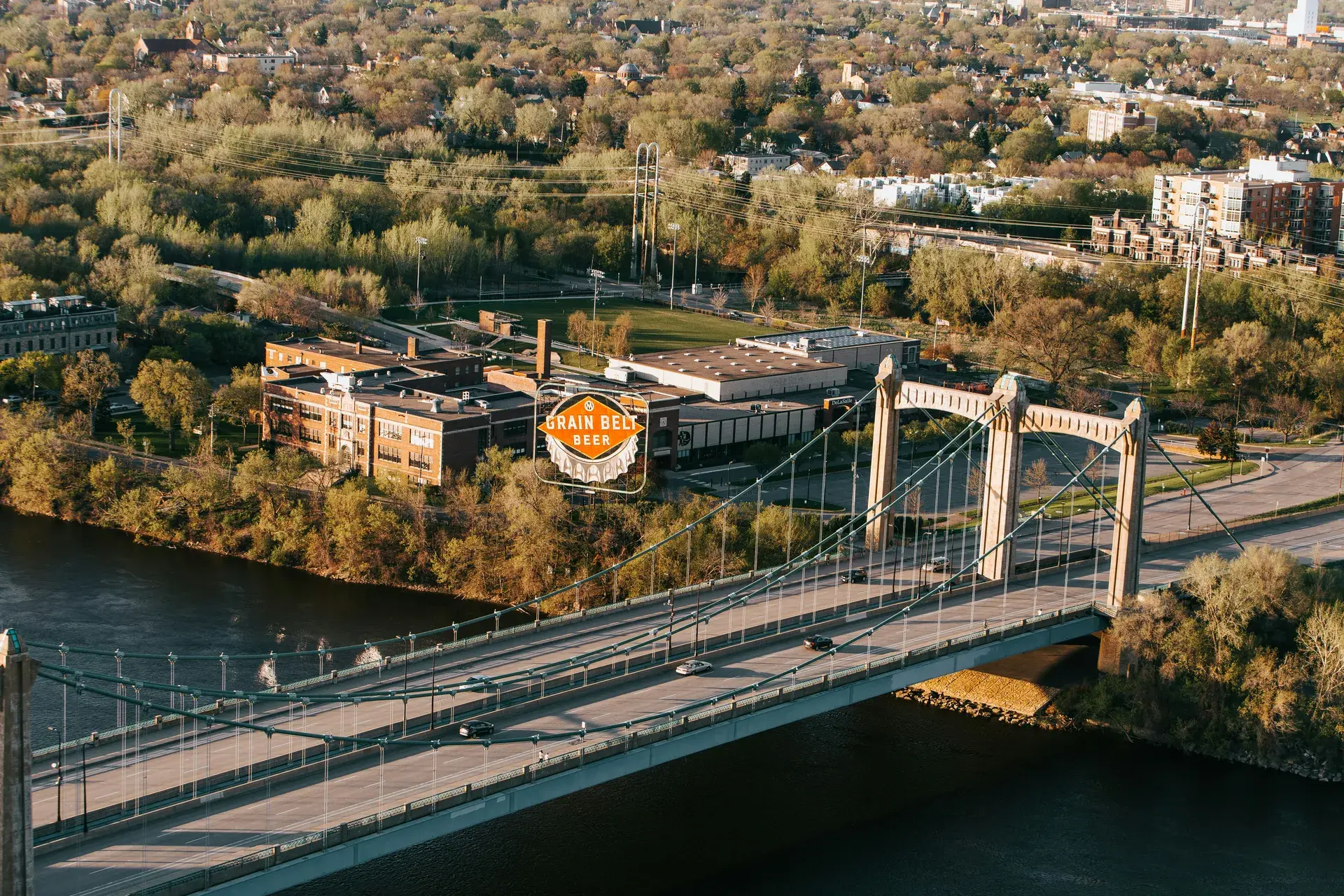
Sheridan is a small residential neighborhood in Northeast Minneapolis, bounded roughly by 17th and 18th Avenues NE to the north, Broadway Street NE to the south, the Mississippi River to the west, and Washington Street NE to the east. Home to about 3,300 residents, it is one of the quieter and more affordable pockets of Northeast — a neighborhood that benefits from its proximity to the arts district, Central Avenue's commercial corridor, and downtown without being at the center of any of them.
Sheridan sits west of Logan Park, the heart of Northeast's arts scene, and south of Bottineau, with St. Anthony West to the south and the Mississippi to the west. The neighborhood shares the broader Northeast identity — blue-collar roots, increasing diversity, arts and culture spillover — while maintaining a residential character that distinguishes it from the more commercially active parts of the area.
Sheridan Neighborhood Sign
As far as we can tell, Sheridan doesn’t have a neighborhood welcome sign — at least, nobody has documented one that we can find. If you’ve seen one, tell us where it is — we’d love to be wrong about this.
Sheridan, Minneapolis — Key Stats (2025–2026)
- Residents (2020 Census)
- ~3,300
- Median home sale price (2025 data)
- $323K
- Homes built before 1940 (2020–24 ACS)
- 43%
- Residents of color (2020–24 ACS)
- 24%
- Nearby commercial corridor
- Central Ave NE
- Drive to downtown Minneapolis
- 8 min
- Walk Score (Oct 2026)
- 83
- Bike Score (Oct 2026)
- 95
Sheridan History & Origins
Sheridan's history is Northeast Minneapolis history — working-class, immigrant, industrial. The neighborhood developed in the late nineteenth and early twentieth centuries as part of the broader settlement of Northeast by Eastern European immigrants — Poles, Ukrainians, Czechs, and others who worked in the mills and factories that powered Minneapolis's industrial economy. The housing stock — modest frame houses, bungalows, and small Foursquares — was built for these families and reflected their practical needs and limited means.
The neighborhood takes its name from Sheridan School at Broadway and University, whose first building, from 1896, was named for General Philip H. Sheridan, a Union Army commander in the Civil War and later Commanding General of the U.S. Army. Sheridan Memorial Park, on the riverfront, is named for the neighborhood and is home to the Sheridan Veterans Memorial, which opened in 2014 and honors all Minnesota veterans.
For most of the twentieth century, Sheridan was a stable, working-class neighborhood — the kind of place where families stayed for generations, where everyone was Catholic or Orthodox or Lutheran, where the tavern on the corner served the same regulars for decades. The deindustrialization of the late twentieth century changed the economic base, and the transformation of Northeast into an arts and cultural district — beginning in the 1990s and accelerating in the 2000s — brought new energy and new residents.
The demographic shift has been gradual but real. Latino families, particularly Mexican and Ecuadorian, have become a significant presence along the Central Avenue corridor and in adjacent neighborhoods. East African immigrant families have also settled in parts of Northeast. The old Eastern European identity has not disappeared — the churches, the cultural organizations, the family names on mailboxes — but it coexists now with a more diverse community.
Living in Sheridan
Living in Sheridan is living in the quiet part of a neighborhood that people think of as exciting. The arts district buzz, the Central Avenue restaurants, the galleries and breweries — they are all nearby, all accessible, and all someone else's front yard. Sheridan's front yards are just front yards — with gardens, lawn chairs, and the kind of low-key neighborhood life that makes a place feel like home rather than a destination.
The residential blocks are compact and walkable. Houses are close together on small lots, with the narrow setbacks and front-porch orientation that characterize early-twentieth-century Minneapolis neighborhoods. The housing is modest in scale but solid in construction — these homes were built to last, and many have. Some have been updated and renovated; others retain their original character with minimal modification.
Sheridan Memorial Park provides the neighborhood's primary gathering space. The park is small but functional — playground, picnic shelter, basketball court, space for community events. It is the kind of park where you know the other parents by name, where the same kids show up after school every day, where the community's social fabric is woven through repeated, unremarkable encounters.
The neighborhood has begun to attract artists, young professionals, and creative types who are priced out of the hotter parts of Northeast. This influx is changing the neighborhood slowly — a renovated house here, a new coffee spot there — but Sheridan has not yet experienced the rapid transformation that has reshaped neighborhoods like the North Loop. The pace of change is manageable, and the community character remains more working-class than artsy, despite the proximity to the arts district.
Sheridan Food, Drink & Local Spots
Sheridan has only a small cluster of restaurants within its boundaries, along Second Street NE near 13th Avenue, but its location puts it within easy reach of one of the best food corridors in Minneapolis. Central Avenue NE, east across Logan Park, is a multicultural commercial strip with restaurants, bakeries, and groceries representing traditions from around the world. The Northeast dining and drinking scene — breweries, restaurants, cafes — is accessible from Sheridan within minutes.
Nearby in Northeast
Central Avenue is one of Minneapolis's most diverse commercial streets — Mexican taquerias, Vietnamese pho shops, East African restaurants, Middle Eastern bakeries, and old-school Northeast bars share the corridor. For Sheridan residents, it's a walkable multicultural food court. Holy Land Deli and numerous smaller spots make this corridor essential.
The broader Northeast dining scene — Bauhaus Brew Labs, Hai Hai, and dozens of other restaurants and breweries — is within a short drive or bike ride from Sheridan. The neighborhood's position gives residents access to one of the best food and drink scenes in the city.
Within Sheridan
Within Sheridan's boundaries, commercial options are limited — a few restaurants on Second Street NE, the Ritz Theater on 13th Avenue, a corner spot or two. Beyond that, the neighborhood's commercial life is borrowed from its neighbors, which is both a limitation (you have to leave for most things) and an advantage (you get the quiet residential character without the commercial traffic).
Parks & Outdoors Near Sheridan
Sheridan has modest park space within its boundaries and access to larger green spaces and trails in the surrounding area. The Mississippi River forms the neighborhood's western edge, and Sheridan Memorial Park sits right on it.
Sheridan Memorial Park
Sheridan Memorial Park is the neighborhood's primary green space — a small riverfront park with the Sheridan Veterans Memorial, a playground, a picnic shelter, and a basketball court. It serves the daily recreational needs of the neighborhood and hosts community events. While not a destination park, it functions as an important social space for a small neighborhood.
Nearby Parks & Trails
The Northeast Minneapolis park system includes several larger parks accessible from Sheridan. The Mississippi East Bank Trail runs along the riverfront through Sheridan Memorial Park, providing walking and cycling connections along the river. The Grand Rounds trail network passes through Northeast, connecting Sheridan to the broader Minneapolis trail system.
Sheridan Schools
Sheridan is served by Minneapolis Public Schools. Las Estrellas Dual Language Elementary School, located in the neighborhood, provides a Spanish dual-language option from pre-K through fifth grade. Edison High School, on 22nd Avenue NE, is a nearby option for grades 9–12 and one of the more diverse high schools in the district; the district's school finder shows which schools serve a specific address.
Families also access magnet programs, charter schools, and the district's open enrollment options. The proximity to the arts district and cultural organizations provides informal educational opportunities — galleries, studios, and creative businesses that expose children to artistic practice as a routine part of neighborhood life.
Sheridan Real Estate & Housing
Sheridan's housing market occupies a moderate position within Northeast Minneapolis — more affordable than the hottest Northeast neighborhoods but carrying the general appreciation that has lifted the entire area. Sheridan's median sale price was $322,750 in 2025, according to Minneapolis Area REALTORS, below the city's $350,000 — though with only 16 sales a year, the figure jumps around; it was $401,450 in 2023.
The older housing stock is mostly early-twentieth-century frame houses and bungalows on small lots. Many homes retain original character — hardwood floors, built-in woodwork, front porches — while some have been modernized. The compact lot sizes and close-together houses create a dense, walkable feel that is characteristic of pre-automobile Minneapolis.
What Your Money Buys
At the entry level, you're looking at smaller homes that may need updating — a two-bedroom bungalow with original everything, a house with good bones but dated finishes. The middle of the market gets you a three-bedroom home in good condition or a recently updated property. At the top, you're looking at fully renovated homes or larger properties. Some newer construction has been added to the mix — Census estimates date about a fifth of Sheridan's housing to 2010 or later.
Getting Around Sheridan
Sheridan benefits from Northeast Minneapolis's overall connectivity. The Walk Score of 83 and Bike Score of 95 reflect the neighborhood's proximity to Central Avenue's commercial corridor and the area's strong cycling infrastructure. Downtown Minneapolis is approximately eight minutes by car.
Metro Transit's Route 30 runs along Broadway on the neighborhood's southern edge, and Central Avenue NE, east across Logan Park, has frequent service to downtown and connections to the broader transit network. The 10 bus on Central Avenue is one of the most frequent and useful routes in the system. Cycling is practical and popular — the flat terrain, connected street grid, and proximity to trails make Northeast one of the best biking areas in the city.
By car, downtown is easily accessible via Central Avenue or University Avenue. Highway 35W is reachable within a few minutes, providing connections to the suburbs and the broader metro. Street parking is generally available on residential blocks, though Central Avenue parking can be competitive during peak hours.
What's Changing: The Honest Version
Sheridan's tensions are the tensions of a neighborhood that is adjacent to change rather than at the center of it — which means the changes come more slowly but are no less consequential for the people who live here.
Northeast Gentrification Spillover
As the core of Northeast's arts district — Logan Park, parts of St. Anthony West — has become more expensive, the price pressure has moved outward. Sheridan, with its lower prices and proximity to the action, has absorbed some of this spillover. Home prices have risen, some long-term residents have been priced out or chosen to sell, and the demographic mix has shifted toward younger, more affluent buyers. This process is not as dramatic as in the North Loop or Uptown, but it is noticeable and ongoing.
Cultural Transition
Northeast Minneapolis has been in cultural transition for decades — from its Eastern European working-class roots to its current identity as an arts and dining destination. In Sheridan, this transition is still underway. The old identity — the taverns, the churches, the multi-generational families — is thinning as those families age out or move away. The new identity — younger, more diverse, more connected to the arts scene — is forming but not yet dominant. The neighborhood is in between, which can feel unsettled but also means that Sheridan has not yet become a finished product.
Development Density
New construction has added a sizable share of Sheridan's housing since 2010, reflecting the development pressure that follows rising demand, and each new project raises questions about density, parking, neighborhood character, and who the new housing is serving. The neighborhood's small size means that even modest development can feel significant, and residents are engaged in the conversation about what kind of growth Sheridan should accommodate.
Sheridan FAQ
Is Sheridan a good neighborhood in Minneapolis?
Sheridan is a compact Northeast Minneapolis neighborhood with strong residential character, good park access, and proximity to both the NE arts district and downtown. It is more affordable than the trendier parts of Northeast while sharing many of the area's assets — walkability, bike infrastructure, and access to Central Avenue's dining and shopping. For people who want a quieter Northeast neighborhood with genuine community character, Sheridan is worth a close look.
Is Sheridan, Minneapolis safe?
Sheridan is generally considered a safe neighborhood, with crime rates close to or slightly below the Minneapolis average. Like all urban neighborhoods, safety varies by block and context. The residential blocks are quiet, and the neighborhood's small size and tight community contribute to a sense of security. Property crime, particularly car break-ins, is the most common concern.
What is Sheridan, Minneapolis known for?
Sheridan is known as a small, residential Northeast Minneapolis neighborhood near the arts district. Sheridan Memorial Park provides community green space. The neighborhood's proximity to Logan Park, Central Avenue NE, and the broader Northeast arts and dining scene gives residents access to cultural amenities without the higher prices of neighborhoods at the center of that scene.
How much do homes cost in Sheridan, Minneapolis?
Sheridan's median sale price was $322,750 in 2025, according to Minneapolis Area REALTORS, below the city's $350,000. With only 16 sales a year, the figure swings — it was $401,450 in 2023. This places Sheridan in a moderate range for Northeast Minneapolis — more affordable than the most desirable Northeast neighborhoods but higher than North Minneapolis.
Where exactly is Sheridan in Minneapolis?
Sheridan is in Northeast Minneapolis, roughly bounded by 17th and 18th Avenues NE to the north, Broadway Street NE to the south, the Mississippi River to the west, and Washington Street NE to the east. It sits west of Logan Park and south of the Bottineau neighborhood, with the Northeast arts district nearby.
What is Sheridan Memorial Park?
Sheridan Memorial Park is the neighborhood's primary green space, a riverfront park built around the Sheridan Veterans Memorial, which opened in 2014 and honors all Minnesota veterans. A new playground, picnic shelter, and basketball court opened in 2019. The park serves as the neighborhood's social center — a place where families gather, kids play, and community events are held. It is modest in scale but central to neighborhood life.
What schools serve Sheridan, Minneapolis?
Sheridan is served by Minneapolis Public Schools. Elementary options include Las Estrellas Dual Language Elementary School, in the neighborhood, and other Northeast Minneapolis schools. Nearby options for grades 9-12 include Edison High School; the district's school finder shows which schools serve a specific address. Families also access magnet programs and charter options.
Is Sheridan part of the Northeast arts district?
Sheridan is adjacent to rather than at the center of the Northeast arts district, which is concentrated more in the Logan Park and St. Anthony West neighborhoods. However, the arts scene's influence extends into Sheridan — artist live-work spaces, small studios, and creative businesses have found homes in the neighborhood, and residents benefit from easy access to Northeast's galleries, theaters, and art events.
How is Sheridan different from other Northeast neighborhoods?
Sheridan is more residential than neighborhoods like Logan Park or St. Anthony West, which are more centrally located in the Northeast cultural scene. It is quieter, slightly more affordable, and less likely to be affected by nightlife and entertainment traffic. For people who want to be near the action without being in it, Sheridan occupies a sweet spot.
What Makes Sheridan Work
Sheridan works because it is small enough to function as a genuine community and close enough to everything that you never feel isolated. The park is a few blocks away. Central Avenue is a short walk. Downtown is eight minutes by car. The Northeast galleries and restaurants are right there. But when you come home to your block in Sheridan, it is quiet — front porches and tree canopy and the sound of someone mowing their lawn. The neighborhood does not try to be anything it is not. It is a place to live, maintained by people who take that seriously.
As Northeast Minneapolis continues to evolve — the old blue-collar identity mixing with the arts scene, the arts scene mixing with new development, the new development pushing prices upward — Sheridan faces the same questions as its neighbors, just at a slightly lower volume. Whether the neighborhood can maintain its affordable, unpretentious character as the area around it grows more expensive is not certain. What is certain is that the people who live here now value exactly the things that are at risk — the quiet blocks, the reasonable prices, the community that knows itself — and they will not let those things go without a fight.

Keep exploring