Minneapolis Neighborhood
Bottineau
A Northeast Minneapolis neighborhood where the Eastern European heritage runs deep in the church steeples, the Mississippi River anchors the western edge, the community has diversified into something new, and the moderate prices make you wonder how long the secret can keep.
№ 5 of 87 · Northeast community · Last updated: October 2026 · A complete neighborhood guide
The church steeples tell the story before the street signs do. Holy Cross, built for its Polish parish in 1928, rising above the bungalow rooftops just south of 17th Avenue. St. Constantine Ukrainian Catholic, farther down University Avenue, its Byzantine domes a quiet assertion of a community that crossed an ocean to build something permanent. The parishes in and around Bottineau were founded by Polish and Ukrainian and Slovak immigrants who settled Northeast Minneapolis in the late 1800s and early 1900s, who worked in the mills and factories along the river, who saved their money and built houses and churches and social halls with the intensity of people who understood that a community is not given — it is constructed, brick by brick, generation by generation. A century later, the steeples still stand, the houses still stand, and the neighborhood has become something those founders could not have imagined — a place where their grandchildren's houses are being bought by Somali families and young graphic designers and everyone is still figuring out what comes next.
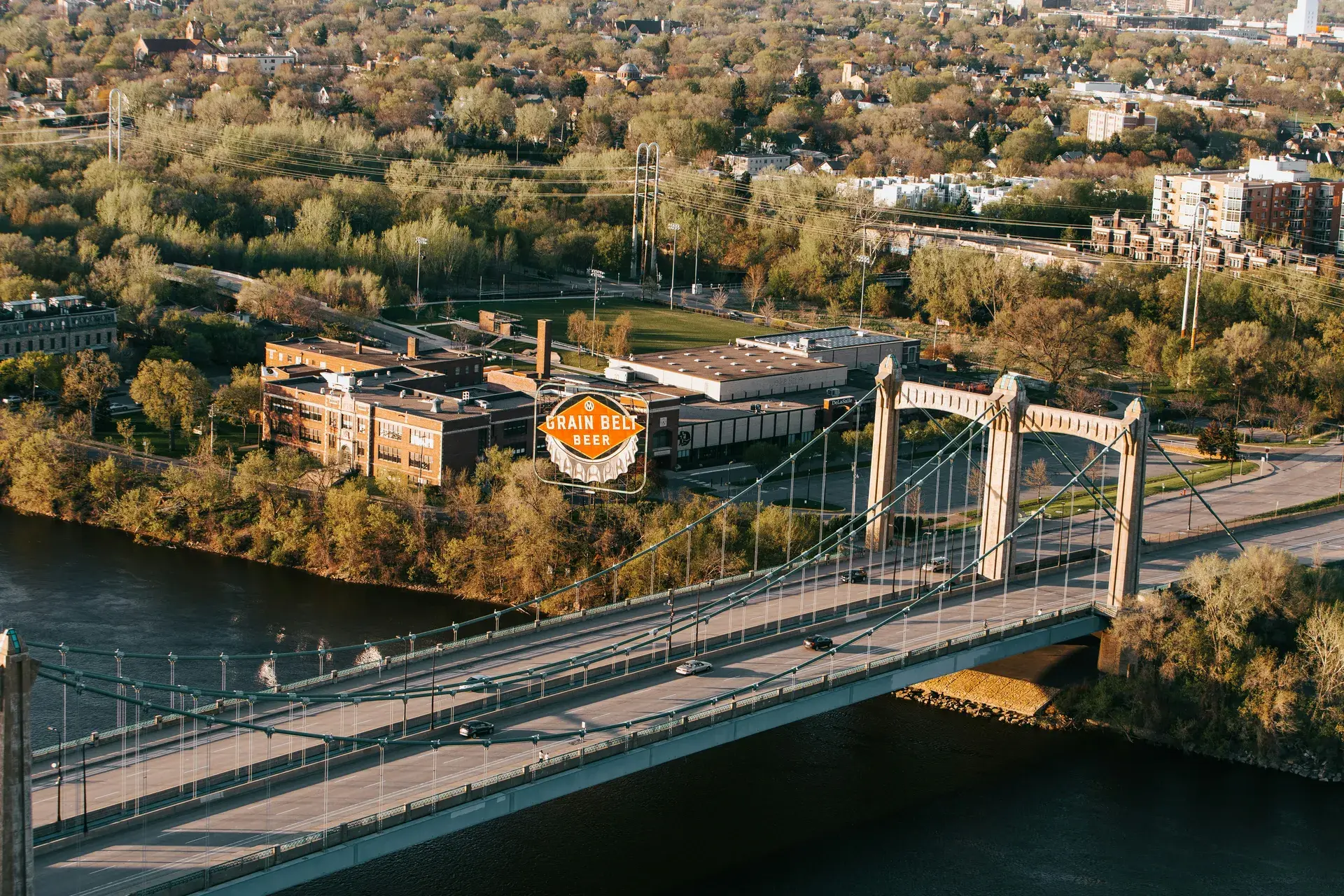
What is Bottineau, Minneapolis?
Bottineau is a residential neighborhood in Northeast Minneapolis, roughly bounded by Lowry Avenue NE to the north, University Avenue NE to the east, 17th and 18th Avenues NE to the south, and the Mississippi River to the west. Home to about 1,600 residents at the 2020 Census, it occupies a riverside position midway up Northeast — close enough to the trendy parts to access the restaurants and breweries, far enough to retain the working-class character that defined the neighborhood for a century.
The neighborhood is named after Pierre Bottineau, a French-Ojibwe fur trader and guide who played a significant role in early Minnesota history and was one of the first settlers of St. Anthony, owning much of what is now Northeast. The name reaches back to those earliest years in a neighborhood whose visible history begins with the Eastern European immigrants who built it — the churches, the housing stock, the commercial buildings that once served their communities.
Today, Bottineau is in transition. The Eastern European heritage is visible in the built environment — the churches, the housing patterns, the street grid — but the population has diversified significantly. East African immigrants, Latino families, and young professionals attracted by Northeast's growing scene have joined the longtime residents who remain. The result is a neighborhood that is culturally layered — old and new, immigrant and American-born, working-class and aspiring — in ways that are messy and real and resistant to easy categorization.
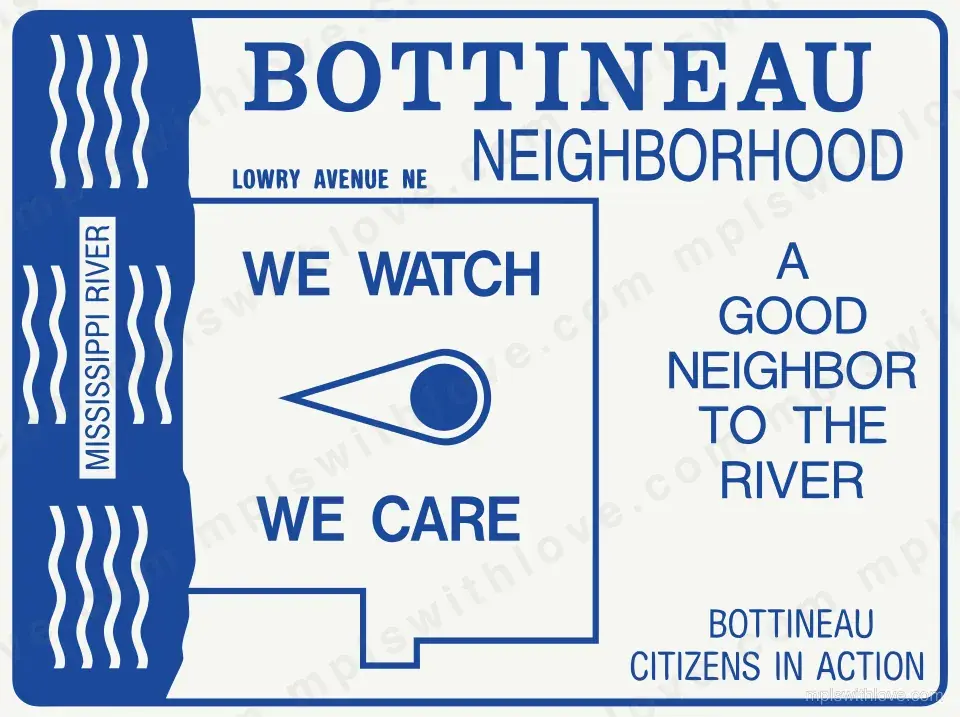
Bottineau Neighborhood Sign
Bottineau, Minneapolis — Key Stats (2025–2026)
- Residents (2020 Census)
- ~1,600
- Median home sale price (2025 data)
- $349K
- Era most homes were built
- 1890s–1940s
- Historic Eastern European churches nearby
- 4+ churches
- Main commercial streets
- Marshall & University
- Drive to downtown Minneapolis
- 10–15 min
- Walk Score (Oct 2026)
- 74
- Bike Score (Oct 2026)
- 97
Bottineau History & Origins
The land that is now Bottineau is part of the ancestral homeland of the Dakota people. Pierre Bottineau, the neighborhood's namesake, was himself a product of the cultural crossroads that defined early Minnesota — born to a French-Canadian father and an Ojibwe mother, he navigated between worlds in a way that the neighborhood named for him would continue to do, in different forms, for generations.
Germans and Scandinavians came to Northeast Minneapolis in the 1860s. Beginning in the 1880s, most of the new arrivals came from Eastern Europe. Poles, the largest group, along with Ukrainians, Slovaks, and other communities, came to work in the flour mills, sawmills, and factories that lined the Mississippi River. They settled on the east bank of the river, in the neighborhoods that would become Northeast, building ethnic enclaves organized around churches, social halls, and mutual aid societies. Bottineau was part of this settlement.
The churches were the most visible and enduring expressions of these communities. Holy Cross Catholic Church, founded by Polish immigrants in 1886, and St. Constantine Ukrainian Catholic Church, founded in 1913, were not just places of worship but the social and cultural centers of their respective communities — hosting weddings, funerals, festivals, and the daily life of immigrant families building new lives in a strange city. The architectural ambition of these churches — Holy Cross's basilica style, St. Constantine's Byzantine domes, the stained glass — was a statement of permanence by people who had left everything behind and were determined to build something that would last.
The housing stock from this era — bungalows, Foursquares, and modest frame houses built from the 1890s through the 1940s — reflects the economic position of the families who built them: working-class, thrifty, and practical. The houses are small by modern standards, built close together on narrow lots, with the kind of solid construction that has allowed them to survive a century of Minnesota winters. Many still have the deep front porches, hardwood floors, and built-in cabinetry that mark them as products of an era when craftsmanship was expected even in modest homes.
The second half of the 20th century brought gradual change. The children and grandchildren of the original Eastern European families moved to the suburbs, following the same trajectory as white ethnic communities across urban America. The commercial corridors thinned, and some of the social institutions that had held the community together began to weaken. New residents — initially other working-class families, then, from the 1990s on, Latino, Black, and Somali families — filled the housing stock and began the process of building their own community within the framework the Eastern Europeans had left behind.
Living in Bottineau
Living in Bottineau means living in a neighborhood where the history is visible on every block — in the church steeples that rise above the rooflines, in the housing stock that was built by immigrant craftsmen a century ago, in the street grid that was laid out when this was the edge of a young city. The residential blocks are dense by Minneapolis standards — narrow lots, houses close together, detached garages accessed by alleys — and the effect is a neighborhood with more human scale and more street life than the wider, more spread-out blocks of South Minneapolis.
The diversity is real and layered. Elderly Polish and Ukrainian residents who have been in their homes for decades live alongside Somali and Oromo families, Latino households, and young professionals who work in the arts or tech or service industries. The neighborhood is not yet gentrified in the way that Logan Park or St. Anthony West have been, but the pressure is visible — new construction, renovated homes, the gradual replacement of hardware stores with coffee shops along nearby Central Avenue.
Central Avenue, about a mile east across Holland, is the commercial lifeline for this part of Northeast and one of the most culturally complex commercial corridors in the city. Within a few blocks you can find a Vietnamese restaurant, a Mexican grocery, a craft brewery, a halal market, and a Polish sausage shop — the layers of immigration and gentrification stacked on top of each other in real time. The avenue is Bottineau's connection to the broader Northeast scene, and its evolution — from ethnic commercial strip to trendy dining corridor — mirrors the neighborhood's own transformation.
The river is a quieter presence. The Mississippi runs along Bottineau's western edge, accessible via trails and parkland. The riverfront here is less dramatic than the gorge in South Minneapolis but no less valuable — a place to walk, bike, and find the kind of quiet that a neighborhood full of people needs.
Bottineau Food, Drink & Local Spots
Bottineau's food scene benefits from Central Avenue, about a mile east — Northeast Minneapolis's primary commercial corridor and one of the most diverse food streets in the Twin Cities. The neighborhood itself doesn't have a dense concentration of restaurants, but the Central Avenue corridor provides access to a range of cuisines that reflects the area's layered immigration history.
Central Avenue Corridor
Central Avenue runs about a mile east of Bottineau and is one of the most culturally diverse commercial corridors in the Twin Cities. The mix includes Vietnamese pho houses, Mexican taquerias, East African restaurants, Polish delis, craft breweries, cocktail bars, and everything in between. The avenue has been evolving rapidly — new restaurants and bars joining longtime establishments — and the food scene here is one of the best arguments for living in Northeast.
Neighborhood Spots
Within Bottineau's residential blocks, commercial options are more limited. Small corner stores, neighborhood bars, and the occasional restaurant serve the immediate community. The commercial activity is concentrated on Marshall Street and University Avenue rather than distributed through the residential grid, which means that dining out usually involves a walk to one of those streets or a short drive to Central Avenue. The neighborhood's bars — some of them holdovers from the Eastern European era — offer cheap drinks and the kind of unpretentious atmosphere that is increasingly rare in a city where every new bar seems to require a cocktail program and a design concept.
Also Worth Knowing
The broader Northeast brewery and restaurant scene — including Indeed Brewing, Bauhaus Brew Labs, Falling Knife Brewing, and dozens of restaurants — is accessible from Bottineau by bike or a short drive east and southeast, toward Central Avenue and the heart of the Arts District. Bottineau residents benefit from Northeast's growing food reputation without living in the middle of it.
Parks & Outdoors Near Bottineau
Bottineau has modest park space within its boundaries but benefits from proximity to the Mississippi River and the broader Northeast park system.
Mississippi Riverfront
The Mississippi River runs along Bottineau's western boundary, and the river trail system provides access to one of the city's best cycling and walking corridors. The east-bank trail picks up just south of the neighborhood and connects south toward the Stone Arch Bridge and downtown; across the Lowry Avenue Bridge, the west-bank route runs north toward North Mississippi Regional Park and the Coon Rapids Dam. The riverfront here is less dramatic than the gorge downstream but offers wooded banks, quiet stretches, and views of the river that provide relief from the density of the residential blocks.
Bottineau Field Park & Neighborhood Parks
Bottineau Field Park, within the neighborhood, provides a community green space with a playground, playing fields, and a recreation center. It serves the daily needs of families — after-school play, weekend sports, summer programming — without being a destination park. Two small riverfront parks on Marshall Street, Gluek and Edgewater, add the kind of green space that makes a dense residential area livable.
Connected Trail System
The river trail and the Northeast street grid provide cycling connectivity to downtown (approximately 2–3 miles), Theodore Wirth Park to the west, and the broader Grand Rounds system. Bottineau is well-positioned for bike commuters and recreational cyclists, with flat terrain and relatively bike-friendly streets.
Bottineau Schools
Bottineau is served by Minneapolis Public Schools. Nearby district schools include Pillsbury Elementary (PreK–5), Northeast Middle School (6–8), and Edison High School (9–12), the district's high school in Northeast Minneapolis. Which schools serve a given address depends on MPS attendance boundaries; the district's school boundary map has the details.
Edison High School is known for its diverse student body, academic programs, and range of extracurricular options. The school has been a stabilizing institution for Northeast and draws students from across the area.
Charter schools and the district's open enrollment system provide additional options.
Bottineau Real Estate & Housing
Bottineau offers moderately priced housing with genuine character — a combination that is increasingly rare in Minneapolis. The median sale price was $349,000 in 2025, according to Minneapolis Area REALTORS — about even with the citywide median of $350,000 and below St. Anthony East and West — though with only 11 sales that year the figure swings; it was $300,000 in 2024. The housing stock — primarily 1890s–1940s bungalows, Foursquares, and frame houses — has the charm and craftsmanship of pre-war construction at prices that post-war suburbs can rarely match.
Below the median, homes typically need work — original kitchens, older systems, cosmetic updates. Around it, you get a well-maintained home with updates and period details. Well above it, properties are fully renovated with modern systems and finishes in historic shells.
Most households rent — about six in ten, by Census estimates — in a mix of older apartment buildings and single-family rentals. The median rent across all units, about $1,440, is close to the citywide median of $1,371, and rents are rising as the broader Northeast appreciation wave reaches Bottineau. Some new construction — primarily multi-family — has appeared along nearby Central Avenue, adding density and changing the streetscape.
Getting Around Bottineau
Bottineau earns a Walk Score of 74 and a Bike Score of 97, making it one of the more accessible Northeast neighborhoods for non-car transportation. Marshall Street and University Avenue provide walkable commercial strips, and the flat terrain and grid street pattern make cycling practical for daily errands and commuting.
Metro Transit's Route 11 runs down 2nd Street NE through the neighborhood and provides frequent service to downtown Minneapolis, with ride times of approximately 15–20 minutes. Route 32 runs along Lowry Avenue on the northern edge, and bus commuting is a viable daily option.
Cycling to downtown is straightforward — approximately 2–3 miles via the river trail or the Northeast street grid. The flat terrain makes bike commuting practical year-round for those willing to ride in winter.
By car, downtown Minneapolis is 10–15 minutes. Columbia Heights is about two miles north. MSP Airport is approximately 20 minutes. Street parking is generally available on residential blocks, though the older, denser street grid means that parking is tighter than in the newer, more spread-out neighborhoods.
What's Changing: The Honest Version
Bottineau sits squarely in the path of Northeast Minneapolis's ongoing transformation — the wave of investment, appreciation, and cultural change that has been reshaping the area for two decades and shows no sign of stopping.
Gentrification Wave
The gentrification of Northeast Minneapolis has been moving northward, and Bottineau is in its current path. New restaurants, renovated buildings, and rising prices are reaching the neighborhood from the south, and the familiar pattern — artists and young professionals arrive, followed by investment, followed by displacement of existing residents — is underway. Bottineau has not yet tipped the way Logan Park has, but the trajectory is visible.
Cultural Transition
The Eastern European heritage that defined Bottineau for a century is fading. The elderly residents who remember when the church served as the center of community life are passing. The social clubs have closed or shrunk. Many of the old ethnic businesses have given way to new ones that serve new communities. This is not necessarily a loss — neighborhoods change, immigrant communities move on, new communities arrive — but it does mean that Bottineau is in a moment of cultural transition where the old identity has weakened and the new one has not yet fully formed.
Housing Pressure
Rising prices and new construction are changing who can afford to live in Bottineau. Long-term renters face increasing rents. Elderly homeowners on fixed incomes face rising property taxes. New buyers — often younger, whiter, and wealthier than existing residents — are outbidding working-class families for the neighborhood's affordable housing stock. The pattern is familiar across gentrifying neighborhoods nationwide, and the question in Bottineau — as everywhere — is whether the community can absorb change without losing the diversity and affordability that make it worth living in.
Bottineau FAQ
Is Bottineau a good neighborhood in Minneapolis?
Bottineau is a solid, character-rich neighborhood in Northeast Minneapolis that offers moderately priced housing, proximity to the Mississippi River, access to Central Avenue's commercial corridor, and the historic texture of one of the city's oldest immigrant communities. The neighborhood has genuine diversity — both cultural and economic — and is close enough to the trendier parts of Northeast to benefit from the restaurant and brewery scene without paying premium prices. It faces the usual Northeast challenges — rising prices, gentrification pressure, aging housing stock — but retains more of its working-class authenticity than neighborhoods closer to downtown.
Where is Bottineau in Minneapolis?
Bottineau is in Northeast Minneapolis, roughly bounded by Lowry Avenue NE to the north, University Avenue NE to the east, 17th and 18th Avenues NE to the south, and the Mississippi River to the west. It sits north of the Sheridan neighborhood, south of Marshall Terrace, and west of Holland, with Hawthorne across the river in North Minneapolis. The Mississippi River forms its western boundary, providing riverside parks and views.
Why is Bottineau called Bottineau?
The neighborhood is named after Pierre Bottineau, a French-Ojibwe fur trader and guide who was a significant figure in early Minnesota history. Bottineau served as a guide for military expeditions and settlers in the mid-19th century and was known for his knowledge of the region's geography. He was also one of the first settlers of St. Anthony and a large landowner in what is now Northeast Minneapolis. Bottineau Field Park, inside the neighborhood, carries his name too.
Is Bottineau safe?
Bottineau's safety profile is moderate, generally in line with the citywide average. Property crime is the most common concern, and the neighborhood's proximity to busier commercial corridors can bring some of the issues associated with those areas. The residential blocks are generally quiet and stable. Like all of Minneapolis, the area experienced elevated crime during 2020–2022, which has since subsided. Most residents feel safe on their blocks while exercising standard urban awareness.
How much do homes cost in Bottineau?
Bottineau's median sale price was $349,000 in 2025, according to Minneapolis Area REALTORS — about even with the citywide median of $350,000 and below St. Anthony East and West. Only 11 homes sold that year, though, so the figure swings: it was $300,000 in 2024. The older housing stock — primarily 1890s–1940s bungalows and frame houses — offers character and charm at accessible prices. Fixer-uppers sell below the median, and updated homes on the best blocks above it. The neighborhood offers good value for buyers seeking Northeast character without Northeast premium pricing.
What is the Eastern European heritage of Bottineau?
Bottineau filled in during the wave of Eastern European immigration to Northeast Minneapolis that began in the 1880s, when Poles, Ukrainians, Slovaks, and others followed earlier German and Scandinavian settlers. These communities built the churches, social halls, and businesses that defined Northeast Minneapolis for generations. Nearby, Holy Cross Catholic Church, St. Constantine Ukrainian Catholic Church, and other houses of worship still stand as architectural and cultural landmarks. While the Eastern European population has declined significantly as families moved to the suburbs and new immigrant communities have arrived, the built environment — the churches, the street patterns, the housing stock — still reflects this heritage.
What schools serve Bottineau?
Bottineau is served by Minneapolis Public Schools. Nearby district schools include Pillsbury Elementary (PreK–5), Northeast Middle School (6–8), and Edison High School (9–12), the district's high school in Northeast Minneapolis; which schools serve a given address depends on MPS attendance boundaries, and the district's school boundary map has the details. Edison is known for its diverse student body and programming. Charter schools and the district's open enrollment system provide additional options.
Is Bottineau gentrifying?
Bottineau is experiencing gentrification pressure as part of the broader Northeast Minneapolis wave, though the process is less advanced here than in neighborhoods like Logan Park or St. Anthony West. Rising prices, new investment, and the influx of younger, wealthier residents are changing the neighborhood's character. Long-term residents — including elderly Eastern European families and more recent immigrant communities — face rising property taxes and rents. The neighborhood is in the middle of the transition, and the balance between preserving affordability and accommodating growth is an active community conversation.
What Makes Bottineau Irreplaceable
Bottineau is the kind of neighborhood that cities lose when they stop paying attention — a place where the history is written in church steeples and housing stock rather than in tourism brochures, where the diversity is genuine rather than curated, and where the affordability that makes it accessible is precisely what makes it vulnerable to the kind of change that erases the things worth preserving. The Eastern European families who built this neighborhood are mostly gone, their children in the suburbs, their churches still standing but serving smaller congregations. The new residents — East African, Latino, young professionals — are writing the next chapter of a story that has always been about immigrants finding a foothold in a city that needed their labor.
What makes Bottineau worth knowing is not any single landmark or restaurant or institution but the texture of the place itself — the way a Polish church and a Somali grocery can share a commercial strip without anyone finding it remarkable, the way a 1920s bungalow with a deep front porch can feel like the best possible place to sit on a summer evening, the way the river at the western edge reminds you that a neighborhood is not just houses and streets but a particular piece of earth with its own history and its own future. Bottineau's future is uncertain, and that uncertainty is part of what makes it worth caring about. The neighborhoods whose futures are certain are usually the ones that have already been bought and sold and packaged. Bottineau is still becoming.

From the shop
Made for people who love it here.
From Minneapolis, With Love - Large Tote Bag
Keep exploring