Minneapolis Neighborhood
St. Anthony East
The quiet sibling of Northeast's historic core — where tree-lined residential streets sit a short walk from the Mississippi, the old town of St. Anthony echoes in the architecture, and daily life moves at a pace that feels earned rather than engineered.
№ 71 of 87 · Northeast community · Last updated: October 2026 · A complete neighborhood guide
On a Wednesday evening in early October, a woman is walking her border collie down a residential street in St. Anthony East. The trees are at peak color — sugar maples in shades of orange and red that would look overwrought in a painting but are simply what happens here in fall. The houses on either side of the street are modest by any standard — one-and-a-half stories, clapboard siding, front porches that get used — but they sit with a confidence that comes from being exactly what they were meant to be. The woman stops, lets the dog investigate a fire hydrant, and looks down the block the way people look at things they see every day and have not stopped appreciating.
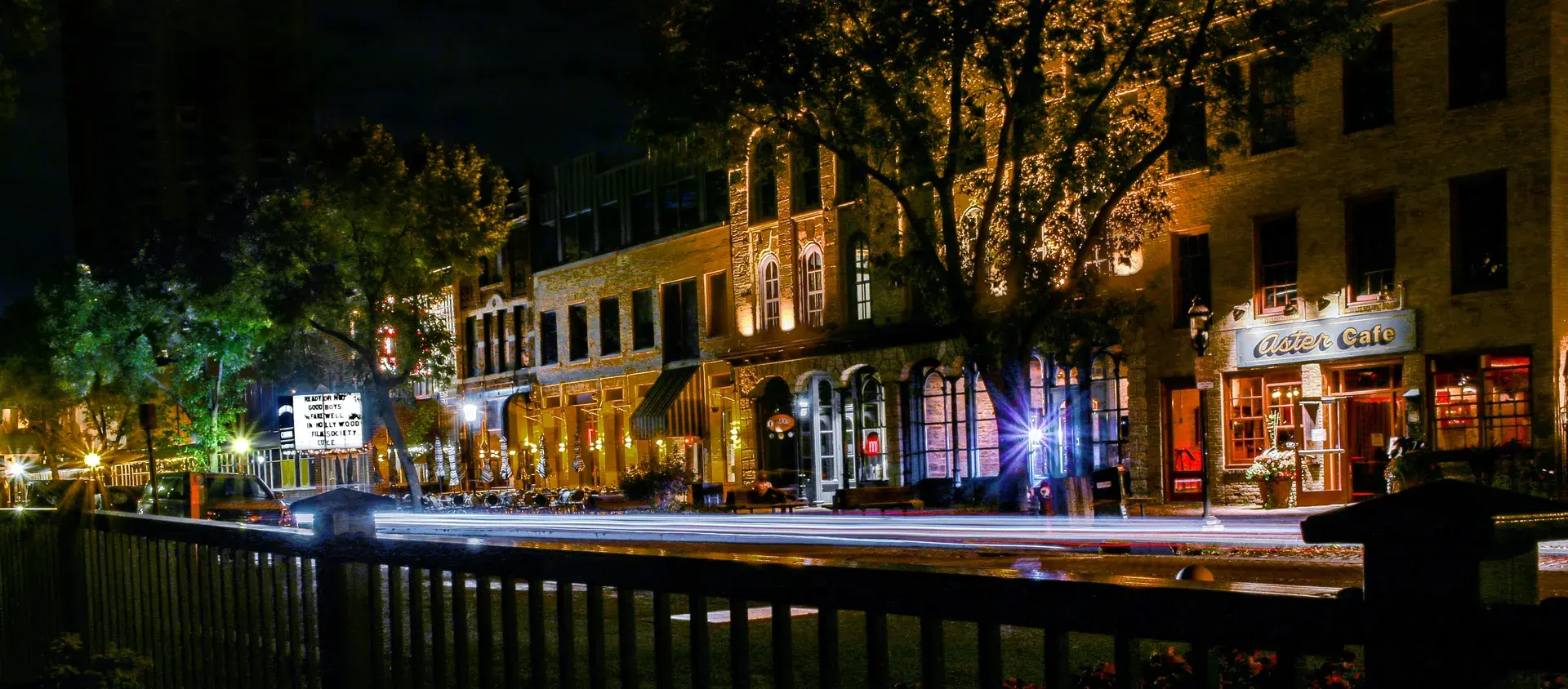
What is St. Anthony East, Minneapolis?
St. Anthony East is a residential neighborhood in the historic core of Northeast Minneapolis, occupying part of what was originally the town of St. Anthony — the east-bank town at St. Anthony Falls, platted in 1849 and merged with Minneapolis in 1872. With roughly 2,200 residents, the neighborhood is defined by tree-lined streets that mix older houses with housing built since the 1970s, proximity to the Mississippi River, and a character that is distinctly Northeast without the commercial energy that defines the brewery and arts districts to the north and east.
The neighborhood is bounded roughly by Broadway Street NE to the north, Central Avenue NE to the east, the railroad tracks to the south, and Washington and 5th Streets NE to the west. This positioning gives it access to both the river — a short walk southwest, with its trails and scenic value — and Central Avenue, Northeast's primary commercial corridor. The interior of the neighborhood, however, is almost entirely residential, with a density and pace that feel more like a small town than a section of a major city.
St. Anthony East sits in the shadow of its more visible neighbors — St. Anthony West has the riverfront commercial access, Logan Park has the arts scene, and the blocks across Broadway have the breweries — but that shadow is precisely where many of its residents prefer to be. St. Anthony East offers the Northeast identity at a volume that the more fashionable neighborhoods no longer can.
St. Anthony East Neighborhood Sign
St. Anthony East, Minneapolis — Key Stats (2025–2026)
- Residents (2020 Census)
- ~2,200
- Median home sale price (2025 data)
- $396K
- Median rent, all units (2020–24 ACS)
- $1,405
- Walk Score (Oct 2026)
- 80
- Bike Score (Oct 2026)
- 98
- Transit Score (Oct 2026)
- 57
- Owner-occupied homes (2020–24 ACS)
- 29%
- Year the town of St. Anthony was platted
- 1849
St. Anthony East History & Origins
Before European settlement, the land that is now St. Anthony East was part of the homeland of the Dakota people, for whom St. Anthony Falls (Owámniyomni) is a sacred site. People gathered at the falls for thousands of years — Dakota, Ho-Chunk and Ojibwe people all camped there — long before they became a center of American industry.
Franklin Steele claimed land on the east bank beside the falls in 1838, and the town of St. Anthony was platted there in 1849 and incorporated in 1855, ahead of Minneapolis, which grew on the west bank. The town was named for St. Anthony Falls, which in turn had been named by Father Louis Hennepin in 1680. St. Anthony grew as sawmills and then flour mills harnessed the power of the falls, drawing workers to the east bank — among them, from the late 1870s on, Ukrainian immigrants who found mill jobs in Northeast.
The blocks that are now St. Anthony East developed as a residential district for the workers who staffed the mills and the businesses that served them, and some of the housing from that era — modest frame houses, duplexes, and small apartment buildings — survives. St. Anthony merged with Minneapolis in 1872, and the east bank became part of the larger city.
Through the 20th century, St. Anthony East was a working-class neighborhood, with a community identity built around church parishes, neighborhood schools, and the immigrant heritage of its residents. It did not escape 1960s redevelopment: the land for St. Anthony Park and Webster School was set aside as part of a 1964 housing redevelopment project, and much of the neighborhood's housing dates from the 1970s or later.
Living in St. Anthony East
Living in St. Anthony East is living in a neighborhood that has figured out what it is and is not interested in becoming something else. The streets are residential in the way that word meant before it became a euphemism for exclusionary — houses with porches, sidewalks where people walk, a density that supports community without crowding. The homes are mostly small by modern standards — two bedrooms, one bathroom, a detached garage that may or may not accommodate a modern SUV — but they sit on established lots with mature trees and the kind of landscaping that takes decades to accumulate.
The neighborhood's eastern edge, along Central Avenue NE, provides walkable access to Northeast's primary commercial corridor — restaurants, shops, groceries, bars, and the miscellaneous commerce of a functioning city street. The interior of the neighborhood, however, is quiet enough that you can hear birds in the morning, which is not something you can say about most neighborhoods in Minneapolis that are this close to downtown.
The river is the neighborhood's other defining feature, though it sits past St. Anthony West rather than at its edge. Walking from the middle of St. Anthony East to Boom Island Park is like stepping between two different landscapes — from the settled, human-scale grid to the wide, open scale of the river.
The community is a mix of long-term residents — families who have been here for generations, retirees who bought when prices were low and see no reason to leave — and newer arrivals, many of them renters, attracted by a quiet Northeast address near the river. The mix works because the neighborhood's character is strong enough to absorb new residents without losing its identity, a quality that not all Minneapolis neighborhoods can claim.
St. Anthony East Food, Drink & Local Spots
St. Anthony East is not a dining destination — the neighborhood's interior is residential, and the restaurants, bars, and cafes that serve the area are concentrated along its edges, particularly Central Avenue NE to the east, and along the University Avenue corridor a few blocks west. The broader Northeast Minneapolis dining scene, one of the strongest in the city, is accessible by a short walk, bike ride, or drive.
Along the Edges
Central Avenue NE — the commercial spine of Northeast Minneapolis — runs along St. Anthony East's eastern boundary and offers a dense concentration of dining options. The avenue's multicultural restaurant scene includes Vietnamese, Mexican, Middle Eastern, East African, and American options at a range of price points. This is working-class dining at its best — no pretension, generous portions, and flavors that reflect the immigrant communities that have made Central Avenue one of the most diverse commercial corridors in the Twin Cities.
Nearby Northeast Highlights
The brewery and restaurant scene in Logan Park, Beltrami, and the broader Northeast corridor is within easy reach. Taprooms, craft cocktail bars, and restaurants that range from taco trucks to white-tablecloth dining are all accessible within a mile or two. The St. Anthony Main dining area along the riverfront is also close, offering upscale-casual options with river views. St. Anthony East benefits from all of this proximity without hosting the traffic and noise that come with it.
Groceries
Grocery options along Central Avenue and in nearby commercial nodes serve St. Anthony East residents. The avenue's international grocery stores — Vietnamese, Mexican, Somali, Middle Eastern — are a particular asset, offering ingredients and products that mainstream grocery chains do not carry. Conventional grocery stores are also accessible along Central Avenue and in adjacent neighborhoods.
Parks & Outdoors Near St. Anthony East
St. Anthony East's outdoor assets are defined by the Mississippi River and the trail system that connects the neighborhood to the broader Grand Rounds network. The river, just beyond St. Anthony West, provides both scenic value and recreational access.
Mississippi River Trails
The riverfront past St. Anthony West offers views of the Mississippi and connects to the trail system that extends south toward the Stone Arch Bridge, St. Anthony Falls, and downtown, and north toward the upper river parks. The trails are popular with runners, cyclists, and walkers year-round, and the river views — particularly in fall — are genuinely spectacular.
Neighborhood Parks
The neighborhood has small parks and green spaces that serve the residential community — playgrounds, open lawn areas, and gathering spaces for neighborhood events. These are functional neighborhood parks rather than destination parks, providing the daily green space that a residential neighborhood needs without the programmatic ambition of the larger regional parks.
Broader Park Access
The Grand Rounds trail system connects St. Anthony East to parks throughout Northeast and the broader city. The trail network is one of the best urban park and trail systems in America, and St. Anthony East's position near the river gives residents easy access to it. Boom Island Park, the Stone Arch Bridge, and the falls overlook area are all reachable by bike or on foot within minutes, extending the neighborhood's effective park access well beyond its own boundaries.
St. Anthony East Schools
Families in St. Anthony East use Minneapolis Public Schools options through the district's enrollment and assignment system. The neighborhood's location in the Northeast quadrant places it within the service area of several elementary, middle, and high school options.
Webster Elementary is inside the neighborhood, on 5th Street NE, and other elementary options sit across Northeast, including Waite Park, Pillsbury, and Las Estrellas Dual Language Elementary on University Avenue NE. Nearby options for older students include Northeast Middle School and Edison High School; the district's school finder shows which schools serve a specific address.
Several charter schools in Northeast Minneapolis also draw enrollment from St. Anthony East families. The neighborhood's proximity to multiple school options is a practical advantage for families, though the quality and fit of available schools is a topic that parents navigate carefully, as it is across the Minneapolis Public Schools district.
St. Anthony East Real Estate & Housing
St. Anthony East's housing mixes older homes from the late 19th and early 20th centuries with housing built from the 1970s on. The older stock is characteristic of working-class Northeast Minneapolis: bungalows, one-and-a-half story frame houses, some Craftsman-era homes, and a smattering of duplexes and small apartment buildings. The scale is modest — two to three bedrooms, one bathroom, detached garages — and the character is unpretentious.
Pricing & Market
St. Anthony East's median sale price was $395,640 in 2025, up from $361,250 a year earlier, according to Minneapolis Area REALTORS. That puts the neighborhood near the top of the Northeast Minneapolis market — above Logan Park and the far-northern Northeast neighborhoods, and about even with St. Anthony West — though with only about 20 sales a year, the median swings; it was $330,000 in 2023. The pricing reflects the location value — river proximity, walkability to Central Avenue, reasonable commute to downtown — and the quality of the housing stock, which varies from unrenovated originals to fully updated homes that have been brought into the 21st century while preserving their architectural character.
Market Dynamics
Owner-occupancy is low — about 29 percent of homes, by Census estimates, against 44 percent citywide — and about two-thirds are rented. Some duplexes and small multi-family properties attract buy-and-hold investors, but the neighborhood has not seen the speculative flipping activity that has characterized some other parts of Northeast.
The housing stock's age means that renovation and maintenance costs are a factor. Buyers should expect to invest in updates — particularly to mechanical systems, windows, and kitchens — in homes that have not been recently renovated. The reward is solid construction, mature lots, and the kind of neighborhood character that new development cannot replicate.
Getting Around St. Anthony East
St. Anthony East is very walkable, highly bikeable, and well-connected by transit for a residential neighborhood. The Walk Score of 80 reflects access to Central Avenue's commercial corridor on the eastern edge, with the residential interior requiring more effort for daily errands. The Bike Score of 98 is among the strongest in Northeast, reflecting the river trail connections, generally flat terrain, and good bike infrastructure along connecting streets.
Metro Transit provides bus service along Central Avenue, University Avenue, and connecting corridors, offering routes to downtown Minneapolis, the University of Minnesota, and other destinations. The Transit Score of 57 reflects decent but not exceptional service — headways are reasonable during peak hours and longer off-peak. The Green Line light rail is accessible via connecting bus routes or a short bike ride to stations along the university corridor.
Driving is straightforward, with Interstate 35W and Highway 65 accessible within minutes. Street parking is generally available and free in the residential areas, and congestion is minimal on local streets. The commute to downtown Minneapolis is approximately 10 minutes by car, depending on traffic and route.
What's Changing in St. Anthony East
St. Anthony East is experiencing the same gradual gentrification pressures that affect all of Northeast Minneapolis, though it has less of the commercial activity that defines the neighborhoods closer to the brewery and arts districts. Home values have risen, if unevenly — the median climbed from $307,500 in 2021 to $395,640 in 2025 — driven by the broader Northeast market and the neighborhood's solid fundamentals: location, river access, housing stock quality.
The primary tension is between preservation and renovation. As the housing stock ages and new buyers invest in updates, the neighborhood's architectural character is evolving. Most renovations respect the existing scale and style, but some additions and modernizations push against the neighborhood's traditional appearance. The balance between maintaining the working-class character that defines St. Anthony East and accommodating the investment that aging homes require is an ongoing conversation.
Central Avenue's commercial evolution also affects the neighborhood. The avenue's transformation from a working-class commercial strip to a more diverse dining and shopping destination has been generally positive for St. Anthony East residents, expanding their walkable options. But the risk of commercial displacement — longstanding businesses priced out by rising rents — is a concern that the broader Northeast community monitors closely.
St. Anthony East FAQ
Is St. Anthony East a good neighborhood in Minneapolis?
St. Anthony East is a solid residential neighborhood that offers the Northeast Minneapolis character — walkable streets, historic homes, proximity to the river — without the intensity of the brewery district or the arts corridor. It is quieter and more family-oriented than the higher-profile parts of Northeast. For people who want Northeast's identity without Northeast's weekend crowds, St. Anthony East is an excellent choice.
Is St. Anthony East, Minneapolis safe?
St. Anthony East has crime rates that are at or below the citywide average. The neighborhood's residential character, established community, and relatively low commercial activity contribute to a generally safe environment. Property crime occurs as it does across Minneapolis, but violent crime is uncommon. Residents report feeling safe walking the neighborhood's streets, including in the evenings.
Where exactly is St. Anthony East in Minneapolis?
St. Anthony East is in Northeast Minneapolis, bounded roughly by Broadway Street NE to the north, Central Avenue NE to the east, the railroad tracks to the south, and Washington and 5th Streets NE to the west. It sits east of St. Anthony West and west of Marcy-Holmes, in what was originally the separate town of St. Anthony before it merged with Minneapolis in 1872.
What is the difference between St. Anthony East and St. Anthony West?
St. Anthony East and St. Anthony West are adjacent neighborhoods in Northeast Minneapolis, split by Washington and 5th Streets NE. St. Anthony West is closer to the riverfront and the Nicollet Island area, with more commercial activity. St. Anthony East is more purely residential and quieter; the two neighborhoods' 2025 median sale prices were nearly identical, at about $400,000. Both share the historic St. Anthony identity and Northeast's general character, but they have distinct personalities. Think of St. Anthony West as the outward-facing sibling and St. Anthony East as the one who stays home and reads.
How much does it cost to live in St. Anthony East?
St. Anthony East's median sale price was $395,640 in 2025, up from $361,250 a year earlier, according to Minneapolis Area REALTORS — well above the city's $350,000 and among the highest in Northeast, though it rests on just 20 sales. Census estimates put the median rent across all units at about $1,400 a month, close to the city's $1,371. The prices reflect the location — river proximity, walkability, and the Northeast address.
Is St. Anthony East walkable?
Yes, mostly. The Walk Score of 80 reflects solid but not exceptional walkability. The neighborhood has some commercial options along its edges — particularly along Central Avenue NE to the east — but the interior is almost entirely residential. Daily errands are manageable on foot for some but may require a bike or car for others, depending on where you live within the neighborhood. Biking is excellent, with a Bike Score of 98 and strong trail connections to the river and the broader city.
What are the schools in St. Anthony East?
Families in St. Anthony East use Minneapolis Public Schools options through the district's enrollment system. Webster Elementary is inside the neighborhood, and Waite Park and Pillsbury are other Northeast elementary options, with Northeast Middle School and Edison High School among the nearby options for older students; the district's school finder shows which schools serve a specific address. The neighborhood's proximity to the broader Northeast school infrastructure means families have several options within a reasonable distance.
Does St. Anthony East have good river access?
Yes, though the neighborhood does not touch the water. The Mississippi is about half a mile southwest, past St. Anthony West, and the river trail system there is open for walking, biking, and running. The trail connections lead to the Stone Arch Bridge, St. Anthony Main, and the broader Grand Rounds network. River access is one of St. Anthony East's most significant amenities.
Is St. Anthony East gentrifying?
The broader Northeast Minneapolis gentrification trend has affected St. Anthony East, though without the brewery-driven commercial activity of neighborhoods like Logan Park. Home values have risen — the median went from $307,500 in 2021 to $395,640 in 2025, though on only about 20 sales a year the figure jumps around — and some renovation activity is visible as buyers invest in the older housing stock. St. Anthony East's primarily residential character and lack of a commercial scene set it apart from the busier parts of Northeast. It is gentrifying in the sense that all of Northeast is.
What Makes St. Anthony East Worth Knowing
St. Anthony East is a neighborhood that rewards patience and attention rather than spectacle. The older blocks are lined with houses built a century or more ago, when the people living in them worked at the mills and factories along the river, and the community that lives in them now carries forward a residential sensibility that has not been displaced by the forces that have transformed other parts of Northeast into destinations. There is no taproom on every corner, no mural tour, no Instagram trail. There are porches, gardens, neighbors who wave, and the Mississippi River a short walk away.
The history here is not abstract — it is in the architecture, in the street grid, in the name itself. St. Anthony was the town at the falls before Minneapolis existed, and this neighborhood carries its name, not as a museum but as a living community. People who love St. Anthony East love it for what it is not: not flashy, not trendy, not trying to be something it was not built to be. In a city that is constantly reinventing itself, that steadiness is its own kind of statement.

From the shop
Made for people who love it here.
From Minneapolis, With Love - Tote Bag
Keep exploring