Logan Park / Northeast
Studio Space
Excellent
Gallery Density
Highest in the city
Affordability
Moderate — rising
Creative Vibe
Epicenter
Key spaces: Northrup King Building (300+ studios), Casket Arts Building, Solar Arts Building, Quincy Street Studios, Art-A-Whirl (largest open studio tour in the US), Indeed Brewing
Northeast Minneapolis — and Logan Park specifically — is the undisputed center of the Minneapolis art scene. The Northrup King Building alone houses over 300 artist studios across four floors, making it one of the largest artist studio complexes in the country. Casket Arts Building, a converted casket factory, adds another 100+ studios with a grittier, more DIY energy. Art-A-Whirl, held every May, opens these buildings and dozens of smaller studios to 30,000+ visitors over a single weekend. The brewery scene, led by Indeed, still provides the social infrastructure where creatives actually meet and collaborate, though losing Bauhaus Brew Labs in June 2026 after twelve years left a real hole in the neighborhood. The honest reality: the artists who built this neighborhood are under increasing economic pressure. Studio rents in Northrup King have risen significantly over the past five years. New luxury apartment construction is changing the demographic mix. The creative community is still here and still vibrant, but the affordability window that created it is narrowing.
Read the full Logan Park / Northeast guide →Whittier
Studio Space
Limited — home studios
Gallery Density
High
Affordability
Good
Creative Vibe
Institutional + grassroots
Key spaces: Minneapolis Institute of Art (MIA), MCAD (Minneapolis College of Art and Design), Eat Street murals, Midtown Global Market (a short ride east on Lake Street), diverse cultural programming
Whittier is where institutional art meets street-level creativity. The Minneapolis Institute of Art — free admission, 90,000+ works, encyclopedic collection — anchors the neighborhood's northeast side. MCAD, directly adjacent, feeds a pipeline of young artists into the neighborhood and keeps the median age low and the creative energy high. MCAD graduates who want to stay near their community rent apartments in Whittier because they can still afford to. The Eat Street corridor provides the kind of visually stimulating, culturally diverse streetscape that attracts creative people — the murals, the signage, the mix of Vietnamese, Ethiopian, Mexican, and Somali businesses creates a visual environment that feels alive. Studio space is the weakness: Whittier lacks the converted industrial buildings that give Northeast its studio inventory. Most artists here work from home studios or rent space elsewhere. But as a neighborhood to live in as a creative person — surrounded by major institutions, diverse food, and affordable rents — Whittier is hard to beat.
Read the full Whittier guide →Powderhorn Park
Studio Space
Moderate — home studios, some shared spaces
Gallery Density
Low — event-based
Affordability
Very good
Creative Vibe
Community-driven
Key spaces: Powderhorn Art Fair (August), MayDay Parade, Open Eye Theatre (Phillips West), strong DIY and maker culture
Powderhorn's creative identity is built on community art, not commercial art. The Powderhorn Art Fair, held the first weekend of August along the lake, is one of the best juried art fairs in the Midwest — focused on handmade and original work, not mass-produced craft fair stuff. In the Heart of the Beast Puppet and Mask Theatre built the MayDay Parade — a giant puppet procession that is genuinely one of the most remarkable civic art events in America — and since the theater handed it to the community in 2023, a neighborhood-led MayDay Council has kept it marching. Open Eye Theatre, a short trip north in Phillips West, adds another layer of experimental performance. The neighborhood attracts artists who make work about community, identity, and social justice rather than artists optimizing for gallery representation. Housing is affordable — you can buy a house here for $250K-$350K, which means a working artist with a day job can actually own property. The tradeoff: there is no gallery infrastructure, limited commercial art market, and the neighborhood's challenges (crime, political intensity) are real factors in daily life.
Read the full Powderhorn Park guide →Phillips
Studio Space
Emerging
Gallery Density
Low — cultural orgs
Affordability
Most affordable
Creative Vibe
Cultural and grassroots
Key spaces: Little Earth of United Tribes, All My Relations Arts gallery, Indigenous art community, East African creative scene, affordable live/work spaces, proximity to Franklin Ave cultural corridor
Phillips is the most culturally important arts neighborhood in Minneapolis in ways that do not show up on gallery maps. The Indigenous art community centered around Little Earth of United Tribes and the Franklin Avenue corridor includes visual artists, musicians, writers, and performers whose work engages with sovereignty, identity, and community in ways that matter beyond the art market. All My Relations Arts gallery, on East Franklin, is one of the few dedicated Indigenous contemporary art spaces in the country. The East African creative community — Somali poets, Oromo musicians, Ethiopian visual artists — adds another creative dimension. Phillips is the most affordable neighborhood in this list, with median home prices under $200K and rents among the lowest in the city. The tradeoff is direct: the affordability exists because the neighborhood has real challenges — higher crime, less commercial infrastructure, fewer amenities. Artists who thrive here are those who are embedded in community, not those looking for a lifestyle neighborhood with studio space.
Read the full Phillips guide →Seward
Studio Space
Limited
Gallery Density
Low
Affordability
Moderate
Creative Vibe
Cooperative and literary
Key spaces: Seward Co-op, strong literary and small-press community, cooperative culture, Midtown Greenway artist studios, river bluff landscape
Seward's creative identity is quieter and more literary than Northeast's visual art scene — a community of writers, editors, and small press publishers. The cooperative ethos — rooted in the Seward Co-op and extending to housing co-ops and community organizations — attracts artists interested in alternative economic models and communal creative practice. The Mississippi River gorge provides landscape that has attracted plein air painters and nature writers for decades. Studio space is limited; most creatives in Seward work from home or in small shared spaces. This is not a neighborhood for artists who want a scene — it is for artists who want a supportive, values-aligned community and access to natural beauty within the city.
Read the full Seward guide →Lowry Hill East
Studio Space
Very limited
Gallery Density
Moderate
Affordability
Moderate — rental market
Creative Vibe
Performance and nightlife
Key spaces: Bryant Lake Bowl (performance space + bowling + restaurant), Jungle Theater and Wedge Co-op across Lyndale, Walker Art Center proximity, dense bar and music venue scene
The Wedge attracts performers, musicians, comedians, and writers more than visual artists. Bryant Lake Bowl is the key venue — a genuinely unique space that combines bowling, a full restaurant, a bar, and a performance theater that hosts experimental comedy, solo shows, dance, and music. The Jungle Theater, just across Lyndale Avenue in Whittier, produces some of the best small-theater work in the city. The Walker Art Center and Minneapolis Sculpture Garden sit just past the neighborhood's northern tip in Lowry Hill, providing world-class contemporary art access a short walk away. The density of bars and music venues along Lyndale Avenue and Hennepin means this is where musicians and comedians live because they can walk to their gigs. Studio space for visual artists is essentially nonexistent — the building stock is residential, not industrial. But for performing artists and writers who want to be in the middle of the city's social and nightlife energy, The Wedge delivers.
Read the full Lowry Hill East guide →Stevens Square
Studio Space
Limited — affordable apartments as studios
Gallery Density
Low
Affordability
Very good
Creative Vibe
Scrappy and urban
Key spaces: Most affordable near-downtown rents, proximity to MIA and MCAD, Stevens Square Park, diverse population, walking distance to Loring Park and Walker
Stevens Square is the neighborhood where broke artists have always lived in Minneapolis — not because it has studios or galleries, but because the rents are low and the location is central. One-bedroom apartments here run $800-$1,100, which is remarkable for a neighborhood within walking distance of both the Minneapolis Institute of Art and the Walker Art Center. The population is dense, diverse, and transient — a mix of students, immigrants, artists, and service workers. There is no pretension here, no curated creative district vibe. Stevens Square is for artists in the early or lean years who need a cheap apartment near cultural institutions and do not mind a gritty urban environment. The tradeoff: higher crime, aging building stock, and limited commercial amenities. But as a launching pad for a creative career in Minneapolis, the location-to-cost ratio is unmatched.
Read the full Stevens Square guide →Loring Park
Studio Space
Very limited
Gallery Density
High — institutional
Affordability
Moderate
Creative Vibe
Institutional and performative
Key spaces: Walker Art Center and Minneapolis Sculpture Garden just across Lyndale, Loring Park (concerts, festivals), Loring Greenway, proximity to Hennepin Theatre District
Loring Park is the neighborhood where you consume art rather than make it — but the consumption options are extraordinary. The Walker Art Center, just across Lyndale Avenue in Lowry Hill, is one of the top contemporary art museums in the country. The Minneapolis Sculpture Garden, with its iconic Spoonbridge and Cherry, is free and open daily. Loring Park itself hosts festivals and concerts through the summer. The Hennepin Theatre District, a few blocks north, has the Orpheum, State, and Pantages theaters. Living here means being within walking distance of more performing and visual arts than any other residential neighborhood in the state. The limitation for working artists is practical: there is no studio space, the rents are moderate-to-high, and the creative energy is audience-oriented rather than maker-oriented. Loring Park is ideal for arts administrators, curators, critics, and creative professionals who work in the arts ecosystem but do not need raw studio space.
Read the full Loring Park guide →Cedar-Riverside
Studio Space
Limited — emerging
Gallery Density
Low
Affordability
Very good
Creative Vibe
Multicultural and academic
Key spaces: West Bank music history (birthplace of Bob Dylan's scene), Mixed Blood Theatre, U of M arts programs, Somali cultural institutions, Cedar Cultural Center, emerging East African creative scene
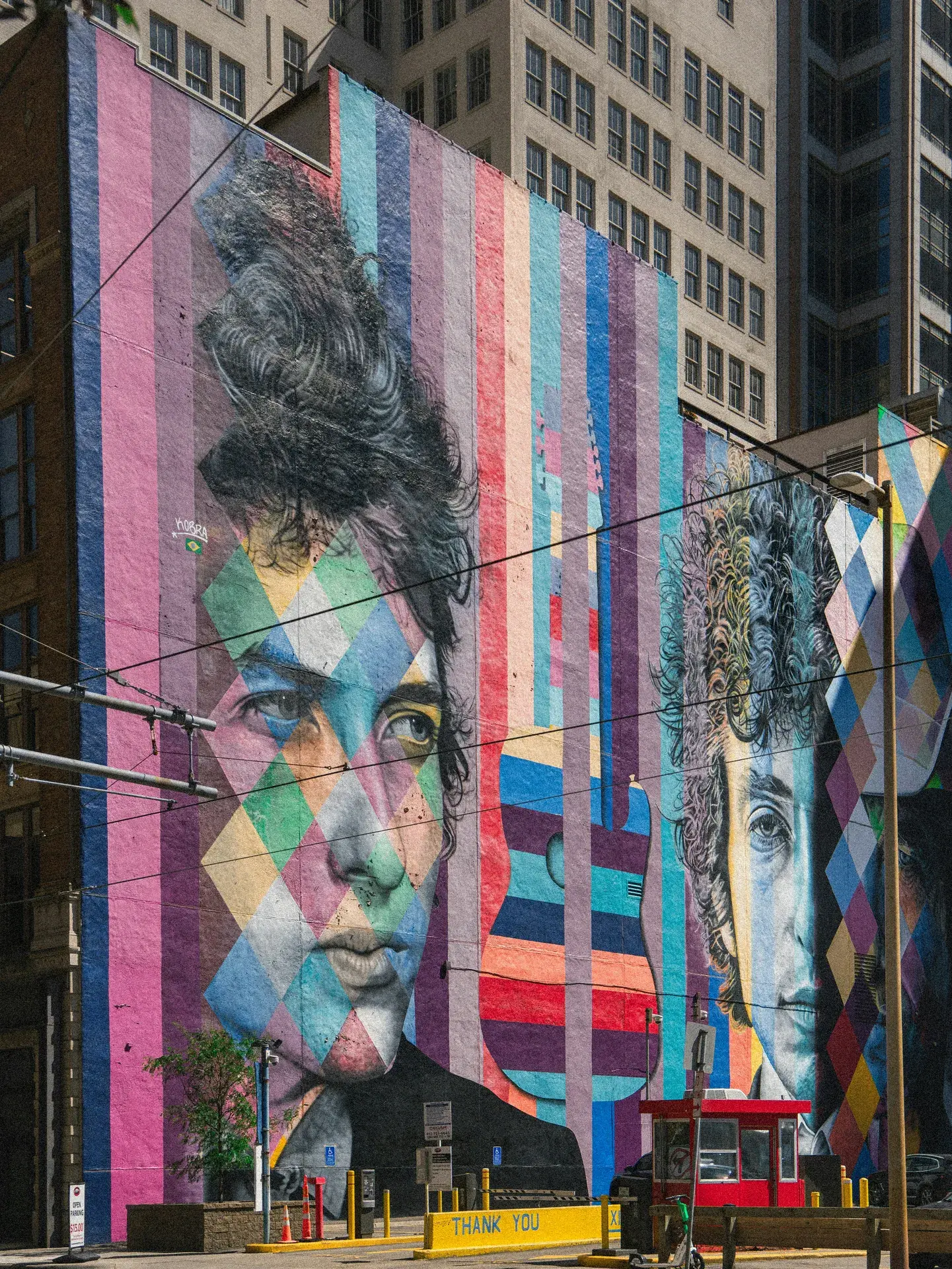
Cedar-Riverside has the deepest musical history of any Minneapolis neighborhood. The West Bank folk scene of the 1960s — the clubs where Bob Dylan played before he left for New York — established a creative lineage that still echoes. The Cedar Cultural Center continues to book eclectic, globally-minded music. Mixed Blood Theatre produces work focused on racial and cultural diversity. The University of Minnesota's arts programs feed students and faculty into the neighborhood. The Somali community, now the dominant demographic, is generating its own creative scene — poetry, music, fashion design, digital media — that is still emerging but increasingly visible. Cedar-Riverside is not a polished arts district; it is a neighborhood where multiple creative traditions coexist, sometimes overlapping and sometimes running in parallel. The tradeoff: the infrastructure for working artists is minimal, the neighborhood has significant poverty and density challenges, and the creative history is more legacy than current reality for the folk and rock scenes.
Read the full Cedar-Riverside guide →Lind-Bohanon / Camden
Studio Space
Emerging — affordable spaces
Gallery Density
Very low
Affordability
Excellent
Creative Vibe
Frontier — early stage
Key spaces: Extremely affordable housing, emerging artist-led spaces, FLOW Northside Arts Crawl, Northside arts organizations, large lots for studio builds
North Minneapolis neighborhoods like Lind-Bohanon and Camden are where the next chapter of Minneapolis arts might be written — if the pattern holds. Artists priced out of Northeast are beginning to look north, where home prices ($150K-$250K) make it possible to buy a house and convert a garage or basement into a studio. The FLOW Northside Arts Crawl is building the same kind of open-studio culture that Art-A-Whirl pioneered in Northeast. Northside arts organizations, including Juxtaposition Arts and Homewood Studios, provide community-embedded creative programming. This is not a developed arts neighborhood — there are no gallery districts, no converted warehouse studios, no brewery crawl infrastructure. But for artists who want to own space, build something from scratch, and be part of an emerging community rather than joining an established one, the Northside offers what Northeast offered twenty years ago: affordability, space, and possibility.
Read the full Lind-Bohanon / Camden guide →The Affordability Question
Minneapolis is still affordable compared to coastal cities for working artists, but the gap is closing. Studio rents in Northeast have roughly doubled since 2015. The neighborhoods on this list that offer the best value — Phillips, Powderhorn, Stevens Square, the Northside — are also the ones with the most significant quality-of-life tradeoffs. There is no neighborhood in Minneapolis that is simultaneously cheap, safe, walkable, and full of studio space. The art of being an artist here, as everywhere, is choosing your tradeoffs wisely.
Frequently Asked Questions
What is the best Minneapolis neighborhood for artists?+
Logan Park and the Northeast Arts District — the undisputed center of the Minneapolis art scene. The Northrup King Building holds over 300 artist studios across four floors, the converted Casket Arts Building adds 100-plus more with grittier DIY energy, and the taproom scene provides the social infrastructure where creatives actually meet.
What is Art-A-Whirl?+
The Northeast Minneapolis open-studio event held every May — Northrup King, Casket Arts, and dozens of smaller studios open to more than 30,000 visitors over a single weekend. It's the clearest picture of how much working art happens in this part of the city.
Is Northeast Minneapolis still affordable for artists?+
The honest answer: the affordability window that created the scene is narrowing. Studio rents in Northrup King have risen significantly over five years, new luxury apartment construction is changing the demographic mix, and losing Bauhaus Brew Labs in June 2026 left a real hole. The community is still here and still vibrant — but under pressure.
Where do artists live south of downtown?+
Whittier and Powderhorn Park — Whittier with the Minneapolis Institute of Art and MCAD anchoring an institutional art corridor, Powderhorn with a longstanding activist-creative community. Phillips rounds out the southern cluster.