Minneapolis Neighborhood
Seward
A South Minneapolis neighborhood where the co-op movement runs deep, Franklin Avenue carries a dozen languages, the Midtown Greenway ends at the river, and community organizing isn't a hobby — it's the infrastructure.
№ 67 of 87 · Longfellow community · Last updated: October 2026 · A complete neighborhood guide
On a Tuesday evening in October, the Seward Co-op on Franklin Avenue is doing what it has done — in one form or another — since 1972. A woman in a hijab is selecting tomatoes from the local produce section, methodically turning each one in her hand. A guy in cycling kit is loading a pannier bag with bulk quinoa and fair-trade coffee, his bike locked to the rack outside where eight other bikes already lean. Two older women are debating the merits of a new tempeh brand near the refrigerated case. A kid in a Seward Montessori t-shirt is eating a slice of co-op pizza at the deli counter while his dad reads the community bulletin board — a dense collage of flyers for neighborhood meetings, yoga classes, mutual aid calls, and a lost cat named Chairman Meow. Nobody is in a hurry. Nobody is performing anything. This is just a grocery store — a cooperatively owned, deeply political, stubbornly idealistic grocery store that has somehow become the beating heart of a neighborhood where "community" isn't a marketing word but an operating system.
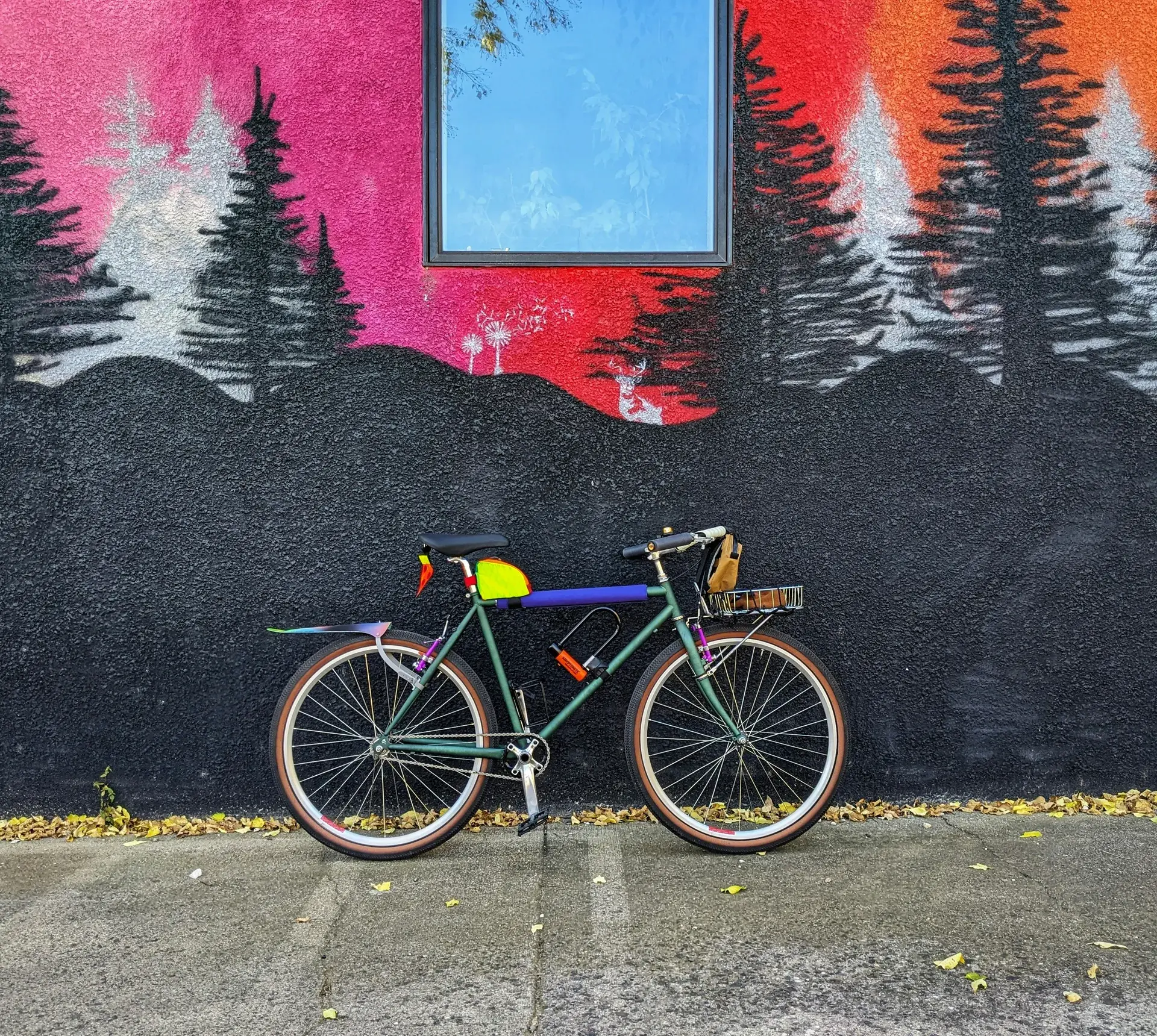
What is Seward, Minneapolis?
Seward is a residential neighborhood in South Minneapolis, roughly bounded by I-94 to the north, the Mississippi River and West River Parkway to the east, the Midtown Greenway corridor to the south, and Hiawatha Avenue (Highway 55) and the Blue Line to the west. It is home to about 7,500 residents and sits at a geographical and cultural crossroads — between the University of Minnesota campus and the Cedar-Riverside neighborhood to the north, the Phillips neighborhoods to the west, and the Longfellow neighborhood to the south.
What makes Seward distinctive is not any single landmark or institution but a culture — a way of organizing community life around cooperation, activism, and a stubborn belief that a neighborhood can be both idealistic and functional. The Seward Co-op, founded in 1972, is the most visible expression of this culture, but it runs much deeper — into the neighborhood association, the community gardens, the mutual aid networks, and the Franklin Avenue corridor where Somali tea shops sit next to craft coffee roasters and nobody thinks that's unusual. Seward is diverse by Minneapolis standards — racially, ethnically, economically, and generationally — and that diversity is not accidental. It is the product of decades of affordable housing, immigrant settlement, and a community that has actively resisted the forces of homogenization.
The neighborhood's defining corridor is Franklin Avenue, which runs east-west across its north end and serves as the primary commercial strip. The eastern terminus of the Midtown Greenway — one of the best pieces of urban cycling infrastructure in the country — sits at the neighborhood's southern edge, connecting Seward to the broader network of trails along the Mississippi River. Between the co-op, the Greenway, the river, and the community culture, Seward attracts a specific kind of person — one who wants to live in a place that means something beyond its real estate value.
Seward Neighborhood Sign
Seward, Minneapolis — Key Stats (2025–2026)
- Residents (2020 Census)
- ~7,500
- Median home sale price (2025 data)
- $354K
- Year Seward Co-op was founded
- 1972
- Homes built before 1940 (2020–24 ACS)
- 32%
- Midtown Greenway (eastern terminus at Seward's edge)
- 5.5 miles
- Drive to downtown Minneapolis
- 10–15 min
- Walk Score (Oct 2026)
- 80
- Bike Score (Oct 2026)
- 99
Seward History & Origins
The land that is now Seward is part of the ancestral homeland of the Dakota people, for whom the confluence of the Mississippi and Minnesota Rivers at Bdote, just miles to the southeast, is a site of profound spiritual and cultural significance. Any honest history of Seward begins with that fact and the dispossession that followed — the treaties of 1837 and 1851 that stripped Dakota land rights, the US-Dakota War of 1862, and the forced exile of Dakota people from their homeland.
The neighborhood takes its name from William Henry Seward, the secretary of state under Abraham Lincoln and Andrew Johnson, best remembered for purchasing Alaska from Russia in 1867 — a transaction his critics called "Seward's Folly" until it turned out to be one of the better real estate deals in American history. Seward School, which opened in 1887, was named for him, and the neighborhood around it shares the name.
Residential development came rapidly in the late 19th and early 20th centuries, as Minneapolis boomed on flour milling and lumber. Seward filled in between the 1880s and 1930 with the housing stock that still defines the neighborhood — workers' cottages, Craftsman bungalows, Foursquare homes, modest frame houses, and scattered duplexes built for the working-class and middle-class families who powered the city's industrial economy, many of them immigrants. The Milwaukee Road tracks along its western edge, and the rail yards where many early residents worked, shaped its early identity as a place where people who worked with their hands could afford to live close to where they worked.
The mid-twentieth century brought the familiar American story of interstate construction and urban renewal. Interstate 94, built in the 1960s, cut along what is now Seward's northern edge, severing connections between communities that had been organically linked and cutting residents off from nearby Riverside Park. During the freeway fight, about 35 percent of the neighborhood was cleared for urban renewal. Hiawatha Avenue (Highway 55) and the Milwaukee Road tracks beside it formed Seward's western boundary — a barrier that still separates Seward from the Phillips neighborhoods to the west. The housing stock — already modest — had begun to show its age, and in 1970 the city's housing authority planned to demolish the 1880s workers' cottages on Milwaukee Avenue along with much of western Seward. Residents organized and saved the street, which was listed on the National Register of Historic Places in 1974.
But Seward's most significant transformation was cultural, not physical. In the late 1960s and 1970s, the neighborhood became a center of the counterculture and back-to-the-land movements that were reshaping urban America. Young people — many of them associated with the University of Minnesota — moved into Seward's affordable houses and apartments and began building the cooperative institutions that would define the neighborhood for the next half century. The Seward Co-op was founded in 1972, initially operating on the corner of 22nd and Franklin avenues. Community gardens, food cooperatives, and housing co-ops followed. The neighborhood became a proving ground for the idea that ordinary people could own and operate the institutions that served them — that a grocery store, a housing complex, or a daycare center could be run democratically, for the benefit of its members rather than outside shareholders. The co-op movement in Seward was not abstract ideology — it was practical. People who couldn't afford organic produce at conventional stores pooled their money and bought it in bulk. People who couldn't afford to buy a house alone formed housing cooperatives and bought buildings together. The cooperative model worked because it solved real problems for real people.
The co-op itself grew from that volunteer-run corner shop into a new store at 2111 East Franklin in 1998, then moved down the avenue to the larger Franklin Store at 2823 East Franklin in 2009. Today it is owned by more than 25,000 households, with a reputation for quality that attracts shoppers from across the metro. The opening of the second location — the Friendship Store on East 38th Street — in 2015 marked a new chapter, expanding the co-op's physical footprint and its ambitions while raising questions about scale and mission that the community continues to debate.
The 1980s and 1990s brought a new wave of residents — East African immigrants, first Oromo refugees from Ethiopia and then, from the 1990s, Somalis — who settled in the adjacent Cedar-Riverside neighborhood and along the Franklin Avenue corridor. These communities opened small businesses, tea shops, restaurants, and halal markets that transformed the commercial landscape of Franklin Avenue. The result was a neighborhood that was both progressive-countercultural and immigrant-entrepreneurial — two cultures that shared more values than either might initially have recognized, including a deep commitment to community self-reliance and mutual support.
By the 2000s and 2010s, Seward had settled into its identity as one of the most politically active, cooperatively organized, and demographically diverse neighborhoods in Minneapolis — a place where the co-op board elections draw genuine passion, where neighborhood meetings are well-attended, and where the phrase "community engagement" is not a bureaucratic cliché but something residents actually practice, week after week, year after year.
Living in Seward
Living in Seward means living in a neighborhood that has opinions. Strong ones. About food systems, about housing policy, about bike infrastructure, about whether the new development on Franklin is the right density and whether it includes enough affordable units. This is not a place where people retreat into their houses and ignore what's happening on their block. The Seward Neighborhood Group — the community organization that serves as the neighborhood's civic backbone — runs programming, facilitates community input on development, organizes events, and provides a forum for the kind of participatory democracy that most neighborhoods talk about but few actually practice. If you move to Seward and don't attend at least one neighborhood meeting in your first year, someone will probably ask you why.
The demographic mix is one of the most genuinely diverse in the city. Longtime homeowners — some of whom have been in their bungalows since the 1970s co-op wave — live alongside Somali and Oromo families, university-affiliated professionals, young families drawn by Seward Montessori, artists and activists, and a steady stream of graduate students from the nearby U of M campus. The diversity here is not the curated, photogenic kind that shows up in real estate marketing. It's messy, sometimes awkward, and occasionally contentious — the co-op member who has been fermenting their own kimchi since 1985 and the Somali grandmother buying goat at the halal market on Franklin may not share a language, but they share a neighborhood, and the infrastructure of community life creates points of contact that wouldn't exist in a more homogeneous place.
The physical texture of Seward is residential and unpretentious. The streets south of Franklin are lined with mature elms and maples — the survivors of Dutch elm disease — shading modest houses with deep porches and narrow lots. The scale is human. Nobody built a McMansion in Seward. The houses are small, the yards are small, the garages are detached and sometimes leaning, and the overall effect is a neighborhood that was built to be lived in rather than looked at. Community gardens are scattered throughout — some managed by the neighborhood group, some informal arrangements between neighbors — and in summer the entire neighborhood feels faintly green and slightly overgrown, in the best possible way.
Franklin Avenue, the neighborhood's commercial spine, is where Seward's diversity is most visible and most complex. Walk the stretch east of Cedar on any given weekday and you pass through several worlds — a Somali tea shop where elders sit for hours over tiny cups of shaah, the co-op with its earnest signage about local sourcing, a halal grocery with goat carcasses hanging in the window, a yoga studio, a Laundromat, a used bookstore. The avenue is not gentrified in the way that Nicollet Avenue in Whittier or Hennepin Avenue in Uptown has been — it's rougher around the edges, less curated, and more honest about the tensions between the people who share it. That honesty is part of what makes Seward feel real in a way that polished neighborhoods cannot replicate.
Cycling is not a hobby in Seward — it's a transportation mode that rivals the car. The Midtown Greenway's eastern terminus sits at the neighborhood's southern edge, and the West River Parkway trail runs along the Mississippi on its eastern edge. The result is that Seward is one of the best-connected cycling neighborhoods in the city, and the bike culture here is less performative-spandex and more practical-panniers — people who bike to the co-op, bike to work at the university, bike to pick up their kids at Seward Montessori. The bike racks outside the co-op are as full as any parking lot in the suburbs.
Neighboring Cedar-Riverside to the north shares Seward's diversity and progressive politics but has a denser, more urban texture — the high-rises of Riverside Plaza and the energy of the West Bank campus. Across the river to the east, Prospect Park offers a more residential, university-adjacent character with Green Line light rail access. Seward sits between these neighbors with its own distinct identity — quieter than Cedar-Riverside, more politically engaged than Prospect Park, and more cooperatively organized than either.
Seward Food, Drink & Local Spots
Seward's food scene is smaller than Whittier's or Longfellow's, but it punches above its weight in character and conviction. This is a neighborhood where the grocery store is a cultural institution, the most celebrated restaurant has a relationship with every farm that supplies it, and the most affordable lunch on the corridor might be a plate of rice and goat from a Somali spot that doesn't bother with Yelp. The food here reflects the neighborhood's values — local sourcing, cooperative economics, immigrant entrepreneurship — and the result is a scene that is less about dining out and more about eating well in a community that cares intensely about where its food comes from and who benefits from its sale.
The Anchors
3311 East 25th Street. The successor to the beloved Birchwood Cafe, Darling carries forward the farm-to-table ethos that made this address a Seward institution — local sourcing, seasonal menus, and baked goods that justify the trip. The space retains its bright, warm character, and the patio still fills the moment the temperature cracks 50 degrees. New ownership, same commitment to being both excellent and principled.
2823 East Franklin Avenue. The co-op's Seward store — a member-owned grocery that has been the neighborhood's center of gravity since 1972. The store emphasizes local, organic, and sustainably sourced products, and the deli and hot bar serve prepared food that is genuinely good, not just 'good for a grocery store.' The bulk section is extensive. The produce is seasonal. The bulletin board is a civic institution in its own right. Anyone can shop here; membership costs $99 (one-time, lifetime) and grants voting rights in co-op governance.
Franklin Avenue Corridor
The stretch of Franklin Avenue running through Seward is one of the more culturally complex commercial corridors in Minneapolis. East African businesses — Somali restaurants, halal groceries, tea shops, clothing stores, and money transfer services — share the avenue with the co-op, a handful of bars, and a scattering of small businesses that serve the neighborhood's eclectic population. This is not a polished dining destination. The Somali restaurants along Franklin are typically modest in presentation — fluorescent lighting, plastic tablecloths, cafeteria-style service — and extraordinary in flavor. Sambusas, goat stew over rice, chapati, and spiced tea are the staples. The prices are low, the portions are large, and the experience is a window into a food culture that most Minneapolis dining guides overlook entirely.
Also Worth Knowing
Seward's food landscape extends into the neighboring corridors. The Cedar-Riverside neighborhood, immediately to the north across I-94, has a dense cluster of East African restaurants and groceries that Seward residents treat as an extension of their own food ecosystem. The Midtown Global Market — a multi-vendor food hall in the old Sears building on Lake Street, a short bike ride southwest — offers cuisines from around the world under one roof. And the Franklin Avenue corridor continues west through the Phillips neighborhoods with additional restaurants, tea houses, and markets. The truth about eating in Seward is that the neighborhood's food scene is best understood not in isolation but as part of a broader corridor that runs along Franklin Avenue from the Mississippi to Hennepin — one of the most culturally diverse food stretches in the Twin Cities.
Parks & Outdoors Near Seward
Seward is not a parks-and-lakes neighborhood in the Southwest Minneapolis sense — there is no Bde Maka Ska or Harriet at your doorstep. But the neighborhood's outdoor assets are substantial and, in some ways, more interesting than a manicured lakefront. The Mississippi River defines the neighborhood's eastern boundary, the Midtown Greenway runs along its southern edge, and a network of smaller parks and community gardens fills the residential blocks in between. For people who define "outdoors" as trails, water, and green space rather than beach access and sailboats, Seward delivers.
The Mississippi River & West River Parkway
Seward sits along the Mississippi River at a point where the river is wide, powerful, and genuinely beautiful — not the tamed, channelized river of the industrial districts downstream, but the river gorge, where the Mississippi cuts between limestone bluffs and the tree canopy hangs over the water like a tunnel of green. West River Parkway runs along the neighborhood's river edge, providing a paved trail for walking, running, and cycling that connects north to the University of Minnesota and the Stone Arch Bridge, and south to Minnehaha Falls and the broader Grand Rounds trail system. The river bluffs here offer some of the best views in the city — particularly in fall, when the cottonwoods and maples along the gorge turn gold and orange against the dark water below.
Access to the riverfront is somewhat limited by topography — the bluffs are steep in places, and the parkway sits above the river rather than at its level. But several points provide access to the water's edge, and the trail itself is one of the finest stretches of urban riverfront in the Upper Midwest. For Seward residents, the river is a daily presence — visible from the neighborhood's eastern streets, audible on quiet nights, and accessible within a few minutes by bike from anywhere in the neighborhood.
The river gorge between Minneapolis and St. Paul is the only true gorge along the entire 2,340-mile length of the Mississippi — a geological fact that never stops being remarkable. The limestone bluffs, the overhanging canopy of cottonwoods and silver maples, the occasional bald eagle circling above the water — this is wilderness threaded through a city, and Seward sits at one of its most accessible points. In winter, the river trail is quieter but no less beautiful, with ice forming along the shoreline and cross-country skiers replacing the summer cyclists. In spring, the snowmelt swells the river and the bluffs turn green almost overnight. Living near the gorge means living with the rhythm of a river that predates the city by millennia and will outlast it by as many more.
The Midtown Greenway
The Midtown Greenway is a 5.5-mile dedicated bike and pedestrian trail running east-west through South Minneapolis in a former railroad trench — and its eastern terminus is at Seward's southern edge, where it connects to the West River Parkway trail. This makes Seward the intersection point of two of the best cycling corridors in the city, and the result is a neighborhood where serious cycling infrastructure is not aspirational but actual. The Greenway is grade-separated from car traffic, plowed in winter, lit at night, and used year-round by commuters, recreational cyclists, runners, and walkers. From Seward, you can ride the Greenway west to Uptown, the Chain of Lakes, and beyond — a car-free commute that converts non-cyclists into believers.
Matthews Park
Matthews Park, near the center of the neighborhood, is the community's primary park — a modest green space with a playground, playing fields, a wading pool, and a recreation center that hosts programming year-round. It's the kind of neighborhood park that won't appear on any tourism list but anchors the daily life of the community — where kids play after school. It's well-used and well-loved, if not exactly scenic in the Minnehaha Falls sense.
Community Gardens
Seward has one of the higher densities of community gardens in Minneapolis, which should surprise no one who has spent five minutes in the co-op. The gardens — some managed by the Seward Neighborhood Group, some by informal collectives of neighbors — are scattered throughout the residential blocks and reflect the neighborhood's diversity in miniature. Somali families growing peppers and cilantro next to longtime residents tending heirloom tomatoes next to graduate students experimenting with urban permaculture. The gardens are small, productive, and deeply social — places where neighbors who might not otherwise interact end up sharing seeds, advice, and occasionally zucchini.
Seward Schools
Schools in Seward offer a profile that reflects the neighborhood's values — diversity, community engagement, and a willingness to try approaches that differ from the conventional suburban model. The picture is more nuanced than a simple test-score ranking would suggest, and families who move here for the schools tend to be those who prioritize cultural richness and pedagogical philosophy alongside academic outcomes.
Seward Montessori School (PreK–6), a citywide magnet in the neighborhood, is for many families the primary reason they chose Seward over other neighborhoods. It is the only Montessori school left in the Minneapolis Public Schools system, and it draws families from across the city through the district's open enrollment process. The school serves a diverse student body and follows the Montessori model of mixed-age classrooms, self-directed learning, and hands-on materials. It is not the highest-scoring elementary in the district by standardized metrics, but it is one of the most intentionally community-connected — parents are actively involved, the school partners with neighborhood organizations, and the pedagogical approach attracts families who are looking for something other than the teach-to-the-test model.
Middle school assignments vary by address, so check the district's school finder. South High School — located nearby on 19th Avenue South — is the closest comprehensive high school. South High is known for its diversity, its strong music and arts programs, and a student culture that reflects the progressive values of the neighborhoods it serves. Like most Minneapolis public schools, South earns mixed reviews from standardized metrics but generates genuine loyalty among families who value diversity and community engagement over raw test scores.
Minneapolis Public Schools' open enrollment system means that Seward families are not limited to neighborhood schools. Many families access magnet programs, citywide options, and charter schools across the district. The school landscape here rewards engaged parents who are willing to research and advocate — it is less automatic than the pipeline in Fulton or Linden Hills, but the options are real and, for the right family, genuinely compelling.
Seward Real Estate & Housing
Seward offers one of the more interesting value propositions in Minneapolis real estate — a walkable, bikeable, community-rich neighborhood with genuine diversity and strong civic culture, at prices that are meaningfully below the Southwest Minneapolis neighborhoods that dominate the city's housing conversation. The median sale price was $354,000 in 2025, according to Minneapolis Area REALTORS — close to the citywide median and roughly half what you'd pay in Linden Hills or Fulton.
Prices have not risen in a straight line. The combination of Greenway access, co-op culture, and the neighborhood's increasing appeal to young professionals and families has pushed values upward over the past decade, but the median slipped from $348,350 in 2022 to $292,000 in 2023 before climbing back to $354,000 in 2025. By 2025 competition for well-maintained homes was real: homes sold in an average of 39 days, against 55 citywide, and for about 102 percent of their original asking price. Seward is no longer the overlooked affordable option it was ten years ago.
What Your Money Buys
Seward's older houses are mostly Craftsman bungalows and simple frame houses from the late 1800s through the 1920s — the same housing stock that characterizes much of South Minneapolis, but here with the particular patina of a neighborhood that has been more interested in community gardens than kitchen renovations. At the lower end of the market, you're looking at smaller bungalows or houses that need updating — original kitchens, single bathrooms, the kind of deferred maintenance that comes with generations of owners who prioritized other things. The middle of the market gets you a well-maintained three-bedroom home or a larger updated property. At the top, you're in renovated territory or looking at homes near the river with views of the gorge.
Duplexes and triplexes are more common in Seward than in Southwest neighborhoods, reflecting the area's historically mixed-income character and its tradition of cooperative and communal living. Some properties are owner-occupied duplexes where the rental income helps with the mortgage — a model that fits naturally in a neighborhood built around cooperative economics. New construction has been limited but present, primarily along Franklin Avenue and near the Greenway, adding apartments and condominiums that have shifted the mix slightly toward density.
The rental market is active, with a mix of older apartment buildings, converted houses, and newer developments. Rents are affordable by Minneapolis standards: Census estimates put the median at about $940 a month across all units, against $1,371 citywide, though the estimate's margin of error is wide. The neighborhood's renter population is diverse, including graduate students, young professionals, immigrant families, and long-term renters who have made Seward home for years.
Getting Around Seward
Seward is one of the best-connected neighborhoods in Minneapolis for people who prefer two wheels to four — and the infrastructure reflects a community that has actively advocated for alternatives to car dependency for decades. The neighborhood earns a Walk Score of 80 and an exceptional Bike Score of 99, numbers that underscore what residents already know: you can live a full life in Seward without a car, and many people do.
The Midtown Greenway is the centerpiece — its eastern terminus at Seward's southern edge connects to the West River Parkway trail, creating a cycling network that reaches from the Mississippi River to the Chain of Lakes without ever touching a road. For bike commuters heading to downtown, the university, or jobs across South Minneapolis, the Greenway is transformative. It is plowed in winter — a detail that separates it from most urban trails and makes year-round cycling viable for the committed. The West River Parkway trail extends north along the river to the Stone Arch Bridge, downtown, and North Minneapolis, and south to Minnehaha Falls and Fort Snelling.
Transit access is adequate but not exceptional. Metro Transit bus routes run along Franklin Avenue, Cedar Avenue, and Riverside Avenue, providing connections to downtown, the University of Minnesota, and the broader transit network. The Green Line light rail — running along University Avenue between downtown Minneapolis and downtown St. Paul — is accessible at the West Bank station in neighboring Cedar-Riverside, about a 10-minute bike ride or short bus connection from most of Seward. The Blue Line runs along the neighborhood's western edge, with a stop at Franklin Avenue station.
By car, downtown Minneapolis is 10–15 minutes. The University of Minnesota campus is 5–10 minutes. MSP International Airport is approximately 15 minutes via Highway 55. Street parking is generally available on residential blocks, and the neighborhood has not experienced the parking pressure that denser areas like Uptown or Whittier face — partly because Seward residents are, on average, more likely to own bikes than second cars.
What's Changing: The Honest Version
Seward's tensions are quieter than Longfellow's post-2020 reckoning or North Loop's rapid transformation, but they are no less real. The neighborhood is grappling with the familiar urban paradox: the qualities that make it special — affordability, diversity, cooperative culture, community engagement — are precisely the qualities that attract new residents whose arrival can erode those same features. This is not unique to Seward, but the neighborhood's strong civic culture means the conversation is happening out loud, in public, with the kind of earnest intensity that Seward brings to everything.
Development and Density
New development along Franklin Avenue and near the Greenway has been a source of ongoing debate. Several mixed-use buildings — apartments above ground-floor retail — have been built or proposed in recent years, and each one has triggered the same set of questions: Is it the right density? Does it include enough affordable units? Will it displace existing businesses? Does the architecture respect the neighborhood's character? The Seward Neighborhood Group facilitates community input on these projects, and the meetings can be contentious — not in the NIMBYist sense of wealthy homeowners protecting property values, but in the genuinely democratic sense of a community trying to reconcile its values (affordability, inclusion, sustainability) with the realities of a growing city and a desirable neighborhood.
The co-op itself has not been immune to these debates. The opening of the Friendship Store on 38th Street in 2015 was widely celebrated, but it also prompted questions about whether the co-op was expanding beyond its original mission, whether a new store in a historically Black, working-class neighborhood signaled gentrification, and what the co-op's role should be in shaping neighborhood development. These are not easy questions, and the fact that Seward residents ask them — loudly, publicly, and with genuine investment in the answers — is both the neighborhood's greatest strength and its most exhausting feature.
Displacement and Affordability
Rising home prices and rents have begun to push out some of the people who built the neighborhood's identity. Long-term renters — including immigrant families, artists, and the graduate students who have been a fixture of Seward for decades — face increasing pressure as older apartment buildings are renovated or replaced and rents rise accordingly. The Somali and East African communities along Franklin Avenue, while still present and visible, have seen some dispersal as families move to more affordable areas — Eden Prairie, Burnsville, Brooklyn Park — following a pattern that has played out in immigrant neighborhoods across urban America.
The neighborhood's cooperative tradition offers some resistance to these forces. Community land trusts, cooperative housing, and the co-op's own commitment to affordability provide models for alternative ownership that don't exist in most neighborhoods. But they operate at the margins of a housing market driven by larger forces — interest rates, zoning policy, regional population growth — that no neighborhood-level institution can fully counteract. The question is whether Seward's cooperative infrastructure can preserve enough affordability to maintain the diversity that makes the neighborhood worth preserving in the first place. The jury is still out.
Crime and Safety
Like much of Minneapolis, Seward experienced an increase in crime — particularly property crime, catalytic converter theft, and car break-ins — during the 2020–2022 period. By 2025–2026, most crime categories had declined from their peaks, but remained elevated compared to pre-2020 levels. The Franklin Avenue corridor has historically been the neighborhood's most challenging area for safety, with occasional incidents related to the social service organizations and shelters that operate along the avenue. Residential blocks south of Franklin are generally quiet and safe.
The neighborhood's relationship with policing is complicated in the way that relationships with policing are complicated across progressive Minneapolis. Many Seward residents supported the 2021 ballot question on public safety reform, and the neighborhood has been active in exploring alternative approaches to safety — community mediation, mental health response teams, restorative justice programs. The tension between wanting a safe neighborhood and questioning the methods by which safety is traditionally enforced is a live conversation in Seward, and residents hold it with more nuance and less defensiveness than in most places.
The Co-op Question
The Seward Co-op is the neighborhood's most important institution, and its evolution mirrors the neighborhood's own tensions. What began as a scrappy, volunteer-run corner store on Franklin Avenue is now a multi-million dollar operation with two locations, hundreds of employees, and a customer base that extends well beyond the neighborhood. The co-op has worked hard to maintain its mission — local sourcing, fair labor practices, democratic governance, community investment — but success brings its own challenges. Some long-time members worry that the co-op has become too professionalized, too focused on the aesthetics of natural foods retail, too similar to the Whole Foods model it once defined itself against. Others argue that growth is necessary for sustainability and that the co-op's expansion has allowed it to do more — not less — for the community.
This is a debate that matters beyond Seward, because the co-op model is one of the few alternatives to corporate food retail that has actually scaled. If Seward Co-op can remain democratic, community-accountable, and accessible to people across income levels while operating at a commercially viable scale, it proves something important about cooperative economics. If it can't, the loss is not just Seward's but the broader movement's. The stakes, in other words, are higher than they look from the cheese aisle.
Seward FAQ
Is Seward a good neighborhood in Minneapolis?
Yes — Seward is one of South Minneapolis's most distinctive and community-oriented neighborhoods. It offers strong co-op culture, excellent biking infrastructure via the Midtown Greenway, proximity to the Mississippi River, genuine demographic diversity, and a progressive civic culture that attracts people who want to be actively involved in their community. It's more affordable than Southwest Minneapolis while offering walkable commercial corridors and a food scene anchored by institutions like Darling Neighborhood Cafe and Seward Co-op. The neighborhood has real urban challenges — property crime, some safety concerns along Franklin Avenue, and ongoing tensions around development — but for people who value community engagement and diversity, Seward is one of the strongest options in the city.
Is Seward, Minneapolis safe?
Seward's safety profile is mixed, which is the honest answer for most urban Minneapolis neighborhoods. The residential blocks — particularly south of Franklin Avenue — are generally quiet, tree-lined, and neighborly. Franklin Avenue itself has historically been a corridor with higher rates of property crime, public intoxication, and occasional violent incidents, though the situation has improved in recent years. Crime rose across Minneapolis in 2020–2022 and has since declined, but remains above pre-2020 levels in some categories. Most Seward residents feel safe on their blocks while exercising normal urban awareness, particularly after dark near commercial corridors.
What is Seward, Minneapolis known for?
Seward is best known for the Seward Co-op (founded in 1972), Darling Neighborhood Cafe, the eastern terminus of the Midtown Greenway, its proximity to the Mississippi River, a strong tradition of progressive activism and community organizing, and its diverse demographics — including significant Somali and East African communities along Franklin Avenue. It's also known as one of the most bike-friendly neighborhoods in the city.
How much do homes cost in Seward, Minneapolis?
Seward's median sale price was $354,000 in 2025, up from $310,000 a year earlier, according to Minneapolis Area REALTORS — right about at the citywide median and well below Southwest Minneapolis neighborhoods. Duplexes and small multi-family properties are relatively common. Compared to neighboring Prospect Park or the Southwest neighborhoods, Seward remains more accessible for first-time buyers.
What is Seward Co-op?
Seward Co-op is a member-owned cooperative grocery store founded in 1972. It operates two stores: the Franklin Store at 2823 East Franklin Avenue in Seward and the Friendship Store at 317 East 38th Street, about three miles southwest. The co-op emphasizes local, organic, and sustainably sourced food, and has been a defining institution of the neighborhood's identity and progressive culture for over fifty years. Anyone can shop there; membership provides ownership benefits and voting rights.
Is Seward walkable?
Seward earns a Walk Score of 80 and an exceptional Bike Score of 99. Franklin Avenue provides the primary commercial corridor, with the co-op, restaurants, and services within walking distance for most residents. The Midtown Greenway — one of the best pieces of urban cycling infrastructure in the country — has its eastern terminus at the neighborhood's southern edge, and bike commuting is a genuine lifestyle here, not just a weekend activity. For car-free living, Seward is one of the better options in South Minneapolis, though it's not as dense with commercial options as Uptown or Whittier.
What schools serve Seward, Minneapolis?
Seward is served by Minneapolis Public Schools. Seward Montessori School (PreK–6), a citywide Montessori magnet, is in the neighborhood. South High School, on 19th Avenue South, is the closest comprehensive high school; middle school assignments vary by address, so check the district's school finder. The neighborhood also has access to the district's open enrollment and magnet programs, and several charter school options are nearby. Families who prioritize diverse, community-embedded schools often find the Seward options compelling.
What are the best restaurants in Seward, Minneapolis?
Seward's food scene is smaller but distinctive. Darling Neighborhood Cafe (which took over the former Birchwood Cafe space) carries on the farm-to-table tradition with a menu built around local sourcing and seasonal produce. Seward Co-op's prepared food and deli are excellent for everyday eating. Along Franklin Avenue, East African restaurants — including Somali spots serving sambusa, goat, and rice — offer some of the most flavorful and affordable food in the neighborhood.
Where exactly is Seward in Minneapolis?
Seward is in South Minneapolis, roughly bounded by I-94 to the north, the Mississippi River and West River Parkway to the east, the Midtown Greenway corridor to the south, and Hiawatha Avenue (Highway 55) and the Blue Line to the west. It sits south of Cedar-Riverside and the University of Minnesota's West Bank campus, across the river from Prospect Park, and north of the Longfellow and Cooper neighborhoods. The Franklin Avenue corridor runs east-west across the neighborhood's north end.
Is Seward gentrifying?
Seward is experiencing some gentrification pressure, though the process is less dramatic than in neighborhoods like Northeast or North Loop. Rising home prices, new construction, and the neighborhood's increasing appeal to young professionals have raised concerns about displacement, particularly for renters and immigrant communities along Franklin Avenue. The co-op culture and strong community organizing tradition have provided some resistance to the most disruptive forms of gentrification, but the tension between preserving affordability and accommodating growth is real and ongoing.
What is the Midtown Greenway?
The Midtown Greenway is a 5.5-mile dedicated bike and pedestrian trail running east-west through South Minneapolis in a former railroad trench. Its eastern terminus is on the Seward neighborhood's southern edge, where it connects to the West River Parkway trail along the Mississippi. The Greenway is grade-separated from car traffic, plowed in winter, lit at night, and considered one of the best pieces of urban cycling infrastructure in the United States. For Seward residents, it provides car-free access to Uptown, the Chain of Lakes, and points west across the city.
What Makes Seward Irreplaceable
There are neighborhoods in Minneapolis with better restaurants, higher Walk Scores, more polished commercial corridors, and more predictable trajectories. Seward is not competing on those terms and never has been. What it offers is something that cannot be manufactured by a developer or mandated by a city council — a genuine culture of cooperative living, built over fifty years by people who believe that a grocery store can be a democratic institution, that a neighborhood meeting is worth attending on a Tuesday night, that the person who arrived from Mogadishu last year and the person whose family has been here since the 1920s both have a claim on this place and a voice in its future.
The neighborhood has its struggles — crime that can't be dismissed, displacement that's already happening, infrastructure that needs investment, and the eternal Minneapolis tension between progressive ideals and the messy reality of implementing them. But walk down Franklin Avenue on a Saturday morning, stop at the co-op for bread, eat lunch at Darling, bike the Greenway to the river, and you will understand why the people who live here fight so hard to keep it what it is. Seward is proof that a neighborhood can be both idealistic and practical, both diverse and cohesive, both changing and stubbornly itself. That combination is rarer than it should be. And it is worth protecting.

Keep exploring
Also in Longfellow
Seward appears in
- Best Bakeries
- Best Breweries by Neighborhood
- Best Brunch
- Best Coffee Shops by Neighborhood
- Best Ethiopian and East African Food
- Best Food Neighborhoods
All 18 guides ↓Show fewer ↑
- 10 Best Neighborhoods
- Best Neighborhoods for Artists and Creatives
- Best Neighborhoods for Dog Owners
- Best Neighborhoods for First-Time Homebuyers
- Best Neighborhoods for Remote Workers
- Best Neighborhoods for Renters
- Best Neighborhoods for Young Professionals
- Best Patios and Outdoor Dining by Neighborhood
- The History of Minneapolis Neighborhood Signs
- Most Bikeable Neighborhoods
- Most Walkable Neighborhoods
- Moving to Minneapolis