What We Mean by “Winter Neighborhood”
A great winter neighborhood is not the same as a great summer neighborhood. In winter, walkability means “can you get somewhere warm within a few blocks.” Amenities means “is there a reason to leave your apartment.” And the cozy factor — hard to quantify, impossible to ignore — is the difference between a winter that feels like a siege and a winter that feels like a season. We ranked these on all of it.
Downtown East
Winter Walkability
Excellent
Plowing
Priority
Indoor Amenities
Exceptional
Winter activities: Skyway system, US Bank Stadium events, indoor dining
Cozy factor: Medium — more functional than cozy
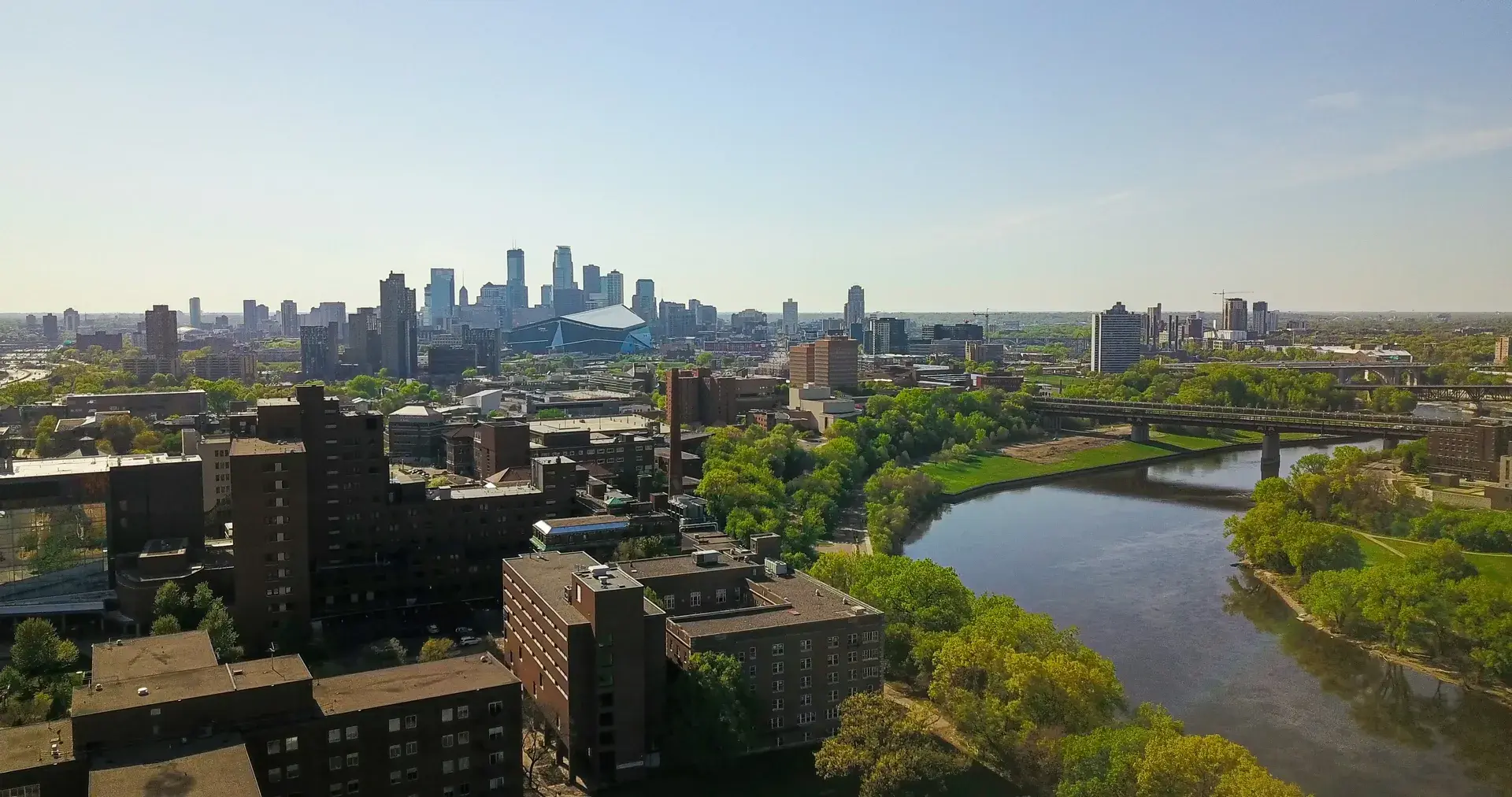
Downtown East wins the winter ranking for one reason: the skyway system. Minneapolis has 9.5 miles of enclosed, climate-controlled skyways connecting 80 city blocks of downtown. You can walk from your apartment to your office, grab lunch, hit a gym, buy groceries, and return home without ever stepping outside in January. No other neighborhood in Minneapolis — or almost any American city — can offer that. The tradeoff: the skyway makes winter survivable but not charming. Downtown East in winter is a functional experience, not a cozy one. The streets are empty because everyone is 15 feet above them. If your vision of winter is hot cocoa by a fireplace, look elsewhere. If your vision is never putting on a parka for your commute, this is your neighborhood.
Read the full Downtown East guide →Downtown West
Winter Walkability
Excellent
Plowing
Priority
Indoor Amenities
Exceptional
Winter activities: Skyway, Target Center events, Hennepin Theatre District
Cozy factor: Medium
Downtown West shares the skyway advantage with Downtown East but adds the Hennepin Theatre District — the Orpheum, State, and Pantages theaters provide winter entertainment infrastructure that other neighborhoods lack. Target Center hosts Timberwolves and Lynx games, concerts, and events throughout the winter. The bar and restaurant scene along Hennepin Avenue gives you options for escaping your apartment without braving the cold. The same tradeoff applies: functional warmth, not cozy warmth. Downtown West in January is about infrastructure, not atmosphere.
Read the full Downtown West guide →North Loop
Winter Walkability
Very Good
Plowing
Priority
Indoor Amenities
Excellent
Winter activities: Walkable dining, Target Field winter events, indoor markets
Cozy factor: High
The North Loop is the best neighborhood in Minneapolis for winter livability that actually feels like living, not just surviving. The density of restaurants, coffee shops, and bars means you can walk out your door, trudge two blocks through snow, and be sitting in a warm restaurant with a glass of wine within five minutes. The neighborhood is compact enough that winter walks to errands are short. Target Field occasionally hosts winter events (hockey, concerts). The coffee shop culture — anchored by Spyhouse on Washington — provides genuine third places for the dark afternoons when your apartment walls start closing in. The North Loop does not have the skyway, but it has something the skyways lack: warmth with character.
Read the full North Loop guide →Bryn Mawr
Winter Walkability
Good
Plowing
Good
Indoor Amenities
Moderate
Winter activities: Theodore Wirth XC skiing, snowshoeing, fat biking, winter trails
Cozy factor: Very High
Bryn Mawr is the winter neighborhood for people who do not survive winter so much as conquer it. Theodore Wirth Park — the largest park in Minneapolis at 759 acres — is Bryn Mawr's backyard, and in winter it transforms into one of the best urban cross-country skiing destinations in America. The Trailhead building (opened 2018) has a chalet, rental equipment, groomed trails for classic and skate skiing — and, as of May 2026, a Trailhead Cafe powered by Northeast bakery Aki's BreadHaus. Fat biking trails. Snowshoeing. Winter mountain biking. If your approach to January is "put on more layers and go outside," Bryn Mawr is your neighborhood. The cozy factor comes from the neighborhood itself — small, tight-knit, residential, with the kind of neighbor-knows-neighbor energy that makes winter feel communal rather than isolating.
Read the full Bryn Mawr guide →Linden Hills
Winter Walkability
Good
Plowing
Good
Indoor Amenities
Good
Winter activities: Frozen Lake Harriet walks, village shopping, skating a couple of miles north at Lake of the Isles
Cozy factor: Very High
Linden Hills in winter is a Currier and Ives postcard brought to life in Minneapolis. Lake Harriet freezes solid by late December, and the frozen lake becomes the neighborhood's winter commons — walkers, skiers, and stubborn ice anglers replacing the summer sailboats. (The Park Board's maintained lake rink, with hockey ice and a warming room, is a couple of miles north at Lake of the Isles.) The village center (Sebastian Joe's, Wild Rumpus, the wine shop) provides the kind of cozy errands that make winter bearable: walk four blocks in the cold, buy a book, eat ice cream (Minnesotans eat ice cream in January — it is a point of pride), walk home. The neighborhood is not an adventure-sports winter destination like Bryn Mawr. It is a hygge-winter neighborhood — warm, pretty, domestic, and deeply pleasant.
Read the full Linden Hills guide →Nokomis
Winter Walkability
Moderate
Plowing
Good
Indoor Amenities
Moderate
Winter activities: Lake Nokomis skating, broomball leagues, ice fishing, winter beach walks
Cozy factor: High
Nokomis has the most authentic winter-community experience in Minneapolis. Lake Nokomis skating is less manicured than Lake Harriet — it is a cleared patch of lake ice, not a curated rink — and that is what makes it great. The broomball and pond hockey leagues are genuine neighborhood traditions, not Instagram content. Ice fishing shanties appear on the lake by January. The winter beach walk — bundled up, crunching through snow along the frozen lake shore — is meditative and surreal. The indoor amenities are thinner than in denser neighborhoods, so you need to be the kind of person who finds beauty in a frozen lake at sunset. If that sounds appealing, Nokomis in winter is extraordinary. If it sounds miserable, you want the skyway.
Read the full Nokomis guide →South Uptown
Winter Walkability
Good
Plowing
Good
Indoor Amenities
Good
Winter activities: Bde Maka Ska winter walking, Lyn-Lake bars, Greenway winter biking
Cozy factor: High
South Uptown is the winter neighborhood for people who refuse to let winter change their lifestyle. The Lyn-Lake corridor bars and restaurants stay busy through January. The Midtown Greenway gets plowed and attracts hardy winter bike commuters. Bde Maka Ska freezes into a vast white plain that is beautiful for winter walks (though less activity-oriented than Harriet or Nokomis). The apartment density means your neighbors are close, which reduces the isolation that can make Minneapolis winters hard for newcomers. South Uptown winter is social — you put on your parka and walk to a bar with friends, same as you would in October, just with more layers.
Read the full South Uptown guide →Longfellow
Winter Walkability
Moderate
Plowing
Good
Indoor Amenities
Moderate
Winter activities: Minnehaha Falls ice formations, river trail snowshoeing, winter biking
Cozy factor: High
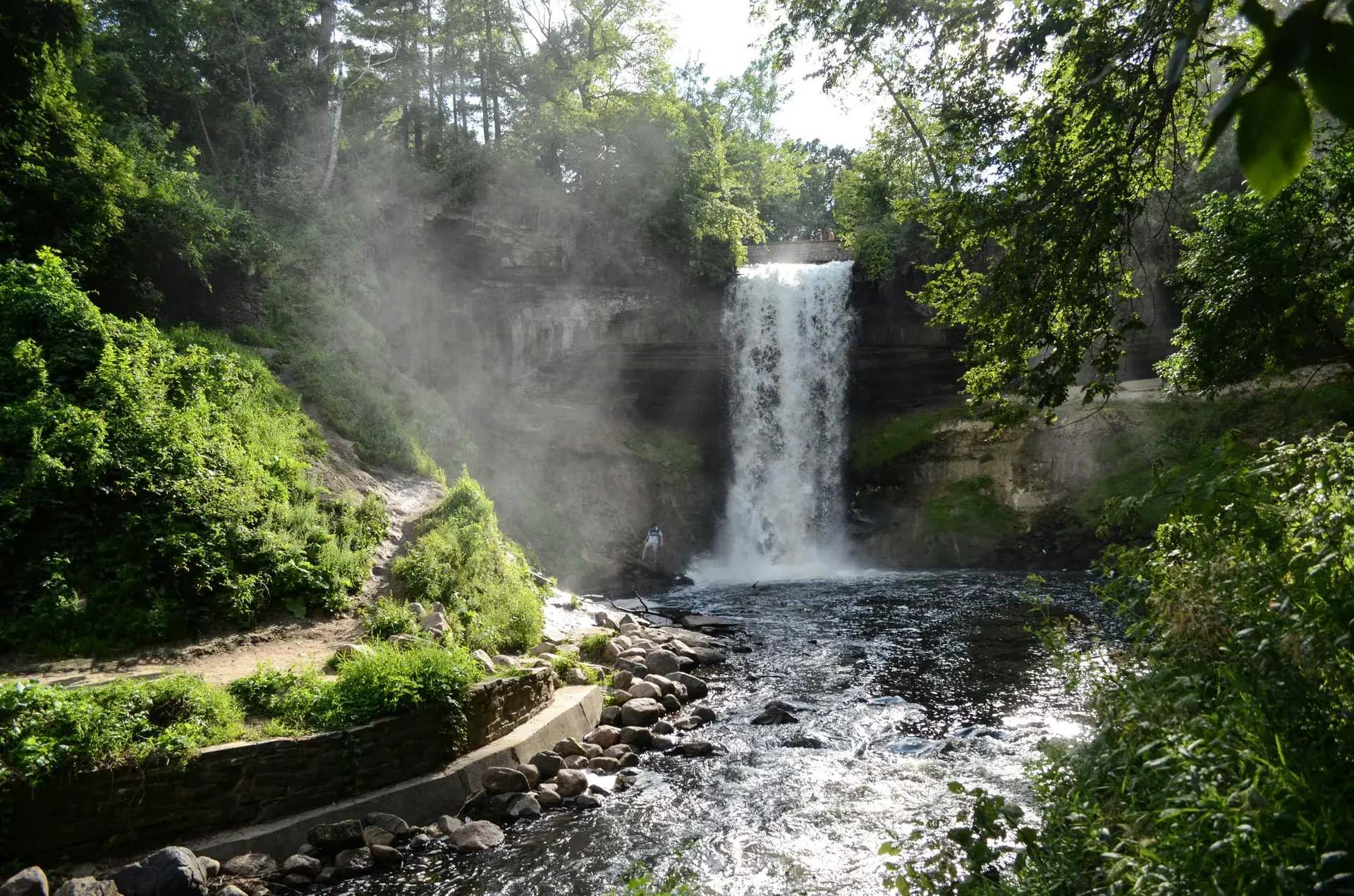
Longfellow's winter crown jewel is frozen Minnehaha Falls — a 53-foot waterfall that freezes into an ice formation so dramatic it looks computer-generated. The walk down to the frozen falls is a winter pilgrimage for Minneapolis residents, and it is a couple of miles south of Longfellow. The Mississippi River gorge trails provide excellent winter snowshoeing and hiking. The coffee shops nearby — Dogwood's East Lake shop, just over the line in Cooper, chief among them — are genuine warm refuges. The tradeoff: Longfellow is less walkable in winter than in summer because the commercial nodes are spread out, and icy sidewalks in a neighborhood with some hilly terrain can be treacherous. A good pair of Yaktrax is essential equipment for Longfellow winter walking.
Read the full Longfellow guide →Whittier
Winter Walkability
Very Good
Plowing
Moderate
Indoor Amenities
Excellent
Winter activities: MIA (free!), Eat Street dining, Midtown Greenway
Cozy factor: Medium-High
Whittier's winter advantage is density: when walking three blocks in the cold is your limit, having 40 restaurants within three blocks matters. Eat Street does not hibernate — the Vietnamese pho, Ethiopian injera, and Thai curry that define Nicollet Avenue are arguably better in January than in July. The Minneapolis Institute of Art is free, open year-round, and can absorb an entire Saturday afternoon when the windchill hits minus-20. The Midtown Greenway provides plowed bike commuting for the truly committed. Whittier winter is urban winter — you are not skating on a frozen lake, you are eating soup in a warm restaurant while watching snow fall on Nicollet Avenue. That is its own kind of wonderful.
Read the full Whittier guide →Marcy-Holmes
Winter Walkability
Good
Plowing
Moderate
Indoor Amenities
Good
Winter activities: Stone Arch Bridge winter views, St. Anthony Main, U of M campus events
Cozy factor: Medium-High
Marcy-Holmes earns a winter spot for its proximity to two things: the Stone Arch Bridge and the University of Minnesota campus. The Stone Arch Bridge in winter — with steam rising from St. Anthony Falls and downtown lit up against a dark sky — is one of the most beautiful urban winter views in America. The U of M campus provides winter cultural infrastructure: Northrop concerts, Weisman Art Museum, campus lectures and events. St. Anthony Main's restaurants (Aster Cafe and nearby options) provide cozy riverfront dining. The neighborhood is hillier than most Minneapolis neighborhoods, which can make icy sidewalks challenging, but the beauty of the winter riverfront compensates.
Read the full Marcy-Holmes guide →Winter Gear That Actually Matters
Regardless of neighborhood, surviving Minneapolis winter requires the right gear. A real winter coat (not a fashion puffer — a coat rated to minus-20). Insulated, waterproof boots with good traction. Wool base layers. A car with snow tires or AWD if you drive. Yaktrax or Stabilicers for icy sidewalks. And a sun lamp for the dark afternoons — seasonal affective disorder is not a joke in a city where December has 8.5 hours of daylight.
The people who love Minneapolis winter are the ones who go outside in it — skiing, skating, fat biking, winter running. The people who suffer are the ones who hibernate from November to April. Pick a neighborhood that makes going outside easy, and winter becomes a feature, not a bug.
Frequently Asked Questions
What is the best Minneapolis neighborhood for winter?+
Downtown East — the skyway system means you can live a Minneapolis January without gambling on the weather every time you leave for work, groceries, or a game. Downtown West and the North Loop share most of that armor.
How bad is winter in Minneapolis?+
Real: an average of 54 inches of snow a year, temperatures that regularly hit minus-10, and January daylight that ends before 5 PM. The guide's framing is that winter here is not something to survive — it's something to choose, and some neighborhoods make that choice much easier.
Which winter neighborhood is best for outdoor people?+
Bryn Mawr — Theodore Wirth Park sits at its front door, which turns the five snowy months into an asset instead of a siege. The ranking sorts neighborhoods into those that make winter beautiful, bearable, or genuinely fun.
Does the skyway really make winter easier?+
Yes — it's the single biggest winter-lifestyle advantage in the city. Living in Downtown East or Downtown West puts groceries, gyms, offices, and restaurants inside a connected climate-controlled network, which is why those two top this particular list and almost no other.