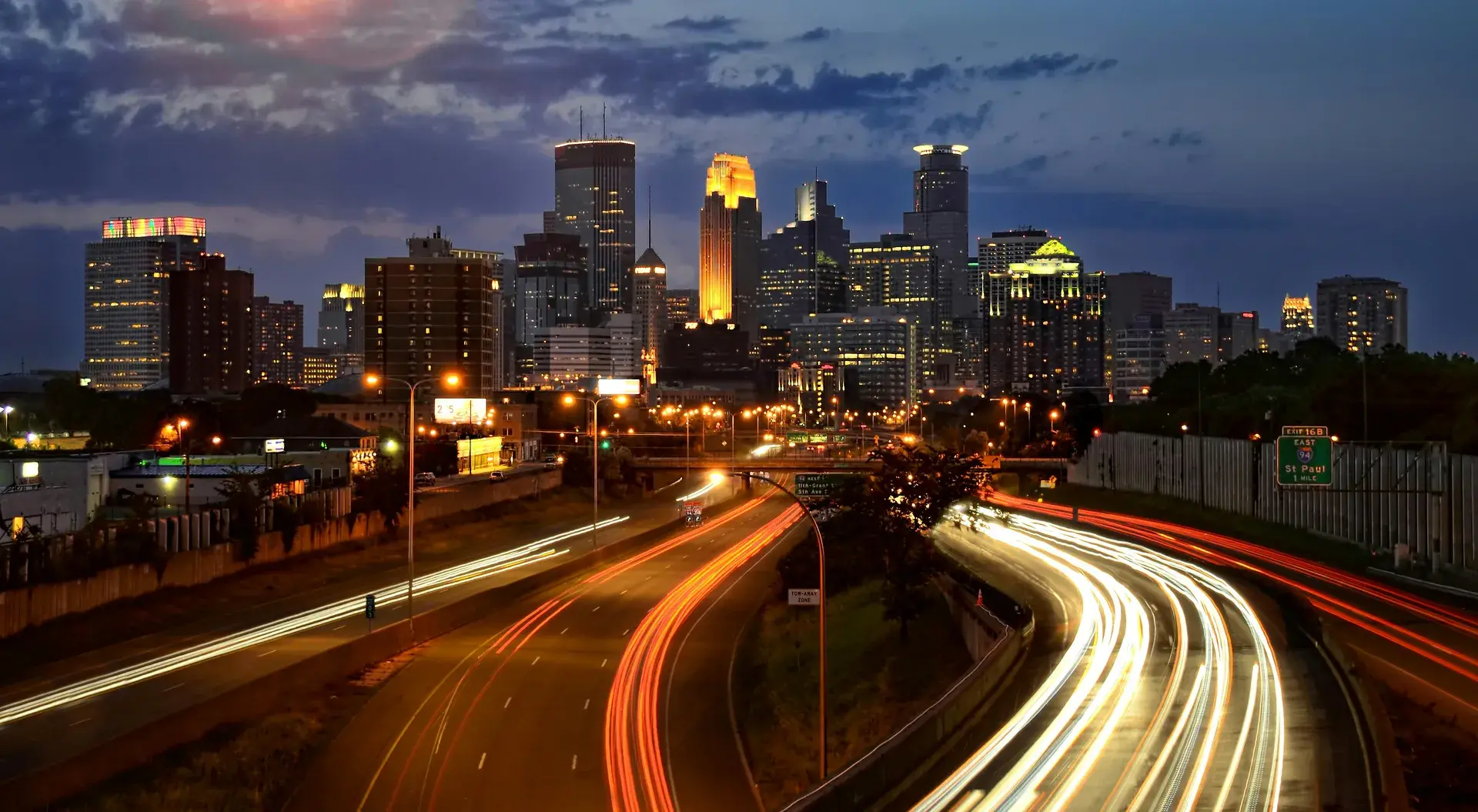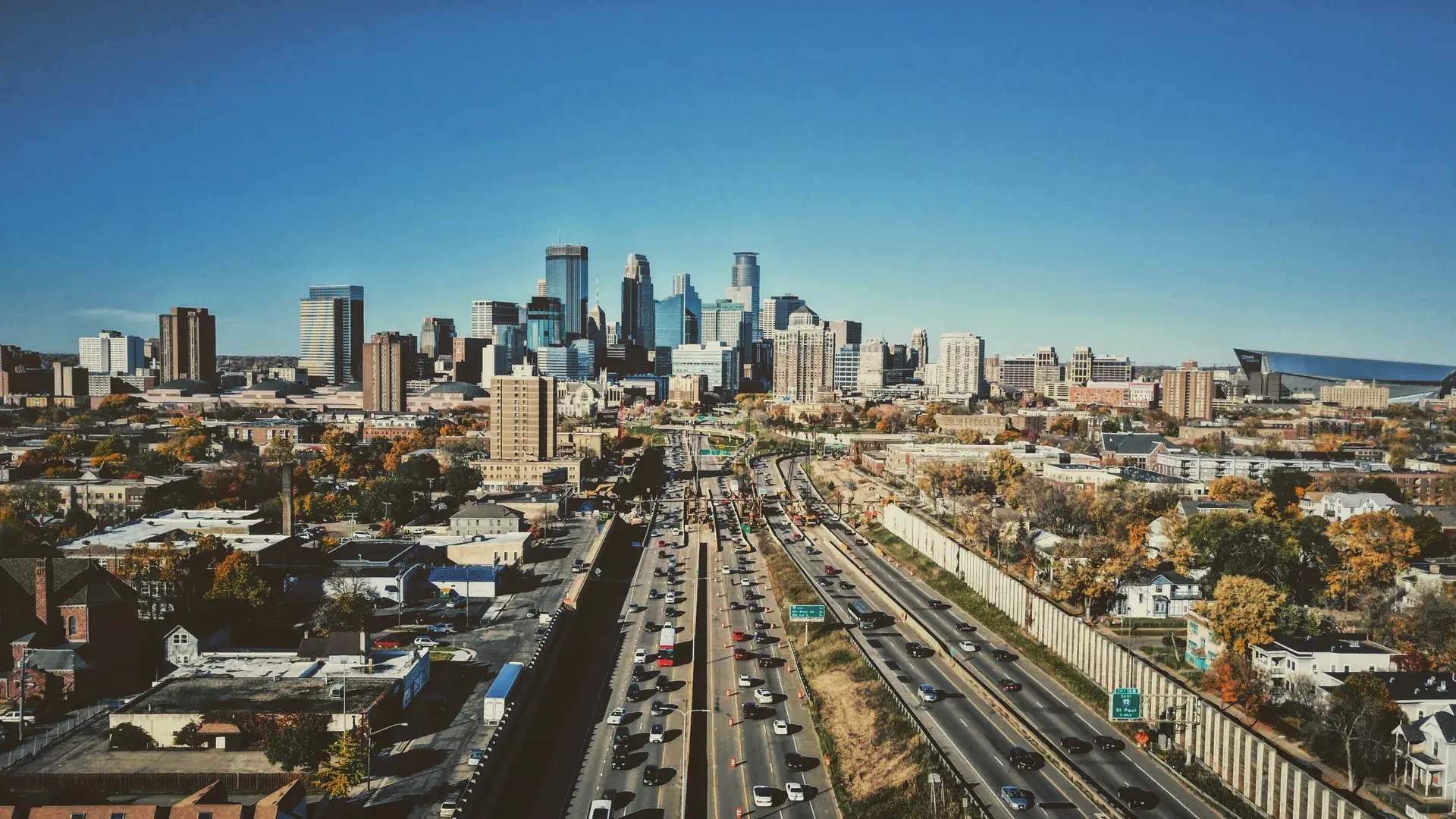
Why Minneapolis?
Minneapolis is one of those cities that people who live here love with an intensity that puzzles outsiders. It is cold — genuinely, punitively cold — for four to five months of the year. It is not on a coast. It is not the city you dreamed of moving to when you were twenty-two. And yet: it has arguably the best park system in America (the Trust for Public Land ranked it #1 nationally for years; it sits at #3 in the 2026 rankings), a cultural infrastructure that rivals cities three times its size, a food scene that James Beard voters have noticed, a bike network that makes Portland jealous, 17 Fortune 500 companies, and a cost of living that lets you actually enjoy all of it.
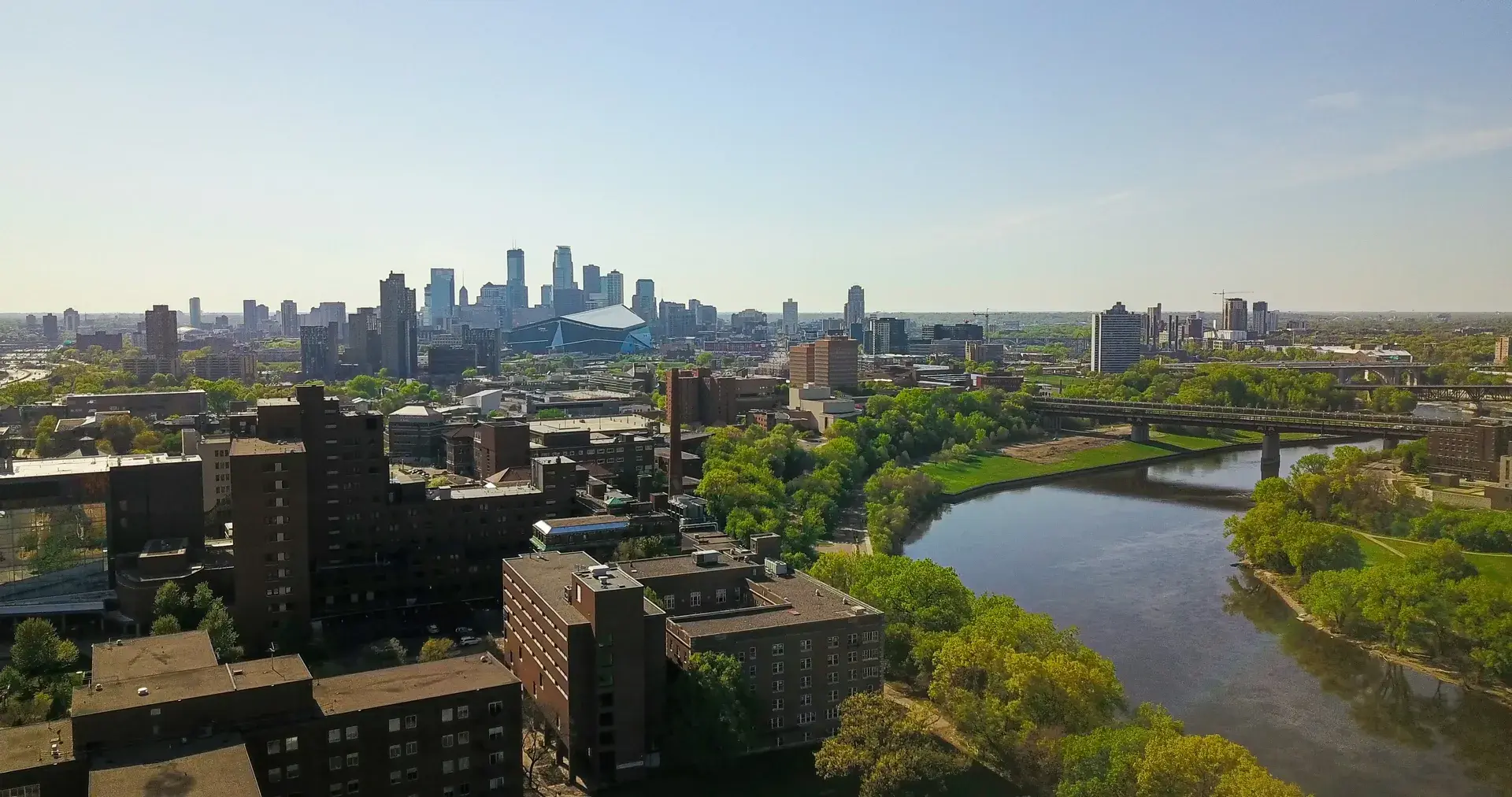
The city sits near the confluence of the Mississippi River and the Minnesota River, spread across a landscape of 22 lakes, winding creek corridors, and the dramatic Mississippi gorge. It has 87 officially defined neighborhoods, each with its own sign, its own character, and its own argument about what Minneapolis really is. The metro area — the Twin Cities of Minneapolis and St. Paul, plus surrounding suburbs — holds about 3.7 million people, making it the 16th largest metro in the country.
What makes Minneapolis unusual is the combination: world-class parks and culture in a metro that is still affordable enough for a teacher or a nurse to buy a house. That is increasingly rare in America, and it is the core reason people move here and stay.
Cost of Living
Minneapolis is roughly 5-10% above the national average for cost of living, which sounds unremarkable until you compare it to the cities people are leaving to come here. Against San Francisco, Minneapolis is 40-50% cheaper. Against New York, 35-45%. Against Denver and Austin — the other mid-tier cities that get relocation buzz — Minneapolis is still 10-20% cheaper. The biggest variable by far is housing, and the biggest variable in housing is which neighborhood you choose.
Housing
The Minneapolis housing market spans a wide range. In the southwest lake neighborhoods — Fulton, Linden Hills, Kenny — 2025 median sale prices ran from about $436,000 in Kenny to $675,000 in Fulton, according to Minneapolis Area REALTORS, against $350,000 citywide. In North Loop, the median condo sold for $383,000. In Longfellow, Powderhorn Park, and Nokomis, you can find solid bungalows for less: Longfellow's 2025 median was $330,000, Powderhorn Park's $318,000, and most of the Nokomis neighborhoods fell between about $310,000 and $400,000. North Minneapolis has some of the most affordable housing in the city: Folwell, Jordan, McKinley, and Webber-Camden all had 2025 medians between about $215,000 and $235,000.
Rent follows the same geography. Census estimates put the median rent across all unit sizes at about $2,100 in North Loop, about $1,300 to $1,400 in Whittier and Lowry Hill East, and about $950 in Seward and $1,300 in Longfellow (both with wide margins of error), against $1,371 citywide.
Other Costs
Groceries are near the national average. Minnesota has a 6.875% state sales tax (but clothing is exempt — a genuine perk). State income tax is progressive and runs 5.35-9.85%, which is higher than many states. Property taxes are moderate to high, depending on your neighborhood and home value. Utilities run about $150-$250/month including heat — gas bills spike in winter but your AC costs are lower than in the Sun Belt. Auto insurance is reasonable. You will spend money on winter gear — a good coat ($200-$400), boots ($100-$200), and layers — but you buy these once and they last years.
Choosing a Neighborhood
Minneapolis has 87 officially defined neighborhoods, and the differences between them are real. This is not a city where “location doesn't matter.” Your neighborhood determines your commute, your schools, your restaurant options, your property taxes, your walkability, your safety profile, and your social world. Choosing the right neighborhood is the single most important decision you will make in your move.
Here is the honest shorthand, by what you are optimizing for:
Best for Families with Kids
Fulton, Linden Hills, Kenny, Lynnhurst. These are the southwest lake neighborhoods — strong schools, safe streets, parks everywhere, Lake Harriet and Bde Maka Ska within biking distance. Nokomis offers a similar vibe at lower prices.
Best for Young Professionals
North Loop for walkable luxury. Lowry Hill East for density and nightlife. South Uptown for lake access with a social scene. Logan Park for breweries and arts.
Best for Walkability & Transit
North Loop (Walk Score 84), Whittier (91), Lowry Hill East (93), Downtown East (91). All four are genuinely car-optional for daily life.
Best Value
Longfellow, Powderhorn Park, Seward, Nokomis. Strong character, real community, park access, and home prices that don't require two six-figure incomes.
Most Character & Culture
Whittier (Eat Street, diversity, MIA), Logan Park (arts district, breweries, Art-A-Whirl), Powderhorn Park (MayDay Parade, radical community organizing), Seward (co-op culture, Mississippi River gorge).
Read our complete neighborhood guides for in-depth coverage of each neighborhood — history, restaurants, real estate, schools, what's changing, and the honest version of what it's really like to live there.
Weather & Seasons: The Honest Version
Minneapolis weather is the thing everyone asks about, and the thing that everyone who lives here has a complicated relationship with. Let's be direct.
Winter (November – March)
It is cold. Not “I need a jacket” cold — “exposed skin can get frostbite in 10 minutes” cold. Average January temperatures range from 7°F to 23°F. Wind chills regularly hit −20°F to −40°F during polar vortex events (these happen a few times per winter). The city gets about 54 inches of snow annually. Winter starts in earnest in November and doesn't fully release its grip until April.
Here is the thing no one tells you: you adjust. Minnesotans don't enjoy −20°F any more than you would. They simply dress for it, build routines around it, and find that the rhythm of winter — the quiet snowfalls, the frozen lakes, the skyway system downtown, the first warm day in March when the entire city exhales — becomes part of the texture of their year. The people who leave because of winter are usually the ones who never invested in a real coat.
Spring (April – May)
Spring is the weakest season. March and April are unpredictable — snow one day, 50°F the next. True spring doesn't arrive until May. When it does, the transformation is dramatic: trees leaf out, lakes thaw, patios open, and the collective mood of the city shifts visibly. May in Minneapolis is one of the most optimistic months in any American city.
Summer (June – August)
Summers are genuinely beautiful. Average highs in July are 82-85°F, with low humidity by national standards (though locals will complain about humidity regardless). Days are long — over 15 hours of daylight in June. The entire city moves outdoors. Lakes are full of swimmers, paddleboarders, and kayakers. Patios are packed. Concerts, festivals, and farmers markets run continuously. It is the payoff for winter, and it is spectacular.
Fall (September – October)
Fall is the consensus best season. September is warm (70s) with cool evenings. October brings peak foliage — the elms, maples, and oaks turn deep gold and red against blue skies. The light changes, the air sharpens, and the city feels like it is savoring the last weeks before winter. By early November, the first snow usually arrives.
What to Buy Before Your First Winter
A serious winter coat (not a fashion coat — an actual parka rated to −20°F or below). Insulated waterproof boots. Wool or fleece-lined gloves, not cotton. A hat that covers your ears. Thermal base layers. A windshield ice scraper and snow brush for your car. Budget $400-$600 for the full kit; it will last 5-10 years.
Job Market
The Twin Cities metro has one of the strongest and most diversified economies of any mid-size American metro. Seventeen Fortune 500 companies are headquartered here — more per capita than almost anywhere in the country. The major sectors:
- Healthcare: UnitedHealth Group (the largest health company in the world by revenue), Medtronic, Mayo Clinic (Rochester, but with significant Twin Cities presence), Allina Health, HealthPartners, Fairview. Healthcare is the metro's largest employment sector.
- Finance & Banking: U.S. Bancorp, Ameriprise Financial, Piper Sandler, Thrivent. The Twin Cities is a major financial services hub.
- Retail & Consumer: Target (headquartered in downtown Minneapolis), Best Buy, General Mills, Land O'Lakes. The retail and CPG presence is deep.
- Technology: Growing but not dominant. No single tech giant is headquartered here, but there is a strong mid-market tech ecosystem, significant corporate tech teams (Target's engineering org is massive), and a growing startup scene. Remote work has made Minneapolis increasingly attractive for tech workers earning coastal salaries.
- Education & Research: The University of Minnesota is a top-tier public research university and one of the metro's largest employers. It anchors a research and innovation ecosystem that includes significant medical device, biotech, and agricultural technology clusters.
Unemployment in the Twin Cities has historically run 1-2 percentage points below the national average. The labor market is competitive for employers — qualified candidates often have multiple offers. The cost-of-living-to-salary ratio is one of the best in the country: you earn 85-95% of what you'd earn in a coastal city, but your housing costs are 40-50% lower.
Getting Around
Minneapolis transportation is a mix of strong infrastructure and real gaps. The honest assessment:
Biking
This is where Minneapolis genuinely leads. The city has over 200 miles of on- and off-street bikeways, including the Midtown Greenway (a car-free below-grade trail running 5.5 miles east-west through the city), the Chain of Lakes paths, and extensive Mississippi River trails. Minneapolis is consistently ranked among the top 2-3 biking cities in America by every organization that measures this. People bike year-round — yes, even in winter. The city plows many bike lanes within 24 hours of snowfall.
Light Rail
The Blue Line runs from Target Field (downtown) through south Minneapolis to MSP International Airport and the Mall of America. The Green Line runs from Target Field east to downtown St. Paul via the University of Minnesota campus. Both lines are useful if your commute aligns with them and less useful if it doesn't. A third line (Southwest LRT / Green Line Extension) has been under construction for years, with delays and cost overruns that have become a local political saga.
Bus
Metro Transit runs an extensive bus network. High-frequency routes on Hennepin, Lyndale, Lake Street, and Central Avenue are reliable. Less-frequent routes in residential neighborhoods can be inconvenient. The bus system is functional but not fast — most trips require transfers and take 1.5-2x as long as driving.
Driving
Most Minneapolis residents own a car. Traffic is moderate by national standards — rush hour exists but rarely approaches coastal-city levels. The interstate system (I-94, I-35W, I-394) provides good access across the metro. Parking is generally available in residential neighborhoods (most have free street parking) and tighter in denser areas like North Loop, downtown, and Uptown. Winter driving requires adjustment — snow tires are not legally required but are strongly recommended. Street parking bans during snow emergencies are enforced seriously.
Airport
MSP International Airport is a major Delta hub, which means direct flights to most U.S. cities and many international destinations. It is consistently ranked among the best airports in North America. The Blue Line light rail connects it to downtown in about 25 minutes. By car, it is 15-25 minutes from most Minneapolis neighborhoods.
Schools & Education
Minneapolis Public Schools (MPS) is a large urban district with significant variation between schools. This is an area where honesty matters more than cheerfulness.
The highest-performing neighborhood schools are concentrated in southwest Minneapolis: the Lake Harriet Lower and Upper, Burroughs, and Armatage elementary schools. Southwest High School has an International Baccalaureate program. These schools perform well above state averages and are a major reason families pay premium prices for southwest neighborhoods.
Schools in other parts of the city show more variation. MPS has struggled with achievement gaps — particularly between white students and students of color — that are among the widest in the nation. The district is aware of this and has made it a stated priority, but progress has been slow.
Minnesota has strong school choice infrastructure. Open enrollment allows families to apply to schools outside their neighborhood boundary. Magnet schools and citywide programs (arts, language immersion, STEM, Montessori) provide alternatives. The charter school sector is large. Private school options include Blake, Breck, Minnehaha Academy, and several parochial schools.
The practical reality: many Minneapolis families — especially those outside southwest — navigate the school system actively, applying to magnets, charters, or open-enrolling in schools across the city rather than defaulting to their neighborhood school. If schools are a top priority, neighborhood choice matters enormously.
Food & Culture
The Twin Cities food and culture scene punches well above its weight for a metro of 3.7 million. Here is what you should know:
Food
The dining scene has evolved dramatically over the past decade. Minneapolis has produced multiple James Beard Award winners and nominees. The standout cuisines are Southeast Asian (the Twin Cities have one of the largest Hmong populations in the world, plus significant Vietnamese and Thai communities), East African (the largest Somali diaspora in North America), and a strong farm-to-table tradition drawing on Minnesota's agricultural base.
Key food corridors: Eat Street in Whittier (the most diverse restaurant strip in the city), Central Avenue in Northeast (old-school Eastern European meets contemporary), the North Loop (the densest collection of upscale restaurants), and Midtown Global Market (an international food hall in a converted Sears building).
The brewery scene is enormous — over 150 breweries in the metro, many functioning as genuine community gathering spaces rather than just drinking establishments. Surly, Indeed, Fulton, and Modist are among the best-known — though the scene is consolidating after its 2010s boom: longtime Northeast favorite Bauhaus Brew Labs closed in June 2026 after twelve years and reopened under new owners in August.
Arts & Culture
Minneapolis has more theater seats per capita than any U.S. city except New York. The Guthrie Theater is a world-class regional theater. The Walker Art Center is one of the top contemporary art museums in the country, with a free sculpture garden. The Minneapolis Institute of Art (MIA) has an encyclopedic collection and is always free. First Avenue is a legendary music venue (yes, from Purple Rain). The music scene — from Prince's legacy to a thriving indie and hip-hop scene — is a genuine cultural asset.
Major festivals: Art-A-Whirl (the largest open studio tour in the country, held in Northeast), MayDay Parade (in Powderhorn), Twin Cities Jazz Festival, Minneapolis Aquatennial, and the Minnesota State Fair (technically in St. Paul, but it is the largest state fair in the country by daily attendance, and it is magnificent).
Parks & Outdoors
This is Minneapolis's strongest card. The Minneapolis Park and Recreation Board, an independent elected body (one of the only ones in the country), manages a system that the Trust for Public Land ranked #1 in America for much of the 2010s (it placed #3 in 2026). The numbers: 180 park properties, 49 recreation centers, 22 lakes, 102 miles of Grand Rounds trails, and the guarantee that 99% of Minneapolis residents live within a 10-minute walk of a park.
The Chain of Lakes — Lake Harriet, Bde Maka Ska (formerly Lake Calhoun), Lake of the Isles, Cedar Lake — forms a connected system of paths in the southwest part of the city that is, without exaggeration, one of the great urban park assets in America. The Mississippi River gorge runs through the southeastern part of the city with trails, bluffs, and views. Minnehaha Falls — a 53-foot waterfall in a city park — is a genuine natural wonder.
Winter outdoor activities include cross-country skiing (groomed trails in multiple city parks), ice skating (dozens of rinks, including the famous Lake of the Isles rink), ice fishing, fat-tire biking, and snowshoeing. The city doesn't shut down for winter; it adapts.
Summer activities include swimming at public beaches (Lake Nokomis, Bde Maka Ska, Lake Harriet), kayaking and paddleboarding, biking the Grand Rounds, free concerts at the Lake Harriet Bandshell, and fishing. The outdoor culture from May through October is among the best of any American city — a direct consequence of long winters making everyone desperate to be outside.
The Honest Stuff No One Puts in the Brochure
The 2020 Reckoning
George Floyd was murdered by a Minneapolis police officer on May 25, 2020, at 38th and Chicago in the Powderhorn neighborhood. The aftermath — the protests, the burning of the Third Precinct, the weeks of unrest, the national reckoning with policing — reshaped Minneapolis in ways that are still unfolding. Crime rose significantly in 2020-2021. Businesses along Lake Street were destroyed. The city voted on (and narrowly rejected) a ballot measure to replace the police department. Officer staffing dropped sharply. The conversation about policing, safety, and racial equity remains active and unresolved.
You should know this history if you are considering moving here. It is part of the city's story, not separate from it. Many neighborhoods have rebuilt and recovered. Crime has declined from its 2020-2021 peak. But the experience changed Minneapolis — its politics, its self-image, its relationship with its own institutions — and that change is ongoing.
Minnesota Nice
“Minnesota Nice” is real, but it is not what you think. People are polite, helpful, and genuinely friendly on the surface. But breaking into established social circles can be difficult. Minnesotans often have deep, long-standing friend groups from childhood, college, or church, and adding new people to those circles is not their default behavior. Transplants frequently report that it takes 2-3 years to build a genuine social network. The antidote: join things. Rec leagues, co-ops, running clubs, neighborhood associations, religious communities. Passive socializing does not work here the way it does in cities with more transient populations.
Segregation
Minneapolis and the Twin Cities have significant racial disparities in income, homeownership, education, and health outcomes — among the worst in the nation by several measures. The city's neighborhoods are more economically and racially segregated than many residents would like to acknowledge. The southwest lake neighborhoods are predominantly white and wealthy. In north Minneapolis, about 40 percent of residents are Black, by Census estimates — more than twice the citywide share. Concentrations of East African immigrants are in Cedar-Riverside and parts of south Minneapolis. This is not unique to Minneapolis, but the gap between the city's progressive self-image and its demographic reality is worth understanding.
The Political Temperature
Minneapolis is one of the most politically progressive cities in America. The City Council skews left of the national Democratic Party. Policy debates around housing (Minneapolis 2040 eliminated single-family zoning citywide), policing, homelessness, and development are intense, well-informed, and sometimes exhausting. If you are moving from a politically moderate or conservative environment, the local political culture will feel very different. If you are moving from another progressive city, you will feel at home — and may still be surprised by the intensity.
Seasonal Affective Disorder
This is real and undersold. Minneapolis gets about 8.5 hours of daylight in December, and many of those hours are overcast. Combined with cold that limits time outdoors, the November-February stretch is genuinely hard on mental health for many people — especially transplants who aren't used to it. A light therapy lamp ($30-$80), Vitamin D supplements, and a winter activity routine are standard coping strategies, not luxuries. Take this seriously.
Frequently Asked Questions
Is Minneapolis a good place to live?+
Yes — Minneapolis consistently ranks among the most livable cities in the U.S. for its parks system (a perennial top-3 finisher in the Trust for Public Land's national ParkScore rankings, and #1 for much of the 2010s), bike infrastructure, cultural scene, strong job market, and relative affordability compared to coastal cities. The tradeoffs are real winters, a mid-size metro (3.7 million), and the growing pains of a city actively reckoning with policing, housing, and equity.
How cold does Minneapolis get in winter?+
Very cold. Average January highs are around 23°F (−5°C), with lows around 7°F (−14°C). Wind chills below −30°F happen several times per winter. The city gets about 54 inches of snow annually. It is genuinely harsh — but the city is built for it, and most residents find they adapt within a year or two.
What is the cost of living in Minneapolis?+
Minneapolis is roughly 5-10% above the national average but significantly cheaper than coastal metros. In 2025 the median sale price was in the low $200,000s in much of north Minneapolis and $670,000 or more in Linden Hills, Fulton and Lynnhurst, against $350,000 citywide, according to Minneapolis Area REALTORS. Median rents run from under $1,000 to more than $2,000 a month depending on neighborhood, by Census estimates, against $1,371 citywide. Groceries, utilities, and transportation are close to the national average. The biggest variable is housing — neighborhood choice drives cost of living more than anything else.
What are the best neighborhoods in Minneapolis for families?+
The southwest lake neighborhoods — Fulton, Linden Hills, Kenny, Lynnhurst — are the traditional family picks with strong schools, parks, and safety. Nokomis offers similar lake access at lower prices. For families who want urban walkability, Lowry Hill East and Whittier work if you are comfortable with city density. The northeast neighborhoods (Logan Park, St. Anthony) are increasingly popular with young families who want culture and community.
What are the best neighborhoods for young professionals?+
North Loop for polished walkability and restaurants. Lowry Hill East (The Wedge) for density and nightlife proximity. Whittier for diversity and affordability. Logan Park / Northeast for the arts and brewery scene. South Uptown for lake access with a social scene. Each has a distinct personality — the 'best' depends on whether you want cocktail bars or dive bars, curated or scrappy.
How is public transit in Minneapolis?+
Functional but not comprehensive. The Blue Line light rail runs from Target Field through downtown to MSP Airport and Mall of America. The Green Line connects Minneapolis to St. Paul via the University of Minnesota. Bus service covers most of the city with varying frequency. The real strength is the bike infrastructure — Minneapolis is consistently ranked among the top 3 biking cities in America. Most residents own a car but don't always need it.
Is Minneapolis safe?+
This is the most complicated question about Minneapolis. Overall crime rates are moderate for a city this size. The southwest and southeast neighborhoods are very safe by any measure. Some areas — parts of north Minneapolis, stretches of Lake Street, downtown late at night — have higher crime rates. After 2020, property crime rose citywide, and the policing debate made safety a charged political topic. The honest answer: most neighborhoods are safe for daily life, but Minneapolis is a real city with real city problems, not a suburb.
What is the job market like in Minneapolis?+
Strong and diversified. The Twin Cities metro is home to 17 Fortune 500 companies — Target, UnitedHealth Group, Best Buy, 3M, General Mills, U.S. Bancorp, Medtronic, and others. Healthcare, finance, retail, food, and tech are the major sectors. The University of Minnesota is a major employer and research institution. Unemployment has historically run below the national average. Remote work has expanded options further, and Minneapolis's cost of living makes it attractive for remote workers earning coastal salaries.
How do Minneapolis schools compare?+
It depends heavily on neighborhood. Minneapolis Public Schools is a large urban district with significant performance variation between schools. Southwest Minneapolis schools (Lake Harriet, Burroughs, Southwest High) perform well above state averages. Schools in other parts of the city vary more widely. Minnesota has robust open enrollment, charter, and private school options. Many families navigate the system strategically, choosing schools outside their neighborhood boundaries.
What should I know about Minneapolis weather beyond winter?+
Minneapolis has dramatic seasonal range. Summers are genuinely beautiful — 80-85°F, long days, the entire city moves outdoors. Fall is spectacular, with peak foliage in early-to-mid October. Spring is the weakest season — March and April can feel like extended winter, and true spring doesn't arrive until May. The flip side of brutal winters is that the summers feel earned, and the outdoor culture from May through October is among the best of any American city.
Do I need a car in Minneapolis?+
It depends on your neighborhood and commute. In walkable neighborhoods like North Loop, Lowry Hill East, Whittier, or Uptown, you can manage without a car for daily life — especially with biking and transit. In the southwest lake neighborhoods (Fulton, Linden Hills, Kenny), a car is practically necessary. Most Minneapolis residents own a car but bike or transit for some trips. If you work downtown and live along a light rail line, car-free living is very doable.
What is the Minneapolis food scene like?+
Excellent and underrated. The Twin Cities punch above their weight in dining. Highlights include a strong Southeast Asian food tradition (Hmong, Vietnamese, Thai), East African cuisine (Somali, Ethiopian), a thriving craft brewery scene (150+ breweries in the metro), James Beard Award-winning restaurants (Demi, Spoon and Stable, and Indígena by Owamni — Sean Sherman's pioneering Indigenous restaurant, which moved into the Guthrie Theater in June 2026 under a new name and with a bigger menu), and an extraordinary year-round farmers market scene. Eat Street in Whittier, Central Avenue in Northeast, and the North Loop are the main dining corridors.