North Loop
Walk Score
84
Median Rent (All Units)
$2,113/mo
Nightlife
Excellent
Residents Aged 25–34
40%
Transit: Two light rail lines
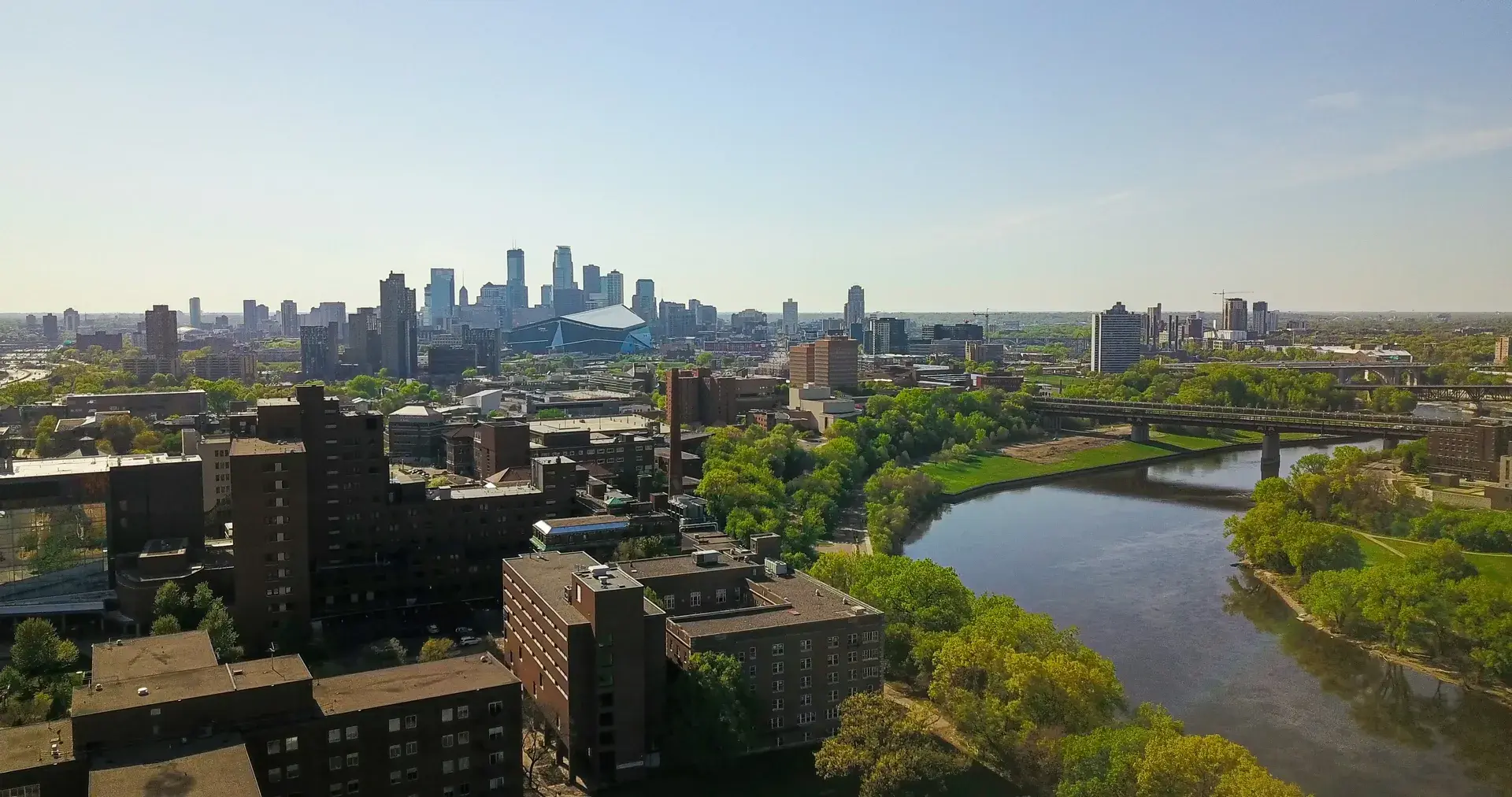
The North Loop is Minneapolis's most polished young-professional neighborhood, and it earns the top spot on sheer density of the things young professionals care about: restaurants (Spoon and Stable, Bar La Grassa, Demi), coffee shops (Spyhouse), breweries (Fulton, Modist), and nightlife — all within walking distance. Two light rail lines provide car-free commuting to most major employment centers. The riverfront trails are right there for morning runs. The social scene is active and well-curated. The tradeoff: the North Loop is expensive. Census estimates put the median rent at about $2,100 a month, against $1,371 citywide, and the neighborhood attracts a specific demographic — affluent, mid-to-late 20s and 30s, predominantly white — that some find homogeneous. If your salary supports it and you want the most convenient young-professional lifestyle in Minneapolis, the North Loop delivers. If you want grit, diversity, or affordability, look further down this list.
Read the full North Loop guide →Whittier
Walk Score
91
Median Rent (All Units)
$1,327/mo
Nightlife
Excellent
Residents Aged 25–34
31%
Transit: Bus routes on Nicollet & Lyndale
Whittier is the North Loop's scrappier, more interesting, more affordable counterpart. Eat Street (Nicollet Avenue from 24th to 29th) has more culinary range in five blocks than most cities have in total — Vietnamese, Ethiopian, Somali, Mexican, Korean, Japanese, and everything between. The Minneapolis Institute of Art is here. MCAD is here. The Midtown Greenway provides car-free east-west biking. The median rent is about $800 a month lower than the North Loop's, by Census estimates. The population is genuinely diverse — racially, economically, and culturally — in a way the North Loop is not. The tradeoff: Whittier is urban in the full sense. More noise, more visible homelessness, higher property crime, and a grittier street feel than the North Loop's curated polish. Young professionals who choose Whittier over the North Loop are making a values statement about the kind of city life they want. It's the right call for many people.
Read the full Whittier guide →Lowry Hill East
Walk Score
93
Median Rent (All Units)
$1,405/mo
Nightlife
Very Good
Residents Aged 25–34
40%
Transit: Bus on Hennepin & Lyndale
The Wedge is Minneapolis's quintessential 20-something neighborhood — dense, loud, bikeable, and packed with bars, restaurants, and the kind of chaotic energy that works when you're 27 and stops working around 34. Bryant Lake Bowl (bowling, dinner, live shows), the Wedge Co-op, and the Hennepin-Lyndale corridor provide walkable everything. The Bike Score of 95 makes this one of the most bikeable neighborhoods in the country. The Walker Art Center and Sculpture Garden are just past the neighborhood's northern tip. The tradeoff: much of the building stock is old, and 'old' here often means 'the landlord hasn't updated anything since 1987.' Parking is a competitive sport. Noise is constant — this is not a neighborhood for light sleepers. But for young professionals who want to live in the middle of things, bike everywhere, and have a packed social calendar, The Wedge is hard to beat at the price.
Read the full Lowry Hill East guide →South Uptown
Walk Score
87
Median Rent (All Units)
$1,344/mo
Nightlife
Good (rebuilding)
Residents Aged 25–34
35%
Transit: Hennepin Ave bus, Midtown Greenway
South Uptown was the default young-professional neighborhood for a decade, and its reputation still carries weight even as the reality has shifted. The Lyn-Lake corridor retains genuine nightlife — CC Club and Moto-i across Lake Street in the Wedge, and a handful of restaurants and bars that anchor the social scene. Bde Maka Ska is a 10-minute walk, providing the best lake access of any neighborhood on this list. The Midtown Greenway runs just north of Lake Street for car-free biking. But Uptown has struggled since 2020: commercial vacancies have thinned the walkable amenity density, crime spiked and hasn't fully recovered, and the neighborhood is in an identity transition between its party-district past and an uncertain future. Rents sit just under the city median, which creates opportunity. If you liked what Uptown used to be, the bones are still here. If you need everything to be open and thriving right now, the North Loop and Whittier are safer bets.
Read the full South Uptown guide →Downtown East
Walk Score
91
Median Rent (All Units)
$1,960/mo
Nightlife
Good (event-driven)
Residents Aged 25–34
39%
Transit: Light rail hub, skyway
Downtown East is the best choice for young professionals whose social and professional lives center on downtown institutions. The Guthrie Theater, Mill City Museum, and Stone Arch Bridge provide cultural infrastructure. The light rail hub gives you some of the best transit access in the city. The skyway system means you can walk to work in January without going outside. The residential population has grown significantly with new apartment buildings offering amenities (gyms, rooftop decks, co-working spaces) that substitute for neighborhood infrastructure. The tradeoff: Downtown East doesn't feel like a neighborhood. The streets empty out after 6 PM on weeknights and on weekends outside of event days. The 'nightlife' is largely tied to sporting events and theater, not the casual walk-to-a-bar scene that defines the other neighborhoods on this list. If you work downtown, value convenience above all, and build your social life through activities rather than proximity, Downtown East works. If you want to bump into friends on the street, live elsewhere.
Read the full Downtown East guide →Logan Park
Walk Score
84
Median Rent (All Units)
$1,116/mo
Nightlife
Good (brewery-centric)
Residents Aged 25–34
23%
Transit: Route 10 on Central Ave
Logan Park is the young-professional neighborhood for people who find the North Loop too polished and Whittier too chaotic. The social scene centers on the neighborhood's brewery-and-arts cluster, anchored by Indeed Brewing in the Solar Arts Building. The district took a real hit when Bauhaus Brew Labs closed after twelve years in the old ironworks on Tyler Street, just across Central Avenue — though new owners reopened it in August 2026. Art-A-Whirl turns the neighborhood into a giant open studio every May. The Northrup King Building hosts 300+ artist studios year-round. Central Avenue provides a walkable corridor of old-school NE bars, ethnic restaurants, and newer spots. The vibe is creative, unpretentious, and beer-forward. The tradeoff: walkability is concentrated along Central Avenue — live a few blocks off it, and you're in quiet residential territory. Transit is functional but not frequent. The neighborhood works best if you bike (the riverfront trail commute to downtown is exceptional) and if your social life revolves around breweries and arts events rather than restaurants and clubs.
Read the full Logan Park guide →Loring Park
Walk Score
91
Median Rent (All Units)
$1,199/mo
Nightlife
Good
Residents Aged 25–34
34%
Transit: Multiple bus routes, near light rail
Loring Park is the most underrated young-professional neighborhood in Minneapolis. The park itself is beautiful — a genuine urban green space with a pond, walking paths, and the annual Loring Park Art Festival. The Walker Art Center and Sculpture Garden are a 5-minute walk. The Nicollet Mall corridor is nearby. The Basilica of St. Mary still anchors the neighborhood's skyline, though its famous Block Party played its last set in 2024 — organizers officially retired the festival in 2026 after a three-decade run. The neighborhood has a significant LGBTQ+ community and has historically been one of Minneapolis's most welcoming neighborhoods for queer residents. The building stock is heavily apartment-oriented, with some grand older buildings alongside newer construction. The tradeoff: Loring Park has struggled with safety perceptions — the park itself has had crime issues, particularly after dark, and the neighborhood borders areas with higher crime. Rents are lower than the North Loop for comparable proximity to downtown, which reflects both opportunity and caution. For young professionals who want a central location, park access, and a walkable lifestyle at a moderate price, Loring Park is worth investigating.
Read the full Loring Park guide →Seward
Walk Score
80
Median Rent (All Units)
$944/mo
Nightlife
Moderate
Residents Aged 25–34
20%
Transit: Bus on Franklin Ave
Seward is the young-professional neighborhood for people who'd rather go to a co-op than a cocktail bar. The Seward Co-op (two locations) anchors a community that values cooperative economics, local food, and intentional living. The demographic mix — Somali and Oromo immigrants, longtime co-op members, University of Minnesota grad students — creates a genuinely multicultural daily experience that the North Loop and Lowry Hill East can't match. The Mississippi River gorge provides bluff-top trails for running and biking. The Midtown Greenway's eastern terminus is here. Rents are far below the North Loop's — Census estimates put the median under $1,000 a month, though with a wide margin of error. The tradeoff: the nightlife and dining scene is limited compared to the higher-ranked neighborhoods. Seward's social life is community-oriented — potlucks, co-op events, neighborhood meetings — rather than bar-and-restaurant oriented. If your idea of a good Friday night involves a co-op wine section and a home-cooked meal with friends, Seward is perfect. If you want a vibrant going-out scene, it's not.
Read the full Seward guide →Powderhorn Park
Walk Score
82
Median Rent (All Units)
$1,472/mo
Nightlife
Moderate
Residents Aged 25–34
22%
Transit: METRO B Line on Lake St
Powderhorn is a young-professional neighborhood with genuine cultural energy. The MayDay Parade, Midtown Global Market just across Lake Street, and the lake itself create a community calendar that is unlike anything in the North Loop or Uptown. The neighborhood is politically engaged — intensely so — and the social scene is built around activism, art, and community organizing as much as nightlife. Census estimates put the median rent at about $1,470, close to the city's $1,371. The population is diverse across every dimension. Lake Street provides transit and commercial infrastructure. The tradeoff: Powderhorn took 2020 harder than almost any neighborhood on this list. Crime spiked. The park encampment was traumatic for the community. The neighborhood is rebuilding, but the scars are real. Young professionals who move to Powderhorn tend to be politically progressive, comfortable with complexity, and drawn to community engagement rather than consumer convenience. It's not for everyone, but the people it's for tend to love it deeply.
Read the full Powderhorn Park guide →Stevens Square
Median Rent (All Units)
$1,115/mo
Nightlife
Moderate (proximity-based)
Residents Aged 25–34
40%
Transit: Multiple bus routes
Stevens Square is one of the most affordable walkable neighborhoods in Minneapolis, and the low rents are the primary draw for young professionals on a budget. You're within walking distance of downtown, Eat Street, the convention center, and Loring Park. The neighborhood is tiny (just a few blocks) and almost entirely apartment buildings. Census estimates put the median rent at about $1,100, roughly $250 under the city median — remarkable for a location this central. The tradeoff: Stevens Square has the highest crime rate of any neighborhood on this list. The combination of affordable rents, transient population, and proximity to higher-crime areas creates real safety concerns, particularly at night. The neighborhood lacks its own commercial infrastructure — you're walking to other neighborhoods for everything. Stevens Square works for young professionals who prioritize affordability and location above all else and are comfortable with urban safety realities. It's a starting point, not a destination.
Read the full Stevens Square guide →Car-Free or Car-Light?
Minneapolis is one of the best biking cities in America, and many young professionals here go car-free or car-light. If that's your plan, prioritize the top 5 neighborhoods on this list — they have the walkability, transit, and commercial density to support it. Below that, you'll want a bike (at minimum) and may find a car necessary for some errands. Check our walkability guide for the full breakdown.
Frequently Asked Questions
What is the best Minneapolis neighborhood for young professionals?+
The North Loop — the most polished young-professional neighborhood in the city, with restaurants, coffee shops, breweries, and nightlife all in walking distance, two light rail lines for car-free commuting, and riverfront trails for morning runs. The tradeoff is cost and a demographic some find homogeneous.
How much is rent in the North Loop?+
Census estimates put the median rent, across all unit sizes, at about $2,100 a month, against $1,371 citywide. If your salary supports it, it's the most convenient young-professional lifestyle in Minneapolis; if you want grit, diversity, or affordability, the rest of this list exists for you.
Where do young professionals live more affordably in Minneapolis?+
Whittier — the North Loop's scrappier, more interesting counterpart. The median rent is about $800 a month lower, Eat Street has more culinary range in five blocks than most cities have in total, and the population is genuinely diverse. The tradeoff is fully urban living: more noise, more grit.
Which neighborhood fits a nightlife-first lifestyle?+
Lowry Hill East — the Wedge — for density, bar proximity, and biking, with South Uptown right beside it for lake access plus a social scene. Both are renter-heavy, walkable, and cheaper than the North Loop.